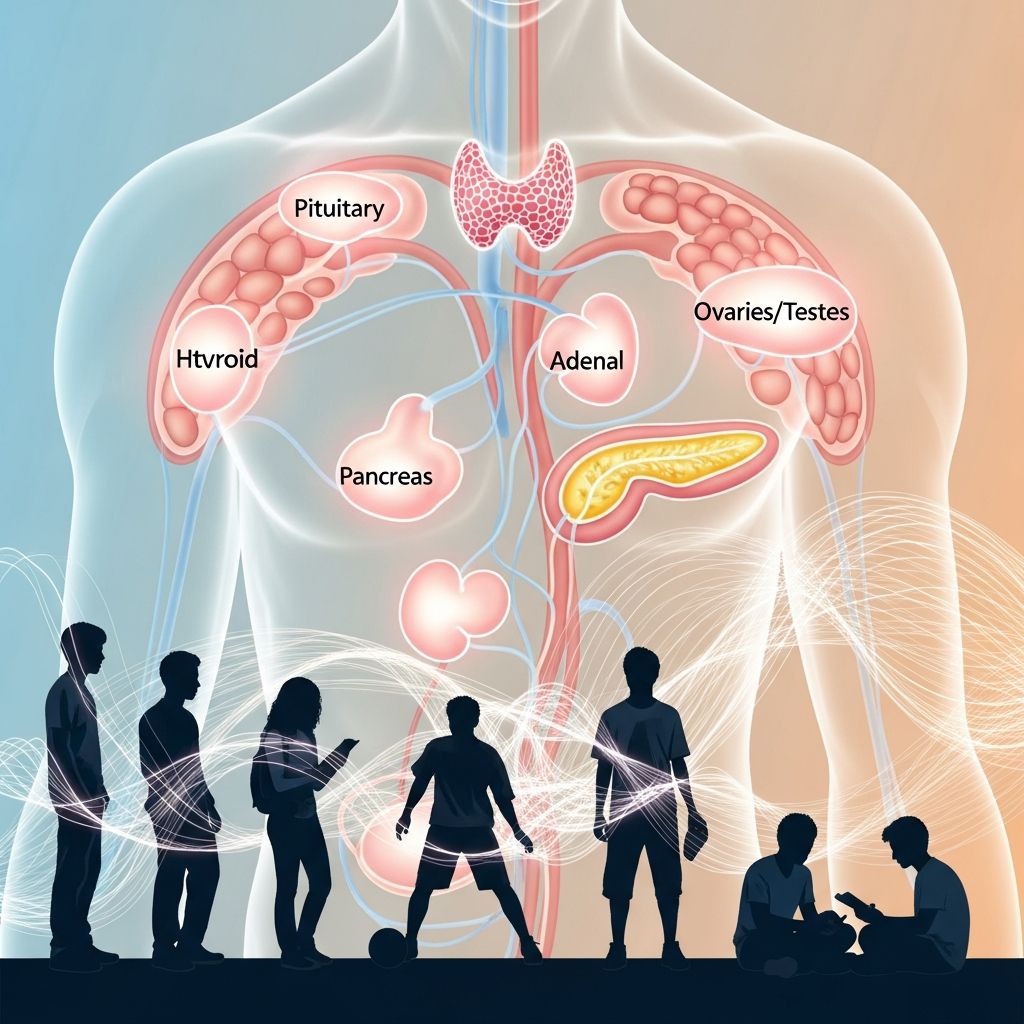
During the teen years, your body seems to have a mind of its own: you grow taller, your shape changes, your moods swing, and your sleep schedule goes wild. All of this is powered by an invisible communication network called the endocrine system, which uses chemical messengers called hormones to coordinate changes all over your body.
Understanding this system can make confusing changes feel a lot less scary and a lot more logical. Think of this as a practical, teen-focused manual for the hormones that are quietly running the show behind the scenes.
What Is the Endocrine System?
The endocrine system is a group of organs called glands that send chemical messages (hormones) into your blood. These messages travel to different parts of your body and tell cells what to do and when to do it. Unlike nerve signals, which are fast and short-lived, hormones act more slowly and can influence your body for hours, days, or even longer.
This system helps control many major processes, including:
- Growth and height changes
- Puberty and sexual development
- Energy levels and metabolism
- Stress and the “fight or flight” response
- Blood sugar balance
- Sleep-wake cycles
- Body temperature and fluid balance
How Hormones Send Messages
Hormones are special chemicals released into your bloodstream by glands. Once released, they circulate until they reach cells that have matching receptors, a bit like a key fitting into a specific lock. When a hormone “key” clicks into its receptor “lock,” it triggers changes inside the cell.
A few important points about how hormones work:
- They travel through blood, so they can affect many organs at once.
- Each hormone usually has specific target cells that recognize it.
- Too much or too little of a hormone can throw off the system and cause symptoms.
The Brain–Hormone Control Center
At the top of this system is a powerful control center in your brain made of two main parts: the hypothalamus and the pituitary gland. Together, they act like the command station, monitoring what is happening in your body and sending instructions to other glands.
| Part | Location | Main Role |
|---|---|---|
| Hypothalamus | Deep inside the brain | Monitors body conditions (like temperature, hunger, and hormone levels) and tells the pituitary what to do. |
| Pituitary gland | Just under the brain | Releases many “master” hormones that control growth and signal other glands (thyroid, adrenal glands, ovaries, testes). |
Think of the hypothalamus as the sensor and planner, and the pituitary as the manager that emails all the departments (other glands) with detailed instructions.
Main Glands You Should Know
Even though you cannot see or feel most glands, they are busy all the time. Here are the major hormone-producing glands and what they do, especially during the teen years.
Thyroid: Your Metabolism Regulator
The thyroid is a butterfly-shaped gland in the front of your neck. It produces hormones that help control how fast your body uses energy, how warm you feel, and how quickly you grow. When thyroid hormone levels are balanced, your energy, weight, and temperature regulation are usually in a healthy range.
- If the thyroid is underactive, people may feel tired, cold, and gain weight easily.
- If it is overactive, people may feel jittery, hot, and lose weight without trying.
Parathyroid Glands: Calcium Keepers
Attached to the back of the thyroid are tiny parathyroid glands. Their main job is to control calcium levels in your blood and bones. Calcium is important for strong bones, healthy teeth, and normal muscle and nerve function.
These glands help decide whether calcium should be stored in bone or released into the blood so that levels stay in a safe range.
Adrenal Glands: Stress and Survival Helpers
You have two adrenal glands sitting on top of your kidneys. They make several hormones that help your body deal with stress, balance salt and water, and support normal blood pressure. They also produce some sex-related hormones that contribute to body hair and other secondary changes.
- In stressful moments, they release hormones that speed up your heart and sharpen your focus.
- They also help your body respond when you are sick or injured.
Pancreas: Blood Sugar Balancer
The pancreas sits behind your stomach and has two jobs: helping digest food and managing blood sugar levels. Its hormone-producing cells release insulin and other hormones that keep sugar in your blood within a healthy range.
- After you eat, insulin helps move sugar from your blood into cells for energy or storage.
- Other hormones act when you have not eaten for a while, helping raise blood sugar so you do not feel weak or shaky.
Ovaries and Testes: Puberty Powerhouses
The ovaries (in males) and testes (in males) are both reproductive glands and major hormone factories. They produce sex hormones that drive the physical and emotional changes of puberty.
- Ovaries produce estrogen and progesterone, which influence breast development, menstrual cycles, and body shape.
- Testes produce testosterone, which supports facial and body hair growth, voice deepening, and muscle development.
Pineal Gland: Sleep–Wake Timer
Deep in your brain, the pineal gland releases melatonin, a hormone that helps regulate your sleep cycle. Levels usually rise in the evening to make you sleepy and fall in the morning so you wake up.
During the teen years, melatonin release tends to shift later, which is one reason many teens feel more awake at night and struggle with early alarms.
Puberty: When Hormones Take Center Stage
Puberty is the period when your body shifts from a child’s body to an adult one capable of reproduction. This process is driven by a slow but powerful increase in hormone activity, especially from the brain, adrenal glands, ovaries, and testes.
While the timeline is different for everyone, puberty usually includes a series of changes that unfold over several years.
How Puberty Starts Inside the Brain
Puberty begins when special brain cells start releasing signals that tell the pituitary gland to wake up the reproductive glands. The pituitary responds by sending hormones through the blood to the ovaries or testes, which then increase production of sex hormones.
- These sex hormones trigger visible changes like body hair, growth spurts, and body shape changes.
- They also affect mood, emotions, and the way you experience attraction and sexuality.
Common Physical Changes in Puberty
The exact pattern differs between individuals, but many teens notice similar shifts as hormone levels rise. These changes do not happen overnight; they build gradually over time.
- Growth in height and changes in body proportions
- Development of breasts in girls and increased muscle mass in boys
- Growth of pubic, underarm, and (in many boys) facial hair
- Changes in skin, including more oil and acne
- Start of menstrual periods in girls and wet dreams or more frequent erections in boys
Hormones, Mood, and Sleep
Hormones do not just reshape your body; they also affect how you feel and how your brain works. Fluctuations in hormone levels can make emotions feel more intense and less predictable.
- You might switch from happy to irritated more quickly than before.
- Stress hormones can make worries feel bigger, especially during school pressure or conflicts.
Sleep is another big area influenced by hormones. The natural delay in melatonin release during adolescence makes many teens night owls, yet school schedules may still demand early mornings. This mismatch can lead to sleep deprivation, which can worsen mood swings and concentration problems.
Typical Hormone-Related Issues in Teens
Most teens go through puberty without major medical problems, but sometimes hormone levels are out of balance. Changes that are extremely early, very late, or unusually intense can signal that something is off and worth checking.
| Area | What You Might Notice | Possible Hormone Link |
|---|---|---|
| Growth | Much shorter or taller than peers; fast or very slow growth | Growth hormone or thyroid imbalance |
| Puberty timing | Puberty starting very early or not starting by mid-teen years | Signals from brain or reproductive glands not typical |
| Energy and weight | Unusual tiredness, weight gain or loss without trying | Thyroid or blood sugar hormones affected |
| Skin and hair | Severe acne, unusual hair growth or hair loss | Androgens (sex-related hormones) out of balance |
| Menstrual cycles | Very irregular or missing periods | Ovary hormones, thyroid, or stress hormones involved |
Not every strange change means something is seriously wrong, but sudden or extreme shifts that worry you are worth discussing with a health professional.
Supporting a Healthy Hormone Balance
You cannot control when puberty starts or exactly how your body will change, but daily habits do influence how smoothly your endocrine system works. Small, consistent choices can support more steady energy, mood, and growth.
Everyday Habits That Help
- Prioritize sleep: Aim for roughly 8–10 hours most nights; a regular schedule helps your body clock.
- Eat balanced meals: Include fruits, vegetables, whole grains, protein, and healthy fats to give your glands the nutrients they need.
- Move your body: Regular physical activity supports bone strength, mood, and blood sugar control.
- Manage stress: Breathing exercises, talking to someone you trust, and hobbies can reduce constant stress hormone surges.
- Avoid smoking, vaping, and drugs: These can interfere with normal hormone function and growth.
When to Ask for Help
It is important to reach out to a trusted adult or health professional if you are worried about your development or symptoms. They can check your growth pattern, ask questions, and sometimes order tests to measure hormone levels.
- Do not ignore persistent symptoms like extreme fatigue, drastic weight changes, or no signs of puberty when most of your peers are changing.
- Medical support can include lifestyle advice, monitoring, or in some cases, medications that help balance hormone levels.
Myths vs. Facts About Hormones
Hormones often get blamed for everything, from bad moods to messy rooms. Some of this is fair, but plenty of what is said about hormones is exaggerated or just wrong. Clearing up myths can make it easier to take your health seriously.
- Myth: Hormones control everything, so behavior does not matter.
Fact: Hormones influence how you feel, but your choices, habits, and coping skills still matter a lot. - Myth: Everyone should hit puberty at the same age.
Fact: There is a wide normal range; being early or late compared with friends does not automatically mean something is wrong. - Myth: Hormone problems are always obvious.
Fact: Some imbalances are subtle and show up slowly over time, which is why regular checkups are useful.
FAQs: Teen Questions About Hormones
1. Why am I so moody all of a sudden?
Rising hormone levels during puberty affect areas of the brain that handle emotions, impulse control, and stress. At the same time, you are facing more school, social, and family pressures, often with less sleep than your body needs. The combination can make emotions feel bigger and harder to manage, even when nothing dramatic has happened.
2. Is it normal that my friends started puberty before me?
Yes. Bodies follow individual timelines influenced by genetics, nutrition, overall health, and other factors. Some teens start noticeable changes earlier, while others develop later, and both can still be healthy. If you are very worried about being much earlier or later than most peers, a health professional can check growth charts and look for reassurance or possible concerns.
3. Can what I eat really affect my hormones?
Food does not usually change the basic timing of puberty, but it does affect how well your endocrine system can do its job. Extremely restrictive diets, frequent meal skipping, or relying on ultra-processed foods can interfere with normal growth, blood sugar balance, and menstrual cycles. A varied, balanced diet supports more stable energy and healthier hormone signaling.
4. Do stress and lack of sleep change my hormones?
Yes. Long-term stress keeps stress hormones higher than normal, which can affect appetite, mood, and even the timing of menstrual periods. Not getting enough sleep disrupts your body clock and can make hormone-related problems, like mood swings and trouble concentrating, feel more intense.
5. How do doctors test for hormone problems?
If a doctor suspects a hormone issue, they may start by asking detailed questions about your growth, puberty signs, energy, sleep, and periods (for girls). They may measure your height and weight over time and order blood tests that check specific hormone levels. Sometimes, imaging tests are used to look at particular glands if needed.
Taking Charge of Your Hormone Health
You cannot see your endocrine system, but you feel its effects every day—from how tall you are becoming to how awake you feel in the morning. Treating your body with care, paying attention to changes, and speaking up when something does not feel right are all ways to respect this powerful, unseen system.
Learning the basics now prepares you to make informed decisions about your health, ask better questions at appointments, and recognize that many of the changes you are going through are not random—they are part of a carefully coordinated hormonal journey into adulthood.