Attention Deficit Hyperactivity Disorder (ADHD) affects approximately 1 in 9 U.S. children and teens aged 3 to 17, with symptoms often persisting and evolving into adolescence. For teenagers, ADHD manifests through challenges like inattention, impulsivity, and restlessness, which can impact school performance, friendships, and self-esteem. This guide provides original, actionable strategies tailored for teens, drawing from established patterns in symptom management to foster independence and confidence.
Recognizing ADHD Patterns in Teenage Years
During adolescence, ADHD symptoms shift from the overt hyperactivity seen in younger children to more subtle issues like fidgeting, daydreaming, and disorganization. Teens may struggle with sustaining attention on tasks, leading to unfinished homework or missed deadlines, while impulsivity can result in interrupting conversations or risky decisions. Common signs include procrastination, difficulty following directions, and trouble reading social cues, which heighten risks such as lower academic achievement, peer conflicts, and even increased chances of substance use or car accidents.
Unlike childhood, where high energy is prominent, teen ADHD often appears as internal restlessness or emotional volatility, compounded by hormonal changes and greater responsibilities. Poor time management and emotional regulation further complicate priorities like assignments and social interactions. Understanding these patterns is the first step toward targeted strategies that promote better outcomes.
Building Laser-Focused Concentration
Enhancing focus is crucial for teens with ADHD, as inattention leads to careless errors and incomplete work. Start by creating a dedicated study zone free from distractions—use noise-cancelling headphones or white noise apps to block external stimuli. Break tasks into 25-minute Pomodoro sessions followed by 5-minute breaks to maintain momentum without burnout.
- Employ visual timers to track intervals and prevent time blindness.
- Prioritize tasks using a daily top-three list, tackling the hardest first when mental energy peaks.
- Incorporate movement breaks, like jumping jacks, to channel restlessness productively.
Body doubling—studying alongside a focused peer via video call—can anchor attention, leveraging social accountability. For reading or lectures, highlight key points or jot margin notes to boost retention and combat mind-wandering.
Organization Hacks for Chaos-Free Days
Disorganization plagues many teens with ADHD, resulting in lost items, missed appointments, and overwhelming clutter. Combat this with color-coded binders for school subjects and digital apps like Todoist for reminders. Designate ‘launch pads’—specific spots for backpacks, keys, and phones—to streamline mornings.
| Challenge | Strategy | Tool Example |
|---|---|---|
| Lost belongings | Daily 5-minute scan routine | Tile trackers |
| Time mismanagement | Backward planning from deadlines | Google Calendar alerts |
| Procrastination | 2-minute rule: Start tiny | Habitica app |
| Clutter buildup | One-touch rule: Handle once | Bins by category |
Weekly reviews—Sunday evenings for planning the week—prevent pile-ups. Hygiene routines benefit from checklists posted in bathrooms, addressing common oversights tied to executive function deficits.
Taming Impulses and Boosting Self-Control
Impulsivity in teens with ADHD heightens risks like unsafe choices or social blunders. Practice the ‘pause and plan’ technique: When urges arise, count to 10 while visualizing consequences. Mindfulness apps offering 5-minute guided breathing build this muscle over time.
- Pre-commit to decisions, like leaving phone in another room during homework.
- Use accountability partners for high-stakes choices, such as driving plans.
- Channel energy into sports or hobbies requiring quick decisions, like martial arts.
For conversations, rehearse active listening: paraphrase what others say before responding to curb interruptions. These habits reduce regret and enhance decision-making as independence grows.
Strengthening Social Connections and Emotional Resilience
Social challenges stem from missing cues, self-focused talk, or rejection sensitivity, leading to isolation. Hone empathy by observing body language in shows or real life, then practicing role-plays. Join clubs aligned with interests—gaming or art—to form bonds naturally.
Emotional swings demand regulation tools like journaling triggers or ‘cool-down corners’ with stress balls. Rejection fears lessen through cognitive reframing: View feedback as growth, not personal failure. Building a support network of understanding friends and mentors fosters belonging.
Academic Triumphs: School-Specific Tactics
School amplifies ADHD hurdles like unfinished assignments and disorganization. Advocate for accommodations—extra time or quiet testing—via 504 plans. Note-taking improves with voice recorders or apps transcribing lectures.
- Turn assignments into quests with rewards, gamifying completion.
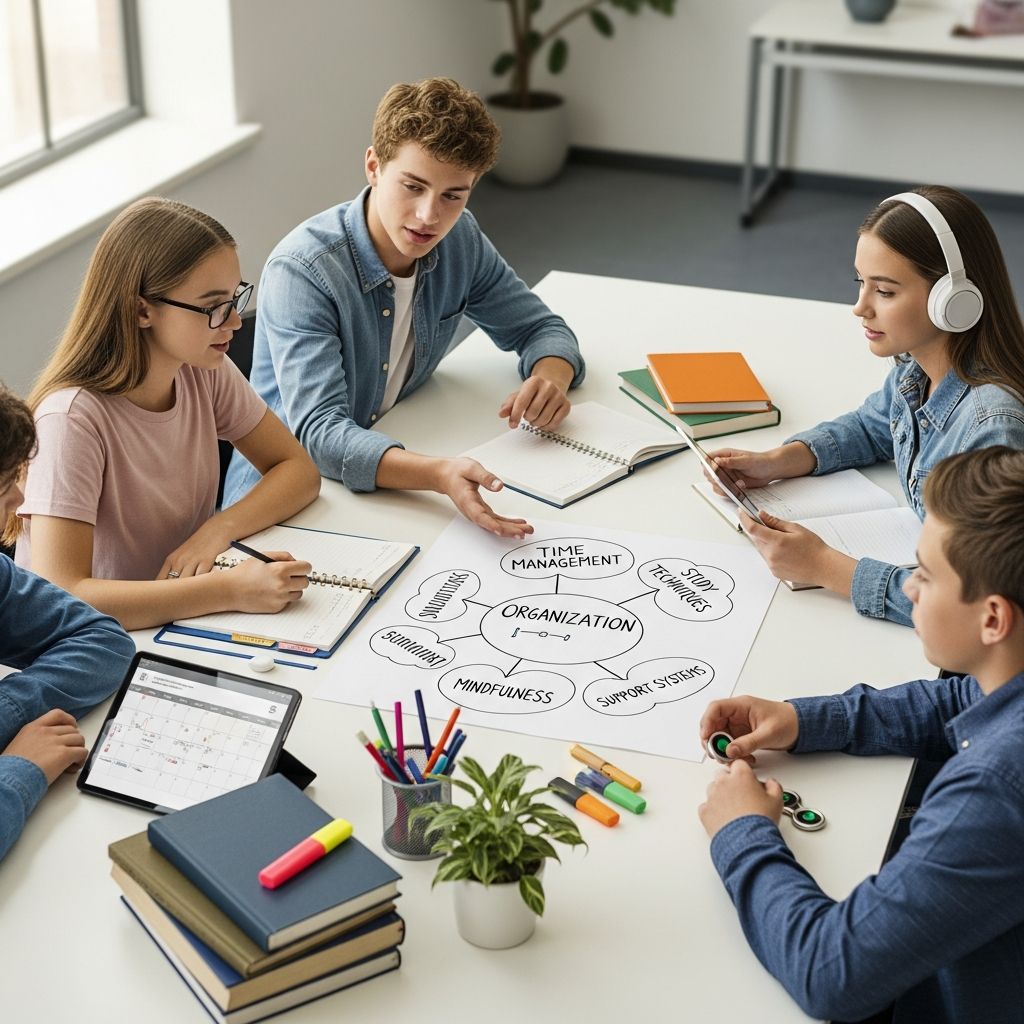
- Study groups for mutual body doubling and explanation reinforcement.
- Teacher check-ins weekly to align on progress.
Long-term projects succeed with milestone calendars, breaking them into weekly chunks. These approaches counter poor performance risks tied to inattention.
Healthy Routines for Body and Mind
Physical health underpins ADHD management. Aim for 60 minutes daily exercise—running or yoga—to release dopamine and curb fidgeting. Sleep hygiene is vital: Consistent 9-11 hour schedules, no screens pre-bed, combat insomnia common in ADHD.
Nutrition matters—omega-3 rich foods like salmon aid focus; limit sugar crashes. Morning routines blending hygiene, breakfast, and planning set positive tones, tackling forgetfulness.
Leveraging Support Systems and Professional Help
Teens thrive with tailored interventions like cognitive behavioral therapy (CBT) for executive skills or medication under medical guidance. Open family dialogues normalize struggles; parental modeling of organization inspires. School counselors offer resources, while online teen ADHD communities provide peer wisdom—cautiously.
Self-advocacy empowers: Practice explaining needs to teachers. Tracking progress in journals reveals wins, boosting self-esteem amid comorbidity risks like anxiety.
Frequently Asked Questions (FAQs)
What if I suspect I have ADHD as a teen?
Track symptoms for two weeks and discuss with a parent or doctor. Professional evaluation via rating scales confirms diagnosis.
Do ADHD meds work for teens?
Stimulants help 70-80% manage symptoms, but combine with therapy for best results. Consult physicians for personalized plans.
Can exercise really help my focus?
Yes, aerobic activity increases brain-derived neurotrophic factor, enhancing attention and mood.
How do I explain ADHD to friends?
Use simple analogies: ‘My brain is like a Ferrari with weak brakes—fast ideas, hard to stop.’
Will I outgrow ADHD?
Symptoms often persist but manageable with strategies; many adults succeed post-diagnosis.
Long-Term Outlook: Thriving Beyond Teens
With consistent strategies, teens with ADHD develop resilience, turning challenges into strengths like creativity and hyperfocus. Regular check-ins evolve tactics as life phases shift—from college to careers—ensuring sustained success.
References
- What Are the Symptoms of ADHD in Teenagers? — Healthline. 2023. https://www.healthline.com/health/adhd/adhd-symptoms-in-teens
- ADHD across the lifespan: What it looks like in children and teens — MedlinePlus Magazine. 2023-10-01. https://magazine.medlineplus.gov/article/adhd-across-the-lifespan-what-it-looks-like-in-children-and-teens
- ADHD symptoms in teens and children — Clinical Partners. 2024. https://www.clinical-partners.co.uk/child-adolescents/child-teen-adhd/adhd-symptoms
- ADHD in Boys: Symptoms at Different Ages — Bloomington Meadows. 2023. https://bloomingtonmeadows.com/blog/adhd-in-boys-symptoms-at-different-ages/
- Attention-Deficit/Hyperactivity Disorder: What You Need to Know — National Institute of Mental Health (NIMH). 2023-08-08. https://www.nimh.nih.gov/health/publications/attention-deficit-hyperactivity-disorder-what-you-need-to-know