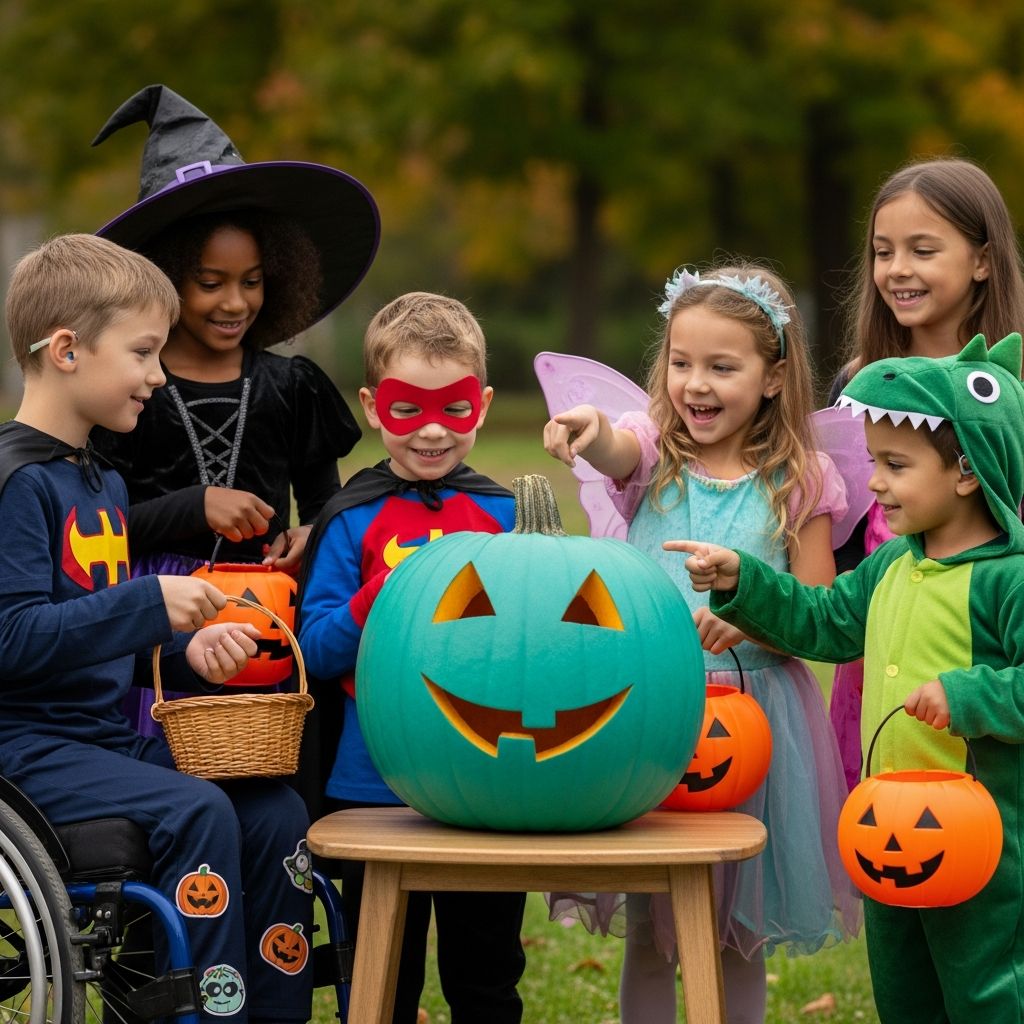
The **Teal Pumpkin Project** is a community-driven initiative that reimagines Halloween as a safe and enjoyable holiday for every child, particularly those with food allergies, intolerances, or special dietary needs. Launched to address the challenges faced by millions of families, it encourages households to offer non-food treats alongside traditional candy, signaled by a distinctive teal pumpkin display.
Understanding the Need for Allergy-Aware Celebrations
Halloween’s iconic candy bowls pose significant risks for children with food allergies. In the United States, approximately one in 13 children—equating to about two per classroom—lives with a food allergy, making cross-contamination and unknown ingredients a constant concern during trick-or-treating. Conditions like celiac disease, food intolerances, and special diets further complicate participation, often leaving kids feeling excluded from the festivities.
This exclusion turns a night of fun into one of anxiety for parents, who must scrutinize every treat or skip houses altogether. The Teal Pumpkin Project counters this by promoting **inclusion and safety**, allowing all children to collect goodies without fear. It fosters respect for diverse health needs while preserving Halloween’s spirit.
Origins and Evolution of the Movement
The idea sparked in 2012 when Becky Basalone, director of a Tennessee food allergy support group, suggested painting pumpkins teal—the international color for food allergy awareness—and distributing non-food items instead of candy. This grassroots effort quickly gained traction and was formally adopted by Food Allergy Research & Education (FARE), transforming into a nationwide and global campaign.
Today, the project boasts thousands of participating homes mapped online, with partnerships from organizations like the Celiac Disease Foundation and retailers such as CVS. Annual events, including the innovative Teal Pumpkin Walk-In to elected officials’ offices, amplify advocacy for allergy awareness. Over a decade, it has evolved from a local idea to a movement impacting over 40 million annual trick-or-treaters.
Simple Steps to Participate and Make a Difference
Joining the Teal Pumpkin Project requires minimal effort but yields maximum impact. Follow these straightforward guidelines to become an allergy-friendly stop:
- Display a Teal Signal: Paint a real pumpkin teal, purchase one from a store, or print a free sign from FARE’s website to place on your porch, door, or window.
- Stock Non-Food Treats: Prepare a separate bowl of safe alternatives like toys, stickers, or glow items. If offering candy too, use distinct containers to prevent mix-ups.
- Register on the Map: Add your address to FARE’s interactive online map, helping families plan routes to welcoming homes.
- Spread the Word: Share flyers with neighbors and promote via social media to build community-wide participation.
These actions not only safeguard allergic children but also delight those preferring non-edible prizes, enhancing the holiday for everyone.
Creative Non-Food Treat Ideas for Trick-or-Treaters
Non-food treats spark joy without health risks. Affordable and easy to source from dollar stores, pharmacies, or online, they cater to all ages. Here’s a curated table of popular options, categorized by type:
| Category | Examples | Why Kids Love Them |
|---|---|---|
| Glow & Light-Up | Glow sticks, glow pendants, mini flashlights | Adds spooky magic to costumes at night |
| Toys & Trinkets | Bouncy balls, squeeze monsters, small puzzles, slinkies | Interactive fun that lasts beyond Halloween |
| Art & Stationery | Mini notebooks, crayons, markers, stickers, temporary tattoos | Fuels creativity and personalization |
| Accessories | Bracelets, rings, hair clips, mini yo-yos | Quick costume enhancements |
| Play Items | Bubbles, pinwheels, spider rings, play-doh minis | Instant sensory delight |
Budget tip: Buy in bulk for under $0.50 per item. Themes like Halloween motifs (e.g., ghost stickers or pumpkin slinkies) tie into the season.
Community Impact and Real-World Stories
The project’s reach extends beyond individual homes. FARE’s map connects families, turning neighborhoods into inclusive zones. In 2025, initiatives like the Teal Pumpkin Walk-In brought costumed children to policymakers, advocating for broader allergy support.
Personal accounts highlight its power: One family launched a nonprofit inspired by their daughter’s needs, distributing thousands of safe treats. Parents report reduced stress and fuller candy bags for allergic kids, who finally feel included. Statistics show participation growing yearly, with corporate partners amplifying distribution.
Beyond allergies, it benefits children with diabetes, braces, or those on restricted diets, proving Halloween’s traditions can evolve inclusively.
Health Facts: Why Food Allergies Demand Action on Halloween
Food allergies affect nearly 6 million U.S. children, with peanuts, tree nuts, milk, eggs, and wheat among top triggers in candies. Anaphylaxis risks from cross-contamination are real, prompting epinephrine readiness. The Teal Pumpkin Project mitigates this by eliminating uncertainty, aligning with public health recommendations for allergy management.
For celiac families, gluten-free verification is impractical mid-trick-or-treat, making non-food options essential. This initiative underscores community responsibility in preventing emergencies.
Overcoming Common Challenges and Myths
Myth: It ruins Halloween tradition. Fact: Non-food treats complement candy; separate bowls preserve choice.
Challenge: Cost. Solution: Items are cheaper than premium candy and reusable across events.
Myth: Only for severe allergies. Fact: It supports all dietary restrictions, promoting universal fun.
Preparation starts early: Stock up in September to avoid shortages.
Frequently Asked Questions (FAQs)
What exactly is the Teal Pumpkin Project?
A FARE-led campaign where households display teal pumpkins to offer non-food treats, making Halloween safer for kids with allergies or special diets.
Do I have to skip candy entirely?
No—offer both in separate bowls to accommodate all trick-or-treaters.
Where can I find free resources?
Download signs and flyers from foodallergy.org/tealpumpkinproject.
How do families find participating homes?
Use FARE’s interactive map by entering their zip code.
Is it just for food allergies?
No, it includes celiac disease, intolerances, and any child avoiding food treats.
Can businesses or schools join?
Yes—register events on the map for community trick-or-treating.
Getting Your Neighborhood on Board
Host a block party to distribute info packets, or create a local Facebook group. Schools can incorporate education into curricula, with PTA-led drives for bulk treats. Success stories from cities like Austin show full neighborhood adoption boosting participation.
Measure impact by tracking map registrations and surveying families post-Halloween.
Future of Inclusive Holidays
As awareness grows, the Teal Pumpkin Project inspires similar efforts for other holidays. Advocacy pushes for allergy labeling improvements and school policies. By 2026, expect expanded corporate involvement and tech integrations like app-based mapping[10].
Ultimately, it reminds us: Holidays thrive on shared joy, not just sweets.
References
- The Teal Pumpkin Project: Guide to an Inclusive Halloween — Austin Moms. 2024-10-28. https://austinmoms.com/2024/10/28/teal-pumpkin-project-examples-of-great-non-food-options/
- Halloween & Food Allergy Inclusiveness — Thermo Fisher Scientific. N/A. https://www.thermofisher.com/allergy/us/en/living-with-allergies/food-allergies/halloween-food-allergies-and-teal-pumpkin-project.html
- Teal Pumpkin Project: Allergy-Friendly Halloween — National Peanut Board. N/A. https://nationalpeanutboard.org/news/give-your-pumpkin-teal-partner-for-food-allergy-friendly-halloween/
- Teal Pumpkin Project: What to Know this Halloween — CVS Health. N/A. https://www.cvs.com/learn/health/allergy/teal-pumpkin-project
- About the Teal Pumpkin Project — Food Allergy Research & Education (FARE). N/A. https://www.foodallergy.org/resources/about-teal-pumpkin-project