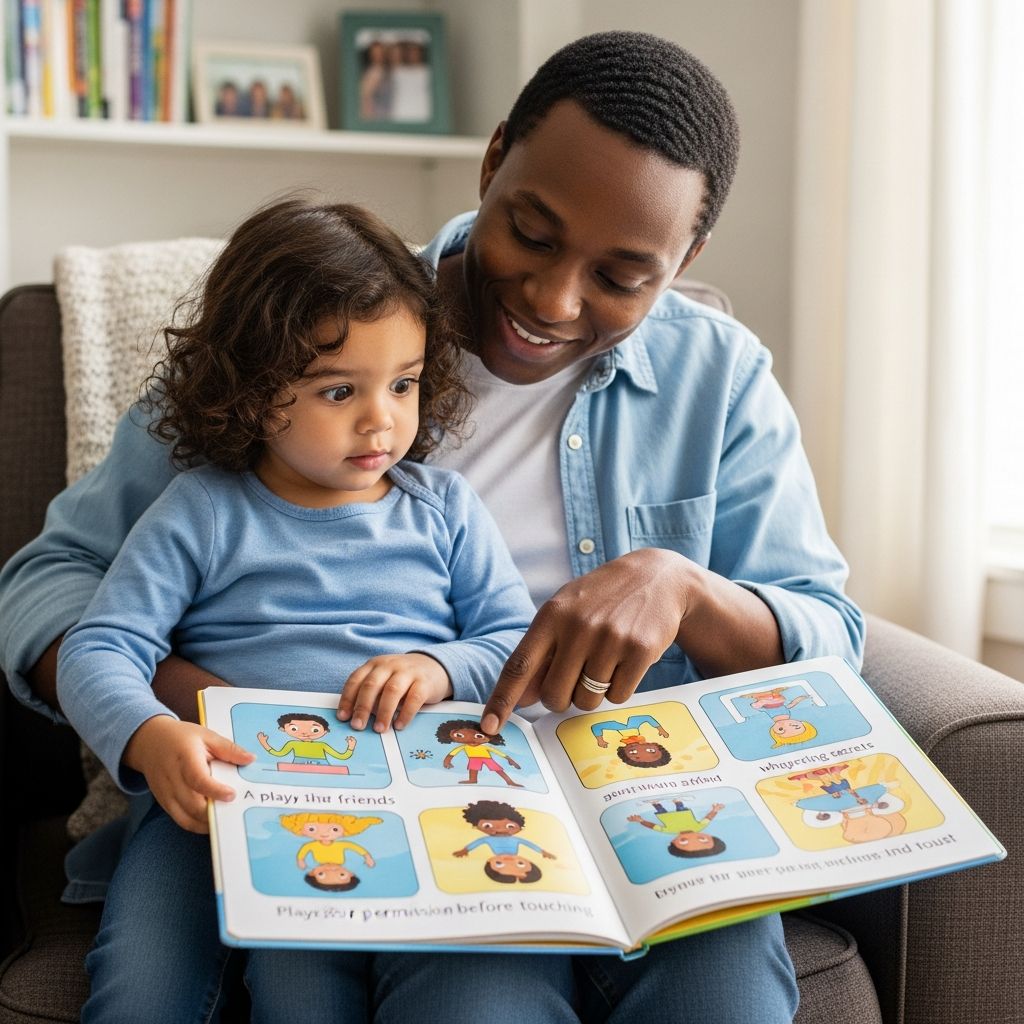
Talking with toddlers about secrets and safety can feel intimidating, but it does not have to be scary or complicated. With simple language, clear family rules, and a few well-chosen stories, you can help your child understand their body, feelings, and boundaries in a way that keeps them safer while strengthening your relationship.
Why Secrets Matter More Than You Think
For many adults, the word secret seems harmless—associated with birthday presents, surprise parties, or silly jokes between friends. For young children, though, secrets can become confusing. They may not yet understand the difference between playful surprises and harmful secrecy, and this confusion is exactly what unsafe adults sometimes exploit.
Teaching your child about secrets is not about making them suspicious of everyone. It is about making sure that no one can convince them to hide something that makes them uncomfortable, scared, or unsafe. When children know that certain secrets are never allowed, they have a powerful tool for self-protection.
Secrets, Surprises, and Privacy: Explaining the Differences
Toddlers learn best when ideas are concrete and repeated often. Instead of using the word “secret” loosely, break it down into three categories your child can understand: surprises, secrets, and privacy.
Safe Surprises
A surprise is something happy that will be shared soon, like a birthday gift or a special visit. Surprises are temporary and are meant to make someone feel loved or excited. You can say things like:
- “We are keeping this present a surprise for Grandma until her birthday.”
- “Surprises are short and they make people feel happy.”
Unsafe Secrets
An unsafe secret is something someone tells your child to hide forever, especially if it makes them feel scared, confused, sad, or yucky inside. These secrets are never okay. Clarify this with simple rules:
- “We do not keep secrets in our family.”
- “If someone says ‘Don’t tell,’ you can always tell a grown-up you trust.”
Healthy Privacy
Privacy is different from secrets. Privacy is about respecting bodies and personal space. You might say:
- “Your body belongs to you. You can close the door when you use the bathroom.”
- “We knock before entering someone’s room because we respect their privacy.”
| Type | Example | How It Feels | Family Rule |
|---|---|---|---|
| Surprise | Hiding a birthday card for Dad until the party | Happy, excited, a little silly | OK to keep for a short time |
| Unsafe secret | Someone says, “Don’t tell your parents we did this” | Scared, confused, yucky, worried | Tell a trusted adult right away |
| Privacy | Closing the bathroom door, changing clothes | Safe, comfortable, respected | Always allowed; others should respect it |
Building a Family Culture of Openness
Conversations about safety work best when they are part of your everyday family culture, not a one-time “big talk.” The goal is to make it crystal clear that your home is a safe place to share anything—big, small, silly, or serious.
Simple Family Rules About Secrets
Create a short list of family rules you repeat often, especially during everyday moments like bath time, bedtime, or getting dressed. For example:
- “We do not keep secrets from each other.”
- “We can always tell a grown-up we trust if something feels wrong.”
- “No one is ever allowed to ask you to keep something about your body a secret.”
- “Even if you think you might get in trouble, you can still tell us.”
These rules send a powerful message: connection and safety always matter more than embarrassment or “getting in trouble.” Your child learns that nothing they tell you will make you turn away from them.
Introducing Body Boundaries Without Fear
Talking about bodies and safety with toddlers does not need to be graphic or frightening. You can keep the language simple, calm, and matter-of-fact. The key is consistency, not intensity.
Using Correct Body Terms
When you use accurate names for body parts, you help your child understand that their whole body is important and not something to be whispered about in shame. It also helps them communicate clearly if they ever need to tell you something is wrong.
- Use proper names for all body parts during bath time, diaper changes, or getting dressed.
- Keep your tone neutral, as if you are naming elbows or knees.
- Avoid nicknames that might confuse a child later if they need to explain something to another adult.
Teaching the “Ownership” Rule
One of the simplest and strongest messages you can give is: “Your body belongs to you.” Here are a few ways to reinforce this:
- Ask for permission before hugs or tickles: “Can I give you a hug?”
- Respect no: If your child says “no,” step back and say, “Thank you for telling me. I will stop.”
- Model consent with others: “I’d like a hug. Is that okay with you?”
When adults honor a toddler’s boundaries in everyday life, the child learns that their “no” matters—and is more likely to speak up if something ever feels wrong.
Story Time as a Safety Tool
Picture books and board books are powerful ways to start conversations about emotions, bodies, and boundaries. With toddlers, stories help translate big ideas into characters and situations they can grasp, without overwhelming them.
What to Look For in Books
When choosing books that touch on secrets, privacy, or body safety, consider:
- Age-appropriate language: Short sentences, clear pictures, and no graphic content.
- Empowering messages: The child character is listened to, believed, and supported.
- Emotional focus: The story highlights feelings—confusion, worry, relief—so your child can learn to name their own.
- Gentle tone: The book should feel reassuring, not terrifying.
How to Read and Talk About It
With toddlers, the way you read matters as much as what you read. Turn story time into a conversation, not a lecture. As you read, pause to ask:
- “How does this character feel right now?”
- “What could they do if something feels wrong?”
- “Who could they talk to?”
After the story, connect it back to your family rules: “Remember, just like in the story, you can always tell me anything. There is no secret too big or too small for us to talk about.”
Everyday Moments to Practice Safety Skills
Toddlers learn through repetition, play, and routines. You do not need special lessons or huge blocks of time; you can weave safety skills into activities you are already doing.
Bath Time and Getting Dressed
- Use these moments to name body parts calmly and clearly.
- Reinforce who is allowed to help with private areas (for example: parents, doctors with a parent present).
- Remind your child: “If anyone touches you in a way that feels yucky or asks you to keep it a secret, you can always tell me.”
Playtime and Pretend
- Use dolls or stuffed animals to act out scenarios: a character telling a grown-up about something that made them uncomfortable.
- Practice saying phrases like “Stop,” “No,” and “I’m telling my mom/dad” in a confident voice.
- Role-play silly “secrets” versus serious ones so your child can practice telling when something doesn’t feel right.
Helping Your Child Trust Their Feelings
Children are often taught to be polite, to comply, and to avoid “making a fuss.” While kindness is important, it should never come at the cost of ignoring their own discomfort or fear. Teaching your toddler that their feelings matter is a key part of keeping them safe.
Normalizing All Feelings
When your child cries, clings, or resists, it can be tempting to say, “You’re fine.” Instead, help them name and trust what they are experiencing:
- “You look worried. Do you feel nervous?”
- “It seems like your tummy feels tight. That can happen when something feels wrong.”
- “Thank you for telling me you feel scared. I am glad you told me.”
Over time, this kind of validation teaches your child that their internal alarm system is valuable and that adults will listen when it goes off.
Balancing Politeness and Safety
It is okay to teach children to say “no thank you” and still be respectful. You can practice scenarios like:
- “What could you say if you do not want a hug?” – “No thank you” or “I’d like a high-five instead.”
- “What could you do if a game makes you feel yucky?” – “Stop, I don’t like that. I’m going to play somewhere else.”
This balance helps them maintain kindness while still asserting their boundaries strongly and clearly.
What to Say If Your Child Shares Something Worrying
One of the hardest moments for any parent is hearing that something has happened that should not have. Your reaction in those first few seconds can shape whether your child feels safe coming to you again in the future.
First Responses to Practice
Even if you feel panicked, angry, or shocked, aim for calm, steady words. A few phrases to keep in mind:
- “Thank you for telling me. You did the right thing.”
- “I believe you.”
- “This is not your fault.”
- “My job is to keep you safe, and I am going to help.”
Your tone and body language matter as much as the words. Get down to your child’s level, make gentle eye contact if they are comfortable with it, and avoid asking “why” questions that might feel like blame. Focus on safety, comfort, and clear steps: “Right now we are going to sit together and then I will talk to another grown-up who can help us.”
Common Myths That Hold Parents Back
Many caregivers hesitate to talk about secrets, bodies, or safety with toddlers because of misunderstandings about what these conversations mean. Busting a few myths can make it easier to begin.
Myth 1: “Talking about this will scare my child.”
Reality: When done calmly and simply, these conversations often make children feel safer, not more afraid. You are giving them clear rules and a sense of control. They learn that there are trustworthy adults who will help them if something feels wrong.
Myth 2: “They are too young to understand.”
Reality: Toddlers may not grasp all the details, but they can understand basic ideas like “Your body is yours,” “We do not keep secrets,” and “You can always tell me anything.” Repetition over time, through books, play, and conversations, deepens their understanding as they grow.
Myth 3: “If something bad were happening, my child would tell me.”
Reality: Children often stay silent when they are scared, confused, or worried about getting in trouble. That is why clear, repeated messages about secrets, body safety, and unconditional support are crucial. Your child needs to hear again and again that you want them to share everything, even if they think it might upset you.
Practical Phrases You Can Use Today
To make these ideas easy to remember, here is a set of short phrases you can sprinkle into daily life. Adapt the wording to your family’s style, but keep the message the same.
- “There is nothing you can tell me that will make me stop loving you.”
- “We do not keep secrets in our family, but we can have happy surprises.”
- “Your body belongs to you. You can say yes or no to hugs and kisses.”
- “If someone ever makes you feel yucky or confused, you can always tell me, even if they say ‘Don’t tell.’”
- “If you are not sure whether something is a secret or a surprise, let’s talk about it together.”
FAQs About Teaching Toddlers About Secrets and Safety
At what age should I start talking about secrets and body safety?
You can start as soon as your child is using words and understanding simple instructions—often around two or three years old. At this age, keep explanations short and repeat them often through routines and story time. The goal is not a single, intense conversation, but many gentle reminders over months and years.
Won’t talking about “unsafe touch” put scary ideas in my child’s head?
When conversations stay focused on rules and safety rather than graphic details, they do not usually increase fear. Instead, they give children language and permission to speak up about things that already confuse or bother them. In other words, you are not introducing danger—you are introducing tools for dealing with it.
What if another adult in the family thinks this is unnecessary?
It can help to explain that the goal is not to alarm children or accuse anyone, but to equip them. Share that these conversations are like teaching kids to look both ways before crossing the street: they prepare children to handle the world, not fear it. Invite other adults to join you in using the same simple family rules so your child gets a consistent message.
How often should I bring this up?
Short, frequent reminders work best. Mention body ownership during bath time, talk about surprises versus secrets when planning a celebration, and revisit your family rules whenever you read a related story. You are building a long-term foundation, not cramming for a test.
What if my child laughs or seems uninterested?
This is completely normal for toddlers. Their attention spans are short and their sense of humor is big. Keep your tone light but clear, and do not worry if a particular conversation seems to “bounce off.” The repetition over months and years is what will stick, even if individual moments do not look serious.
Creating a Safer, More Connected Childhood
Teaching toddlers about secrets, surprises, and body safety is really about something much bigger: building a relationship where your child knows, deep in their bones, that they can always come to you. You are not just protecting them from specific dangers; you are shaping how they see their own worth, voice, and boundaries.
With simple phrases, everyday routines, and a few thoughtfully chosen stories, you can give your child the lifelong gift of knowing that their feelings matter, their body is their own, and there will always be a trusted grown-up ready to listen when something does not feel right.