Manners are not just about saying “please” and “thank you.” They are everyday habits that help children move through the world with kindness, respect, and confidence. When manners are taught through pressure, lectures, or shame, many kids resist. When they are woven into play, children naturally want to practice them again and again.
Imaginative role play is one of the most powerful, gentle ways to teach manners because it matches how children are wired to learn: through stories, imitation, repetition, and fun. This article shows how to turn pretend play into a practical, emotionally intelligent tool for raising considerate kids.
Why Role Play Works Better Than Nagging
Many parents rely on constant reminders: “Say thank you,” “Use your inside voice,” “Don’t interrupt.” Over time, both adults and children feel frustrated, and manners become a battle instead of a skill. Role play changes the tone. Instead of correcting in the heat of the moment, you and your child practice calmly when no one is upset.
In role play, children can rehearse new behaviors safely. They get to try out different responses, see how others might feel, and receive coaching without the embarrassment that comes from being corrected in public. It is similar to athletes running drills or actors rehearsing scripts before stepping onto a real stage.
- Kids learn best when their bodies, emotions, and imaginations are involved.
- Play lowers defensiveness, so children are more open to guidance.
- Rehearsal in pretend situations makes polite behavior easier to use in real life.
Foundations: Respectful Teaching of Manners
Before jumping into specific games, it helps to clarify the mindset behind respectful manners teaching. The goal is not to raise children who obey blindly or perform politeness to avoid punishment. The deeper goal is to nurture empathy, self-respect, and an understanding of how actions affect others.
When adults teach manners in a way that honors a child’s feelings and autonomy, children are more likely to internalize those values. Rather than memorizing rules, they begin to think: “My words can make someone feel welcome or hurt” or “Listening shows that I care.”
- Focus on connection first; correction is more effective when kids feel safe and loved.
- Model the same manners you want your child to learn.
- Avoid humiliation, mockery, or comparing your child to others.
Key Manners to Practice Through Play
Almost any social skill can be turned into a role play scenario. To get started, choose a few manners that are currently challenging for your child or especially important in your family culture.
| Manner | Everyday Situation | Possible Role Play Theme |
|---|---|---|
| Using polite words (please, thank you, excuse me) | Asking for snacks, toys, or help | Magic words at the castle kitchen |
| Taking turns and sharing | Playing with siblings or friends | Toy shop with limited supplies |
| Greeting people kindly | Meeting neighbors, relatives, teachers | Friendly space explorers meeting aliens |
| Listening and not interrupting | Adults talking, phone calls, group conversations | Radio station where only one person speaks at a time |
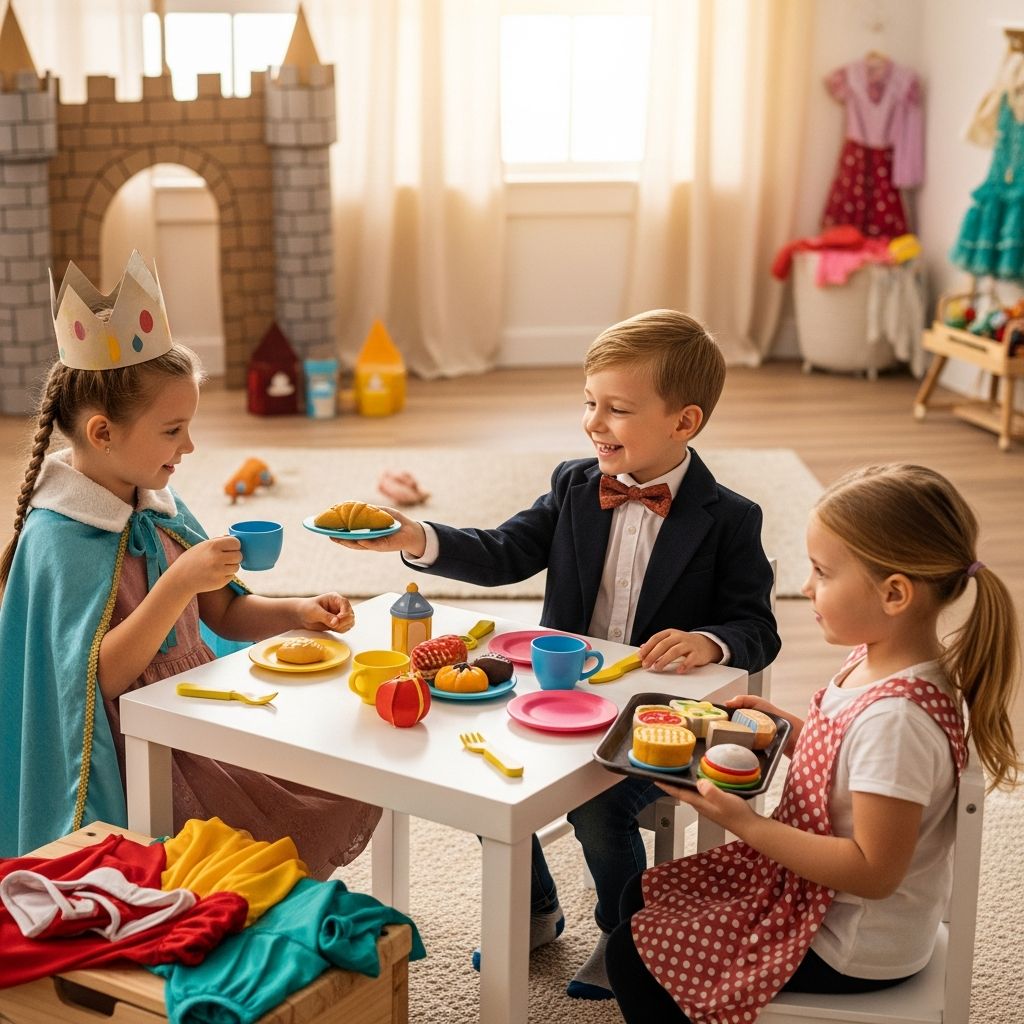
| Table manners | Family meals, restaurants, parties | Royal banquet with visiting guests |
Start with just one or two manners so your child can experience success. As they become more confident, you can expand to more complex social skills such as apologizing, handling disagreements, and noticing other people’s needs.
Step-by-Step: How to Set Up a Role Play Session
Even a five-minute role play can make a difference if it is done consistently and respectfully. Think of it as a short, playful practice session rather than a serious lesson.
- Pick one focus. Choose a single skill for that session, such as saying “thank you” when someone helps, or waiting a turn to speak.
- Invite, don’t demand. Say something like, “Want to play a restaurant game?” or “Let’s pretend we’re guests at a royal party.”
- Set a simple scene. Use whatever you have: stuffed animals, toy food, a blanket as a picnic, or just your imagination.
- Explain the challenge lightly. Briefly describe the situation and the manner you will practice, in age-appropriate language.
- Act it out together. Take turns playing different roles so your child experiences both sides of the interaction.
- Pause and coach. If your child forgets the manner, stop and try again, offering gentle prompts rather than criticism.
- End with warmth. Finish on a positive note, maybe with a silly twist or a hug, and acknowledge their effort.
Designing Engaging Scenarios Kids Love
The more imaginative the scenario, the more eagerly children participate. You do not have to be theatrical or dramatic. Simply weaving manners into familiar play themes makes a big difference.
Here are some themes that work well for many ages:
- Restaurant or café. Practice ordering food politely, saying thank you to the server, waiting for food without demanding, and using table manners.
- Birthday party. Rehearse how to greet guests, accept gifts graciously, wait for cake, and include others in games.
- Toy store or library. Practice asking for what you want, waiting your turn, returning items, and responding when told “not today.”
- Doctor’s office or classroom. Practice listening when it is someone else’s turn, following instructions, and using a calm voice.
- Fantastic adventures. Knights, astronauts, explorers, superheroes, or animal families can all demonstrate kindness, patience, and respectful speech.
Sample Scripts for Common Manners
Below are short example scripts you can adapt. Do not worry about using exact words. The goal is to give your child a clear pattern they can imitate and gradually make their own.
Asking Politely
Scenario: Your child wants another helping of snack.
- You: “Let’s pretend this is the snack shop. You really want more crackers. How could you ask in a kind way?”
- Child (first attempt): “I want more.”
- You: “That’s one way. In our snack shop, we use extra-friendly words. Maybe: ‘May I have more crackers, please?’ Want to try that?”
After practicing, switch roles so your child plays the adult and you play the child asking politely or rudely. Children often enjoy correcting the grown-up, which reinforces learning without shame.
Responding When Told “No”
Scenario: You visit a pretend toy store, but some toys are off-limits.
- You: “I’m the shopkeeper. This toy is not for sale today. How might your character respond?”
- Child (possibly upset): “But I want it!”
- You: “Your character really wants it. Could they also say something like, ‘Okay, maybe next time’ or ‘That makes me sad, but I understand’?”
This kind of practice helps children handle disappointment and develop respectful responses even when they feel frustrated.
Waiting Without Interrupting
Scenario: You pretend to be on an important phone call while your child needs your attention.
- You: “In this game, if you need me while I’m talking, you can gently put your hand on my arm. That tells me, ‘I have something to say.’ I’ll put my hand on yours to show I heard you, and as soon as I can, I’ll talk to you.”
- Practice with very short “calls” at first, then gradually lengthen them as your child succeeds.
Turning Mistakes Into Learning Moments
Even with a lot of playful practice, children will forget their manners. They may shout, grab, interrupt, or complain. Instead of seeing these moments as proof that role play “doesn’t work,” treat them as important information about where your child needs more support.
In the moment, keep corrections brief and kind: “Try that again with your respectful voice,” or “Let’s take a breath and start over.” Later, when things are calm, you can create a playful scenario that mirrors what happened and let your child experiment with different choices.
- Avoid long lectures. Short reminders are easier for children to absorb.
- Use humor when appropriate to reduce tension and keep your child engaged.
- Notice small improvements and name them specifically: “You waited a long time before speaking; that was thoughtful.”
Adapting Role Play by Age
Role play looks different with a preschooler than with a preteen. Adjust your approach to your child’s developmental stage and personality so the practice feels natural, not forced.
Toddlers and Preschoolers
- Keep sessions very short—often two to five minutes is enough.
- Rely heavily on toys, puppets, or stuffed animals to act out manners.
- Repeat the same simple scenario many times across days or weeks.
Early Elementary Children
- Invite them to help design the story, characters, and rules of the game.
- Introduce slightly more complex manners, such as including others or apologizing.
- Use checklists or stickers to track which skills have been “unlocked” through play.
Older Children
- Shift toward more realistic social situations: group projects, text messages, or visits with relatives.
- Ask them what situations feel awkward or difficult and co-create role plays around those.
- Invite them to coach younger siblings or even you, which reinforces their understanding.
Common Challenges and Gentle Solutions
It is normal to encounter some resistance or confusion when you introduce role play. Below are typical hurdles and ways to handle them kindly.
| Challenge | What Might Be Happening | Helpful Response |
|---|---|---|
| Child refuses to play | Feels self-conscious or senses it is a “hidden lesson” | Make the play sillier, shorter, and more child-led; drop it and try again another day |
| Child overacts with rudeness | Using the game to release pent-up feelings | Allow a bit of wildness, then gently guide toward alternative responses |
| Child performs well in play but not in real life | Still building the bridge from rehearsal to real situations | Give it time, keep practicing, and celebrate small real-world successes |
| Parent feels silly or awkward | Not used to being playful in a structured way | Start with simple games; remember your child cares more about connection than perfect acting |
Building a Family Culture of Kindness
Role play is most effective when it is part of a broader family culture that values kindness, curiosity, and repair. Children watch the way adults speak to service workers, talk about neighbors, and handle disagreements at home.
When you apologize, show gratitude, or admit a mistake, you model the very manners you are asking your child to learn. Role play then becomes one more tool, alongside real-life example and gentle guidance, that reinforces your family’s values.
- Use “we” language: “In our family, we try to speak kindly, even when we are upset.”
- Make appreciation a daily habit, such as sharing one thing you are grateful for at dinner.
- Normalize imperfection: everyone forgets manners sometimes, and everyone can try again.
Frequently Asked Questions
How often should we do role play for manners?
Consistency matters more than length. Two or three short sessions a week can be very effective, especially if they stay light and fun. Some families naturally weave role play into daily routines, such as pretending to run a restaurant at dinner once a week.
What if my child knows the right words in play but refuses in public?
This usually means the child still feels shy, overwhelmed, or resistant in real situations. Keep practicing in private, and avoid putting them on the spot by demanding a public performance. Quietly model the behavior yourself and praise any small step in the right direction.
Isn’t this just teaching kids to “act polite” instead of really caring?
At first, yes, children may imitate polite behavior before fully understanding the feelings behind it. Over time, the combination of role play, real-life experience, and conversations about emotions helps them connect actions with impact. The goal is not fake niceness but genuine consideration that grows as they mature.
Can I use role play to address serious rudeness or defiance?
Role play can support deeper behavior change, but only if the relationship feels safe. If a child is consistently defiant or extremely rude, they may be overwhelmed by stress, unmet needs, or big emotions. In such cases, focus first on connection, calming strategies, and understanding what is driving the behavior, then introduce role play gently.
What if I do not feel creative enough to invent scenarios?
You do not need elaborate props or storylines. Simply look at the situations that are already difficult in your home—meal times, getting ready to leave, visiting relatives—and turn them into very simple “what if” games. Over time, your child will likely start inventing their own versions.
Putting It All Into Practice
Teaching manners through imaginative role play takes a bit of planning at first, but it soon becomes a natural part of life. Instead of dreading another battle over “please” and “thank you,” you and your child can look forward to shared stories, inside jokes, and playful practice that builds real skills.
Every small scene you act out together—every pretend restaurant, royal banquet, space adventure, or toy shop—gives your child another chance to rehearse being thoughtful, patient, and kind. Over time, those rehearsed moments add up to a genuine, lived habit of respect for themselves and the people around them.