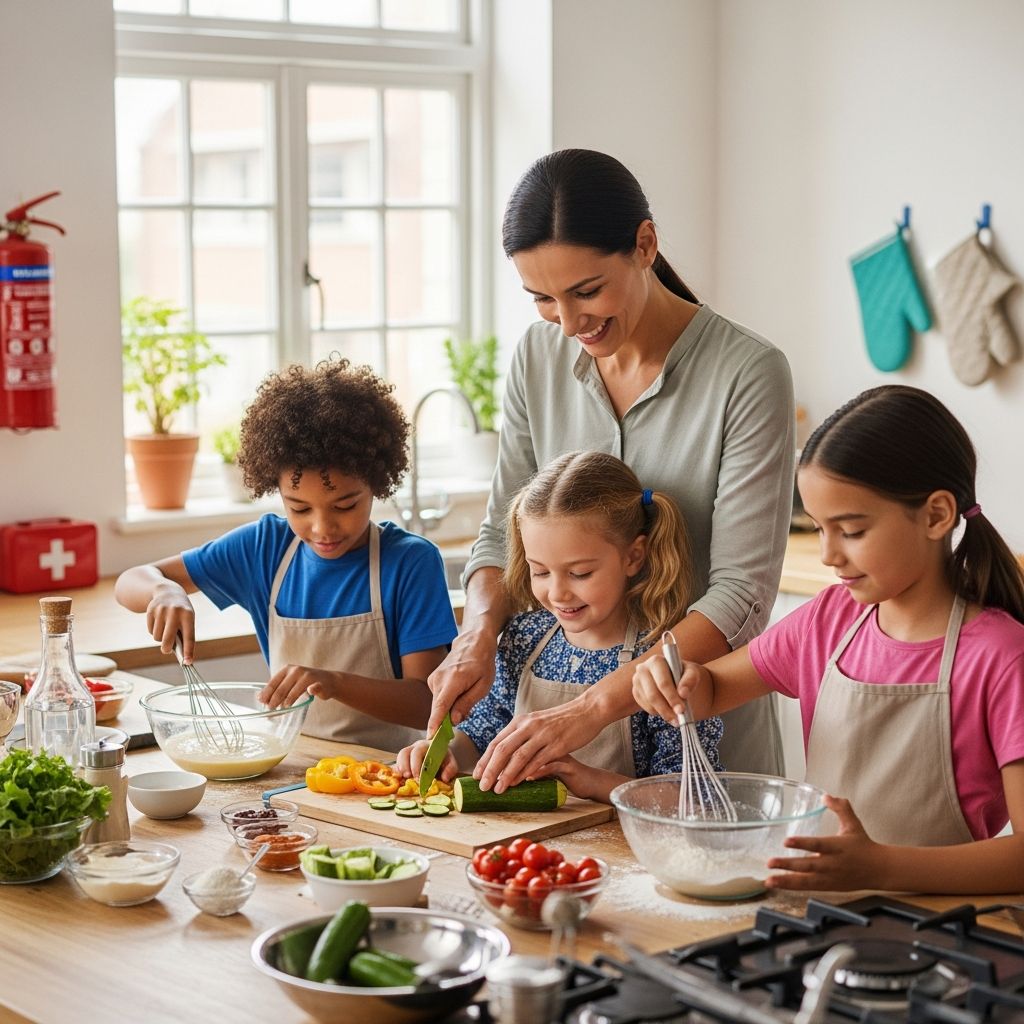
Teaching children how to cook is one of the most practical and rewarding life lessons you can share at home. Cooking together builds confidence, encourages healthier eating, and gives kids real-world practice with reading, math, and problem-solving.
Why Teach Kids to Cook?
When children learn to cook, they gain more than a few favorite recipes. They also develop important life skills and a sense of independence that will serve them well as they grow.
- Cooking strengthens reading and math skills through following recipes, measuring, and timing steps.
- Kids who help prepare meals are often more willing to taste new foods and choose healthier options.
- Working together in the kitchen encourages responsibility, teamwork, and communication.
Core Principles for Teaching Children to Cook
Before assigning tasks or choosing recipes, it helps to approach cooking with kids through a few guiding principles. These ideas keep the experience positive for both you and your child.
- Safety first: Clear rules about heat, sharp tools, and cleanliness come before any fun cooking activity.
- Progress, not perfection: Focus on effort and learning rather than perfectly shaped cookies or perfectly chopped vegetables.
- Age-appropriate responsibility: Match tasks to your child’s abilities so they feel challenged but not overwhelmed.
Kitchen Safety Basics for Kids
Solid safety habits help children feel confident and protect them from common kitchen accidents. Introduce these rules early and repeat them often, especially with younger kids.
- Always wash hands with soap and water before and after handling food, especially raw meat, eggs, or poultry.
- Keep hair tied back and avoid loose sleeves or dangling accessories that could catch on equipment or flame.
- Use separate utensils and cutting surfaces for raw meat and ready-to-eat foods to reduce the risk of cross-contamination.
- Teach kids to turn pot and pan handles inward on the stove so they cannot be bumped or pulled.
- Show children how to safely pass knives and scissors, and emphasize that they are tools, not toys.
Setting Up a Kid-Friendly Kitchen Space
A well-prepared kitchen environment makes it easier for children to focus on learning skills rather than struggling to reach tools or ingredients. A few small adjustments can make a big difference.
- Provide a sturdy step stool so kids can comfortably reach the countertop or sink without stretching.
- Keep child-safe tools—such as small mixing bowls, measuring cups, and kid-friendly knives—in a low cupboard or drawer.
- Clear clutter from the workspace and set out all necessary ingredients and tools before starting a recipe.
Age-Appropriate Kitchen Tasks
Not every cooking task is right for every age. Matching responsibilities to developmental stages helps children succeed and stay safe. The following table offers general guidance; adjust up or down based on your child’s comfort level and experience.
| Age Range | Motor Skill Focus | Sample Tasks |
|---|---|---|
| 2–3 years | Pouring, stirring, simple hand movements |
|
| 4–5 years | Improving coordination and control |
|
| 6–8 years | Reading, basic knife skills with supervision |
|
| 9–11 years | Greater independence and responsibility |
|
| 12+ years | Planning, timing, and multitasking |
|
Helping Toddlers and Preschoolers in the Kitchen
Young children may not be ready for heat or sharp tools, but they can still play a meaningful role in simple food preparation. At this age, cooking should be playful, sensory, and focused on short tasks.
- Invite toddlers to rinse produce, tear lettuce, or arrange toppings on pizza or toast.
- Use large bowls and spoons so spills are less likely, and keep tasks brief to match short attention spans.
- Talk about colors, shapes, and numbers as they help: “Can you put three carrot sticks on each plate?”
Elementary-Age Kids: Building Real Skills
By early elementary school, children can handle more precise tasks and start to understand the sequence of a recipe. They also enjoy having a sense of ownership over part of the meal.
- Let them measure ingredients, crack eggs into a separate bowl, and read each step of a simple recipe aloud.
- Introduce basic knife safety and demonstrate how to tuck fingers and cut away from the body.
- Encourage them to prepare a side dish, like a salad or fruit plate, mostly on their own.
Preteens and Teens: Towards Independence
Older kids are ready to take on more responsibility and learn skills that will eventually allow them to cook independently. This is the perfect time to teach techniques rather than just recipes.
- Show them how to safely use the oven and stovetop, including setting timers and checking doneness.
- Teach versatile basics such as cooking pasta, rice, and eggs, making simple sauces, and roasting vegetables.
- Invite them to choose recipes, write shopping lists, and help with grocery planning and budgeting.
Choosing the Right Recipes for Kids
Recipe choice can make or break a child’s interest in cooking. Simple, colorful, and relatively quick dishes keep enthusiasm high while teaching foundational skills.
- Start with recipes that use a small number of familiar ingredients and straightforward steps.
- Pick dishes that offer visible transformations, such as batter turning into muffins or vegetables softening as they roast.
- Include a mix of sweet and savory recipes so kids can explore different flavors and textures.
Making Cooking Educational
The kitchen is a natural classroom where kids can practice school skills without even realizing it. With a bit of intention, cooking activities can support language arts, math, and science learning.
- Ask children to read recipe instructions out loud and summarize the next step in their own words.
- Talk about fractions when measuring ingredients and use multiplication or division to double or halve a recipe.
- Discuss how heat changes food, why some ingredients rise or thicken, and how different cooking methods affect texture.
Encouraging Healthy Eating Habits
Cooking with kids is one of the most effective ways to encourage a positive relationship with food. Children are much more willing to taste dishes they helped create.
- Offer choices within boundaries, such as letting kids pick vegetables for a stir-fry or toppings for a grain bowl.
- Present new foods alongside familiar favorites and keep pressure low: tasting is encouraged, but not forced.
- Use cooking time to talk casually about balanced meals, whole foods, and how different foods help the body.
Keeping the Experience Fun and Low-Stress
Mess and mistakes are natural parts of learning to cook. A relaxed attitude helps kids stay curious and willing to try again when something does not turn out as expected.
- Give yourself extra time so you are not rushed and tempted to take over every task.
- Celebrate small successes, such as properly cracking an egg or safely chopping a vegetable.
- Play music, tell stories, and treat cooking time as shared family time rather than just another chore.
Cleanup as Part of the Lesson
Teaching children to clean up as they go is just as important as cooking itself. It builds responsibility and shows respect for shared spaces.
- Assign simple cleanup jobs like wiping the table, putting ingredients back, or loading the dishwasher.
- Model the habit of rinsing tools and clearing clutter between steps to keep the workspace tidy.
- End each cooking session with a quick team cleanup so children see it as a normal part of the process.
Frequently Asked Questions (FAQs)
At what age can children start cooking?
Children can begin helping in the kitchen as early as two or three years old with simple, safe tasks like washing produce or stirring ingredients in a large bowl. The key is close supervision and choosing activities that match each child’s motor skills and attention span.
How do I know which tasks are safe for my child?
Start by considering your child’s ability to follow instructions, handle tools carefully, and stay focused. If they can listen and respond to safety reminders, they may be ready to handle more complex tasks, such as using a peeler or cutting soft foods with guidance.
What if my child is not interested in cooking?
Try connecting cooking to your child’s existing interests. If they like art, focus on decorating dishes; if they enjoy numbers, highlight the measuring and timing parts of recipes. Keeping sessions short and fun can gradually build interest over time.
How do I teach knife skills safely?
Begin with a kid-safe or small, duller knife and soft foods like bananas or cooked vegetables. Demonstrate how to hold the knife and tuck fingers out of the way, then guide their hands as needed. Always stay close by, offer clear reminders, and increase difficulty only when they show consistent control.
What should I do when mistakes happen?
Expect spills, over-salted dishes, and occasionally burnt edges. Treat mistakes as learning opportunities by discussing what happened and how to adjust next time, rather than focusing on blame. Emphasizing that even experienced cooks make errors keeps kids willing to try again.
Final Thoughts
Teaching children to cook is an ongoing process, not a single lesson. By starting early, emphasizing safety, and offering age-appropriate responsibilities, you give kids skills they will use for a lifetime. Most importantly, cooking together builds memories and connections that go far beyond the dinner table.