Every child experiences a whirlwind of feelings daily, from joy and excitement to frustration and sadness. Guiding them to recognize and share these emotions builds a strong foundation for emotional intelligence, which research links to improved focus, relationships, and stress management in school and life.
Why Emotional Expression Matters for Young Minds
Emotional intelligence equips children to navigate their inner world and social interactions effectively. Kids who can name their feelings are better at paying attention, forming friendships, and handling challenges, according to studies on early childhood development. This skill set, including recognizing emotions in self and others, understanding their triggers, labeling them precisely, expressing appropriately, and regulating them, directly supports academic engagement and empathy growth.
Without tools to process emotions, children might act out through tantrums or withdraw, missing opportunities for connection. High emotional intelligence correlates with resilience, helping kids bounce back from setbacks like a lost game or friendship conflict. Long-term, it predicts success beyond IQ, influencing health, career outcomes, and lower risks of behavioral issues.
Spotting Emotions in Children of All Ages
Children signal feelings through body language, tone, and actions before words. Toddlers might stomp feet when angry, while older kids sigh or isolate themselves when sad. Parents attuned to these cues can intervene early, turning moments into teaching opportunities.
- Infants and Toddlers: Crying varies by need—hunger wails are urgent, tiredness softer. Watch facial cues like furrowed brows for discomfort.
- Preschoolers: They use big gestures; clenched fists signal anger, wide eyes excitement.
- School-Age Kids: Subtler signs emerge, like slumped shoulders for disappointment or fidgeting for anxiety.
- Teens: Withdrawal or irritability often masks deeper emotions like stress from school pressures.
Observing these patterns fosters awareness, the first step in emotion coaching.
Building a Safe Space for Sharing Feelings
Create an environment where kids feel secure voicing emotions without judgment. Consistency shows adults value their inner experiences, encouraging openness. Daily check-ins normalize talking about feelings, reducing shame around ‘negative’ ones like anger or fear.
Model vulnerability yourself: ‘I’m frustrated the traffic delayed us, but deep breaths help.’ This demonstrates emotions are universal and manageable. Avoid dismissing feelings with phrases like ‘Don’t cry’—instead, validate: ‘It’s okay to feel sad about that.’
Everyday Strategies to Teach Emotion Talk
Integrate emotional discussions into routines for natural practice. Use car rides or bedtime for low-pressure chats: ‘What made you happiest today?’ This builds vocabulary and reflection habits.
| Age Group | Daily Strategy | Expected Benefit |
|---|---|---|
| Toddlers (2-4) | Name emotions during play: ‘You look happy building that tower!’ | Expands feeling words from basic to nuanced. |
| Preschool (5-7) | Emotion charades: Act out feelings together. | Improves recognition in self and others. |
| School Age (8-12) | Journal prompts: ‘Draw how school felt today.’ | Enhances regulation and self-awareness. |
| Teens (13+) | Discuss media: ‘How do you think that character felt?’ | Fosters empathy and perspective-taking. |
These methods embed skills into life, making emotional literacy second nature.
Playful Ways to Explore Feelings
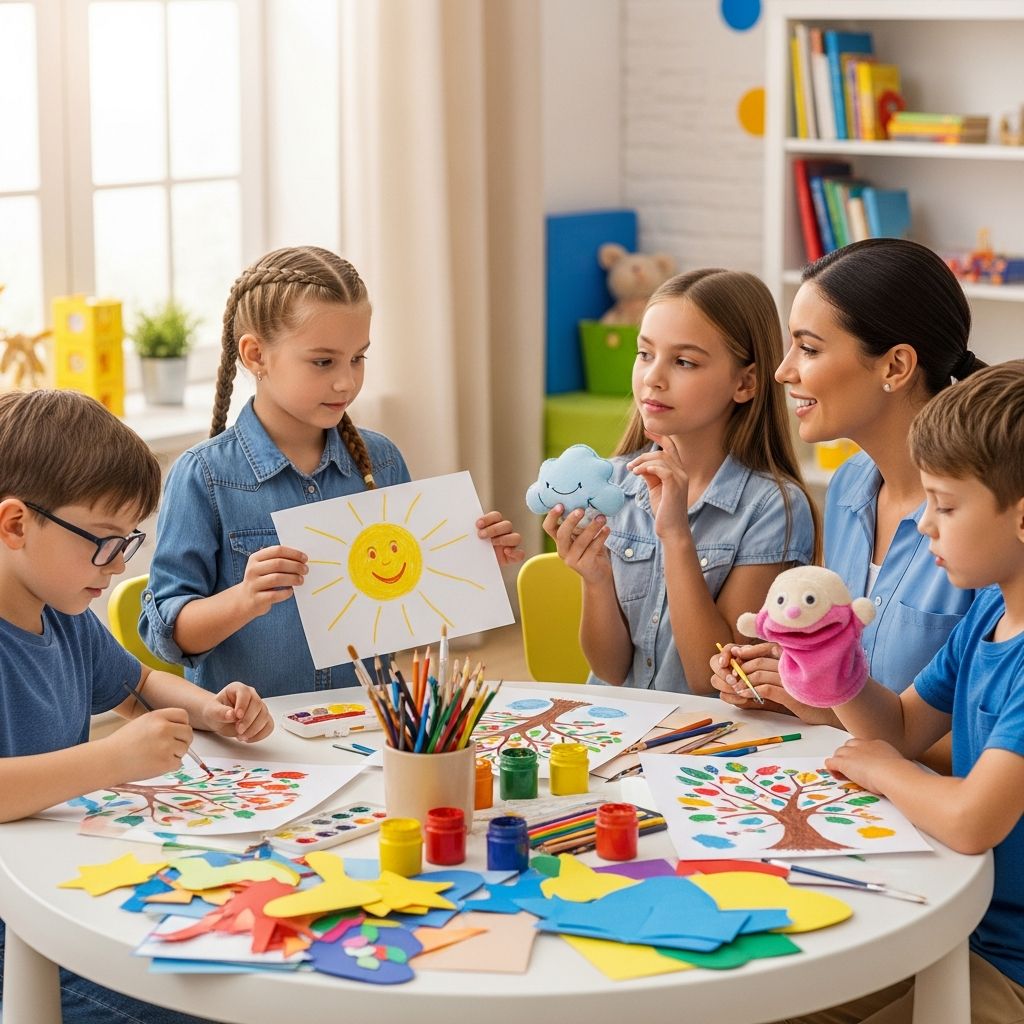
Play is a child’s language for emotions. Through games, they experiment safely, developing empathy and control. Role-playing scenarios like sharing toys teaches negotiation and fairness.
- Storytime Discussions: Pause books to ask, ‘Why is the character upset? What would you do?’ Links narratives to real life, boosting emotional vocabulary.
- Art Activities: Provide colors for moods—red for mad, blue for calm. Kids externalize feelings non-verbally.
- Emotion Games: Use cards showing faces; match to situations. Builds quick recognition.
- Puppet Shows: Puppets argue and reconcile, modeling resolution without real stakes.
Such activities make learning fun, embedding skills deeply for resilience.
Guiding Kids Through Emotion Coaching Steps
Emotion coaching is a proven framework with five steps to build self-regulation. It views upsets as chances to connect and teach, not just discipline.
- Awareness: Notice your child’s cues without overreacting. Stay calm to model control.
- Opportunity Mindset: See meltdowns as teaching moments for intimacy and skills.
- Empathetic Listening: Reflect back: ‘You seem really mad your friend took your toy.’
- Labeling: Name the emotion: ‘That’s disappointment.’ Builds vocabulary.
- Problem-Solve: Set limits on behavior while guiding solutions: ‘Hitting hurts; let’s use words to ask for turns.’
Practice yields self-control by age four, like averting eyes from scares. Consistent coaching predicts lifelong success.
Handling Tricky Emotions Like Anger and Sadness
Not all feelings are pleasant, but suppressing them hinders growth. Mild frustration builds perseverance; sadness cultivates compassion. Teach regulation tools: deep breathing, counting, or ‘peace corners’ with soft toys.
For anger, validate then redirect: ‘I see you’re furious—punch this pillow, then let’s talk.’ Sadness benefits from hugs and sharing memories. These affirm emotions while channeling them productively.
Role of Schools and Social Learning Programs
Many schools integrate social-emotional learning (SEL), teaching awareness and problem-solving systematically. Programs like mood meters help kids track feelings daily, improving engagement. Parents reinforce by aligning home practices, creating a unified support system.
SEL benefits kids with learning differences too, aiding challenge management through emotional smarts.
Common Challenges and Solutions
Some kids clam up due to shyness or past dismissals. Patience and non-demanding invites work: ‘Tell me if you want, or draw it.’ Track progress; small wins build confidence.
For over-emotional kids, teach tolerance: ‘Feelings come and go like clouds.’ Combine with boundaries to prevent chaos.
Frequently Asked Questions (FAQs)
What exactly is emotional intelligence in kids?
It means being savvy with emotions—spotting them in yourself and others, grasping why they happen, naming them right, sharing suitably, and keeping them in check.
How does talking about feelings benefit children?
Kids gain better focus, friendships, empathy, and bounce-back power from stress, paving way for school success and health.
Can emotional intelligence be taught at any age?
Yes, from infancy onward. It grows with practice, even for kids with learning challenges—it just needs steady support.
What if my child refuses to talk about emotions?
Start small with play or art. Model sharing yourself and listen without fixing first to build trust.
Are negative emotions harmful for kids?
No, managed well, they teach resilience. Strategies help accept and handle them constructively.
Long-Term Gains from Emotional Openness
Fostering emotion talk yields adults who self-motivate, empathize, decide wisely, and stress less. Relationships flourish as communication strengthens; conflicts resolve amicably. Invest now for a lifetime of emotional agility.
References
- Fostering Emotional Intelligence and Resilient Kids — BBM Academy. 2023. https://bbmacademy.com/blog/fostering-emotional-intelligence-and-resilient-kids/
- Teaching Emotional Intelligence in Early Childhood — NAEYC. 2017-03-01. https://www.naeyc.org/resources/pubs/yc/mar2017/teaching-emotional-intelligence
- How to Strengthen Your Child’s Emotional Intelligence — The Gottman Institute. 2023. https://www.gottman.com/blog/strengthen-childs-emotional-intelligence/
- Emotional intelligence: What it means for kids — Understood.org. 2023. https://www.understood.org/en/articles/the-importance-of-emotional-intelligence-for-kids-with-learning-and-thinking-differences
- EMOTIONAL INTELLIGENCE IN CHILDREN — International Journal of Trend in Research and Development. 2022. https://www.ijtrd.com/papers/IJTRD22090.pdf