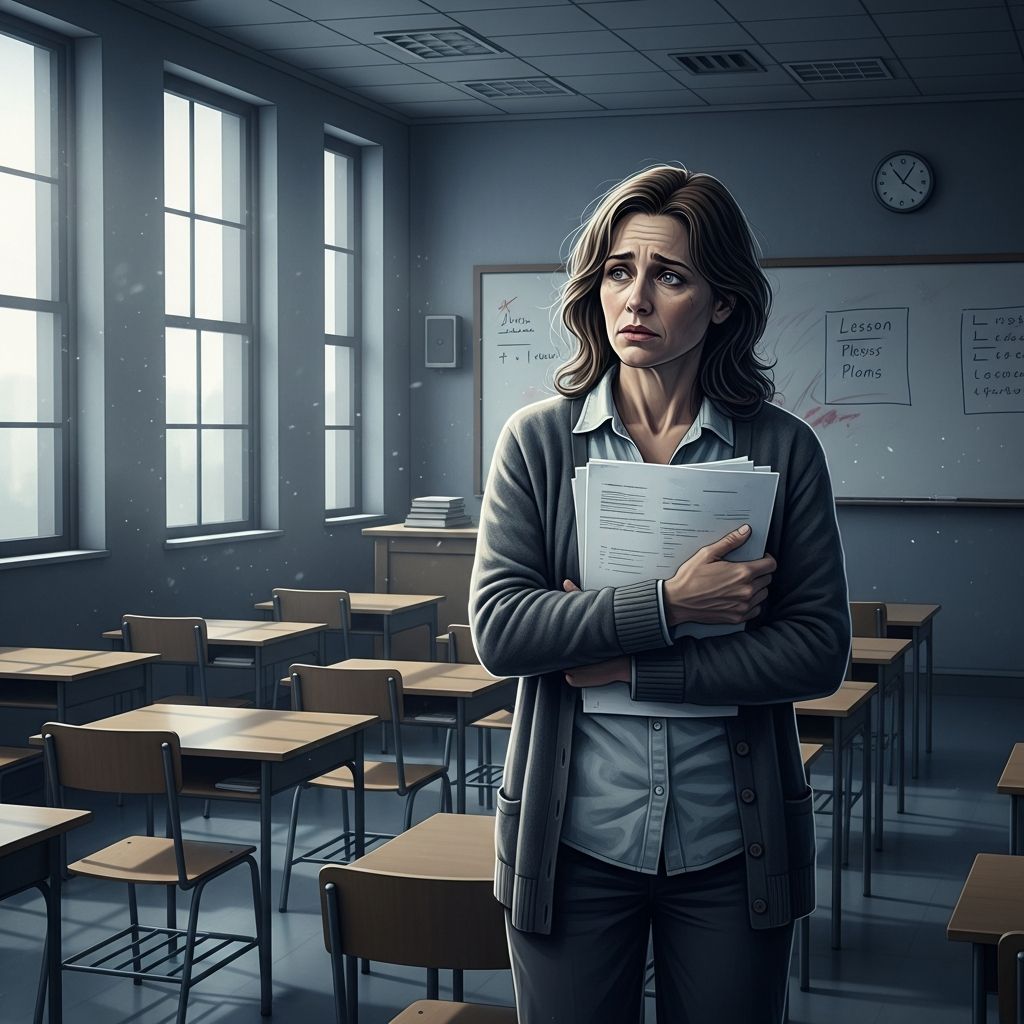
Across the United States, educators express significant reservations about resuming in-person instruction, with polls indicating that up to 20% are unlikely to return to classrooms this fall due to health risks and logistical hurdles.Teacher shortages loom large as districts grapple with reopening strategies.
The Scale of Educator Hesitancy
Recent nationwide surveys paint a concerning picture of teacher morale and readiness. In a USA Today/Ipsos poll, one in five K-12 teachers reported they are unlikely to return to school buildings in the upcoming semester, citing personal safety and family responsibilities as primary barriers. This sentiment echoes in local reports, where teachers in districts like San Antonio remain wary even when policies allow bringing their own children to campus for supervision during virtual sessions.
Compounding this, 83% of teachers in the same poll stated they struggle to fulfill their roles amid school closures, with 76% observing students falling behind in remote environments and half expressing deep worry for pupil well-being. These figures highlight not just individual fears but systemic strains on the education workforce.
Safety Protocols: The Key to Confidence
While apprehension is high, data suggests a path forward. A national poll by the American Federation of Teachers (AFT) involving nearly 1,200 educators found that 76% would feel comfortable returning if stringent safety measures are implemented, including physical distancing, enhanced ventilation, rigorous cleaning, and provision of face coverings and PPE. Educators prioritize these concrete steps over vague assurances.
- Physical Distancing: Maintaining at least six feet between individuals in classrooms and common areas.
- Ventilation Improvements: Upgrading HVAC systems to increase air circulation and filtration.
- Cleaning Regimens: Frequent disinfection of high-touch surfaces throughout the day.
- PPE Availability: Free masks, shields, and sanitizers for all staff and students.
Without federal investment in these areas, however, willingness drops sharply, fueling calls for hybrid models where in-person and remote learning alternate to balance safety and education quality.
Childcare Dilemmas for Educator Parents
A major friction point is childcare. Many teachers, particularly mothers, face impossible choices when districts mandate on-site presence for remote teaching without reliable options for their own children. In Northside Independent School District, for instance, policies prohibit children in classrooms during instruction, leaving parents like one interviewed teacher—who refused to expose her kids to potential outbreaks—contemplating resignation.
This issue disproportionately affects female educators, exacerbating gender imbalances in the profession and contributing to potential exodus rates. Districts are piloting childcare initiatives, but final plans remain fluid, heightening uncertainty.
Hybrid Learning Emerges as Preferred Path
Educators overwhelmingly favor hybrid approaches, blending in-person and virtual sessions. The AFT survey revealed 82% view distance learning as far less effective than traditional classroom interaction, underscoring the need for partial returns. Hybrid models could mitigate overcrowding while addressing learning losses observed during full remote periods.
| Model | Pros | Cons | Educator Support |
|---|---|---|---|
| Full In-Person | Best academic outcomes; social benefits | High health risks without safeguards | Low (20-30% confident) |
| Full Remote | Safer for vulnerable groups | Learning gaps; engagement issues | Moderate but declining |
| Hybrid | Balances safety and learning | Logistical complexity; tech needs | High (plurality preference) |
This table summarizes stakeholder views, with hybrid gaining traction as a pragmatic compromise.
Broader Implications: Shortages and Strikes
Potential teacher departures threaten district operations. Over 18% of teachers and 27% of principals were aged 65+ in 2017-18, making early retirements likely among vulnerable staff. During economic downturns, hiring freezes compound shortages, straining remaining personnel.
Unions like the AFT and National Education Association have warned of strikes if reopenings ignore medical guidance, a stance amplified by 83% of teachers voicing return concerns in additional polls. In high-profile cases, such as New York City’s Stuyvesant High School, 80% of faculty sought in-person exemptions.
Student Impacts: Absenteeism and Learning Loss
Teacher uncertainty reverberates to students. Chronic absenteeism has surged, with 28% of students missing school excessively in 2021-22 and 26% in 2022-23, per reports signaling an “explosion” in absences nationwide. Remote learning’s inefficacy—cited by 76% of teachers—has widened gaps, particularly for disadvantaged youth.
Parents mirror educator caution: 60% hesitate to send children back, 30% very likely to opt out, and 40% oppose pre-vaccine returns. This dual reluctance risks a dual crisis of staffing and attendance.
Policy Recommendations for Stability
To rebuild trust, leaders must act decisively:
- Prioritize federal funding for safety infrastructure, targeting ventilation and PPE stockpiles.
- Expand childcare subsidies and on-campus programs tailored for educator families.
- Invest in teacher training for hybrid delivery, including tech equity grants.
- Develop transparent, science-driven reopening criteria with union input.
- Offer incentives like hazard pay and mental health support to retain veteran staff.
These measures could shift the narrative from crisis to controlled recovery.
Frequently Asked Questions
What percentage of teachers are unlikely to return to classrooms?
Around 20%, according to a USA Today/Ipsos poll, due to safety and childcare concerns.
Would teachers return with better safety measures?
Yes, 76% would feel comfortable if distancing, ventilation, cleaning, and PPE are adequately provided.
How effective is remote learning compared to in-person?
82% of educators say distance learning is not nearly as effective, contributing to student setbacks.
What is driving chronic student absenteeism?
Rates hit 26-28% recently, linked to pandemic disruptions, health fears, and learning disengagement.
Are teacher unions threatening action?
Yes, groups like AFT warn of strikes without adherence to medical safety standards.
Looking Ahead: Building Resilient Schools
The convergence of teacher hesitancy, parental caution, and absenteeism epidemics demands innovative responses. Districts succeeding with hybrid pilots, childcare pilots, and safety investments offer blueprints. By addressing educator needs head-on, schools can safeguard staff, reengage students, and minimize long-term disruptions. The path requires collaboration across government, unions, and communities to transform uncertainty into sustainable education delivery.
References
- Poll: 20% of teachers unlikely to return in fall — K12 Dive. 2020-07-17. https://www.k12dive.com/news/poll-20-of-teachers-unlikely-to-return-in-fall/578735/
- Teachers remain unsure about returning to school even if their kids can join them — News4SanAntonio. 2020-08-???. https://news4sanantonio.com/news/education/teachers-remain-unsure-about-returning-to-school-even-if-their-kids-can-join-them
- New Data Shows Majority of Educators Willing to Go Back to School if Key Safety Conditions Are Met — American Federation of Teachers (AFT). 2020-06-??. https://www.aft.org/press-release/new-data-shows-majority-educators-willing-go-back-school-if-key-safety
- Teachers Share Their Concerns About Returning To Classrooms — YouTube (news clip). 2020-??. https://www.youtube.com/watch?v=yv4onLMbqdM
- 1 In 4 Kids Aren’t Going To School Anymore — YourTango. 2023-??. https://www.yourtango.com/self/one-in-four-kids-arent-going-school-anymore