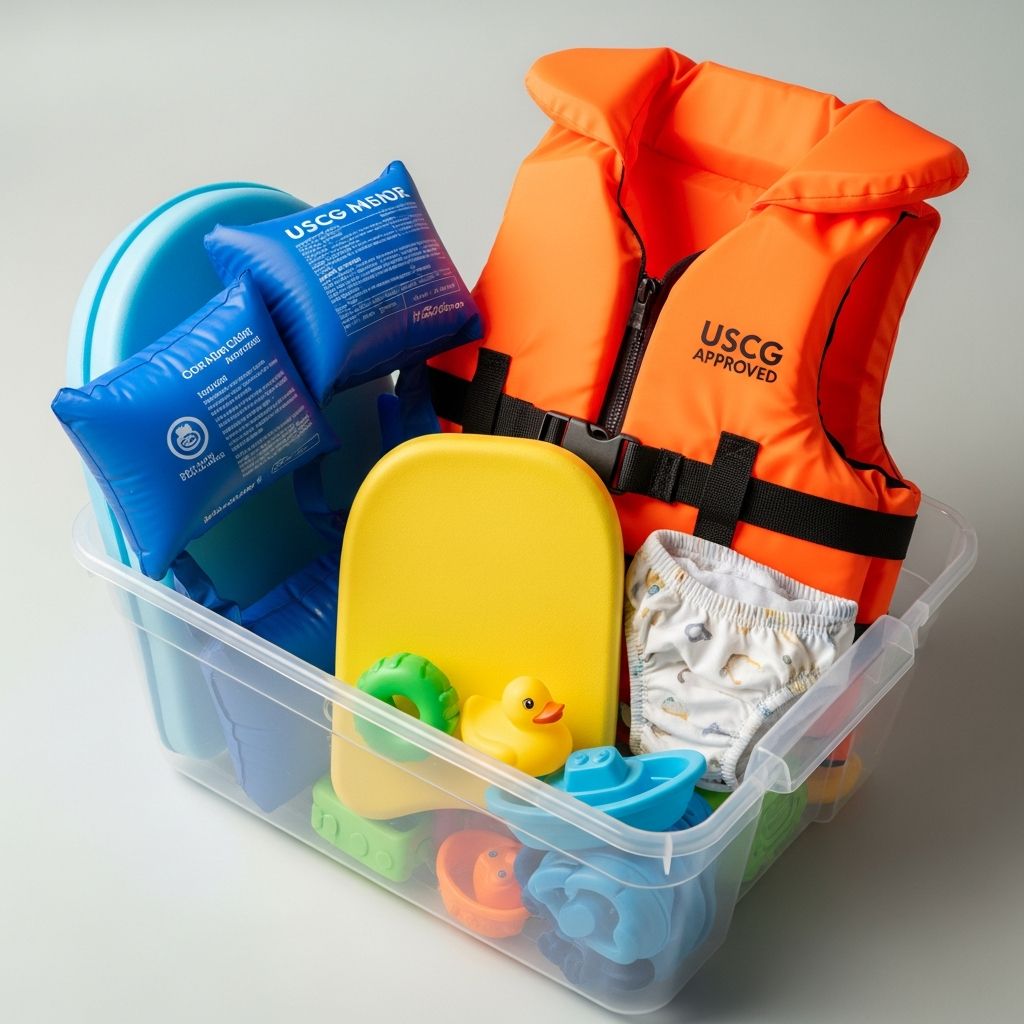
For many parents, a product like a branded swim sweater or floaty looks like the perfect shortcut to a carefree afternoon at the pool. It promises buoyancy, freedom of movement, and adorable photos. But once you get your child in the water, questions pop up: Is this really safe? Does it help them learn, or just keep them vertical? How much can I relax while they’re wearing it?
This guide uses the idea of a popular character-themed swim sweater as a starting point and expands into a broader, practical look at how to choose and use swim aids for young kids. You will not find product hype here—only what most caregivers really need: safety context, pros and cons, and realistic expectations.
What Exactly Is a Swim Sweater?
A swim sweater is typically a buoyant top, often made of fabric similar to a rash guard, with an embedded inflatable or foam ring around the child’s torso. Picture a snug shirt that sits over a small inner tube. Kids slip their arms through the sleeves, and the floatation stays positioned around their midsection.
Common design features include:
- A soft fabric top, often with UV-protective material to cover shoulders and upper arms.
- An internal inflatable or foam ring that provides buoyancy around the chest and upper belly.
- Bright colors or licensed characters that make the device fun and highly visible.
- One-size or limited-size options aimed mostly at toddlers and preschoolers.
Unlike a traditional life jacket, a swim sweater is usually marketed as a learn-to-swim aid for supervised play, not as a certified life-saving device. The U.S. Coast Guard (USCG), for example, approves specific categories of life jackets and personal flotation devices (PFDs); character-based pool toys and swim aids generally do not fall into those approved categories.
Life Jacket vs. Swim Sweater vs. Arm Floaties: Key Differences
Parents are often choosing among several options: life jackets, swim sweaters, and arm floaties (water wings). Each serves a different purpose and offers a different level of protection.
| Type | Primary Purpose | Buoyancy & Position | Typical Use | Pros | Limitations |
|---|---|---|---|---|---|
| USCG-approved life jacket | Life-saving flotation | Designed to keep head above water, some turn face-up | Boats, open water, non-swimmers in deeper pools | Highest safety standard; tested and labeled | Bulkier; not ideal for learning proper swim technique |
| Swim sweater / learn-to-swim top | Assisted, playful buoyancy | Supports torso; often keeps child mostly upright | Shallow pools, close adult supervision | Comfortable; some UV coverage; kids enjoy the look | Usually not USCG-approved; can encourage unsafe habits if over-relied on |
| Arm floaties (water wings) | Basic buoyancy on arms | Lift upper arms; child bobs vertically | Very shallow play, heavily supervised | Cheap, compact, quick to inflate | Can slip off; puncture risk; may limit arm movement; not safety devices |
Understanding this distinction is essential: only approved life jackets are designed and tested to prevent drowning. Everything else is a toy or training tool to be used in shallow water, with you within arm’s reach.
Why Parents Reach for Swim Sweaters
Even knowing the limitations, swim sweaters appeal to families for some understandable reasons.
1. Extra Buoyancy for Nervous Beginners
Young children often cling to caregivers when first entering the water. A snug floatation top can give them enough support to:
- Experiment with gentle kicks and arm movements.
- Stand or bounce in shallow water with a bit less fear.
- Relax their grip on you for a few seconds at a time.
Used thoughtfully, these positive experiences can contribute to growing water confidence, which experts recognize as part of learning to swim safely.
2. Comfort and Coverage
Compared to stiff vests or slippery tubes, a fabric-based swim sweater may feel softer on a child’s skin. Some products also extend sleeves over the shoulders and upper arms, providing additional sun protection in combination with sunscreen and hats.
3. Fun, Familiar Characters
For reluctant swimmers, a recognizable character or bright design can help turn anxiety into excitement: “I’m swimming with my fish buddy!” That emotional shift can make it easier to get in the water and participate in lessons.
The Big Caveat: Swim Aids Are Not Drowning Protection
It is important to be blunt: no swim sweater, floaty, or toy replaces close, constant adult supervision. Drowning is fast and often silent, and it remains a leading cause of accidental death for young children in many countries.
Major safety organizations, including the American Academy of Pediatrics (AAP) and the U.S. Consumer Product Safety Commission (CPSC), emphasize the same core ideas:
- An adult should provide “touch supervision” for weak or non-swimmers—close enough to reach them instantly.
- Pools require physical barriers such as four-sided fencing, self-closing gates, and, ideally, pool alarms.
- Parents should not rely on air-filled toys (like water wings or basic inflatables) to prevent drowning.
Swim sweaters fall into the “aids and toys” category, not the “life-saving gear” category. They can be helpful, but only inside a larger safety plan.
How Swim Aids Change the Way Kids Move in Water
One hidden effect of floatation devices is how they shape your child’s body position in the water, which can either support or conflict with swimming skills.
- Vertical bobbing: Torso-based float aids often hold kids almost upright. This is the opposite of the horizontal glide used for real swimming.
- Head-up posture: With the head held high and legs dangling, children learn to pedal like they’re on a bicycle, not kick from the hips.
- Dependence on devices: If a child always experiences water with buoyant gear, they may feel helpless and panicked when it is removed.
Swim instructors frequently recommend that floatation aids be used only in a limited, intentional way, and that kids also spend time in extremely shallow water practicing horizontal float and glide with hands-on support.
Using a Swim Sweater Safely and Effectively
If you decide a swim sweater fits your child and your situation, you can make it a tool instead of a crutch by following a few practical guidelines.
Check the Label and Fit Every Time
- Look for weight and age guidelines on the label and follow them strictly.
- Adjust closures so the top is snug but not restrictive—if it rides up to the child’s chin, it is too loose.
- Inspect seams, valves, and fabric for wear or damage before each use.
Keep the Environment Low-Risk
- Stay in shallow areas where your child can stand with their head well above water.
- Avoid strong currents, surf, rivers, or open water when relying on non-approved devices.
- Limit use to pools and calm, designated swimming areas with a lifeguard whenever possible.
Pair with Active Teaching, Not Passive Floating
Use moments in a swim sweater to reinforce real skills:
- Have your child practice kicking from the hips while you gently support their upper back into a more horizontal position.
- Encourage blowing bubbles, brief face-in-the-water activities, and reaching forward with the arms.
- Take regular breaks without the device in very shallow water, holding their hands while they try simple front and back floats.
These approaches help bridge the gap between playful buoyancy and early swimming ability.
Alternatives and Complements to Swim Sweaters
Parents do not have to choose all-or-nothing between no support and a heavily branded floatation top. Consider combining several strategies over a season.
1. Infant and Toddler Swim Lessons
Organized lessons, especially those that follow evidence-informed curricula, can reduce drowning risk and build safe habits. Instructors teach:
- Comfort with water on the face and head.
- Basic front and back float positions.
- Safe entry and exit from the pool edge.
Ask your local provider about small class sizes, instructor certifications, and their philosophy on the use of floatation aids during class.
2. Coast Guard–Approved Life Jackets for Open Water
Any time you are on a boat or in natural water (lakes, rivers, oceans), a properly fitted, USCG-approved life jacket is essential, even if your child can swim. These devices are tested for buoyancy, stability, and durability under real conditions that recreational pool toys are not designed to handle.
3. Simple, Hands-On Play in Very Shallow Water
You can do a lot without any floatation device at all if you control depth and stay within arm’s reach. Some ideas:
- Walking games in water that stays below the chest.
- Sing-along activities while seated on the steps or a ledge.
- Practicing back floats with your hand fully supporting the child’s head and upper back.
These low-tech experiences often build more meaningful comfort than hours spent fully dependent on floaties.
What to Look for When Shopping for Swim Aids
If you are comparing various learn-to-swim products, including swim sweaters, consider the following checklist.
- Clear labeling: Does it explicitly state whether it is or is not a USCG-approved life jacket or PFD?
- Proper size range: Is your child comfortably within the recommended weight and chest size?
- Sturdy construction: Are seams reinforced, valves protected, and closures secure?
- Comfort: Does the fabric feel soft, and is chafing unlikely around the arms, neck, and legs?
- Freedom of movement: Can your child move arms and legs enough to practice basic motions, rather than just hanging in place?
- Visibility: Are colors bright enough for you and lifeguards to spot quickly in a crowd?
Whenever possible, try the device on your child dry first, then in a controlled shallow area, before depending on it for a full swim session.
Building Healthy Water Attitudes Alongside Gear Choices
Swim sweaters and similar tools are only one part of your child’s relationship with water. Equally important are the messages and habits that go with them.
- Talk openly about rules: no running, no pushing, no swimming without an adult.
- Model putting on sun protection and appropriate gear every time.
- Celebrate progress in comfort and skills, not just how “fearless” a child appears.
- Gently correct overconfidence—remind kids that their floaty is helping, and that deep water still requires an adult.
By pairing consistent boundaries with fun, you help your child grow into a confident, respectful swimmer rather than a reckless daredevil in a cute floaty.
Frequently Asked Questions (FAQs)
Is a swim sweater safe enough that I can sit on a lounge chair while my child plays?
No. A swim sweater is not a life-saving device and should never be treated as one. You should remain within arm’s reach of non-swimmers and maintain constant visual attention, even in shallow water.
Does using floatation gear delay learning to swim?
It can, if a child spends all of their water time in vertical, device-supported positions. Used sparingly and combined with hands-on practice in horizontal float and glide, swim aids do not have to delay learning and can sometimes make early experiences feel less frightening.
At what age can my child safely swim without any floatation?
There is no single age at which it becomes “safe.” Ability, maturity, pool design, and supervision matter more than birthdays. Many children still need close supervision and may benefit from life jackets in deeper or open water well into the school years.
Are character-branded swim devices more dangerous than plain ones?
Branding itself is not the issue. The key questions are whether the product is properly labeled, fits your child, is used only in appropriate settings, and is understood as a toy or training aid rather than a certified flotation device.
Should my child wear a life jacket in a backyard pool?
If your child cannot swim confidently and the water is too deep for them to stand, a properly fitted, USCG-approved life jacket can add protection, especially during group gatherings. However, it must always supplement—not replace—careful adult supervision and barriers like pool fences.
References
- Life Jacket Requirements — U.S. Coast Guard. 2024-03-15. https://www.uscgboating.org/recreational-boaters/life-jacket-wear-wearing-your-life-jacket-saves-lives.php
- Personal Flotation Devices (PFDs) for Recreational Boaters — U.S. Coast Guard. 2023-06-01. https://www.uscgboating.org/safety/pfd-false-sense-of-security.php
- Pool Safely: Simple Steps Save Lives — U.S. Consumer Product Safety Commission. 2023-05-25. https://www.poolsafely.gov
- Drowning Prevention — American Academy of Pediatrics. 2021-03-15. https://www.aap.org/en/patient-care/drowning-prevention
- Sun Safety for Kids — Centers for Disease Control and Prevention. 2023-07-01. https://www.cdc.gov/cancer/skin/basic_info/children.htm