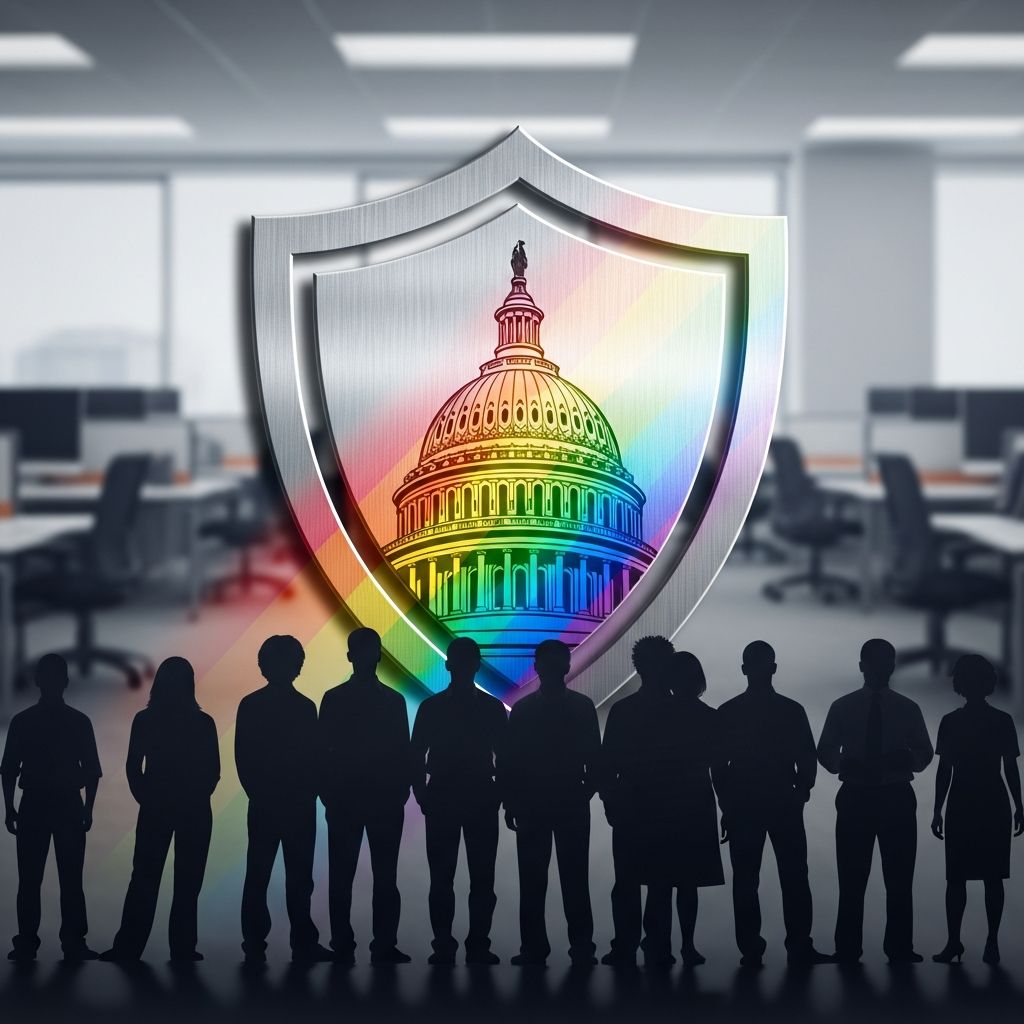
Understanding the Supreme Court’s Landmark Employment Protection Decision
In June 2020, the United States Supreme Court issued a transformative ruling that fundamentally altered the landscape of workplace protections for millions of Americans. The 6-3 decision in Bostock v. Clayton County established that federal employment discrimination laws extend comprehensive protections to lesbian, gay, bisexual, and transgender workers. This historic judgment resolved years of legal uncertainty and created uniform protections across all 50 states for employees based on sexual orientation and gender identity.
The Legal Foundation: Title VII and Its Expanded Interpretation
The cornerstone of this protection lies in Title VII of the Civil Rights Act of 1964, which originally prohibited employment discrimination based on race, color, religion, sex, and national origin. Prior to the Supreme Court’s decision, the statute’s language regarding sex-based discrimination had never been explicitly interpreted to include sexual orientation or gender identity. However, the Court’s majority, led by Justice Neil Gorsuch, applied a textualist approach to the law’s wording.
The Court’s reasoning centered on the concept of “but-for causation”—meaning that if an individual’s sex is one factor among the reasons for an adverse employment action, Title VII’s protections are triggered. Justice Gorsuch articulated the logical foundation: when an employer discriminates against someone for being gay or transgender, that employer necessarily considers the worker’s sex in making its decision. This interpretation means that “it is impossible to discriminate against a person for being homosexual or transgender without discriminating against that individual based on sex”.
Before the Decision: A Fragmented Patchwork of Protections
The employment landscape for LGBT workers before June 2020 was characterized by significant inconsistency and vulnerability. State-level protections varied dramatically, with only 22 states and the District of Columbia explicitly prohibiting employment discrimination against LGBT individuals. This created a reality where legal protections depended entirely on geographic location.
At the federal level, multiple circuit courts had reached conflicting conclusions about Title VII’s applicability. The Second Circuit Court of Appeals (covering New York) and the Sixth Circuit Court (covering Michigan) had determined that Title VII prohibited sexual orientation and gender identity discrimination, while the Eleventh Circuit Court (covering Georgia) had reached the opposite conclusion. This circuit split meant that LGBT workers received different legal protections depending on which federal court had jurisdiction over their cases.
In practical terms, this fragmentation meant that an employee could be legally terminated for being gay or transgender in one state while enjoying federal protections in another. Approximately 27 states lacked any statutory protections against employment discrimination based on sexual orientation or gender identity, leaving millions of LGBT workers vulnerable to termination, disciplinary action, or discriminatory hiring practices.
Scope and Impact of the Protective Ruling
The Supreme Court’s decision provides immediate federal employment protections to an estimated 8.1 million LGBT workers in the United States. This figure includes approximately 7.1 million lesbian, gay, and bisexual employees and roughly 1 million transgender workers. The protections apply to all employers covered by Title VII, which generally includes organizations with 15 or more employees.
The decision proves particularly significant for LGBT workers residing in states without existing statutory protections. An estimated 3.4 million lesbian, gay, and bisexual workers and 536,000 transgender workers live in the 27 states that previously lacked express employment non-discrimination statutes. For these individuals, the Supreme Court’s ruling provided their first comprehensive federal workplace protections.
Comprehensive Employment Protections Established
The ruling establishes clear protections across multiple aspects of employment relationships:
- Protection against termination based on sexual orientation or gender identity
- Prohibition of discriminatory discipline or adverse employment actions
- Prevention of discrimination in hiring decisions and recruitment processes
- Protection during the entire employment relationship, from initial hiring through advancement opportunities
- Coverage for all terms and conditions of employment under Title VII’s framework
Broader Implications Beyond Employment
While the Supreme Court’s decision directly addresses workplace discrimination, its implications extend significantly beyond employment contexts. The ruling signals that other federal and state laws prohibiting sex-based discrimination likely also protect LGBT individuals from discrimination in housing, public accommodations, education, and other areas. This interpretive framework has the potential to reshape multiple areas of civil rights law and expand protections into sectors previously uncertain about their legal obligations.
The Continuing Need for Comprehensive Protection
Despite the Supreme Court’s landmark decision, significant gaps in legal protections remain. Research from the Williams Institute indicates that discrimination against LGBT people continues to be widespread. Many states still lack comprehensive non-discrimination statutes covering employment, housing, and public accommodations, meaning state-level protections remain fragmented.
Additionally, federal law contains certain exceptions and carve-outs. Title VII’s protections do not apply to all employers, notably excluding employers with fewer than 15 employees, religious organizations operating under specific exemptions, and certain other categories. Many LGBT workers remain without comprehensive protections in these circumstances.
Legislative Efforts and Ongoing Advocacy
Prior to the Supreme Court’s decision, congressional efforts to specifically add sexual orientation and gender identity as protected categories under Title VII had failed. While the judicial ruling achieved protections that legislation could not, continued advocacy focuses on establishing explicit statutory language that leaves no ambiguity for future courts to interpret.
Public support for LGBT-inclusive non-discrimination protections has grown substantially, yet many states have not translated this support into statutory protections. This disconnect between public opinion and legal frameworks remains a focal point for ongoing civil rights advocacy efforts.
Recognition and Significance of the Decision
Legal experts and civil rights organizations recognized the Supreme Court’s decision as transformative. The ruling provided “much needed protection for LGBT people from employment discrimination” and demonstrated that federal civil rights law extends to protect historically marginalized workers. The decision represents a substantial milestone for LGBT Americans, immediately providing millions with workplace rights previously uncertain or unavailable.
Justice Gorsuch’s majority opinion acknowledged that the Civil Rights Act’s original drafters “might not have anticipated their work would lead to this particular result.” However, he reasoned that the statute’s clear language against discrimination “because of” sex necessarily encompasses sexual orientation and gender identity discrimination. This approach prioritized the statutory text over speculation about legislative intent, establishing a durable legal foundation for the protections.
Frequently Asked Questions
Which employers must comply with the Supreme Court’s LGBT employment protection ruling?
All employers covered by Title VII of the Civil Rights Act must comply, which generally includes private employers with 15 or more employees, as well as state and local government employers and educational institutions. Certain exceptions apply, including religious organizations operating under specific exemptions and employers with fewer than 15 employees.
Can an employer still terminate an LGBT employee for job performance reasons?
Yes, employers may terminate employees for legitimate job performance reasons unrelated to sexual orientation or gender identity. However, employers cannot use sexual orientation or gender identity as a factor in employment decisions, even if other reasons also contributed to the decision.
Does the ruling apply to religious organizations?
Religious organizations may have certain exemptions from Title VII protections under existing religious freedom provisions of civil rights law. However, the scope of these exemptions remains subject to ongoing litigation and interpretation.
How does this ruling affect state-level employment protections?A: The ruling establishes federal protections that apply nationwide. However, states may maintain more protective provisions, and many states have statutes providing broader protections than the federal minimum. The federal ruling sets a baseline that all states must meet.
Q: What recourse do LGBT employees have if they experience workplace discrimination?
Employees can file charges with the Equal Employment Opportunity Commission (EEOC), which investigates discrimination complaints and may take legal action. Employees may also pursue private lawsuits against employers for violations of Title VII.
Does the ruling require employers to provide specific benefits or accommodations?
The ruling prohibits discrimination based on sexual orientation and gender identity but does not specifically mandate particular benefits or accommodations. However, employers must treat LGBT employees consistently with non-LGBT employees regarding benefits, workplace policies, and treatment.
References
- US Supreme Court Ruling A Victory for LGBT Workers — Human Rights Watch. 2020-06-15. https://www.hrw.org/news/2020/06/15/us-supreme-court-ruling-victory-lgbt-workers
- Landmark U.S. Supreme Court Ruling Prohibits Sexual Orientation and Gender Identity-Based Discrimination in Employment — Employment Law Worldview. 2020-06-15. https://www.employmentlawworldview.com/landmark-u-s-supreme-court-ruling-prohibits-sexual-orientation-and-gender-identity-based-discrimination-in-employment-us/
- US Supreme Court decision protects 8.1 million LGBT workers from employment discrimination — The Williams Institute, UCLA. 2020-06-15. https://williamsinstitute.law.ucla.edu/press/title-vii-decision-press-release/
- Historic U.S. Supreme Court Ruling Protects LGBTQ Employees from Sex-Based Discrimination in the Workplace — Lawyers’ Committee for Civil Rights Under Law. 2020-06-15. https://www.lawyerscommittee.org/historic-u-s-supreme-court-ruling-protects-lgbtq-employees-from-sex-based-discrimination-in-the-workplace/
- Supreme Court Ruling – LGBT People are Protected in the Workplace — San Francisco Department of Human Resources. 2020-06-15. https://sfdhr.org/supreme-court-ruling-lgbt-people-are-protected-workplace
- Supreme Court Rules Title VII Protects LGBT Employees — O’Connell & Aronowitz, PLLC. 2020-06-16. https://oalaw.com/blog/labor-employment-law/supreme-court-rules-title-vii-protects-lgbt-employees/