Pregnancy transforms the way your body responds to almost everything, including sunlight. The same afternoon by the pool that once left you with a light tan can suddenly turn into a painful burn when you are expecting. Understanding why this happens, what it means for your baby, and how to protect yourself allows you to enjoy the outdoors without unnecessary worry.
This guide explains how sunburn can affect you during pregnancy, the real risks behind overheating and dehydration, safe prevention strategies, and pregnancy-friendly treatments if you do get burned. It is designed as educational information and is not a substitute for medical advice. Always speak with your own healthcare provider about personal concerns.
Why Pregnancy Changes the Way You Burn
Many pregnant people notice they burn faster than they used to, even with the same amount of time in the sun. This is not your imagination. Shifts in hormones and circulation alter how your skin responds to ultraviolet (UV) radiation, how quickly you overheat, and how efficiently your body cools down.
Several changes make sunburn more likely in pregnancy:
- Increased blood flow to the skin. Your body sends more blood toward the surface to help cool you, which can make your skin more reactive to heat and UV rays.
- Hormonal shifts. Hormones that influence pigment cells become more active, which can lead to patchy darkening (like the “mask of pregnancy”) and make sun exposure more noticeable.
- Higher baseline body temperature. Pregnancy naturally raises your core temperature a little, so additional heat from the sun can tip you into discomfort or overheating much more quickly than before.
All of these factors mean that even if you have never burned easily, pregnancy can temporarily turn you into someone who does.
Is Sunburn Itself Dangerous for the Baby?
A mild, local sunburn on the skin does not directly reach or burn the baby. Your uterus and the surrounding tissues protect the fetus from that external injury. However, the body-wide effects that often accompany a strong burn can indirectly affect pregnancy, especially when overheating or fluid loss become severe.
The main concerns are not the red skin itself, but the chain reaction it can set off in your body, including rises in temperature, dehydration, and inflammation. These stresses can make you feel unwell and, in more serious situations, may increase the risk of complications like contractions, fainting, or heat-related illness.
Key Risks of Sunburn During Pregnancy
The intensity and size of the burn matter. A small pink area that fades in a day or two is far less worrisome than a blistering burn across large portions of your body. Below are the main ways a significant sunburn can cause problems during pregnancy.
Overheating and Heat Stress
Sunburned skin makes it harder for your body to regulate temperature. When a large area is burned, more heat is trapped and you may feel hot and flushed even in the shade. Prolonged overheating is uncomfortable for you and may increase the risk of:
- Lightheadedness, dizziness, or fainting.
- Headache, fatigue, and feeling generally unwell.
- Heat exhaustion or, in extreme cases, heatstroke, which is a medical emergency.
In early pregnancy, very high body temperatures from any cause (severe fever, extreme heat exposure) have been linked in research to a small increase in the risk of certain birth defects. Keeping your temperature in a safe range is therefore important throughout pregnancy.
Dehydration and Electrolyte Imbalance
When your skin burns, it pulls fluid toward the surface and away from the rest of your body. On hot days you may already be sweating more, and pregnancy itself increases your daily fluid needs. Put together, this can quickly lead to dehydration.
During pregnancy, dehydration is not only uncomfortable; it can also trigger uterine irritability. Some people notice cramping or more frequent Braxton Hicks contractions when they have not had enough to drink. In more advanced dehydration, you may feel weak, have a rapid heartbeat, or notice your urine becoming very dark.
Skin Damage, Discomfort, and Infection Risk
Sunburn thins and injures the outer layer of skin. When burns are severe enough to blister, the protective barrier breaks down entirely. That exposed area can be painful and more susceptible to infection if bacteria enter through damaged skin.
Pain and discomfort themselves can contribute to poor sleep and increased stress. Many pregnant people already struggle with rest and comfort; a widespread burn can make those challenges worse at exactly the time your body is working hardest.
Common Myths About Sun and Pregnancy
Myths about pregnancy and sun exposure circulate widely. Sorting fact from fiction helps you make choices that are both safe and realistic.
Myth 1: “Any sun on the belly harms the baby.”
Sunlight does not penetrate through the abdominal wall and uterus to burn the fetus. What matters is how the sun affects your whole body – your temperature, hydration status, and skin health. Covering the belly can still be useful, but mainly to protect your skin and reduce overheating, not because the sun is directly burning the baby.
Myth 2: “Sunscreen is more dangerous than sunburn when pregnant.”
Most modern sunscreens have been studied for safety in pregnancy, and many providers specifically recommend mineral-based products with zinc oxide or titanium dioxide for people who are concerned about chemical absorption. The long-term risks of repeated, unprotected sunburns, including skin cancer, are well established. For most pregnant people, a thoughtful sunscreen choice plus sun-smart habits offer more benefit than harm.
Myth 3: “If you are pregnant, you should avoid the sun completely.”
Sunlight, in moderation, can support vitamin D production, mood, and physical activity. Completely avoiding the outdoors is not necessary for most people. The goal is not zero sun, but safe sun: shorter exposures, better timing, shade, and protection tailored to your skin and climate.
How to Prevent Sunburn Safely During Pregnancy
Preventing sunburn is far easier than treating a severe one, especially when you are already managing pregnancy discomforts. The most effective strategy is a layered approach that combines time management, clothing, shade, and sunscreen.
Smart Sun Habits
Consider these everyday strategies to reduce your burn risk:
- Avoid peak hours. Try to stay out of direct sun between late morning and mid-afternoon, when UV radiation is strongest.
- Use the shadow rule. If your shadow is shorter than you are, the sun is high and stronger; favor shade or indoor activities during those times.
- Plan your walks wisely. Early morning and later evening walks tend to be cooler and gentler on your skin and circulation.
Protective Clothing and Accessories
Clothing is one of the safest, most reliable tools for preventing sunburn in pregnancy because it does not involve chemicals or skin products. Look for:
- Lightweight, tightly woven fabrics. If you can see your hand clearly through the fabric, UV light can getting through too; denser fabrics are more protective.
- Long sleeves and maxi dresses. Loose, breathable cuts cover more skin while allowing airflow to prevent overheating.
- Wide-brimmed hats. A brim that shades your face, ears, and neck helps minimize facial darkening and protects the scalp.
- UV-blocking sunglasses. Protecting your eyes helps reduce discomfort and long-term sun damage to delicate eye tissues.
Choosing a Pregnancy-Friendly Sunscreen
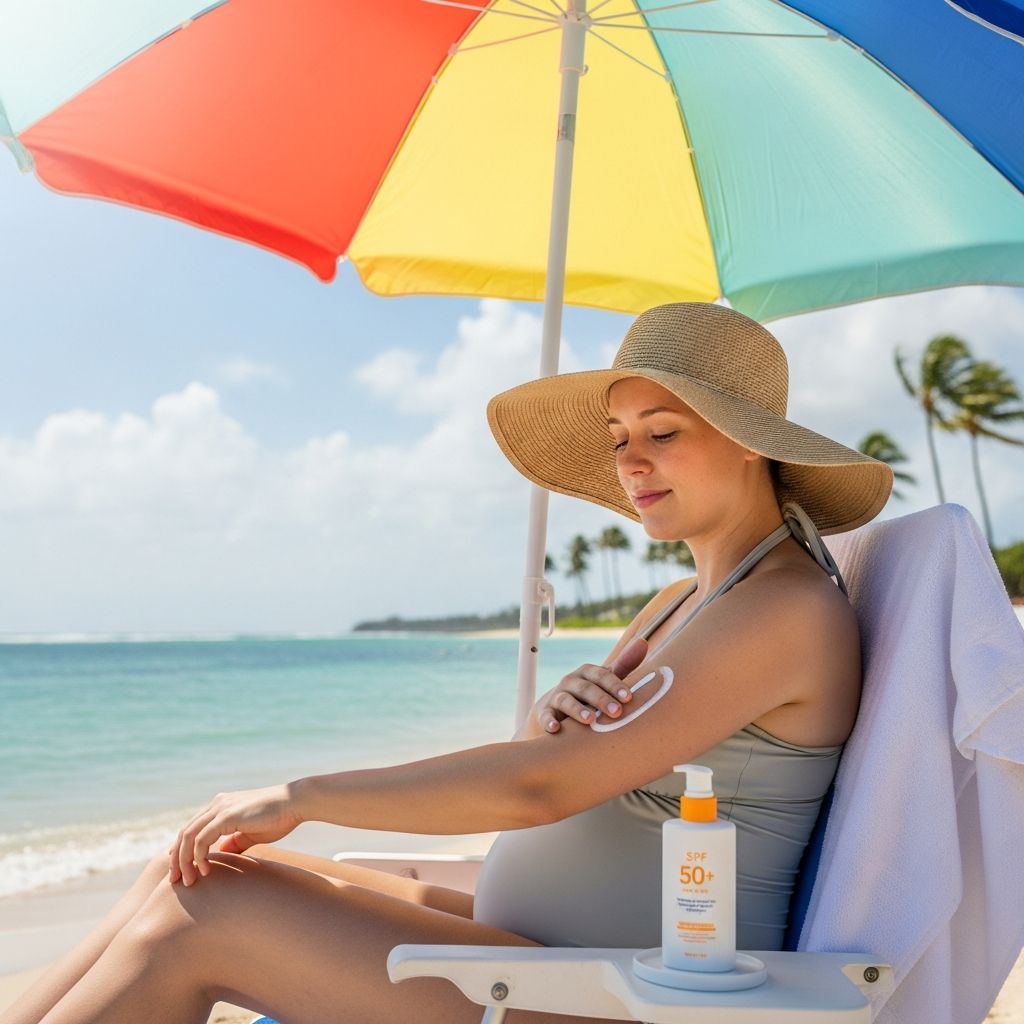
If you are comfortable using sunscreen, it becomes an important final line of defense on exposed areas like the face, hands, and feet. When selecting a formula while pregnant, you may want to prioritize:
- Broad-spectrum protection. Choose a product that guards against both UVA and UVB rays and has a sun protection factor (SPF) of at least 30.
- Mineral active ingredients. Many people prefer zinc oxide and titanium dioxide during pregnancy because they sit on the skin’s surface and reflect light rather than entering the skin.
- Fragrance-free options. Hormonal changes often make smells more intense and increase the risk of irritation, so simple formulas are often more comfortable.
Apply sunscreen generously 15–20 minutes before going outside and reapply every two hours or after swimming or sweating. Do not forget often-missed areas like the tops of the feet, back of the neck, ears, and hands.
Safe Sun Time in Pregnancy: A Practical Overview
There is no single “safe number of minutes” that works for everyone because skin type, location, altitude, time of day, and season all influence burn risk. However, the table below offers general guidance you can adapt with the help of your healthcare provider.
| Skin Tendency | Example Features | Suggested Approach to Midday Sun |
|---|---|---|
| Burns very easily | Very fair skin, light eyes, frequently burns | Avoid direct midday sun when possible; rely on shade, clothing, and sunscreen for even short outings. |
| Sometimes burns, sometimes tans | Light to medium skin, may tan after initial redness | Limit midday exposure to short errands; schedule longer outdoor time for morning or late afternoon. |
| Rarely burns | Medium to deep skin tone, usually tans | Still use sun protection; burns may be less obvious but UV damage and overheating can still occur. |
Regardless of skin tone, pregnancy lowers your margin for error with heat and dehydration. When in doubt, err on the side of shorter exposures and better protection rather than trying to “push through” discomfort.
What to Do If You Get Sunburned While Pregnant
Even with your best efforts, accidents happen: a cloudy day that suddenly brightens, an event that keeps you outside longer than expected, or a forgotten sunscreen reapplication. If you notice your skin turning pink or feeling hot and tender, the earlier you respond, the better you will feel.
Immediate First Steps
As soon as you suspect sunburn:
- Get out of the sun. Move indoors or into deep shade so the burn does not continue to worsen.
- Start cooling the skin. Use cool (not icy) compresses, a gentle cool shower, or a bath to draw heat away without shocking your body.
- Drink fluids. Take small, frequent sips of water or an electrolyte drink to begin replacing lost fluids and reduce the risk of dehydration.
Soothing the Skin Safely
Once you are in a cooler environment, focus on gentle, pregnancy-safe comfort measures:
- Moisturize with care. A plain, fragrance-free moisturizer or aloe-based gel can help relieve tightness and dryness. Test any new product on a small area first if your skin is very sensitive.
- Avoid heavy oils on severe burns. Thick ointments can trap heat in the skin in the first hours after a burn; use lighter lotions until the heat fades.
- Wear soft, loose clothing. Fabric that glides over the skin instead of rubbing reduces irritation and pain.
Medications and Pain Relief
Pain relief options are more limited during pregnancy and should always be discussed with your prenatal care provider. Many providers consider certain oral pain relievers relatively safe in pregnancy when used at appropriate doses, but your specific health history matters.
Topical products containing numbing agents or strong anti-inflammatory ingredients may not be recommended for use on large areas or during certain stages of pregnancy. Never start a new medication or medicated cream without checking whether it is appropriate for you at your current gestational age.
When to Call a Healthcare Provider About Sunburn
Most mild sunburns can be managed at home, but certain warning signs indicate that you need medical evaluation, especially while pregnant. Reach out to a healthcare professional or seek urgent care if you experience any of the following after a burn:
- Fever, chills, or feeling unusually hot or cold despite being in a cool room.
- Confusion, severe dizziness, fainting, or difficulty staying awake.
- Persistent vomiting, inability to keep fluids down, or signs of serious dehydration (very dark urine or not urinating for many hours).
- Extensive blistering, especially if the blisters cover a large area or show signs of infection such as pus, streaking redness, or warmth.
- Strong abdominal pain, regular contractions, or fluid leaking from the vagina.
When you contact a provider, let them know you are pregnant, how far along you are, how long you were in the sun, and what symptoms you are experiencing. This helps them decide whether you should be observed, treated with IV fluids, or monitored for signs of labor or other complications.
Frequently Asked Questions About Sunburn and Pregnancy
Can a bad sunburn cause miscarriage?
The burn on your skin by itself does not directly cause miscarriage. However, extreme overheating, severe dehydration, or heatstroke are serious conditions that can threaten your health and may increase risks to the pregnancy. Seeking help early if you feel very ill after sun exposure is important.
Is tanning safe during pregnancy?
Intentional tanning, whether outdoors or in tanning beds, means deliberately exposing your skin to high levels of UV radiation. That exposure increases long-term risks such as skin cancer and short-term issues like overheating and dehydration. Most experts recommend avoiding tanning beds entirely and using extra caution with any intentional tanning during pregnancy.
Can I still get enough vitamin D if I avoid the sun?
Vitamin D can come from brief, incidental sun exposure, certain foods, and supplements. Many prenatal vitamins already contain vitamin D. Your provider can check your levels if needed and help you decide whether a supplement is appropriate, rather than relying on unprotected sun exposure to meet your needs.
Does sunscreen block all vitamin D production?
In everyday life, sunscreen is not applied perfectly or frequently enough to block every bit of UVB that contributes to vitamin D synthesis. Even with good sun protection, many people still produce some vitamin D. If you have specific concerns, talk with your provider about blood testing and supplementation instead of skipping sun protection.
My face has dark patches now; does sunburn make that worse?
Many people notice dark, patchy pigmentation on the face during pregnancy. Sun exposure can deepen or spread these patches. While it may not be a burn in the traditional sense, protecting your skin from the sun with hats, shade, and sunscreen can help minimize these changes and make them more likely to fade after birth.
Practical Sun-Safe Checklist for Pregnant Days Outside
Before heading out for a day at the park, beach, or backyard, run through this simple checklist to keep sunburn from becoming an uninvited guest:
- Checked the UV index and planned most outdoor time for early morning or late afternoon.
- Packed or worn a wide-brimmed hat, sunglasses, and light, long layers.
- Applied broad-spectrum SPF 30+ sunscreen to exposed areas and brought it along for reapplication.
- Filled a large water bottle and, if it is a hot day, added an extra source of electrolytes.
- Identified nearby shade – a tree, umbrella, tent, or indoor space – for regular cooling breaks.
- Set a reminder on your phone to reapply sunscreen and drink water at regular intervals.
With thoughtful planning and attentive listening to your body, you can continue to enjoy time outdoors throughout your pregnancy. Protecting your skin and staying cool are not only about comfort today; they are part of caring for your long-term health and creating a safer environment for your growing baby.