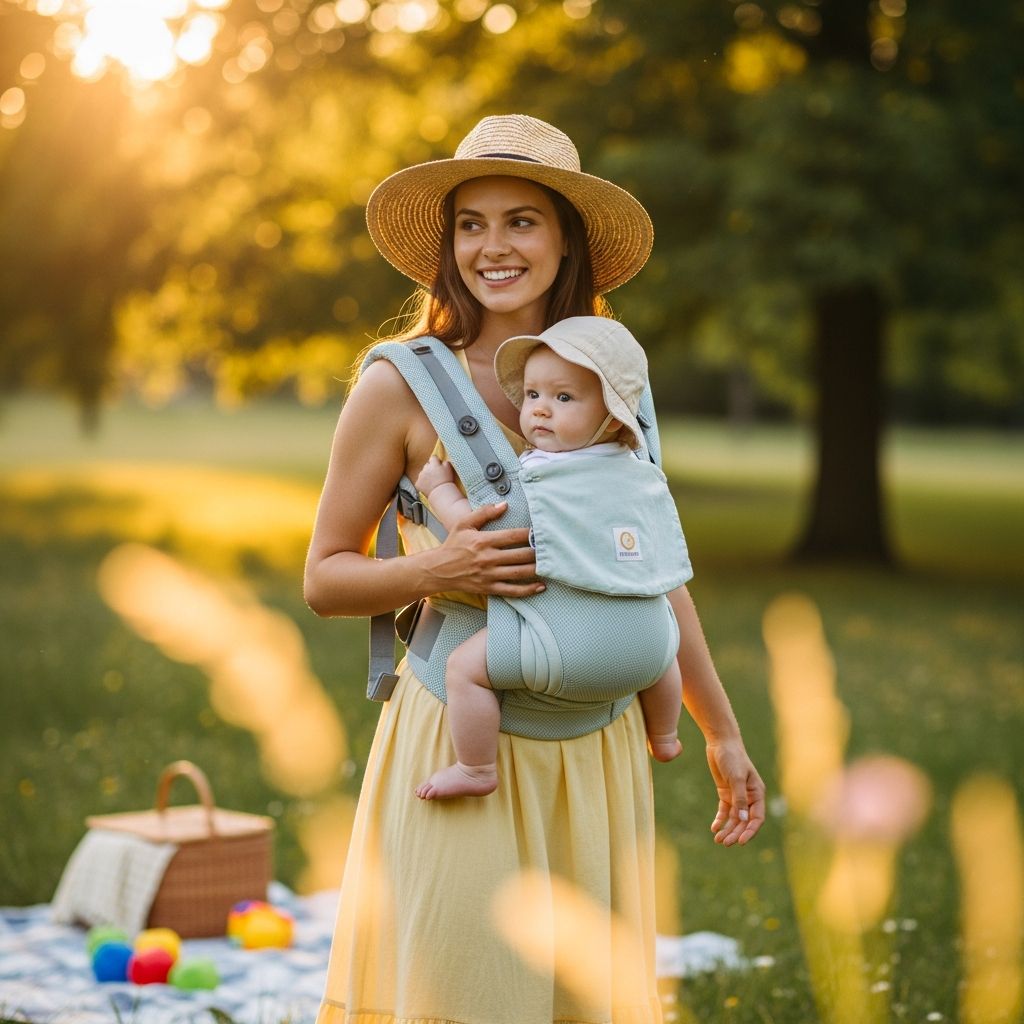
Carrying your baby close during the summer months offers bonding benefits and hands-free convenience, even as temperatures climb. With thoughtful preparation, parents can maintain safety and comfort for both themselves and their little ones amid the heat. This guide explores key strategies drawn from expert recommendations to make warm-weather babywearing enjoyable and risk-free.
Selecting the Ideal Carrier for Hot Climates
The foundation of effective summer babywearing starts with choosing a carrier that prioritizes airflow and lightweight design. Breathable materials like TENCEL Modal, linen, cotton, or mesh panels allow air circulation, reducing sweat buildup between parent and child.
Avoid heavy, padded carriers that trap heat; instead, opt for wraps or slings with open structures. For instance, waffle-knit fabrics promote ventilation while securing baby firmly. Structured carriers without waist belts, such as onbuhimos, position high on the back for older infants, minimizing hot spots around the hips.
- Look for natural fibers that wick moisture away from skin.
- Test carriers for adjustability to prevent bunching, which blocks airflow.
- Consider single-layer wrapping techniques like kangaroo or simple back carries for minimal fabric coverage.
These choices ensure the carrier acts as a supportive layer rather than an insulator, adapting to summer’s demands.
Dressing Strategies for Parent and Baby
Layering appropriately transforms potential discomfort into ease. Both parent and baby should wear lightweight, loose-fitting garments in light colors to reflect sunlight and facilitate evaporation.
For babies, a simple diaper or onesie suffices under the carrier, treating it as an extra layer. Parents benefit from moisture-wicking tops that cover the chest, preventing direct skin contact that amplifies stickiness. Natural fabrics outperform synthetics for breathability.
| Element | Parent Recommendations | Baby Recommendations |
|---|---|---|
| Fabrics | Cotton, linen, bamboo | Organic cotton, UV-protective weaves |
| Colors | White, pastels | Light shades for exposed skin |
| Accessories | Breathable shirt over chest | Muslin cloth between bodies |
Incorporate a thin muslin or hydrophilic cloth between you for sweat absorption, swapping as needed. Long lightweight sleeves protect arms from UV without overheating.
Hydration and Personal Cooling Techniques
Staying hydrated is crucial, as sweat regulates body temperature for both parent and baby through skin-to-skin proximity. Carry water bottles and offer sips frequently to yourself and older infants capable of drinking independently.
Additional cooling methods include seeking shade, using fans during pauses, or light misting with water sprays. Avoid submerging in pools while wearing, but brief sprinkles refresh without compromising safety. Wide-brim hats or parasols shield from direct sun, enhancing overall comfort.
- Prioritize water intake before, during, and after outings.
- Rest in air-conditioned spots midday.
- Use evaporative cooling via damp cloths on pulse points.
Timing Outings and Environmental Awareness
Schedule babywearing for cooler periods like dawn or dusk, dodging peak heat from 10 a.m. to 4 p.m. when UV rays intensify. Shade trees, awnings, or indoor transitions prevent prolonged exposure.
Alternate positions—front to hip or back—to air out fabrics and redistribute weight, giving brief respites. For toddlers, back carries expose less skin to direct sun while promoting airflow.
Recognizing and Preventing Overheating
Vigilance for distress signals ensures prompt action. Watch for flushed cheeks, excessive dampness on neck or chest, rapid breathing, or irritability in your baby. Parents should self-monitor similarly.
If signs appear, unfasten the carrier, move to shade, and cool with gentle fanning or hydration. Never use barriers like towels between baby and carrier, as they obstruct airways and airflow.
- Check temperature via neck or torso feel every 15-20 minutes.
- Pause activities if either feels overly warm.
- Ensure baby’s face remains visible and unobstructed.
Sun Protection Without Compromise
Babies under six months avoid chemical sunscreens; rely on physical barriers like clothing, hats, and shade. For older infants, apply to exposed areas like feet, ears, and neck, reapplying post-sweat. Natural options such as shea butter offer mild defense.
Parent hats with neck flaps protect while carrying, and UV-rated garments add security without bulk.
Advanced Carrying Positions for Heat Relief
Beyond basics, specific holds optimize ventilation. Front kangaroo positions use minimal passes for newborns, while back carries suit active toddlers, freeing the chest. Hip carries allow quick access for checks and position shifts.
Experiment to find what suits your duo, prioritizing the TICKS protocol: Tight, In view at all times, Close enough to kiss, Keep chin off chest, Supported back.
Common Challenges and Solutions
| Challenge | Solution |
|---|---|
| Sweat buildup | Breathable fabrics + muslin barriers |
| Sun exposure | Shade seeking + protective gear |
| Overheating signs | Frequent monitoring + breaks |
| Carrier discomfort | Lightweight, adjustable options |
Frequently Asked Questions
Can I babywear in temperatures over 90°F?
Yes, with precautions like breathable carriers, hydration, and shade. Limit duration and monitor closely.
Is skin-to-skin safe in summer heat?
It aids thermoregulation via sweat but add fabric layers if excessive perspiration occurs.
What if my baby seems fussy in the heat?
Check for overheating indicators; cool down immediately and reassess.
Are mesh carriers best for summer?
They excel in airflow, paired with supportive structures.
How often should I check on baby while wearing?
Every 10-15 minutes in heat, ensuring airway patency and comfort.
Embracing Summer Adventures Together
Summer babywearing fosters connection amid beach walks or market strolls. By integrating these practices, parents equip themselves for seamless, joyful experiences. Consistent application builds confidence, turning heat into just another backdrop for precious moments.
Expand your knowledge with carrier trials and community insights, tailoring to your lifestyle. Safe, cool carrying awaits.
References
- Hot Weather Babywearing Tips — Solly Baby. 2023. https://sollybaby.com/blogs/news/best-tips-for-babywearing-in-warm-weather
- 5 Tips for Using Baby Carriers in Warm Weather — Babymaxi. 2023. https://www.babymaxi.com/blogs/learn-and-explore/babywearing-in-the-summer
- Top 5 Summer Babywearing Tips — Boba. 2023. https://boba.com/blogs/boba-reads/top-5-summer-babywearing-tips-stay-cool-and-comfortable
- Babywearing in summer with wrap & baby carrier — Fidella. 2023. https://fidella.org/blogs/babywearing/summer-wrapping-tips-and-tricks
- How to Stay Cool While Babywearing This Summer — Moby Wrap. 2023. https://mobywrap.com/blogs/blog/how-to-stay-cool-while-babywearing-this-summer
- Stay Cool this Summer while Babywearing — CBWS. 2023. https://www.cbws.org/blog/stay-cool-this-summer-while-babywearing