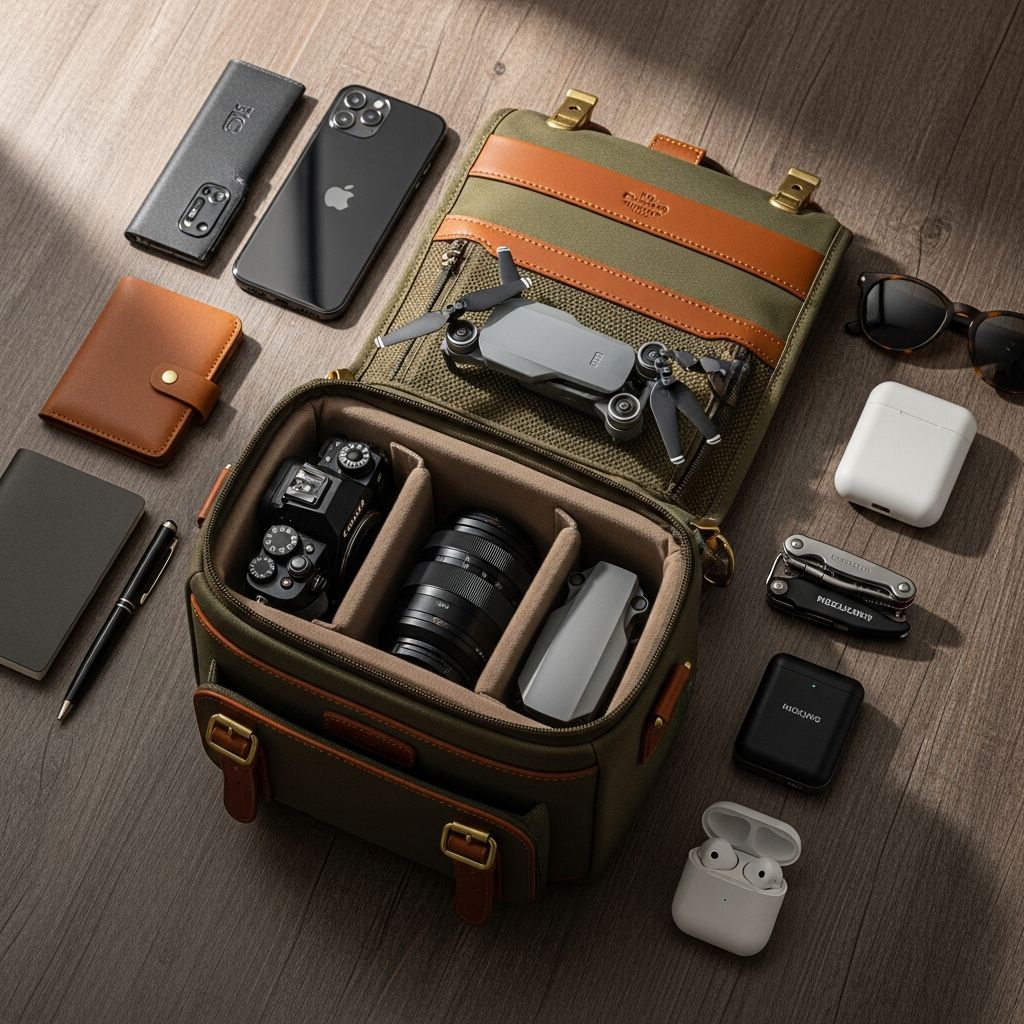
Camera bags were once strictly a niche accessory for photographers. Today, beautifully designed camera bags have quietly become the go-to everyday bags for parents, travelers, and remote workers who crave organization, style, and durability in one piece of gear.
Instead of juggling a diaper bag, a purse, and a camera case, many people now rely on a single well-designed camera bag that does it all—without looking like it belongs at a press conference.
From Clunky Gear Case to Modern Style Staple
Traditional camera bags were built with one goal: protect expensive camera equipment. That usually meant boxy silhouettes, technical fabrics, and highly visible logos. They worked—but they rarely looked good with anything other than cargo pants.
The new generation of camera-inspired bags changed that by focusing on three ideas:
- Everyday versatility instead of single-purpose design
- Fashion-forward materials such as leather, canvas, and metal hardware
- Hidden protection that does not scream “there is pricey tech inside”
At the same time, the number of people who need to carry both personal items and tech has exploded: parents with tablets and snacks, content creators with mirrorless cameras, and remote workers with laptops and chargers. Surveys show that smartphone and social media use for photography and video continues to grow globally, driving demand for bags that support portable equipment and frequent movement.
What Makes a Camera Bag Perfect for Everyday Use?
The features that protect fragile lenses also happen to make daily life much easier. When adapted into more fashionable silhouettes, camera bags solve many frustrations that standard handbags, totes, or backpacks ignore.
Padded Protection You Don’t Have to Baby
Camera bags are built around impact protection. Even entry-level models typically include padded, shock-absorbing interiors designed to keep delicate gear safe from bumps and drops.
- Thick, soft walls that double as gentle barriers against water bottles and snack containers
- Structured bases that help the bag stand upright, keeping items from tumbling out
- Soft dividers that protect glasses, small electronics, or baby bottles just as well as lenses
Modular Organization Instead of a Single Black Hole
Interior dividers—originally meant for camera bodies and lenses—translate beautifully into daily organization.
- One compartment can hold wallet, keys, and phone where they’re always visible
- Another can be dedicated to diapers, wipes, and a spare onesie
- A third can safely store a camera, tablet, or e-reader
Modern work and travel demands often require carrying laptops, tablets, external drives, and chargers. A modular interior ensures cables do not tangle with snacks and that electronics remain cushioned from everyday impacts.
Thoughtful Exterior Design
Unlike purely fashion-focused handbags, camera-style bags usually include highly practical touches:
- Secure zip closures instead of open-top designs
- Multiple external pockets to separate quick-grab items like transit cards
- Comfortable, often adjustable straps built to handle more weight
- Discrete construction that does not advertise the presence of expensive equipment
Research on theft and personal safety recommends using bags that close completely and do not draw attention to valuables, especially when traveling on public transport or in crowded public spaces.
Camera Bags in Real Life: Who Uses Them and How?
Although the classic user is still a photographer, many other groups have discovered that a camera bag solves daily pain points in a stylish way.
Parents Who Refuse to Carry a Cartoon-Covered Diaper Bag
Parents juggling changing gear, snacks, and a phone often outgrow traditional diaper bags quickly. A structured camera bag offers:
- Enough room for diapers, wipes, a spare outfit, and a swaddle
- Separate padded space for a camera or tablet for on-the-go entertainment
- A design that still looks sophisticated for dinners, meetings, or date nights
Instead of owning a diaper bag, a purse, and a camera case, many parents opt for a single, well-organized camera-style bag that transitions seamlessly from playground to office.
Travelers and City Commuters
Camera bags also excel as daypacks for urban adventures or long commutes. They tick off several safety and comfort features that travelers value:
- Crossbody or backpack options that leave hands free for tickets and coffee
- Padded interiors that protect cameras, compact laptops, or e-readers from bumps
- Sneaky pockets for passports or transit cards, kept close to the body
Public transportation systems and airports increasingly encourage travelers to keep essential items with them rather than in checked luggage, making a secure, structured day bag more important than ever.
Remote Workers and Creators
From video calls in coffee shops to impromptu photo shoots, contemporary work often happens far away from a desk. Camera bags shine in this environment because they comfortably carry:
- A small laptop or tablet in a padded slot
- Chargers, headphones, and a portable battery in dedicated pockets
- A camera or compact microphone for content creation
As hybrid work becomes more common globally, people look for bags that protect tech while still blending into everyday outfits—precisely what stylish camera bags are built to offer.
Key Design Elements to Look For
Not all camera-inspired bags are created equal. When choosing one you plan to carry every day, several design features determine whether it becomes a true workhorse or a closet regret.
| Feature | Why It Matters | Everyday Benefit |
|---|---|---|
| Padded, removable dividers | Originally for camera lenses and bodies | Lets you reconfigure for baby gear, tech, or travel items |
| Structured exterior | Protects contents and holds shape when set down | Prevents squashed snacks, tangled cables, or crushed sunglasses |
| Top-zip closure | More secure than open-tote designs | Helps deter theft and keeps items contained if the bag tips over |
| Adjustable strap | Distributes weight more evenly across body | Makes heavier loads more comfortable for long days |
| Neutral, timeless styling | Works with different outfits and settings | Allows one bag to replace several specialty bags |
Balancing Style, Comfort, and Practicality
Because camera bags are often carried for long stretches—on shoots, trips, or commutes—comfort is non-negotiable. Poorly designed straps or unbalanced weight distribution can lead to fatigue and even musculoskeletal strain over time.
Comfort Considerations
- Wide, padded straps reduce pressure on the shoulders.
- Convertible carry options (crossbody and shoulder) help vary how weight is distributed.
- Mid-size capacities avoid the temptation to overpack, which is a common source of strain.
Style Considerations
To make sure a camera-inspired bag works hard in your wardrobe, consider:
- Material: Leather and high-quality coated canvas usually age gracefully and resist daily wear.
- Hardware: Subtle metal accents and sturdy zippers feel polished without appearing flashy.
- Color: Neutrals (black, tan, deep brown) generally pair with more outfits, while a bold shade can become a personal signature.
Everyday Use Cases: How One Bag Can Replace Three
One of the biggest advantages of stylish camera bags is their ability to adapt to multiple scenarios without switching bags constantly.
Morning School Run and Workday
- Slip in a small laptop, notebook, and pen in the main compartment.
- Use a padded section for snacks, hand wipes, and a compact water bottle.
- Keep keys, transit cards, and headphones in front pockets.
Weekend Outing or Family Event
- Replace stationery with diapers, a changing mat, and a spare shirt.
- Reserve one divider space for a camera or instant-photo printer to capture memories.
- Add sunscreen, tissues, and small toys in side pockets.
Travel Day or City Exploring
- Use the padded interior for a camera and extra lens, plus a tablet or e-reader.
- Keep passport, boarding pass, and travel card in a zip pocket that faces your body.
- Include a light scarf, charging cable, and portable battery in remaining compartments.
Care and Longevity: Making Your Bag Last
Since these bags often cost more than basic totes, taking care of them helps preserve both appearance and performance.
- Clean regularly with appropriate products for leather or fabric, avoiding harsh solvents.
- Avoid overloading, which can strain straps and zippers and lead to premature wear.
- Store properly—upright or stuffed lightly with paper to maintain shape.
- Use pouches for liquids or creams to prevent accidental spills inside padded interiors.
Frequently Asked Questions (FAQs)
Are camera bags really more practical than regular handbags?
For many people, yes. Camera bags are designed with structure, padding, and compartments to protect fragile items, which happens to be ideal for organizing daily essentials and tech without everything collapsing into a single pile.
Can I use a camera bag as a diaper bag?
Absolutely. The same padded dividers used for lenses work well for separating diapers, wipes, and bottles. With a few small pouches for hygiene items, a camera-style bag can function as a chic, highly organized diaper bag.
Will a camera bag protect my laptop or tablet?If the bag includes a padded compartment sized appropriately, it can protect a laptop or tablet from everyday bumps. For larger devices, check dimensions carefully and consider an additional slim sleeve for improved drop protection.
Q: Are stylish camera bags safe for travel in busy cities?
They can be, especially if they offer full-zip closures and can be worn crossbody or as a backpack. Safety guidance for travelers often recommends bags that close completely and are carried close to the body to reduce the risk of pickpocketing.
How do I choose the right size of camera bag for everyday use?
List what you carry on an average busy day—phone, wallet, keys, tech devices, personal care items, and any kid-related gear—and choose a bag that fits those items with a small amount of leftover space. If you go too large, you may be tempted to overpack, which can become uncomfortable over time.
References
- Camera bag ergonomics and protection — B&H Photo Video, Learning Center. 2023-05-10. https://www.bhphotovideo.com/explora/photography/buying-guide/how-to-choose-a-camera-bag
- Hybrid working and the future of work — Organisation for Economic Co-operation and Development (OECD). 2023-02-20. https://www.oecd.org/future-of-work/hybrid-working-and-the-future-of-work.htm
- Mobile phone use for photography and content creation — Pew Research Center. 2021-11-10. https://www.pewresearch.org/internet/2021/11/10/mobile-technology-and-home-broadband-2021/
- Pickpocketing and theft prevention tips for travelers — U.S. Department of State, Bureau of Consular Affairs. 2022-06-15. https://travel.state.gov/content/travel/en/international-travel/before-you-go/travelers-checklist.html
- Visual social media and digital photography trends — Reuters Institute for the Study of Journalism, University of Oxford. 2023-06-21. https://reutersinstitute.politics.ox.ac.uk/digital-news-report/2023