A stye on a child’s eyelid can look alarming, but it is usually a minor infection that clears with simple home care. This guide explains what styes are, how to tell them apart from similar eyelid bumps, what you can safely do at home, and when to seek medical help.
What Is a Stye?
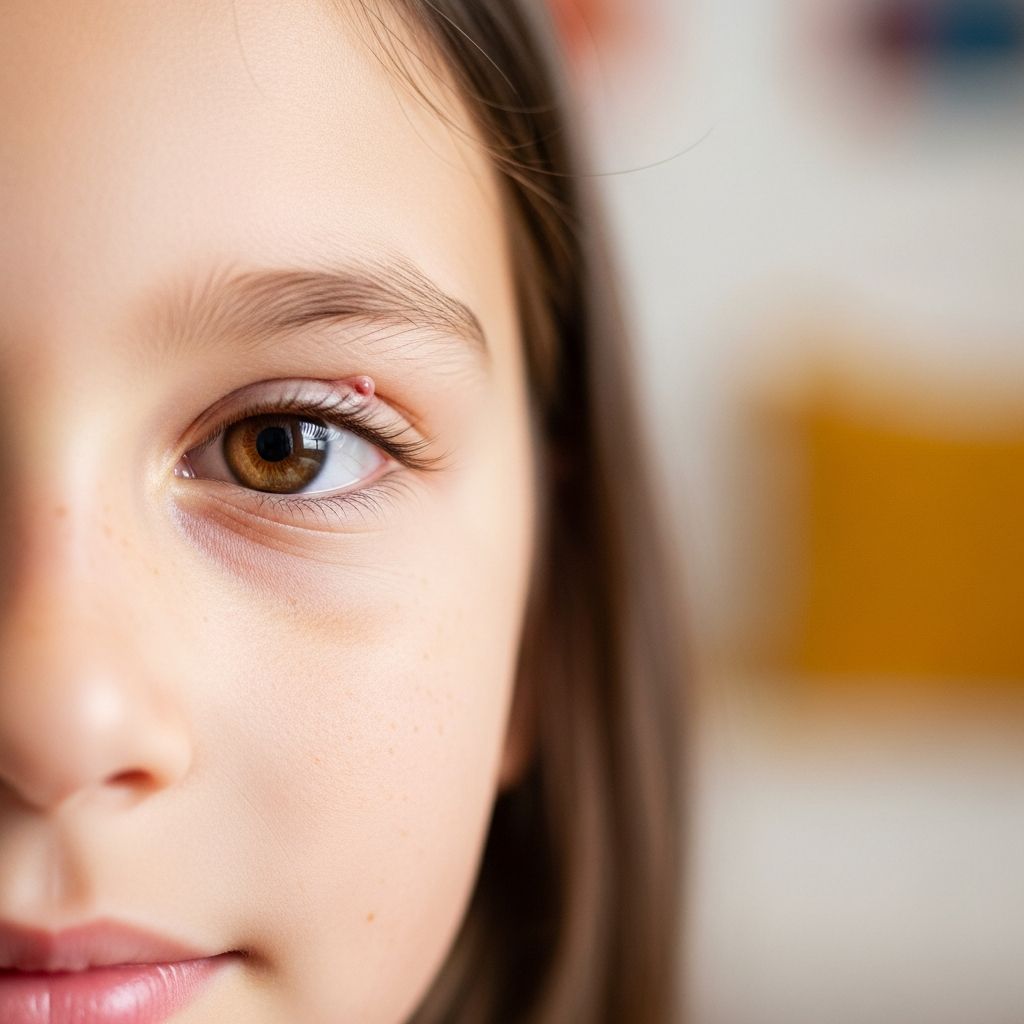
A stye is a small, red, painful lump that forms on the edge or inside of the eyelid. It develops when one of the tiny oil glands near the eyelashes or within the eyelid becomes blocked and infected by bacteria.
Styes are very common in children because kids often rub their eyes with unwashed hands, which can transfer germs to the delicate skin of the eyelids.
Key features of a stye
- Looks like a pimple or small boil on the eyelid.
- Usually red, swollen and tender to the touch.
- May be on the outer lid margin or just under the inner surface of the lid.
- Can cause tearing, a scratchy sensation, or mild light sensitivity.
How a Stye Forms
The eyelids contain many tiny glands that produce oil to keep the eye surface moist and comfortable. When one of these glands becomes clogged, oil cannot drain properly and bacteria can grow in the trapped material, leading to an inflamed bump called a stye.
The most common bacteria involved are those that normally live on the skin but can cause infection when they get into a blocked gland.
Common risk factors in kids
- Frequently rubbing or scratching the eyes.
- Not washing hands regularly, especially after playing outside or with pets.
- Using old or shared eye makeup (for older children and teens).
- Existing eyelid inflammation (such as chronic redness or crusting along the lash line).
- Skin conditions on the face that irritate the eyelids.
Types of Styes and Similar Eyelid Lumps
Not every bump on the eyelid is the same. Understanding the differences helps parents know what to expect and how urgently to seek care.
| Condition | What it is | Pain level | Typical location | Time course |
|---|---|---|---|---|
| External stye | Infected gland at the eyelash line, appearing like a red pimple on the edge of the lid. | Usually tender and sore. | Along the outer eyelid margin near the lashes. | Develops quickly and often drains or improves within several days. |
| Internal stye | Infection of a deeper oil gland inside the eyelid. | Painful, with a deeper ache in the lid. | Inner surface of the lid; swelling may push outward. | May take longer to drain or resolve than an external stye. |
| Chalazion | Firm, noninfectious lump that forms when a blocked gland slowly hardens. | Usually not painful once formed. | Often away from the edge of the lid, more in the middle of the eyelid. | Develops gradually and can linger for weeks to months. |
Signs and Symptoms Parents May Notice
Symptoms often start with mild eyelid tenderness and redness, then progress to a noticeable bump. Some children may only complain that their eye “hurts” or “feels funny.”
Typical symptoms of a stye
- A small, raised, red bump on the eyelid that may look like a pimple.
- Swelling and warmth of the affected part of the eyelid.
- Pain or soreness, especially when blinking or touching the lid.
- Increased tearing or watery eyes.
- Crusting around the eyelashes or a tiny yellow spot where pus may drain.
Less common symptoms
- Temporary blurry vision if the swelling presses on the eye surface.
- Sensitivity to bright light.
- A feeling like something is stuck in the eye, even when nothing is visible.
When to Call the Doctor
Most styes are mild and can be managed at home. However, certain warning signs mean a child should be seen by a healthcare provider.
Contact a doctor promptly if:
- The swelling is spreading beyond the eyelid, especially into the cheek or eyebrow area.
- The eyelid becomes very red, hot, or hard to open.
- Your child develops fever, seems unusually tired, or appears unwell.
- There are changes in vision, such as double vision, persistent blurriness, or eye pain with movement.
- The stye does not improve at all after 1 week of home care.
- Styes keep returning or appear in both eyes repeatedly.
Safe Home Care for a Stye
Gentle home treatment helps styes drain naturally and eases discomfort. The main goal is to soften the blocked oil and encourage it to flow out through the gland opening.
Warm compresses: the cornerstone of care
A warm compress is the most important home treatment. Moist heat increases circulation, loosens thick oil inside the gland, and helps the stye come to a head and drain on its own.
How to apply a warm compress (step-by-step)
- Wash your hands thoroughly with soap and water.
- Use a clean, soft washcloth and wet it with warm (not hot) tap water.
- Wring out excess water so it is not dripping.
- Gently place the cloth over your child’s closed eyelid for 5–10 minutes.
- Re-warm the cloth as needed to keep it comfortably warm.
- Repeat 3–4 times a day until the stye improves.
Other helpful home measures
- Keep the eyelid area clean by gently wiping away crusts with a cotton pad moistened in warm water.
- Discourage your child from rubbing or scratching the affected eye.
- For older children, avoid wearing contact lenses until the stye has healed.
- Skip eye makeup (mascara, eyeliner, eye shadow) until all redness and swelling are gone.
Important safety “don’ts”
- Do not squeeze or pop the stye like a pimple. This can spread infection.
- Do not use over-the-counter steroid eye drops or ointments unless prescribed specifically for your child.
- Do not share washcloths, towels, or pillowcases that come into contact with the affected eye.
Medical Treatment Options
Many styes improve without prescription medication, but sometimes additional treatment is needed. The choice depends on the severity of the infection and how your child is feeling overall.
Possible treatments from a healthcare professional
- Prescription antibiotic ointment or drops: Used if there are signs of more significant bacterial infection along the lid margin or nearby skin.
- Oral antibiotics: Reserved for more widespread infection or when the surrounding eyelid tissue is involved.
- Minor in-office procedure: In some stubborn cases, an eye specialist may gently open the stye under local anesthesia to allow trapped material to drain.
- Treatment of underlying conditions: If your child has chronic eyelid inflammation or skin problems, the doctor may suggest long-term eyelid hygiene or other medications.
How Long Does a Stye Last?
With regular warm compresses and good eyelid hygiene, most styes begin to feel better in a few days and shrink significantly within about a week. Some may leave a small, firm bump that slowly fades over time.
If a painless lump remains after the redness and tenderness are gone, it may have turned into a chalazion, which sometimes requires additional treatment if it persists.
Preventing Future Styes
Children who get one stye may be more prone to others, especially if eye-rubbing or poor eyelid hygiene continues. A few simple daily habits can lower the risk of new styes forming.
Healthy habits for kids
- Teach regular handwashing, especially before touching the face or eyes.
- Encourage children to use a clean tissue rather than fingers if the eye itches.
- Remind teens not to share eye makeup, wash brushes often, and replace mascara regularly.
- Make it a rule to remove all eye makeup before bedtime.
Eyelid hygiene routine (for frequent styes)
If your child tends to develop repeated styes, a gentle daily lid-care routine can help keep the oil glands flowing freely.
- Ask your healthcare provider to recommend a child-safe eyelid cleanser or diluted solution.
- Using a clean cotton pad, gently wipe along the lash line once or twice a day.
- Follow with a brief warm compress to soften any blocked oil.
Helping Your Child Cope
Styes can be uncomfortable and may make children self-conscious about how they look. Reassure your child that this is a common problem, not caused by anything they “did wrong,” and that it usually goes away quickly.
- Explain in simple terms that the bump is like a small pimple and will shrink with warm cloths.
- Let your child choose a special washcloth just for their eye care to give them a sense of control.
- Use screen time, audiobooks, or quiet games to distract them while the warm compress is in place.
Frequently Asked Questions About Styes in Children
Is a stye contagious?
The stye itself is not usually considered highly contagious, but the bacteria inside it can spread through shared towels or by touching the eye and then touching another surface. Use separate washcloths and pillowcases, and remind family members to wash their hands often.
Can a stye damage my child’s vision?
Most styes sit on the eyelid and do not permanently harm vision. Temporary blurriness may occur if the swelling presses on the eye or if tears and discharge coat the front of the eye, but this should clear as the stye heals. Seek medical care if your child complains of persistent vision changes or eye pain.
Should my child stay home from school?
If your child feels generally well and does not have a fever, it is usually safe to attend school. Emphasize handwashing and discourage close contact games that involve face touching. If there is significant drainage or swelling that makes it hard for your child to see comfortably, resting at home may be helpful until symptoms improve.
Will my child need surgery?
Most children never need a surgical procedure for a stye. Minor procedures are reserved for styes that do not clear with home care and medication or for chalazia that remain large and bothersome. These are typically done by an eye specialist using local anesthesia and are usually quick.
What if styes keep coming back?
Recurring styes may be a sign of ongoing eyelid inflammation, skin conditions, or habits such as rubbing the eyes. Discuss this pattern with your child’s doctor, who may recommend a regular eyelid cleansing routine, evaluation for underlying skin issues, or referral to an eye specialist if needed.
Key Takeaways for Parents
- Styes are common, mild eyelid infections that usually clear with warm compresses and good hygiene.
- Watch for warning signs like spreading redness, fever, or vision changes, and contact a healthcare professional if they occur.
- Teaching handwashing and avoiding eye rubbing can greatly reduce the chance of future styes.