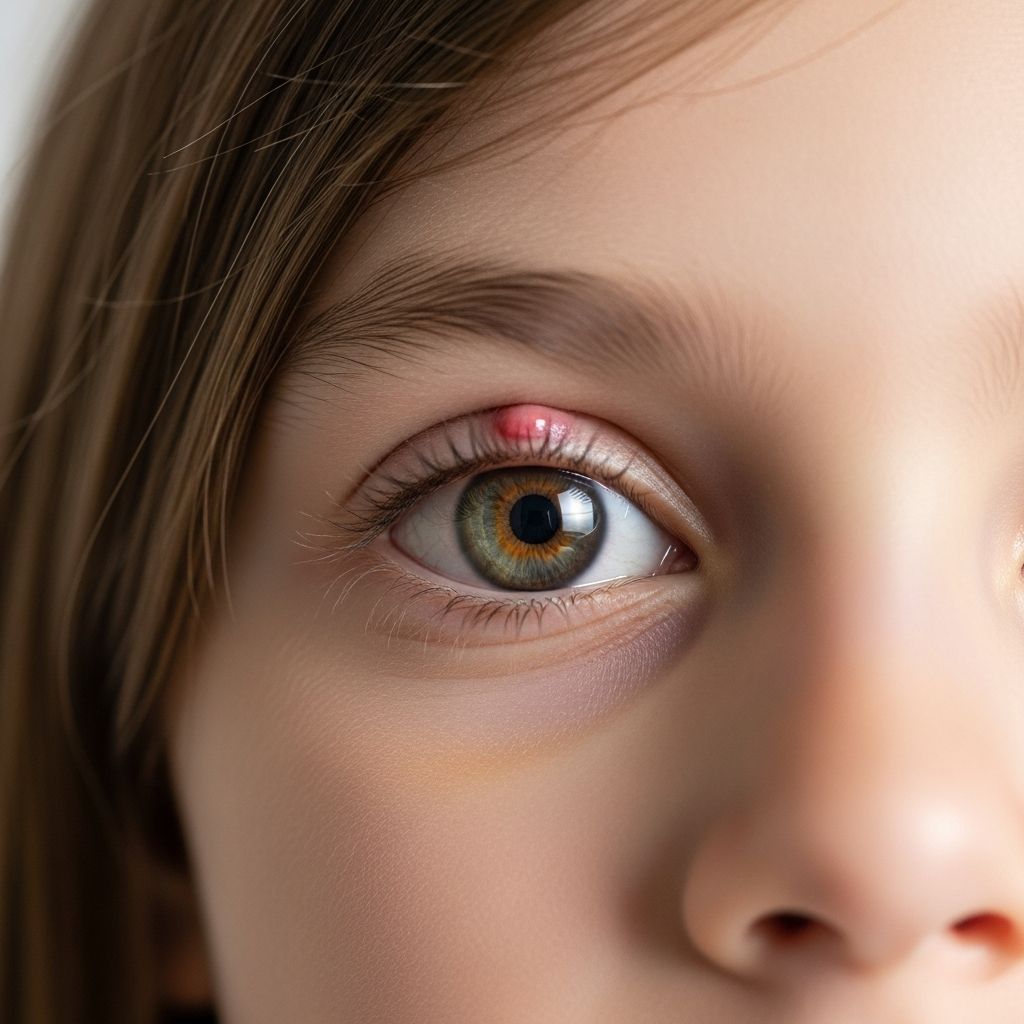
Styes represent a frequent yet typically benign eye concern in young ones, manifesting as tender, red swellings on the eyelid edges. These infections arise from blocked oil glands near the eyelashes, often due to bacterial activity, and while uncomfortable, they generally resolve with simple care.
Recognizing the Signs of a Stye in Kids
Parents often first notice a stye when their child complains of eye discomfort or rubbing. The primary indicator is a small, pimple-like bump on the upper or lower eyelid, filled with pus and surrounded by redness and swelling. This lesion causes localized pain, tenderness upon touch, and may lead to excessive tearing or a gritty sensation.
In children, additional symptoms can include crusting along the lash line, sensitivity to light, or blurred vision if swelling presses on the eye. External styes appear on the outer eyelid surface near hair follicles, while internal ones develop on the inner lining, potentially causing more drainage toward the eye.
- Red, swollen bump resembling a boil near eyelashes.
- Pain or soreness when blinking or touching the area.
- Watery eyes or mild discharge.
- Crusty eyelids upon waking.
These signs typically emerge suddenly, distinguishing styes from slower-developing issues like chalazia.
Why Styes Develop: Bacterial Blockages Explained
At the heart of a stye, known medically as hordeolum, lies an obstruction in the eyelid’s sebaceous glands—tiny oil producers that lubricate the eye. When these glands clog with debris, bacteria like Staphylococcus aureus—a common skin resident—invade, sparking acute inflammation.
Children are particularly susceptible due to habits like rubbing dirty hands over eyes or sharing towels. The eyelid anatomy facilitates this: glands of Zeis and Moll at lash bases for external styes, and deeper Meibomian glands for internal variants. Inflammation triggers pus buildup, edema, and vascular changes, peaking discomfort in 24-48 hours.
| Type of Stye | Location | Affected Gland | Common Features |
|---|---|---|---|
| External | Outer eyelid edge | Zeis or Moll | Visible pustule, points outward |
| Internal | Inner eyelid surface | Meibomian | Drainage into eye, conjunctival redness |
Risk amplifiers include chronic lid inflammation (blepharitis), diabetes, or rosacea, though most pediatric cases stem from hygiene lapses.
Distinguishing Styes from Similar Eye Issues
Not every eyelid bump signals a stye. Chalazia, for instance, form from noninfectious blockages, lacking acute pain and pus; they persist as firm, painless nodules. Blepharitis presents diffuse edge redness without focal swelling, while preseptal cellulitis spreads broadly with fever.
Key differentiators: styes hurt and evolve rapidly, often self-resolving in days, unlike chronic chalazia needing intervention. Rarely, untreated styes progress to cellulitis, warranting prompt checks.
Safe Home Management Strategies for Young Eyes
Most styes heal spontaneously within 7-10 days, but targeted care accelerates relief and drainage. Central to treatment: warm compresses, applied 3-4 times daily for 10-15 minutes, soften blockages and promote natural pus release without squeezing.
- Gently clean the lid with baby shampoo diluted in warm water using a soft cloth.
- Apply a clean, warm (not hot) cloth, rewetting as it cools.
- Avoid popping the stye to prevent bacterial spread.
Over-the-counter pain relievers like acetaminophen ease discomfort in kids. Antibiotic ointments are reserved for persistent cases, as styes rarely require them initially. Contact lens wearers should pause use until cleared.
Prevention Tips to Keep Children’s Eyelids Healthy
Proactive steps curb recurrence. Instill handwashing before eye touching, discard expired makeup, and clean lids nightly. For blepharitis-prone kids, daily warm scrubs maintain gland flow. Avoid sharing eye products or towels to block bacterial transfer.
- Wash hands frequently, especially post-play.
- Remove makeup before bed.
- Use fresh compresses per session.
- Manage underlying conditions like diabetes.
When to Consult a Pediatrician or Eye Specialist
While home care suffices for most, seek care if the stye enlarges after 48 hours, impairs vision, or accompanies fever, widespread redness, or orbital pain—signs of cellulitis. Recurrent styes may signal blepharitis or immune issues needing evaluation.
In severe cases, doctors may lance the stye or prescribe oral antibiotics. Children under 2 or with eye trauma merit quicker attention.
Potential Complications and Long-Term Outlook
Complications are uncommon but include chalazion conversion, scarring, or secondary infections like preseptal cellulitis. With proper care, vision threats are minimal, and most kids experience full recovery sans sequelae.
Chronic cases link to meibomian dysfunction; regular pediatric eye exams aid early detection.
Frequently Asked Questions About Styes in Children
Can styes affect vision in kids?
Temporarily, large styes may distort the cornea via pressure, blurring sight; this resolves post-healing.
Is it safe to squeeze a child’s stye?
No—squeezing risks deeper infection spread; use compresses instead.
How long do styes last without treatment?
Typically 1-2 weeks, though compresses shorten to days.
Are styes contagious?
Not directly, but bacteria on towels or hands can transmit; hygiene prevents spread.
Do babies get styes?
Yes, from blocked glands; gentle care applies.
Supporting Eye Health Beyond Styes
Holistic pediatric eye care encompasses balanced diets rich in omega-3s for gland health, screen time limits to reduce rubbing, and annual vision screenings. Educating kids on not touching eyes fosters lifelong habits.
Styes, though alarming, empower parents with knowledge for swift, effective responses, safeguarding little ones’ bright-eyed futures.
References
- Hordeolum (Stye) – StatPearls — NCBI Bookshelf, NIH. 2023-07-17. https://www.ncbi.nlm.nih.gov/books/NBK459349/
- Stye (Sty): What It Is, Causes, Symptoms & Treatment — Cleveland Clinic. 2023-11-01. https://my.clevelandclinic.org/health/diseases/17658-stye
- Styes: causes, symptoms and treatment explained — Spire Healthcare. 2023-05-15. https://www.spirehealthcare.com/health-hub/specialties/vision-and-eye-health/styes-causes-symptoms-and-treatment-explained/
- Stye (sty) – Symptoms & causes — Mayo Clinic. 2023-09-12. https://www.mayoclinic.org/diseases-conditions/sty/symptoms-causes/syc-20378017
- What Causes a Stye and the Best Ways to Get Rid of One — Duke Eye Center. 2023-02-20. https://dukeeyecenter.duke.edu/news/what-causes-stye-and-best-ways-get-rid-one-featuring-singh
- Stye — healthdirect.gov.au. 2023-08-05. https://www.healthdirect.gov.au/stye