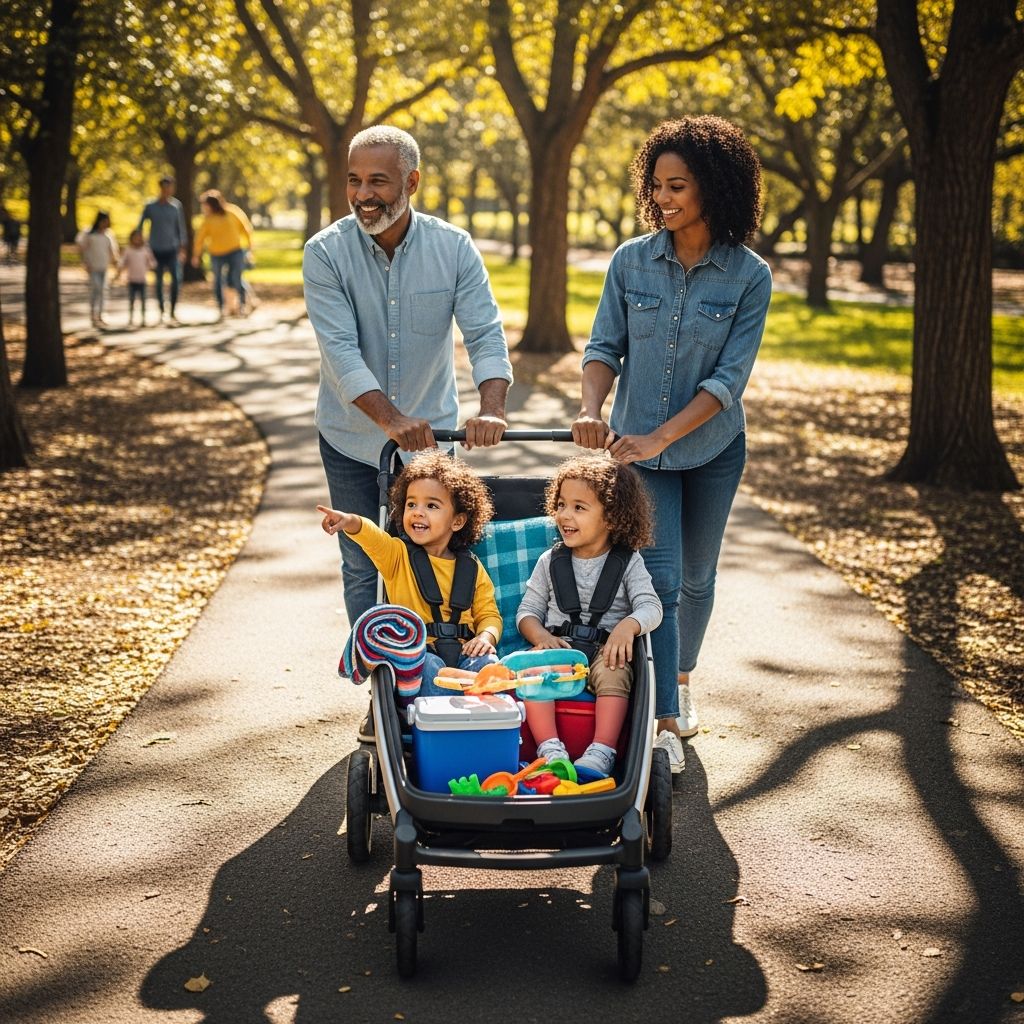
Stroller wagons have quickly become a favorite for parents who want more space, easier hauling, and better performance on rough ground than most traditional strollers can offer. They blend the steering and safety of a stroller with the open, roomy cargo space of a wagon, making them ideal for parks, festivals, beach days, and everyday errands.
This guide walks you through what stroller wagons are, who they work best for, how to compare key features, and how to decide if one belongs in your trunk.
What Exactly Is a Stroller Wagon?
A stroller wagon is a hybrid children’s transport: it typically seats one or more kids inside a roomy, low-to-the-ground compartment, with push and/or pull handles so adults can maneuver it like a stroller or a wagon. Many modern designs include:
- Harnesses or seat belts for safety
- All-terrain wheels and suspension for smoother rides on uneven ground
- Canopies with sun protection, often UPF 50+ or higher
- Storage pockets, baskets, or under-floor wells for gear
The result is a flexible ride that can carry multiple kids plus all of their snacks, towels, toys, and jackets with far less juggling for parents.
Why Parents Consider a Stroller Wagon
Parents usually start looking at stroller wagons when a typical stroller begins to feel cramped, heavy, or limiting. Common reasons include:
- Outgrowing a stroller: Older toddlers and preschoolers may still tire on long days out, but no longer fit comfortably in compact strollers.
- Multiple children: Families with two or more kids want one solution that carries everyone—and their stuff—at once.
- Adventure-heavy lifestyles: Regular trips to parks, trails, fairs, or beaches call for something that handles bumps, grass, gravel, and sand better than many standard strollers.
- Extra storage: Some parents simply need more cargo space for sports gear, coolers, or picnic supplies.
Key Benefits of Stroller Wagons
Although models vary, most stroller wagons share several advantages that appeal to busy families.
1. All-Terrain Capability
Many stroller wagons use large, air-filled or foam-filled tires and shock-absorbing suspension systems to navigate challenging terrain more comfortably than small-wheeled strollers.
- Better performance on grass, gravel, and dirt paths
- Improved comfort on bumpy routes like festival grounds or farm trails
- Less chance of wheels getting stuck in cracks or soft sand compared with tiny stroller wheels
2. Higher Weight and Capacity
Traditional strollers often cap out around a single child under about 40–50 lb, while many stroller wagons are built to hold two or more children plus gear.
- Room for siblings or friends in one ride
- Space for backpacks, diaper bags, jackets, and groceries
- Useful for years as children grow, which can improve overall value
3. Storage and Organization
Compared with many lightweight strollers, stroller wagons often include:
- Built-in pockets for bottles, snacks, and toys
- Removable or hanging parent organizers for phones, keys, and wallets
- Under-seat or side cargo areas that act like a portable trunk
4. Comfort for Kids
Manufacturers often design stroller wagons with comfort in mind so kids stay content on longer outings.
- Padded seats and backrests; some use memory foam
- Reclining or removable panels for lounging or napping
- Roomy footwells so kids aren’t sitting directly on the floor
- Large canopies or panels that offer shade and sometimes blackout coverage for better naps
5. Flexible Push or Pull Handling
Many wagons allow adults to push like a stroller or pull like a wagon, often with reversible or telescoping handles.
- Push mode is often easier on smooth surfaces like sidewalks
- Pull mode can feel more natural on sand or through crowds
- Adjustable handle heights help caregivers of different statures
Potential Downsides to Weigh
Stroller wagons are not perfect for every family or environment. Before buying, consider possible drawbacks:
- Size and weight: Many wagons are bulkier and heavier than compact strollers, which can make carrying them up stairs or loading into small car trunks challenging.
- Storage at home: You may need more closet or garage space due to their footprint even when folded.
- Transit rules: Some public transportation systems have restrictions around large wagons; local guidelines vary.
- Higher cost: Full-featured, all-terrain models often cost more than many standard strollers.
- Not always newborn-ready: Some wagons require infant car seat adapters or other accessories before they are safe for very young babies.
Comparing Stroller Wagons and Traditional Strollers
This simplified comparison highlights where each tends to shine.
| Feature | Stroller Wagon | Traditional Stroller |
|---|---|---|
| Capacity | Often 2+ kids plus gear; high weight limits | Typically 1–2 kids; lower total capacity |
| Terrain | Handles grass, gravel, uneven ground better | Best on flat sidewalks and indoor surfaces |
| Size & Portability | Bulkier; may be harder to transport and store | Usually lighter and more compact |
| Storage Space | Generous cargo room and pockets | Limited basket and smaller pockets |
| Newborn Use | Often requires car seat adapter or extra system | Many models are newborn-ready out of the box |
| Ideal Use Cases | Day-long outings, parks, beaches, festivals | Quick errands, travel, daily neighborhood walks |
Essential Features to Look For
When comparing specific models, focus less on brand name and more on how the wagon will fit your daily life. Below are core features to evaluate.
1. Size, Seating, and Weight Limit
- Number of seats: Do you need space for one child, two, or more? Some wagons are explicitly designed for two kids sized similarly.
- Total capacity: Consider combined weight of kids plus bags; all-terrain wagons sometimes support loads over 300 lb.
- Internal dimensions: Tall children need enough head and leg room to ride comfortably as they grow.
2. Safety and Harness System
Safe design is critical when transporting children. Regulatory agencies emphasize using appropriate restraints whenever kids are in moving wheeled devices, similar to stroller guidance.
- Harness type: Look for 3-point or 5-point harnesses for each seat, not just lap belts.
- Braking: A reliable brake system—often a foot-activated linked rear brake—is crucial for stopping on slopes or when loading kids.
- Stability: A wide base and low center of gravity help reduce tipping risk, especially on inclines or when kids lean over the side.
3. Maneuverability and Wheels
- Wheel type: Large, durable wheels with tread work better on mixed terrain; puncture-resistant materials reduce maintenance.
- Suspension: Rear or full suspension systems help smooth bumps and protect sleeping kids from jolts.
- Steering: Swivel front wheels improve turning on pavement, while lockable wheels may help on rougher ground.
4. Portability and Fold
- Fold size: Measure your car trunk and entryways. A wagon that fits your lifestyle must also fit your vehicle.
- Fold mechanism: One-step or simple folding systems save time in parking lots and at the end of long days.
- Carry weight: Check the wagon’s weight; if you will lift it frequently, lighter options may be worth prioritizing.
5. Comfort and Nap-Friendly Features
- Padded seating: Cushioned or memory-foam seats keep kids comfortable on longer rides.
- Recline or flat space: Some models offer nap systems or reclining panels that create a more bed-like area.
- Footwell: A dedicated footwell allows a more ergonomic seated position and prevents kids from squabbling over leg room.
6. Weather and Sun Protection
Because stroller wagons are often used outdoors for extended periods, sun and weather coverage matters.
- Canopy rating: Many premium canopies advertise UPF 50+ sun protection, which blocks most harmful UV radiation.
- Ventilation: Mesh windows or panels help on hot days.
- Optional covers: Some brands sell rain covers, bug nets, or blackout panels for naps and privacy.
7. Storage Solutions
- Built-in pockets: Look for easy-access compartments for wipes, bottles, and small toys.
- Larger storage bags: Removable storage bags, undercarriage baskets, or side-mounted coolers are handy for longer outings.
- Parent console: Cup holders and phone slots reduce the risk of spills and dropped electronics.
Is a Stroller Wagon Right for Your Family?
To decide whether to invest in a stroller wagon, think through how and where you spend most of your time with your kids.
- You frequently visit zoos, theme parks, farmers markets, beaches, or sports fields.
- You have two or more children who sometimes tire at different times.
- Your current stroller feels overloaded or hard to push when packed.
- You have vehicle and home storage space for a larger piece of baby gear.
If most of these statements fit your situation, a stroller wagon may be a worthwhile upgrade. On the other hand, families who primarily use public transit, live in walk-up apartments with no storage, or need an ultra-light travel stroller may be better served by a compact stroller or baby carrier instead.
Usage and Safety Tips
Once you bring a stroller wagon home, keep safety and practicality in mind.
- Always buckle harnesses: Kids can stand or lean unexpectedly; harness use reduces fall risk.
- Engage brakes when stopped: Apply brakes while loading, unloading, or parked on any slope.
- Avoid overloading: Respect manufacturer weight limits and keep heavier items low and centered to maintain stability.
- Monitor sun exposure: Even with UPF canopies, use sun-safe clothing and follow pediatric guidance on sunscreen for older infants and children.
- Check local rules: Some venues or transit agencies may treat large wagons differently than strollers; policies can affect what you’re allowed to bring inside.
Frequently Asked Questions (FAQs)
At what age can my child safely ride in a stroller wagon?
Age recommendations vary by model, but many wagons are designed for toddlers who can sit unassisted and meet the manufacturer’s minimum weight and height requirements. Newborns generally need compatible infant car seat adapters or a dedicated flat sleep system before they can ride safely.
Are stroller wagons allowed everywhere strollers are?
Not always. Some amusement parks, stadiums, and public transit systems place special limits on wagons or large wheeled devices, even if they meet stroller safety standards. It is important to review specific venue or agency policies before your trip.
Can I use a stroller wagon as my only stroller?
Some families do, especially those with older toddlers and preschoolers, a car for transport, and plenty of storage space. Others prefer to keep a lighter travel stroller or baby carrier for quick errands, tight indoor spaces, or air travel where a large wagon may be inconvenient.
How do I maintain stroller wagon wheels and brakes?
Regularly check that brakes engage fully and that wheels spin freely without wobbling. For air-filled tires, follow manufacturer instructions for pressure checks. Many wagons use puncture-resistant tires that need only occasional cleaning and inspection for wear.
Do stroller wagons meet safety standards?
Reputable brands design wagons to meet or exceed safety standards that apply to children’s wheeled vehicles and strollers in their region. Look for clear labeling of standards compliance, weight and age recommendations, and thorough instructions. Using the product according to those instructions is essential for safety.
References
- The Benefits of All-Terrain Stroller Wagons — Keenz. 2024-03-01. https://keenz.us/blogs/family-fun/the-benefits-of-all-terrain-stroller-wagons
- 12 Top Features to Look for in a Stroller Wagon — Veer. 2023-06-15. https://goveer.com/blogs/365-journal/stroller-wagon-top-features
- Why Wagons? — Gladly Family. 2023-05-10. https://gladlyfamily.com/blogs/auntie-articles/why-wagons
- Summit Wagon Stroller Product Details — Safety 1st. 2022-09-20. https://safety1st.com/products/summit-wagon-stroller-cv450
- Stroller Wagon Buyer’s Guide — Tactical Baby Gear. 2023-02-01. https://tacticalbabygear.com/blogs/news/stroller-wagon-buyers-guide
- Breeze Ultra-Lite Stroller Wagon Product Details — Munchkin. 2022-07-18. https://www.munchkin.com/breeze-ultra-lite-stroller-wagon
- Is a Double Stroller for Infant and Toddler Better Than a Wagon? — Radio Flyer. 2023-08-25. https://www.radioflyer.com/blogs/radio-flyer/is-a-double-stroller-for-infant-and-toddler-better-than-a-wagon