Air travel with young children often conjures images of meltdowns, spilled snacks, and endless pacing in tight aisles. Yet, with thoughtful planning and proven tactics, these journeys can become highlights of family bonding rather than sources of exhaustion. This guide draws on pediatrician recommendations and airline insights to equip parents with actionable steps for calmer takeoffs, landings, and everything in between.
Pre-Flight Planning: Build a Strong Foundation
The journey to a peaceful flight begins long before the airport. Strategic preparation minimizes surprises and sets a positive tone for the entire trip.
- Consult Healthcare Professionals Early: Schedule a pediatrician visit weeks ahead to confirm your child’s health status, update vaccinations, and discuss travel-specific needs like medications or motion sickness remedies. This step ensures any underlying issues are addressed proactively.
- Align Schedules with Natural Rhythms: Book flights that coincide with nap times or quieter off-peak hours. Overnight or midday departures often allow children to sleep through much of the turbulence, reducing wakeful fussiness.
- Secure Family Seating: Use airline apps to reserve adjacent seats in advance, prioritizing bulkhead or bassinet options for infants. This prevents mid-air seat swaps and keeps everyone together.
Planning extends to documentation: Double-check passports, visas, and IDs for all family members, including minors. Opt for car rental agencies with on-site airport parking to streamline ground transport upon arrival.
Packing Essentials: Efficiency Meets Comfort
Overpacking leads to chaos at security; underpacking invites discomfort. Focus on versatile, compact items that serve multiple purposes.
| Category | Must-Haves | Tips |
|---|---|---|
| Diapering & Hygiene | Diapers, wipes, changing pad, spare outfits | Pack in clear, accessible bags for quick TSA access; include hand sanitizer. |
| Snacks & Feeding | Non-messy options like pouches, crackers, fruit; child’s meal request | Choose low-sugar items to avoid energy crashes; feed before boarding. |
| Comfort & Entertainment | Blanket, lovey, headphones, new small toys | Curate a “surprise bag” revealed gradually to sustain interest. |
| Health & Safety | Medications, thermometer, pacifiers | Keep in carry-on; follow FAA child travel rules for car seats. |
Brightly colored bags make spotting items easier in crowded overhead bins. Weigh carry-ons individually to dodge fees, and strap children into strollers or carriers for hands-free navigation.
Navigating Airports: Turn Waiting into Playtime
Airports are playgrounds in disguise if approached correctly. Arrive 2-3 hours early to buffer delays, using the extra time wisely.
- Leverage Family Lanes: Many checkpoints offer priority lines for parents with little ones, speeding up security without added stress.
- Explore Kid Zones: Direct high energy to play areas near gates—climbing structures, viewing decks, or even rooftop pools at hubs like Singapore. Let kids burn off steam pre-boarding.
- Build Buffer Time: For connections, allocate 1.5-2 hours minimum, or book hourly hotel rooms for showers and naps during long layovers.
Discuss “airport rules” with children en route: no running near crowds, hands to self during lines. Ride-on luggage adds fun until boarding, then transfer to carts.
Tackling Takeoff and Landing: Ears and Emotions
Cabin pressure shifts cause ear pain for many kids, peaking during ascent and descent. Proactive soothing turns potential tears into triumph.
- Pressure Relief Techniques: Offer bottles, pacifiers, or snacks to encourage swallowing and yawning, equalizing ears naturally.
- Comfort Anchors: Clutching a familiar stuffed animal or blanket provides emotional security amid unfamiliar sensations.
- Distraction Power: Sing songs, trace shapes on tray tables, or play “I Spy” to redirect focus from discomfort.
For toddlers, a foot hammock or scarf under feet prevents kicking seats ahead, maintaining courtesy to fellow passengers.
In-Flight Entertainment: Sustain Engagement Without Overload
Once airborne, the real test begins. Balance activity with rest, adapting to your child’s cues.
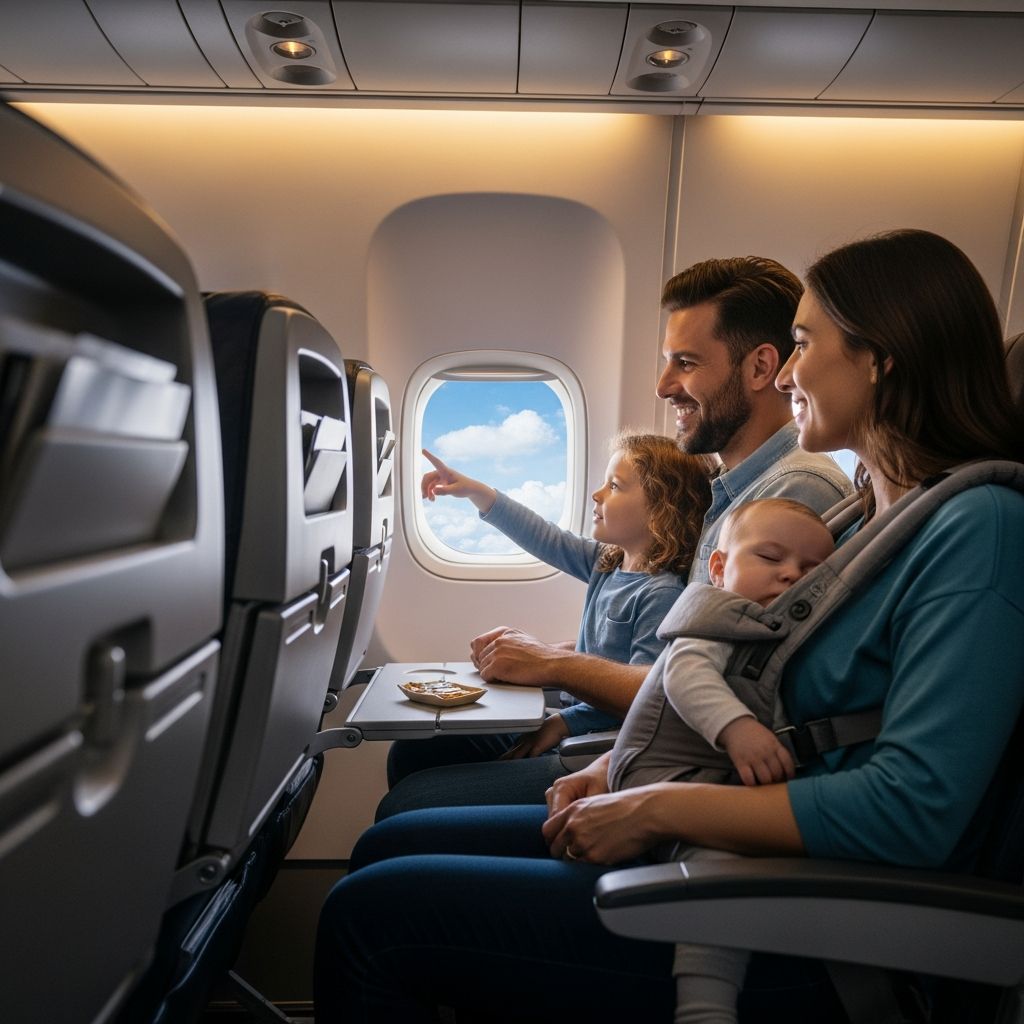
- Quiet Observation First: Let them absorb the novelty—clouds, tiny landscapes—before introducing toys. Boredom sparks imagination.
- Layered Activities: Start with suction/magnetic toys, progress to stickers, playdough, or audio stories via kid headphones. Avoid screens initially to preserve attention spans.
- Movement Breaks: Seat window-side to curb aisle wandering; brief walks to the galley corner for rocking or chatting with crew.
Request child meals for variety, and keep a feet-level bag for instant access to soothers during turbulence.
Managing Meltdowns: Stay Calm Amid Chaos
Even perfect plans falter. When cries erupt, prioritize de-escalation over perfection.
- Empathize Actively: Acknowledge feelings—”I know it’s loud; I’m here”—then offer a one-minute hug window before gentle redirection.
- Parental Poise: Kids mirror stress; deep breaths and flexibility prevent escalation. View hiccups as temporary.
- Ally with Crew: Flight attendants often assist with distractions or holding spots, turning team players into saviors.
Post-meal, dim lights signal rest—ditch home routines for onboard reality.
Arrival and Recovery: Ease into Destination Mode
Touchdown brings relief, but jet lag looms. Prioritize downtime.
- Unpack Smart: Change clothes, hydrate, and nap strategically upon hotel check-in.
- Light Schedule: Skip packed Day 1 itineraries; opt for nearby parks or pools to readjust gently.
- Reflect Positively: Celebrate small wins to build confidence for future trips.
Flexibility reigns: Delays or skipped naps happen—roll with it.
Frequently Asked Questions (FAQs)
What if my child refuses to wear headphones?
Offer alternatives like soft story pods or quiet songs first; gradually introduce with fun associations, or use during takeoff for pressure help.
Can I bring my own car seat on the plane?
Yes, FAA-approved seats are permitted if you buy a seat for it; gate-check strollers for free.
How do I handle long-haul connections?
Book ample layover time or transit hotels; scout play areas and massage spots for sanity.
What snacks avoid messes?
Pouches, dry cereals, apple slices—easy to portion and clean.
Best seats for families?
Bulkhead for space, window for views; book early via apps.
Implementing these strategies transforms air travel from ordeal to opportunity. Families report fewer tears and more treasured moments when preparation meets patience. Safe travels!
References
- Stress-Free Traveling With Kids: Pediatrician-Approved Tips — Children’s Medical Group. 2023-05-15. https://childrensmg.com/stress-free-traveling-with-kids-pediatrician-approved-tips-for-road-trips-and-flights/
- How to Fly with Toddlers: 10 New Tips — Flyaway Designs. 2024-02-10. https://www.flyawaydesigns.com/blogs/news/how-to-fly-with-toddlers-10-new-tips-for-a-stress-free-flight
- Ready for Stress-Free Travel? 10 Tips for Flying with Children — Finnair Blue Wings. 2023-11-20. https://www.finnair.com/us-en/bluewings/travel-experience/ready-for-stress-free-travel–10-tips-for-flying-with-children-3590136
- 45 Tips to Survive a Flight with Kids — Little Voyageurs. 2024-07-08. https://www.littlevoyageurs.com/en/blog/flying-with-kids
- Travel With Kids with Less Stress — Safe Ride 4 Kids. 2023-09-12. https://saferide4kids.com/blog/travel-with-kids-less-stress/