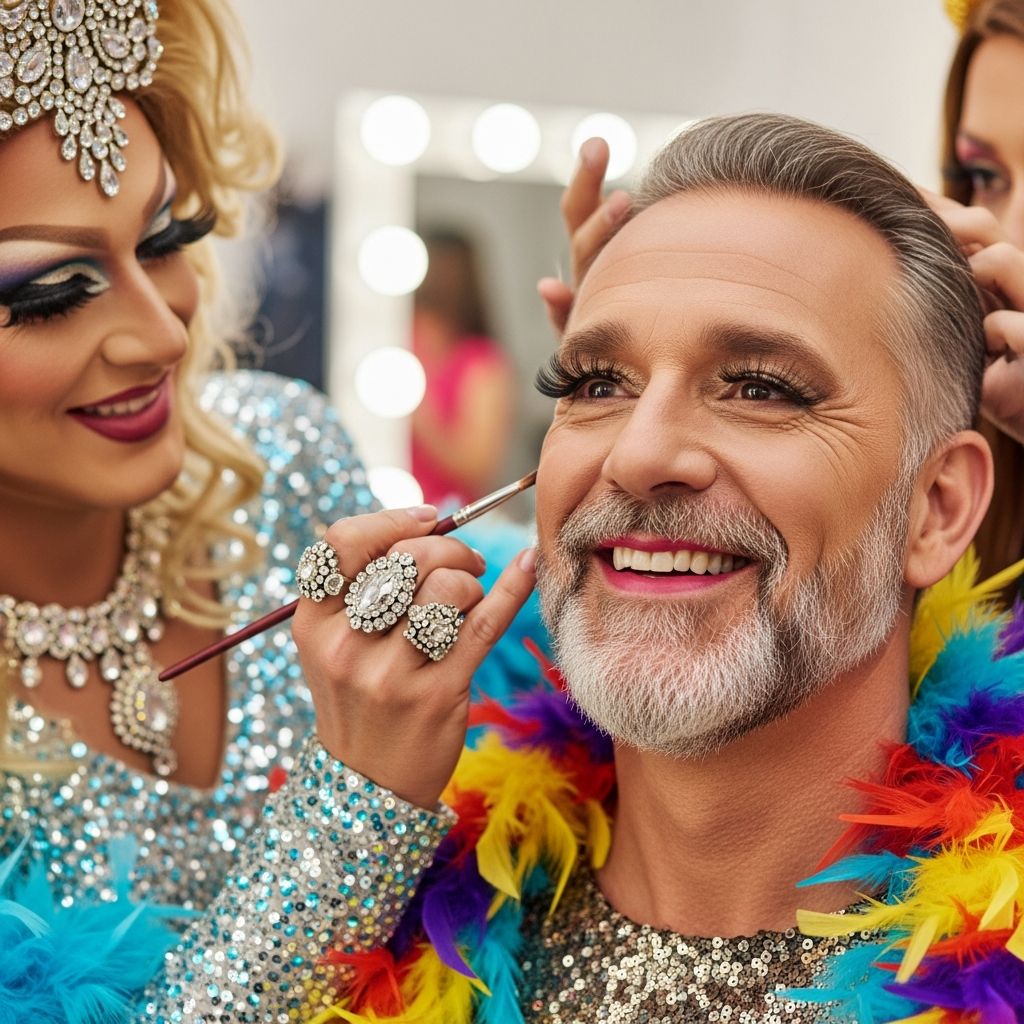
When a straight Southern dad willingly sits in a makeup chair and lets his gay son transform him into a full drag queen, it becomes far more than a playful makeover — it turns into a powerful public declaration of love, support, and unconditional acceptance.
The Viral Story Behind the Drag Makeover
A video of a straight Southern father asking his gay son to put him in drag makeup quickly captured the internet’s attention, not just because of the dramatic transformation, but because of the heartfelt reason behind it. Viewers were drawn to the emotional bond between father and son and the way the dad used drag as a tool to show his son that he accepts him fully and proudly.
The clip shows the dad stepping out of his comfort zone, embracing a world that traditionally might have been foreign or even stigmatized in some Southern communities. Instead of resisting, he leans into the experience with humor, humility, and a clear desire to be present for his son in a way that truly matters.
A Straight Southern Dad’s Journey to Allyship
What makes this story especially striking is the father’s background as a straight Southern man, a demographic often stereotyped as conservative or resistant to LGBTQ+ expression. By volunteering for a drag makeover, he actively challenges those stereotypes and paints a picture of a dad who is willing to grow, learn, and change for the sake of his child.
His gesture highlights how allyship is not only about verbal support but also about visible, sometimes uncomfortable actions that send a clear message: “You are safe, loved, and celebrated in this family.” The makeover becomes a tangible symbol of that commitment.
- He allows himself to be vulnerable in a public and highly shareable way.
- He uses drag as a bridge into his son’s world and interests.
- He demonstrates that masculinity and acceptance are not opposites but can coexist beautifully.
Why He Asked for the Drag Makeover
According to the story, the dad did not simply tolerate drag — he actively requested the transformation from his son. This detail matters, because it shifts the dynamic from a son asking for permission to a father seeking connection on his son’s terms. The makeover was his way of saying, without needing many words, that he wanted to understand and honor an important part of his son’s identity and creative expression.
In many families, LGBTQ+ kids carry the emotional burden of wondering whether they will ever be fully seen, rather than merely “accepted enough.” By initiating the idea himself, the father reversed that pattern, showing initiative and emotional courage that resonated deeply with viewers.
Inside the Drag Transformation: Makeup, Wigs, and Laughter
The makeover itself followed the familiar rhythm of drag transformations: primer, foundation, contouring, bold eye looks, and, of course, a dramatic wig and lashes. For the dad, each step was a new and often hilarious experience, from feeling false lashes brush against his eyelids to adjusting to the exaggerated features created by contour and highlight.
Throughout the process, the son guided him gently, explaining techniques and joking along the way. Their banter, shared laughter, and small moments of tenderness became the emotional core of the video, turning a simple makeover into a memory they will likely both cherish forever.
- Heavy foundation and contour helped reshape his features into an exaggerated drag look.
- Bold eye shadow and eyeliner emphasized drama and playfulness.
- A voluminous wig and statement lips completed the over-the-top drag persona.
The Big Reveal: A Dad in Full Drag
When the transformation was complete, the reveal showcased not just a playful caricature of femininity but also a father fully committed to the bit. The dad posed, smiled, and embraced his new drag persona with surprising confidence, leaning into the performance aspect that makes drag so joyful.
Viewers responded with delight to his willingness to go all in. Instead of acting embarrassed or defensive, he seemed to truly enjoy the moment, radiating a mixture of self-deprecating humor and genuine pride in what his son had created.
| Aspect | Before | After (In Drag) |
|---|---|---|
| Appearance | Casual, typical Southern dad look | Full glam with heavy makeup, wig, and styled outfit |
| Comfort Level | Slightly nervous but open-minded | Relaxed, laughing, and performing for the camera |
| Relationship Energy | Playful but reserved at first | Warm, affectionate, and clearly bonded through the experience |
How the Son Reacted: Pride, Joy, and Validation
For the son, watching his father step into drag was about far more than glitter and eyeliner. It was a moment of validation that many LGBTQ+ people long for but never receive: a parent not only accepting their identity but celebrating it in a highly visible way.
The son’s reactions — smiling, beaming with pride, maybe even tearing up off camera — reflected just how healing and affirming this experience could be. When a parent chooses to stand beside their LGBTQ+ child in such a bold way, it sends a message that counters years of cultural shame and stigma.
Breaking Stereotypes About Southern Dads and Masculinity
This story gained traction in part because it breaks down common stereotypes about Southern culture, masculinity, and fatherhood. Many people associate Southern dads with rigid gender roles and traditional expectations, but here the father demonstrates that love for a child can override outdated norms.
By embracing drag, he shows that masculinity does not have to be fragile or threatened by gender-bending expression. Instead, it can be expansive, flexible, and rooted in empathy rather than fear.
- He challenges the notion that straight men must avoid anything seen as feminine.
- He models emotional intelligence by prioritizing his son’s feelings over social judgment.
- He helps redefine what “being a good dad” looks like in modern families.
Why Drag Can Be So Meaningful to LGBTQ+ Kids
Drag is more than costumes and makeup; for many LGBTQ+ people, it represents self-expression, resilience, and chosen family. When a parent participates in drag, they are stepping into a space that often functions as a sanctuary for those who have felt misunderstood or rejected elsewhere.
By going into that space with his son, the dad implicitly honors the importance of drag culture in his son’s life. The makeover becomes an act of joining rather than excluding, and a way of saying, “Your world matters to me because you matter to me.”
Internet Reactions: Tears, Applause, and Hope
The public response to the video was overwhelmingly positive, with many viewers sharing that they were moved to tears by the father’s openness and love. Comments frequently mentioned wishing they had grown up with a parent like this or hoping that today’s younger generation will encounter more parents who are this supportive.
Some viewers noted that seeing a straight Southern dad in drag helped change their own assumptions about what allyship can look like. For LGBTQ+ people who have experienced rejection, the video offered a bittersweet combination of joy for the son and a reminder of what they might have missed in their own families.
Lessons for Parents: How to Support LGBTQ+ Kids
While not every parent will put on a wig and false lashes, this dad’s actions point to deeper principles that any caregiver can follow. Support does not always require grand gestures, but it does require listening, humility, and a willingness to step outside of one’s comfort zone.
Parents who want to emulate the spirit of this father’s support can focus on small, daily actions that communicate safety and respect, from using correct pronouns to showing interest in their child’s passions.
- Ask open-ended questions about your child’s interests and identities.
- Avoid dismissive jokes or comments about LGBTQ+ people or drag culture.
- Show up for important events or performances that matter to your child.
- Be willing to learn and acknowledge when you do not understand something yet.
Simple Ways to Be an LGBTQ+ Ally as a Parent
Allyship begins with respect and grows through action. Parents do not need to be experts in queer history or drag performance to be effective allies; they simply need to approach their children with curiosity instead of judgment and love instead of fear.
Gestures like watching LGBTQ+ media together, learning terms your child uses to describe themselves, or defending your child from homophobic or transphobic remarks send a powerful message: your home is a safe place to be yourself.
Conversation Starters for Families Inspired by the Video
Families who watched the viral drag makeover may want to use it as a springboard for meaningful conversation. Rather than letting the video pass as mere entertainment, parents and kids can discuss what it meant and how it made them feel.
These discussions can open up space for children to share parts of themselves they have been unsure about revealing. Even in families where no one identifies as LGBTQ+, talking about acceptance and difference helps build empathy and emotional literacy.
- “What part of the makeover video stood out to you the most, and why?”
- “How do you think the son felt seeing his dad in drag?”
- “What do you think makes someone a ‘good dad’ or a ‘good parent’?”
- “How can we show people we love them even when we do not fully understand their experiences?”
FAQs About the Dad Drag Queen Makeover Story
Why did the dad agree to a drag makeover?
The dad agreed to the drag makeover as a heartfelt way to show his gay son that he accepted and celebrated him. Instead of simply saying he was supportive, he chose to participate in something deeply connected to his son’s identity and interests.
Was the dad uncomfortable during the transformation?
Like many people new to drag, the dad appeared a bit nervous and amused at first, especially with the heavy makeup and lashes. However, as the process continued, he relaxed, laughed with his son, and seemed to genuinely enjoy the experience and the final look.
What made this video different from other makeover clips online?
Many makeover videos focus on aesthetics, but this one stood out because of its emotional core. The story centered on a straight Southern father using drag as a means to connect with his gay son, challenge stereotypes, and publicly affirm his love.
Does a parent have to do something this bold to be supportive?
No, not every act of support needs to go viral or involve a full drag transformation. What matters most is consistent, everyday behavior that communicates acceptance, such as listening without judgment, learning about LGBTQ+ issues, and standing up for your child when needed.
What can other parents learn from this dad?
Other parents can learn that stepping into a child’s world is one of the most powerful ways to strengthen connection. By pushing past personal discomfort and cultural expectations, caregivers can show their children that who they are is not just tolerated but cherished.
Why This Story Matters for Today’s Families
This drag queen makeover is more than a fun viral moment—it is a reflection of how modern parenting is evolving toward greater openness and emotional honesty. Parents are increasingly recognizing that genuine support often requires visible action and a willingness to stand with their children against stigma.
For LGBTQ+ youth and their families, stories like this offer hope that more households can become places of safety, joy, and self-expression. When a straight Southern dad can become a glamorous drag queen for a day to make his son feel loved, it shows that the future of family life can be brighter, kinder, and more inclusive than the past.