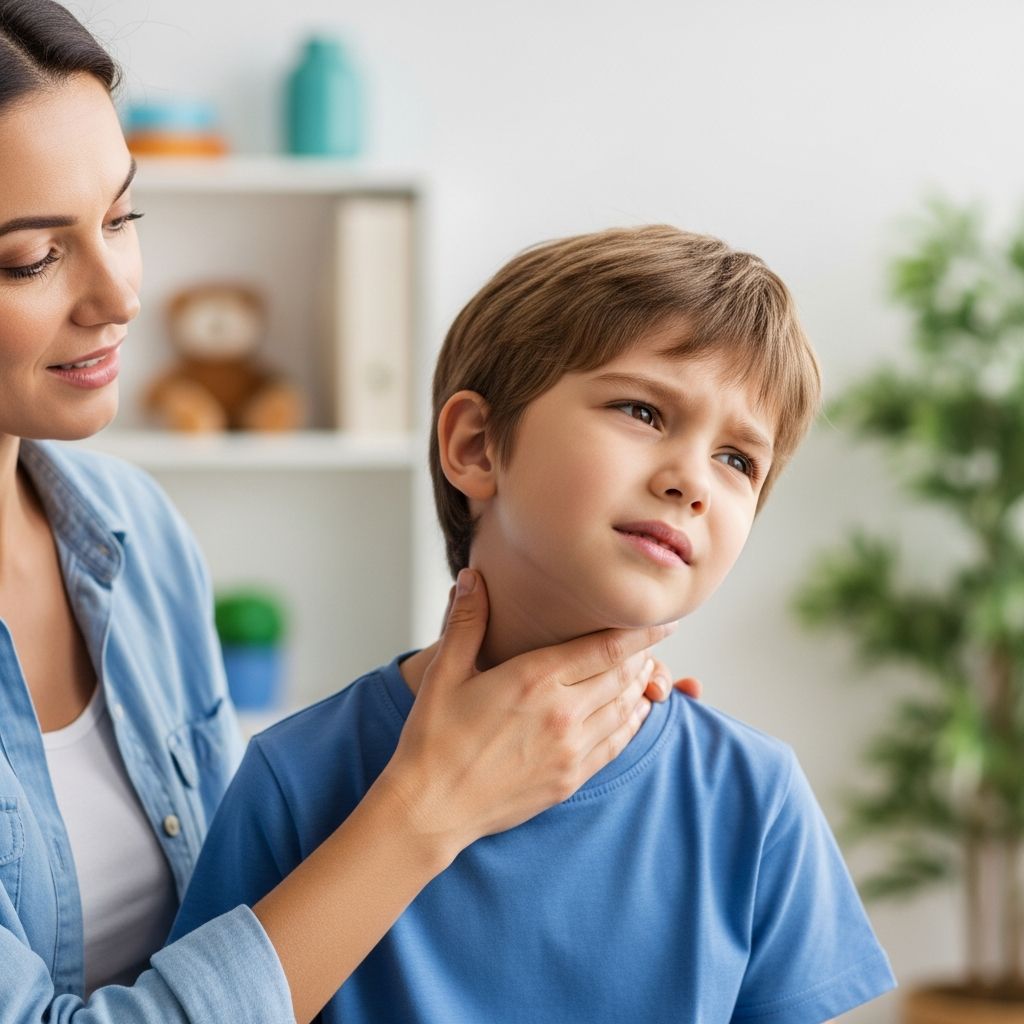
A child waking up and refusing to move their neck can be frightening. Most of the time, a stiff neck in children is related to irritated muscles or minor strain and improves with simple home care. But in some cases, neck stiffness is an early sign of a serious infection, such as meningitis, or an injury that needs urgent medical attention.
This guide explains how to recognize causes of neck stiffness, how to keep your child comfortable, and which warning signs mean you should call the doctor right away.
What Doctors Mean by a “Stiff Neck”
Parents often say a child has a stiff neck when the neck is sore or hard to turn. In medical care, stiffness usually means there is a clear limit to movement—especially bending the head forward to try to touch the chin to the chest.
- Neck pain: the child says their neck hurts, feels tight, or achy.
- Neck stiffness: the child cannot move the neck normally, often especially forward or to one side.
- Guarded posture: the child turns their whole body instead of just the head or tilts the head to one side.
Both pain and stiffness can come from muscles, joints, nerves, or (less often) infection around the brain and spinal cord.
Common Everyday Causes of a Stiff Neck in Kids
Most stiff necks in children have simple explanations and improve within a few days.
1. Muscle Strain and Poor Posture
The most frequent reason for a stiff neck in school-age children and teens is overworked neck muscles.
- Sleeping in an awkward position or on too many pillows.
- Reading, gaming, or using a phone with the head bent forward for long periods (“text neck”).
- Carrying a heavy backpack on one shoulder.
- Sports that involve sudden turning of the head.
These activities can overstretch or fatigue the muscles and ligaments that support the neck. Pain often starts after waking up or after a long period of screen use.
2. Torticollis (Wry Neck)
Torticollis is a condition where the neck muscles tighten on one side so the child’s head tilts toward the sore side and the chin points slightly away.
- Older children often wake up with sudden neck pain and a noticeable head tilt.
- It can be triggered by minor muscle irritation, awkward sleep position, or nearby infection (such as throat infection or swollen lymph nodes).
- Movement away from the tight side is painful and limited.
Many cases of torticollis are uncomfortable but not dangerous, and they usually improve with rest and stretching. However, torticollis after an injury or with fever and difficulty swallowing may signal a more serious problem.
3. Swollen Lymph Nodes or Throat Infections
Neck pain can occur when lymph nodes in the neck swell because of infections such as colds, strep throat, or mono.
- A tender lump or area under the jaw or along the side of the neck.
- Pain that worsens when the child turns the head.
- Other symptoms like sore throat, fever, cough, or fatigue.
While these infections are common, a child with a stiff neck and fever must still be checked carefully to rule out meningitis and other serious conditions.
4. Minor Injuries and Whiplash
Falls, sports accidents, or sudden stops in a vehicle can cause sprains and strains to the neck.
- Pain often appears within several hours of the event.
- There may be bruising or tenderness over the neck muscles.
- Children may hold their head very still to avoid moving the sore area.
Any neck pain after a significant fall, collision, or suspected head injury should be assessed by a medical professional.
Serious but Less Common Causes
A small number of children with a stiff neck have conditions that require rapid treatment. Knowing the red flags helps parents seek care promptly.
1. Meningitis
Meningitis is an infection and inflammation of the membranes covering the brain and spinal cord. It can be caused by viruses or bacteria. Bacterial meningitis is a medical emergency.
Classic warning signs include:
- Fever.
- Headache.
- Stiff neck, especially pain or inability when trying to touch the chin to the chest.
Children may also have:
- Confusion, unusual sleepiness, or difficulty waking up.
- Vomiting or poor feeding (especially in babies).
- Rash, sometimes purple or bruise-like.
- Irritability and a high-pitched cry in infants, or a bulging soft spot on the head.
If you suspect meningitis, go to emergency care immediately. Early treatment greatly improves outcomes.
2. Deep Neck Infections
Some throat and neck infections can spread into deeper spaces in the neck, forming an abscess behind the throat (such as a retropharyngeal abscess). These infections can cause severe pain and stiffness, especially when turning the head or swallowing.
Warning signs of a deep neck infection include:
- Fever and feeling very unwell.
- Severe sore throat and difficulty swallowing.
- Drooling or trouble handling saliva.
- Neck stiffness or torticollis and pain with neck movement.
Deep neck infections require urgent medical assessment and often antibiotics or surgical drainage.
3. Serious Neck or Spine Injury
While most children with a stiff neck have minor strain, a strong blow or fall can injure the bones, ligaments, or spinal cord in the neck.
- Neck pain after a fall from height, sports collision, or vehicle crash.
- Numbness, weakness, or tingling in the arms or legs.
- Difficulty walking, controlling the bladder, or changes in coordination.
Do not move the child’s neck if you suspect a serious injury. Call emergency services and keep the child as still as possible until help arrives.
Comparing Minor vs. Emergency Neck Symptoms
| Feature | Usually Minor (Home Care OK) | Needs Urgent Medical Attention |
|---|---|---|
| Onset | Gradual after sleep or long screen time | Sudden with fever, severe headache, or after major injury |
| Movement | Uncomfortable but still able to move neck somewhat | Cannot move neck at all or extreme pain with small movements |
| Fever | Absent or mild; child otherwise well | Moderate to high fever, appears very ill or confused |
| Other symptoms | Mild soreness, no headache, eating and drinking normally | Severe headache, vomiting, rash, trouble swallowing, or neurologic changes |
| Recent events | New pillow, long car trip, intense studying or gaming | Big fall, sports collision, car crash, or known serious infection |
Safe Home Care for Mild Stiff Neck
If your child otherwise seems well and there are no red-flag symptoms, you can usually start with home treatment while observing closely.
Comfort Measures
- Rest and gentle movement: Encourage your child to avoid heavy lifting, rough play, or sports for a day or two, but avoid total bed rest; gentle, slow movements often help stiffness improve.
- Heat or cold packs: A warm compress or heating pad on low, used for 10–15 minutes at a time, can relax tight muscles. Some children prefer a cool pack wrapped in a cloth.
- Comfortable sleep position: Use one supportive pillow, and avoid letting your child sleep on several pillows or in a twisted position.
Posture and Activity Changes
- Remind your child to keep screens at eye level, so they are not constantly looking down.
- Encourage breaks from screens or reading every 20–30 minutes to stretch the neck and shoulders.
- Adjust desks and chairs so your child can sit upright with feet supported.
Medications
Over-the-counter pain relievers such as acetaminophen or ibuprofen are often used to reduce pain and improve comfort. Always:
- Use the correct dose for your child’s age and weight.
- Avoid giving aspirin to children and teenagers because of the risk of Reye syndrome.
- Check with your child’s healthcare provider if your child has chronic health conditions or is taking other medications.
If pain remains strong despite appropriate dosing, contact your healthcare provider.
When to Call the Doctor or Seek Emergency Care
Contact your child’s doctor or seek urgent care immediately if your child has a stiff neck and any of the following:
- Fever or recent fever.
- Severe headache that does not improve with pain medicine.
- Confusion, unusual sleepiness, or difficulty waking up.
- Vomiting, especially if repeated or with headache.
- Rash, especially one that does not fade when pressed.
- Neck stiffness following a fall, sports injury, or car accident.
- Neck pain with drooling, trouble swallowing, or trouble breathing.
- Weakness, tingling, or numbness in the arms or legs.
- Neck pain that is getting worse or not improving after a couple of days of rest and home care.
- Infants with a stiff neck plus a high-pitched cry, poor feeding, or a bulging soft spot on the head.
These signs may suggest meningitis, a deep neck infection, or significant injury and should be taken seriously.
How Doctors Evaluate a Stiff Neck
Your child’s healthcare provider will start with a detailed history and physical examination.
- Questions about when the pain started, recent injuries, infections, and how the symptoms have changed.
- Physical exam to check neck movement, tenderness, posture, and any signs of infection or nerve problems.
- Neurologic exam to look for weakness, changes in reflexes, or problems with coordination.
Depending on findings, they may order:
- Blood tests if infection is suspected.
- Imaging, such as X-ray, ultrasound, CT, or MRI, if injury or unusual cause is possible.
- Spinal fluid testing (lumbar puncture) if meningitis is a concern.
Most children with simple neck strain will not need extensive testing and can be managed with rest, stretching, and pain relief.
Preventing Neck Pain and Stiffness in Children
While not all causes are preventable, healthy habits can lower the risk of recurring stiff neck episodes.
- Encourage good posture while sitting and using screens.
- Limit long, uninterrupted periods of phone or tablet use; schedule breaks.
- Make sure backpacks are not overloaded and are worn with two straps.
- Use age-appropriate car seats, seat belts, and sports safety gear to reduce injury risk.
- Keep your child up to date on routine vaccinations that protect against some forms of meningitis, such as Hib and meningococcal vaccines.
Frequently Asked Questions (FAQs)
My child woke up with a stiff neck but no fever. Can I watch at home?
If your child otherwise seems well, can move the neck a bit, and has no fever, headache, or injury, it is reasonable to start with rest, gentle stretching, and appropriate pain relief while watching closely. If the pain worsens, lasts more than 1–2 days, or new symptoms appear, contact your child’s doctor.
How can I tell if neck stiffness might be meningitis?
Meningitis usually causes fever, headache, and a stiff neck together, often with vomiting, confusion, or a rash. A child may not be able to touch their chin to their chest because of pain, and they often look very unwell. Any suspicion of meningitis is an emergency—seek care immediately.
Is torticollis in children always serious?
No. Many children develop temporary torticollis from muscle irritation or awkward sleep position, and they improve within a few days. However, torticollis after an injury or with fever, drooling, or difficulty swallowing can signal a more serious problem and should be checked urgently.
Can screen time really cause neck pain in kids?
Yes. Holding the head bent forward for long periods when using phones, tablets, or computers puts extra strain on neck muscles and joints and is a common trigger for neck pain in school-age children and teens.
How long should a simple stiff neck last before I worry?
Mild neck strain usually improves noticeably within 24–72 hours with rest and home care. If pain or stiffness is not improving after a few days, is getting worse, or is accompanied by fever, headache, or other concerning symptoms, your child should be evaluated by a healthcare professional.
References
- Etiology of child acute stiff neck — Kolesov S et al., Spine (Phila Pa 1976). 2009-09-15. https://pubmed.ncbi.nlm.nih.gov/19680099/
- Neck Pain or Stiffness — Seattle Children’s Hospital. 2023-05-01 (updated). https://www.seattlechildrens.org/conditions/a-z/neck-pain-or-stiffness/
- Neck pain — AboutKidsHealth, The Hospital for Sick Children (SickKids). 2022-06-14. https://www.aboutkidshealth.ca/neck-pain
- Torticollis — Nemours KidsHealth. 2022-09-01 (reviewed). https://kidshealth.org/en/parents/torticollis-kids.html
- What to do if your child has a stiff neck — Children’s Health of Orange County (CHOC). 2023-08-10. https://health.choc.org/what-to-do-if-your-child-has-a-stiff-neck/
- Neck pain in children: Treatment and when to see a doctor — Medical News Today. 2018-10-25. https://www.medicalnewstoday.com/articles/322944
- Meningitis: Symptoms and causes — Mayo Clinic. 2023-04-27. https://www.mayoclinic.org/diseases-conditions/meningitis/symptoms-causes/syc-20350508
- Stiff Neck: Common Causes & How to Treat Them — Cleveland Clinic. 2022-09-15. https://my.clevelandclinic.org/health/symptoms/24477-stiff-neck