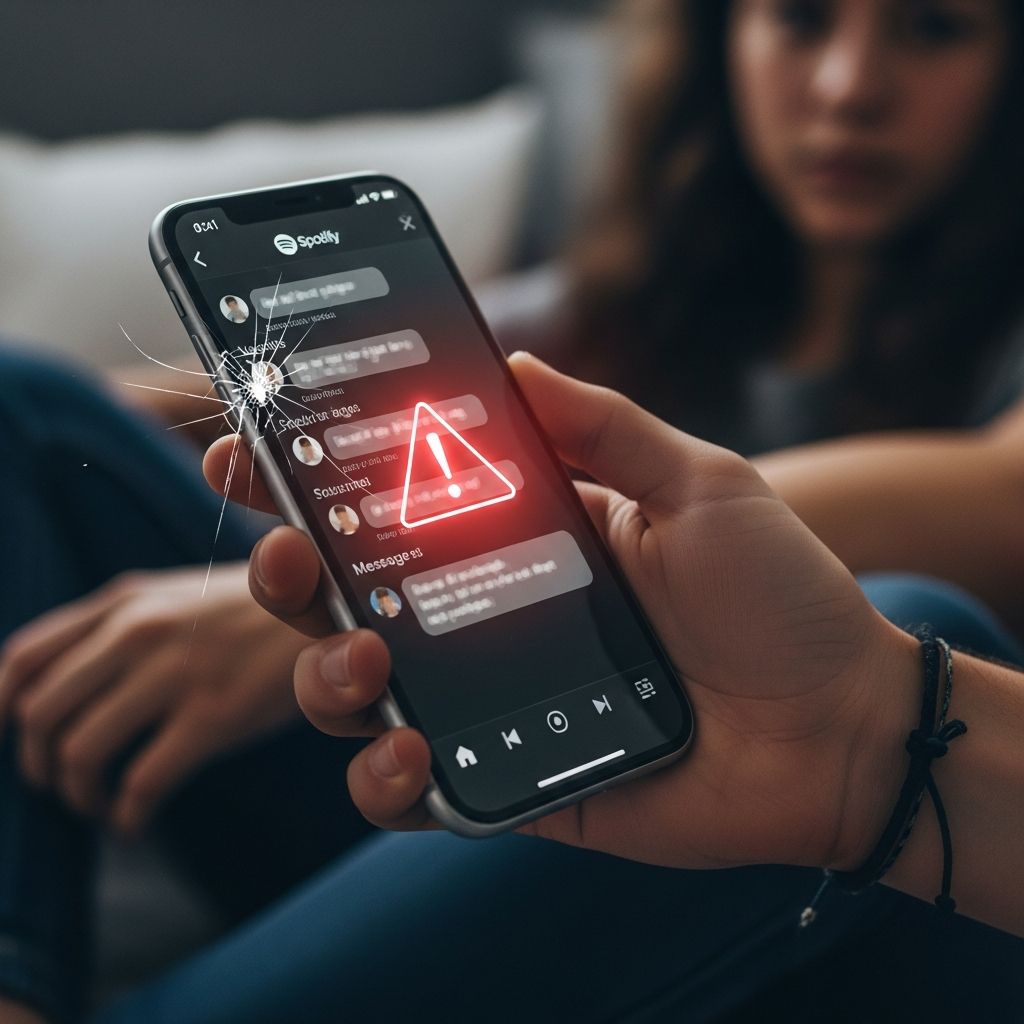
Spotify, the world’s leading music streaming service, recently introduced its Messages feature, allowing premium users aged 16 and older to exchange music recommendations, podcasts, and personal chats directly within the app. While designed to foster connections over shared content, this addition has ignited fierce debates about online safety, particularly for vulnerable teenagers navigating digital spaces.
Understanding the Messages Feature Rollout
The Messages tool enables one-on-one conversations where users can share tracks, audiobooks, and more with contacts like friends or family. Available initially to premium subscribers 16+, it’s expanding to select markets for both free and paid accounts. Spotify positions it as a controlled environment: chats start only with known connections or prior sharers, and users must accept incoming requests. Additional controls include reporting, blocking, and opting out entirely.
However, critics argue these measures fall short. Teens can easily falsify ages during signup, bypassing restrictions. Predators exploit such loopholes, using flattery or fake profiles to initiate harmful interactions. Data underscores the peril: the Internet Watch Foundation reported in March 2024 that 60% of sexual extortion cases target 16- and 17-year-olds.
Why Experts Sound the Alarm on Predator Access
Organizations like the National Center on Sexual Exploitation (NCOSE) have urgently called for Spotify to pause the feature or restrict it to verified adults 18+. NCOSE’s Haley McNamara warns that direct messaging is a primary vector for grooming, citing prior Spotify incidents of child abuse despite the platform’s eight-year delay in launching basic parental controls like Spotify Kids. Without robust age verification, 16- and 17-year-olds remain at high risk, potentially turning Spotify into an exploitation hub.
Private messaging amplifies dangers because interactions evade public scrutiny. Unlike open feeds, DMs allow unchecked escalation from innocent shares to manipulative exchanges. Teens, driven by peer pressure or curiosity, may engage without recognizing red flags. Studies show predators often masquerade as peers, building trust before exploiting victims.
- Key Vulnerabilities:
- Self-reported ages easily lied about by minors.
- Limited initial safeguards beyond opt-in acceptance.
- History of delayed safety updates on Spotify.
- High incidence of extortion among late teens.
Spotify’s Defenses: Do They Hold Up?
Spotify counters concerns with proactive steps. An age reassurance system, rolled out globally including the US, combines self-declaration, internal tech, and third-party Yoti checks for restricted features like Messages. The platform consulted its Safety Advisory Council of child safety experts during development. Automated scans detect child sexual abuse material, and reports trigger reviews against terms of service.
Users gain granular control: reject messages, block senders, report content or accounts, and disable the feature via settings (Account > Privacy & Social > Messages toggle). Spotify emphasizes starting chats only with familiar contacts, reducing stranger risks.
Yet skeptics like McNamara label these as insufficient. Age checks are trialed unevenly, often for 18+ only, with no guaranteed expansion to 16-year-olds. Declining messages relies on teen judgment, which predators routinely undermine. NCOSE demands verifiable age gates at 18+, a standard absent here.
Real-World Risks: Grooming and Beyond
Direct messages transform passive streaming into interactive social spaces, blurring lines with riskier apps. Past Spotify cases involved grooming via public shares, now amplified privately. Broader stats paint a grim picture: platforms without stringent DM limits see spikes in exploitation reports.
|Risk Factor|Description|Mitigation Attempted by Spotify||—|—|—||Age Bypass|Teens lie about birthdates|Age reassurance (self-report + Yoti)||Predator Initiation|Fake profiles contact via shares|Accept/decline requests||Escalation Potential|Private chats hide abuse|Scanning + reporting||Peer Pressure|Sharing trends influence behavior|User controls only||
This table highlights core issues: while Spotify offers tools, they hinge on user vigilance and tech not foolproof against deception.
Parental Strategies to Safeguard Teens
Parents can’t rely solely on Spotify; proactive involvement is essential. Start by verifying account ages and toggling off Messages if needed. Discuss platform risks openly, teaching teens to spot grooming—sudden compliments, secrecy requests, or content pushes.
- Audit Settings: Check Privacy & Social; disable Messages, limit public sharing.
- Set Rules: Confine chats to verified family/friends; daily time caps.
- Monitor Habits: Review activity casually; use family plans for oversight.
- Educate: Role-play scenarios; emphasize reporting uncomfortable interactions.
- Alternatives: Consider kid-focused apps like Gabb or AirDroid-monitored streaming without DMs.
Tools like luna app guide parents on boundaries, stressing conversations over surveillance. Encourage using block/report: long-press messages for options.
Broader Implications for Digital Music Platforms
Spotify’s move reflects industry trends toward socialization, but at what cost? Competitors lag in DMs, preserving safer listening. Regulators eye age verification mandates; EU and US bills push platform accountability. Spotify’s council input is positive, yet execution lags expert consensus for 18+ DMs.
For teens, balancing discovery with safety means hybrid approaches: supervised accounts, content filters, and offline sharing. Platforms must prioritize verification tech, as self-attestation fails against savvy users.
Frequently Asked Questions (FAQs)
Who can use Spotify Messages?
Premium users 16+ in select markets, expanding. Free users may gain access later; age must be verified via reassurance process.
Can I disable Messages for my teen?
Yes: Settings > Account > Privacy & Social > Toggle Messages off. Also limit social features.
Does Spotify scan for harmful content in DMs?
Yes, automated scans target abuse material; reports prompt human review.
Are 16-year-olds safe from predators on this feature?
Experts say no—60% extortion hits this group. Robust 18+ verification needed.
What if my child lies about their age?
Common issue; parents should manage accounts, use family plans, and discuss honesty.
Empowering Teens in a Connected World
Spotify Messages enriches sharing but underscores digital parenting challenges. By blending education, settings tweaks, and vigilance, families mitigate risks. Platforms must evolve faster—teens deserve innovation without exploitation shadows. Stay informed, communicate, and adapt as features roll out.
References
- Spotify’s New DM Feature Will Give Predators Easy Access to Teens — National Center on Sexual Exploitation. 2025-08-27. https://endsexualexploitation.org/articles/spotifys-new-dm-feature-will-give-predators-easy-access-to-teens/
- Watchdog group warns parents about Spotify’s new DM feature — The Christian Post. 2025-09-03. https://www.christianpost.com/news/watchdog-group-warns-parents-about-spotifys-new-dm-feature.html
- Spotify Messages: the risks explained for parents — We Are Luna. Undated (accessed 2026). https://weareluna.app/parents/guides/teen-news-and-insights/spotify-messages/
- Is Spotify Safe for Kids? — Gabb. Undated (accessed 2026). https://gabb.com/blog/is-spotify-safe-for-kids/
- Is Spotify safe for kids? Optimal Safety Guide for Parents — AirDroid. Undated (accessed 2026). https://www.airdroid.com/parent-control/is-spotify-safe-for-kids/
- Spotify App Review – Should parents trust it? Is it safe? — Protect Young Eyes. Undated (accessed 2026). https://www.protectyoungeyes.com/apps/spotify-app-review-parent-guide