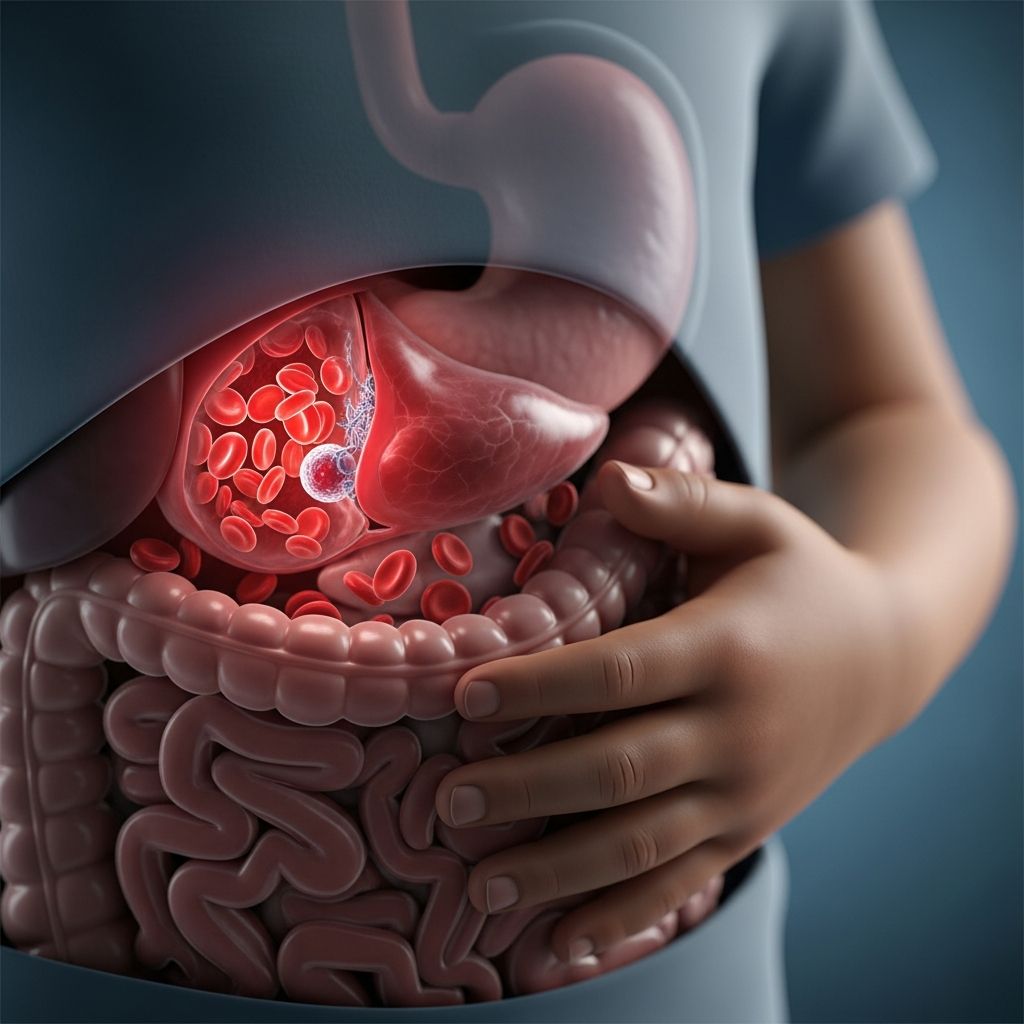
Splenic sequestration is one of the most serious complications of sickle cell disease (SCD) in infants and young children. It can develop quickly and become life-threatening if not recognized and treated right away.
This guide explains, in clear language, what splenic sequestration is, why it happens, what symptoms to watch for, what to do in an emergency, and how doctors treat and help prevent future episodes.
1. The Spleen’s Role and Why It Matters in Sickle Cell Disease
The spleen is a soft, fist-sized organ on the upper left side of the abdomen, just under the rib cage. It has several important jobs:
- Filters blood by removing old or damaged red blood cells.
- Helps fight infection by storing and producing certain white blood cells and antibodies.
- Stores blood, acting as a small reservoir the body can use when needed.
In children with sickle cell disease, red blood cells can become rigid and crescent-shaped. These sickled cells can get stuck in tiny blood vessels inside the spleen, blocking normal blood flow.
| Normal red blood cells | Sickled red blood cells |
|---|---|
| Round, flexible, move easily through blood vessels | Stiff, C-shaped, more likely to clog blood vessels |
| Live about 120 days | Often break down early (10–20 days) |
| Support normal oxygen delivery | Cause chronic anemia and organ stress |
Because the spleen is constantly filtering blood, it is especially vulnerable to damage from sickled cells. Over time, many children with SCD develop scarring and loss of spleen function, but before this happens they are at high risk for splenic sequestration episodes.
2. What Is Splenic Sequestration?
Splenic sequestration happens when a large number of red blood cells suddenly become trapped in the spleen. The spleen swells and fills with blood, and the rest of the body is left with far fewer red blood cells and much less circulating blood volume.
Doctors often define a splenic sequestration crisis in SCD as:
- Rapid enlargement of the spleen from the child’s usual size, and
- An acute drop in hemoglobin, typically by about 2 g/dL or more, causing severe anemia.
Because so much blood gets trapped in the spleen, vital organs such as the brain, heart, and lungs may not receive enough blood and oxygen. This can lead to shock and can be fatal without quick treatment.
Who Is Most at Risk?
- Children with sickle cell anemia (HbSS) or other severe forms of SCD.
- Most commonly infants and young children, generally under about 5 years of age, before the spleen becomes severely scarred.
- Children with a history of previous splenic sequestration are at higher risk for repeat episodes.
3. Why Splenic Sequestration Is an Emergency
When red blood cells suddenly pool inside the spleen, a child can lose a large portion of their circulating blood volume within a short time. This causes:
- Severe anemia (very low red blood cell count), and
- Circulatory collapse or shock in severe cases.
Splenic sequestration is considered a medical emergency because it can progress rapidly. Some children may look fairly well at first but worsen over a few hours. Without fast treatment, this complication is one of the leading causes of death in young children with sickle cell disease.
4. Early Warning Signs Parents Should Watch For
Parents and caregivers play a crucial role in catching splenic sequestration early. The key is to look for new or sudden symptoms, especially when your child has sickle cell disease.
Common Symptoms
Symptoms are due to two main problems: the spleen rapidly getting bigger and the body suddenly becoming more anemic.
- Pain or fullness on the left side of the belly, which may be tender to touch.
- Noticeable swelling of the abdomen, especially under the left ribs.
- A firm or enlarged spleen that you can feel more easily than usual.
- Sudden weakness or fatigue; your child may not want to play.
- Pale skin, lips, or fingernails.
- Fast heartbeat or fast breathing even at rest.
- Dizziness or seeming unsteady in older children.
- Unusual sleepiness or difficulty waking a young child.
These symptoms can overlap with those of infection or other SCD problems, so size and tenderness of the spleen are especially important clues.
How to Feel Your Child’s Spleen
Many specialized sickle cell clinics teach parents how to gently check the spleen at home. Always ask your child’s care team to show you the correct technique and what is normal for your child.
In general:
- Have your child lie on their back, relaxed.
- Use the flat pads of your fingers, not the tips.
- Start under the left rib cage and gently move your hand downward.
- Feel for a smooth, firm edge that was not there before or is lower than usual.
If you suddenly notice that the spleen feels much bigger, firmer, or more tender than usual, especially with the symptoms above, seek medical care immediately.
5. When to Call the Doctor and When to Dial Emergency Services
Because splenic sequestration can worsen quickly, it is safer to overreact than to wait. Contact your child’s care team or emergency services if:
- You feel a new or rapidly enlarging spleen.
- Your child has belly pain on the left side, especially if the abdomen seems swollen.
- There is sudden weakness, extreme tiredness, or unusual sleepiness.
- You notice pale lips or skin, fast breathing, or a fast heartbeat at rest.
Call emergency medical services (EMS) or go to the nearest emergency department right away if any of the following occur:
- Your child is very hard to wake up or not responding normally.
- Breathing is rapid, labored, or appears difficult.
- Your child seems confused, dizzy, or about to faint.
- You suspect severe abdominal pain and a suddenly enlarged spleen.
Do not wait to see if symptoms improve. Emergency teams can begin treatment, including oxygen and IV access, much faster if they are called early.
6. How Doctors Diagnose Splenic Sequestration
In the hospital or clinic, health professionals will move quickly to confirm the diagnosis and start treatment. Evaluation typically includes:
- Physical examination
Doctors will feel the child’s abdomen to measure the size of the spleen compared with previous exams. - Blood tests
Common tests include complete blood count (CBC) to check hemoglobin, hematocrit, and platelet levels, as well as reticulocyte count and blood type. - Vital signs
Heart rate, blood pressure, breathing rate, and oxygen level help assess whether the child is in shock or at risk of collapse. - Imaging if needed
In some cases, ultrasound may be used to confirm an enlarged spleen, but the diagnosis is usually based on exam and blood work.
7. Treatment: What Happens in the Hospital?
Treatment aims to restore blood volume, correct severe anemia, and prevent shock, while monitoring for complications.
Immediate Management
- IV fluids to support circulation and blood pressure.
- Blood transfusions to replace trapped red blood cells and raise hemoglobin levels.
- Oxygen if oxygen levels are low or breathing is difficult.
- Close monitoring of vital signs, spleen size, and urine output.
- Pain management, especially for abdominal pain.
In severe cases, children may need care in an intensive care unit (ICU) for continuous monitoring.
Ongoing and Long-Term Approaches
Once the crisis is controlled, the health care team will discuss how to lower the risk of another episode. Long-term strategies may include:
- Chronic transfusion programs for some high-risk children.
- Hydroxyurea therapy to reduce sickling episodes in appropriate patients.
- Splenectomy (surgical removal of the spleen) in selected children with recurrent or severe sequestration crises.
After splenectomy, children have a higher risk of certain infections and usually need specific vaccines and sometimes daily antibiotics, based on expert guidelines.
8. Reducing the Risk: Practical Steps for Families
Not every episode of splenic sequestration can be prevented, but families can significantly improve outcomes by combining home monitoring with regular medical care.
At-Home Prevention and Monitoring
- Learn your child’s usual spleen size and check gently when they are sick or not acting like themselves.
- Know the early symptoms of anemia and splenic sequestration.
- Give medicines exactly as prescribed, including hydroxyurea or prophylactic antibiotics if ordered.
- Keep vaccines up to date, especially those that protect against bacteria the spleen normally helps fight (such as pneumococcus and meningococcus), following public health and hematology guidelines.
- Have a written emergency plan with phone numbers for the sickle cell team and closest emergency department.
Partnering With the Health Care Team
- Attend all routine sickle cell visits, where spleen size and overall health are checked.
- Ask your child’s hematologist about their individual risk for splenic sequestration and whether extra monitoring is needed.
- Review what to do during fevers, infections, or pain crises, when splenic sequestration risk may be higher.
9. Living With the Possibility of Splenic Sequestration
Learning about splenic sequestration can be frightening, but knowledge also gives families power. When parents understand the condition and know what to watch for, they can act quickly at the first warning signs.
Most children who receive prompt emergency care for splenic sequestration recover well from the immediate episode. Ongoing partnership with a pediatric hematology team can help guide decisions about long-term treatments and support your child’s growth, school life, and everyday activities.
10. Frequently Asked Questions (FAQs)
Q1: Can splenic sequestration happen more than once?
Yes. Children who have had one splenic sequestration episode are at higher risk for another. Your child’s doctor may discuss options such as closer monitoring, preventive transfusions, or in some cases removal of the spleen to decrease the chance of future crises.
Q2: Does splenic sequestration only affect young children?
It is most common in infants and children under about 5 years old with sickle cell disease, because their spleens are still functioning and can trap blood. In older children and adults, the spleen often becomes scarred and shrinks, so classic splenic sequestration is less frequent, though other complications can still occur.
Q3: Is splenic sequestration always painful?
Not always. Some children have clear belly pain on the left side, but others mainly show swelling, weakness, or pale skin without strong pain. That is why checking spleen size and watching for anemia symptoms are both important.
Q4: How is splenic sequestration different from a typical pain crisis?
A pain crisis in sickle cell disease usually involves severe pain in bones, joints, or the chest as sickled cells block blood flow in those areas. In splenic sequestration, the main problem is a rapid pooling of blood inside the spleen, causing sudden enlargement and dangerous anemia. Both are emergencies, but splenic sequestration is especially time-sensitive because of the risk of shock.
Q5: After a splenectomy, will my child still have sickle cell disease?
Yes. Removing the spleen does not cure sickle cell disease, but it can prevent future splenic sequestration crises. Children without a spleen need careful infection prevention, including recommended vaccines and, in many cases, daily antibiotics, under the guidance of their hematology and primary care teams.
References
- Complications of SCD: Splenic Sequestration — Centers for Disease Control and Prevention (CDC). 2023-08-31. https://www.cdc.gov/sickle-cell/complications/splenic-sequestration.html
- Splenic Sequestration Crisis — StatPearls, NCBI Bookshelf. 2024-01-15. https://www.ncbi.nlm.nih.gov/books/NBK553164/
- Acute Spleen Enlargement (Splenic Sequestration) — Together by St. Jude™. 2024-09-01. https://together.stjude.org/en-us/treatment-tests-procedures/symptoms-side-effects/acute-splenic-sequestration.html
- Splenic sequestration in children with sickle cell disease — Texas Children’s Hospital. 2022-06-10. https://www.texaschildrens.org/content/conditions/splenic-sequestration-children-with-sickle-cell-disease
- Sickle Cell Disease: Splenic Sequestration — Kaiser Permanente Health Encyclopedia. 2023-05-12. https://healthy.kaiserpermanente.org/health-wellness/health-encyclopedia/he.sickle-cell-disease-splenic-sequestration.hw253997