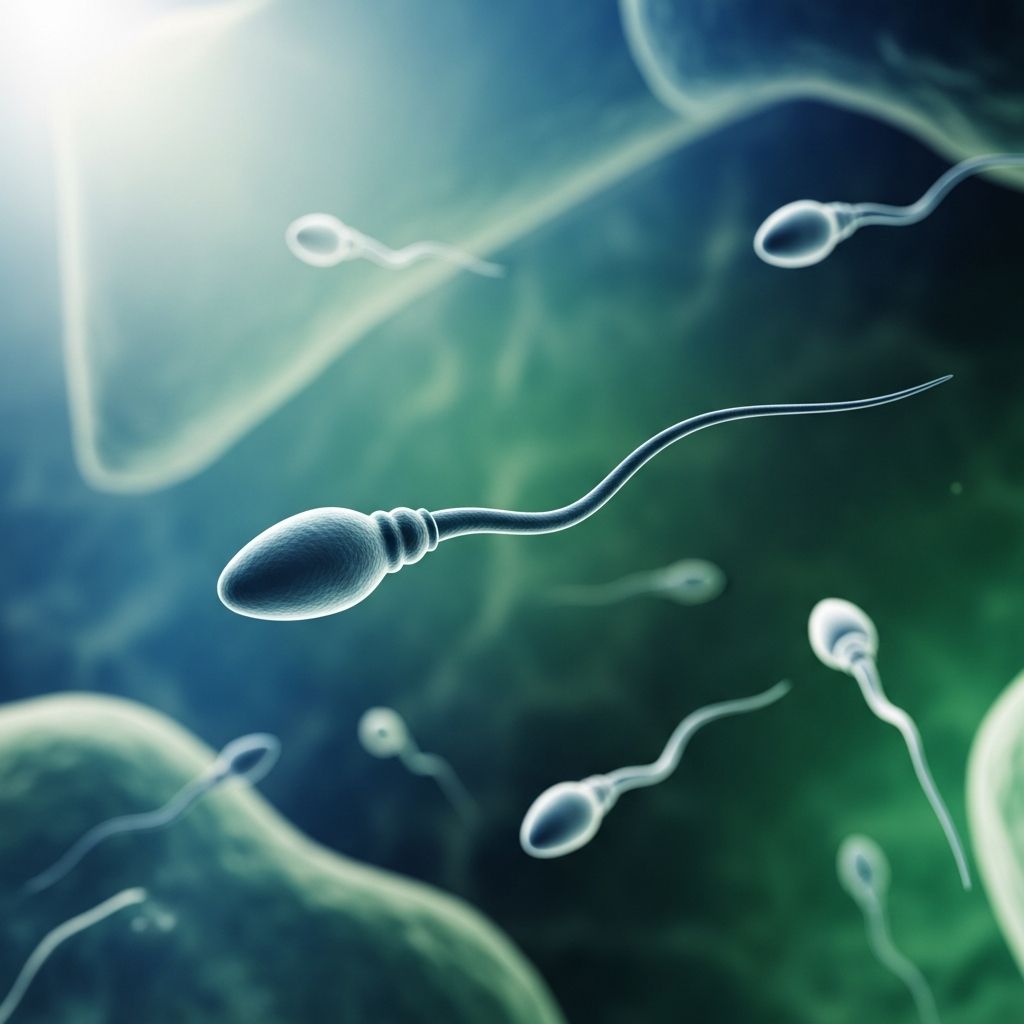
The capacity of sperm to propel themselves effectively toward the egg is a cornerstone of male reproductive health. Known as **sperm motility**, this dynamic process determines whether sperm can navigate the challenging journey through the female reproductive tract to achieve fertilization. Understanding motility not only sheds light on fertility potential but also empowers individuals to take proactive steps for better outcomes.
Defining Sperm Motility and Its Types
Sperm motility refers to the percentage of sperm cells capable of independent movement, crucial for reaching and penetrating the egg. Fertility hinges on this ability, as immobile or poorly moving sperm cannot complete the voyage from the vagina, through the cervix, uterus, and into the fallopian tubes.
Experts classify motility into distinct categories for precise evaluation:
- Progressive motility: Sperm advance forward in straight lines or broad arcs, traveling at least 25 micrometers per second. This is essential for successful fertilization.
- Non-progressive motility: Sperm exhibit tail movement but fail to progress, often swirling in tight circles without net forward motion.
- Immotile sperm: Completely stationary, these contribute nothing to conception efforts.
Traditional grading systems further refine assessment: Grade A denotes fast, linear swimmers; Grade B slower but directional movers; Grade C non-progressive; and Grade D fully static.
Normal Benchmarks for Sperm Motility
According to the World Health Organization’s 2021 guidelines, healthy semen features at least 30% progressive motility and 42% total motility (any movement). Below these thresholds—specifically under 32% progressive—diagnoses asthenozoospermia, signaling potential fertility challenges.
A comprehensive semen analysis evaluates multiple parameters. Here’s a breakdown of standard norms:
| Parameter | Normal Value |
|---|---|
| Sperm Concentration | ≥15-20 million/mL |
| Total Motility | ≥40% |
| Progressive Motility | ≥30-32% |
| Morphology (Normal Forms) | ≥4% |
| Semen Volume | ≥1.5-2.0 mL |
These metrics provide a holistic view, as motility alone doesn’t dictate fertility; count, shape, and volume interplay critically.
How Poor Sperm Motility Impedes Conception
When motility dips below norms, sperm struggle against cervical mucus barriers, especially outside fertile windows when mucus thickens and acidifies. Even with ovulation’s favorable shifts—thinner, alkaline mucus—low-motility sperm often lag, reducing fertilization odds.
While low count (oligospermia) drives 90% of male infertility cases, asthenozoospermia frequently compounds or independently causes issues. Conception remains possible with reduced motility, as just one robust sperm suffices, but probabilities plummet, prolonging time-to-pregnancy.
Root Causes Behind Reduced Sperm Motility
Diverse factors undermine motility, spanning lifestyle, medical, and environmental domains.
Lifestyle Contributors
- Smoking and tobacco use elevate oxidative stress, impairing sperm tails.
- Excess alcohol and drug use disrupt hormonal balance and cell function.
- Obesity correlates with hormonal disruptions and inflammation affecting motility.
- Sedentary habits diminish testicular temperature regulation.
Medical and Genetic Influences
- Varicocele, enlarged scrotal veins, raises local heat and oxidative damage.
- Infections or inflammation (e.g., prostatitis) produce toxins harming sperm.
- Hormonal deficiencies, like low testosterone, stunt sperm production quality.
- Genetic issues or testicular trauma yield inherently poor movers.
Environmental Assaults
Exposure to pesticides, heavy metals, and heat (saunas, tight clothing) triggers oxidative stress, a primary motility saboteur. Aging naturally declines motility via accumulated cellular wear.
Diagnostic Approaches for Motility Assessment
Semen analysis remains the gold standard, involving 2-7 days’ abstinence followed by lab scrutiny under microscopy for motility grades, count, and vitality. Home kits offer preliminary checks but lack comprehensiveness.
For deeper insights, advanced tests like computer-assisted semen analysis (CASA) quantify speed precisely, while anti-sperm antibody screens detect immune hindrances.
Proven Strategies to Enhance Sperm Motility
Reversible causes respond well to interventions, often yielding 20-50% motility gains within months.
Lifestyle Overhauls
- Dietary shifts: Antioxidant-rich foods (berries, nuts, leafy greens) combat oxidative damage. Omega-3s from fish support membrane fluidity.
- Exercise: Moderate activity (30 min/day) optimizes weight and hormones; avoid overtraining.
- Habits cessation: Quit smoking, limit alcohol to <14 units/week, evade recreational drugs.
- Heat avoidance: Loose underwear, cooler showers preserve scrotal chill (2-4°C below body temp).
Supplements with Evidence
- Coenzyme Q10 (200-300mg/day): Boosts mitochondrial energy for propulsion.
- L-Carnitine (2g/day): Fuels fatty acid transport in sperm tails.
- Zinc (15-30mg) + Folate: Elevates motility in deficient men.
- Vitamin C/E: Neutralize free radicals.
Consult physicians before starting, as excess can harm.
Medical Interventions
Varicocele repair surgery improves motility in 60-70% of cases. Hormone therapies address deficiencies, while antibiotics clear infections. For severe cases, assisted reproduction like IUI (motile sperm selection) or IVF/ICSI bypasses natural barriers.
Navigating Fertility with Low Motility
Couples facing asthenozoospermia should track ovulation, time intercourse optimally, and consider fertility specialists after 6-12 months of trying. Even 20-30% motility permits natural conception in many.
Frequently Asked Questions
Is 40% sperm motility normal?
Yes, total motility ≥40% and progressive ≥32% align with WHO norms for fertility potential.
Can low motility prevent pregnancy entirely?
No, as few as one motile sperm can fertilize; lower rates just extend conception timelines.
How long to improve motility via lifestyle?
Spermatogenesis cycles 74 days; 3 months of changes often yield results.
Do home tests accurately measure motility?
They provide estimates but professional labs offer definitive, multi-parameter analysis.
Does age drastically affect motility?
Yes, motility declines post-40 due to oxidative accumulation and DNA fragmentation.
Empowering Your Fertility Journey
Armed with motility knowledge, men can implement targeted changes to amplify conception prospects. Routine checks and specialist input maximize success, turning fertility hurdles into achievable milestones for aspiring parents.
References
- Understanding Sperm Motility and Its Effects on Fertility — Viera Fertility. 2023. https://www.vierafertility.com/blog/understanding-sperm-motility-and-its-effects-on-fertility/
- Understanding Sperm Motility: Normal Ranges and Fertility Factors — Nova IVF Fertility. 2023. https://www.novaivffertility.com/fertility-help/what-is-the-normal-motility-of-sperm
- Sperm motility: normal and low motility explained — Clearblue. 2024. https://www.clearblue.com/how-to-get-pregnant/sperm-motility
- Sperm Motility: Causes, Treatment, and More — Healthline. 2023. https://www.healthline.com/health/fertility/sperm-motility
- Healthy sperm: Improving your fertility — Mayo Clinic. 2024-01-16. https://www.mayoclinic.org/healthy-lifestyle/getting-pregnant/in-depth/fertility/art-20047584
- Getting pregnant with low sperm motility and how to increase it — Cryos International. 2023. https://www.cryosinternational.com/en-gb/dk-shop/private/blog/low-sperm-motility–what-is-it/
- A Mini Review on the Relationship between Sperm Motility and… — JSciMed Central (Peer-reviewed). 2019. https://www.jscimedcentral.com/public/assets/articles/sexualmedicine-6-1096.pdf