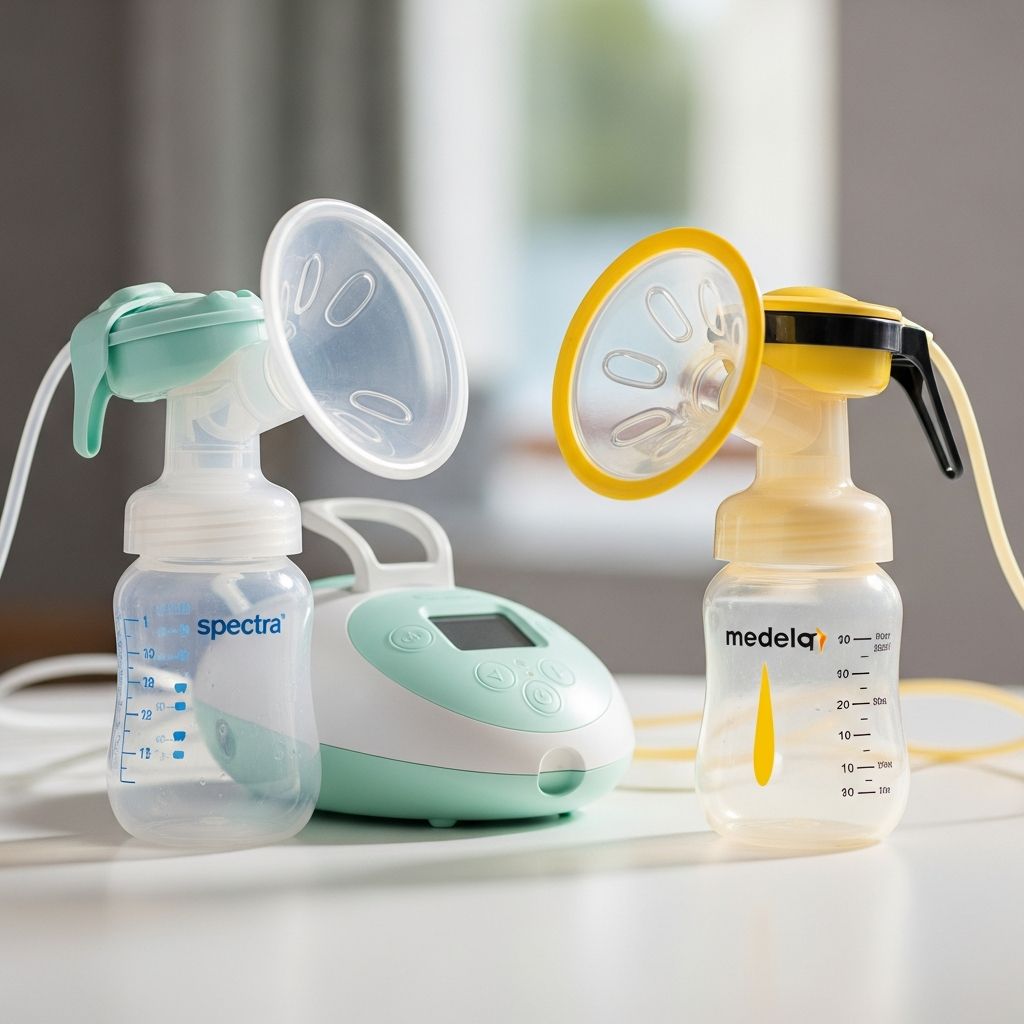
If you plan to pump regularly, choosing between Spectra and Medela is one of the biggest breastfeeding decisions you will make. Both brands are trusted, widely recommended by lactation professionals, and covered by many insurance plans, but they feel very different to use and fit very different lifestyles.
This guide uses the key ideas from the classic Spectra vs Medela debate and expands them into a fresh, detailed, and easy-to-skim comparison so you can decide which pump will work better for your body, your schedule, and your budget.
Brand Overview: What Spectra and Medela Are Known For
Before you compare specific models like the Spectra S1/S2 and the Medela Pump In Style, it helps to understand the general philosophy and strengths of each brand.
- Medela is a long-established Swiss company whose electric pumps have been used in hospitals and homes for decades. Many Medela models use 2-Phase Expression technology, which imitates a baby’s fast sucking at the start of a feed followed by slower, deeper sucks to remove milk more efficiently.
- Spectra is a newer brand founded by moms and nurses in South Korea, known for quiet motors, built-in night lights, and highly customizable settings that allow parents to adjust both suction strength and speed independently.
In most comparisons, the focus is on the Spectra S1/S2 versus the Medela Pump In Style, since those are common insurance-covered, everyday double electric pumps.
How to Decide: Start With Your Pumping Lifestyle
Instead of starting with technical specifications, begin with how you expect to use your pump. Your personal situation often matters more than any single feature.
- How often will you pump? Daily at work, a few times a week, or only occasionally?
- Where will you pump? At home, in a workplace pumping room, in your car, or while traveling?
- What matters most to you? Comfort, speed, noise level, portability, or price?
- Do you want a pump that can support exclusive pumping if needed?
Once you answer those questions, the differences between Spectra and Medela become much clearer.
Feature Comparison: Spectra vs Medela at a Glance
| Feature | Typical Spectra (S1/S2) | Typical Medela (Pump In Style style pumps) |
|---|---|---|
| Suction feel | Often described as gentle, rhythmic, and adjustable in both speed and strength | More of a pulling sensation using preset 2-Phase Expression patterns |
| Noise level | Generally very quiet motors, good for night pumping | Some models louder; may be more noticeable in shared spaces |
| Portability | S1 has a built-in rechargeable battery; S2 requires an outlet; both are bulkier | Many models lighter and easier to carry; some use external battery packs |
| Controls | Digital display, independent adjustment of vacuum and cycle speed | Dial or button controls with fewer custom options; often preset programs |
| System type | Closed system to keep milk out of tubing and motor | Most current personal pumps are also closed system; always confirm by model |
| Typical fit & flanges | Standard hard plastic flanges; various sizes available; some need inserts | Many models offer flexible, more contoured flanges which some users find more comfortable |
Suction, Efficiency, and Milk Output
Both brands are capable of supporting exclusive pumping when used correctly, but they get there in slightly different ways.
Suction strength and patterns
- Spectra pumps (such as the S1 and S2) allow you to separately adjust vacuum strength and cycle speed (how many suction cycles per minute), which helps many parents mimic their baby’s natural nursing rhythm.
- Medela pumps commonly use pre-programmed patterns based on research on infant sucking behavior: a fast stimulation phase followed by a slower, stronger expression phase.
Clinical research shows that double electric pumps using 2-phase or similar technology can help shorten pumping time and improve milk removal compared with single or non-patterned pumps, especially for parents who pump frequently.
Real-world efficiency
In practice, parents often report:
- Similar overall milk output across both brands over 24 hours when flanges fit correctly and pumping is consistent.
- Spectra feeling more effective at lower suction settings, which can be helpful if you have sensitive nipples or are prone to vasospasm.
- Medela sometimes requiring a bit more time or slightly higher suction to achieve the same output for some users, although this varies widely.
From a medical standpoint, consistent and complete milk removal is more important than the brand itself. Professional organizations like the American Academy of Pediatrics emphasize that frequent, effective milk removal (by baby or pump) is key to maintaining supply.
Comfort: How Each Brand Feels to Use
Comfort can make the difference between dreading pumping and tolerating or even liking it.
Flange fit and sensation
- Flange size and shape matter more than logo. Ill-fitting flanges can lead to pain, nipple damage, or reduced milk transfer. Both brands offer multiple sizes and compatibility with third-party inserts.
- Spectra is usually described as a gentler, more massaging sensation because of its adjustable cycle speeds and vacuum levels.
- Medela flanges on certain models are more contoured, sometimes with flexible rims, and some parents feel that their stronger, pulling motion more closely imitates a baby’s latch.
Tips to improve comfort with any pump
- Get a proper flange sizing check from a lactation consultant, especially if you have pain or low output.
- Use the lowest suction level that still yields good milk flow; more suction does not always mean more milk.
- Apply a thin layer of breast milk or nipple balm to the tunnel to reduce friction.
- Make minor adjustments to position (angle and placement) to center your nipple without rubbing the sides.
Noise, Size, and Portability
Where and when you pump will heavily influence whether Spectra or Medela makes more sense for you.
Noise level
- Spectra S1/S2 are often praised for being noticeably quieter than many other traditional electric pumps, which is helpful if you pump next to a sleeping baby or in a shared office.
- Some Medela personal pumps are louder and more mechanical-sounding, which can feel awkward in very quiet spaces.
Portability and power options
- Spectra S1 includes a built-in rechargeable battery, so you can move around the house or pump in your car without a power outlet, though the unit is still relatively bulky and not truly discreet.
- Spectra S2 is similar but typically requires an outlet; it is better as a home or office workstation pump.
- Medela offers several lighter personal pumps and some compact or wearable options that are easier to slip into a bag, making them appealing for frequent travelers or those commuting daily.
According to comparison guides, Medela’s personal pumps often weigh less than Spectra’s traditional S-series pumps, trading a bit of suction power and adjustability for portability.
Hygiene, Cleaning, and System Design
Pump design affects how easy it is to keep milk away from the motor and how much cleaning you need to do.
- Modern Spectra pumps are closed system, meaning there is a barrier that prevents milk and condensation from backing up into the tubing or motor.
- Many current Medela personal pumps are also closed system, though older models were not; always check your specific pump’s manual.
- Closed systems reduce the risk of milk getting into internal components that cannot be cleaned and can simplify routine hygiene.
Independent of brand, you should follow evidence-based guidelines for cleaning pump parts. The U.S. Centers for Disease Control and Prevention (CDC) recommend washing all parts that come into contact with milk after each use, sanitizing at least once daily for infants under 3 months, and thoroughly drying parts before reassembly to reduce bacterial growth.
Long-Term Use, Durability, and Warranty
Most insurance-covered pumps are designed for one user and one breastfeeding journey, but quality and feel can still differ.
- Medela has a long track record in hospitals and home use; many parents report their pumps lasting through multiple children when cared for properly.
- Spectra also offers sturdy pumps, and users often feel that the S1/S2 motors remain strong even with heavy daily use.
- Both brands generally provide limited warranties on the motor (for example, about 1–2 years depending on the model and region). Always register your pump and keep proof of purchase.
Health agencies such as the U.S. Food and Drug Administration (FDA) do not recommend sharing or buying previously used personal-use breast pumps unless they are specifically labeled as multi-user and have replaceable parts that isolate the milk from the motor.
Cost, Insurance Coverage, and Accessories
The overall cost of using a pump includes much more than the initial device.
Upfront cost and insurance
- In many countries, particularly the United States, health insurance often covers at least part of the cost of a Spectra or Medela double electric pump.
- Parents may need to choose from a list of specific models covered by their plan, which could limit whether you get, for example, a Spectra S1 versus S2 or a certain Medela model.
Ongoing expenses
- Replacement parts such as valves, membranes, tubing, and flanges should be replaced periodically, especially with daily use.
- Extra sets of parts can significantly improve convenience for working parents—you can keep one set at work and one at home.
- Both brands sell cooler bags, bottle sets, and hands-free pumping bras that can add to the total cost but also improve your experience.
Who Might Prefer Spectra?
Spectra may be a better fit if you:
- Plan to pump daily or multiple times per day, such as exclusive pumping or full-time work outside the home.
- Value a quiet motor for nighttime or shared spaces.
- Want fine-tuned control over suction strength and cycle speed.
- Prefer a more gentle, massage-like sensation.
- Need a pump that can stay plugged in at a “pumping station” most of the time (especially with the S2), or a strong, somewhat portable option like the S1.
Who Might Prefer Medela?
Medela may be a better fit if you:
- Need a lighter, more compact pump to carry to work or on frequent trips.
- Like the feel of a stronger pulling motion and are comfortable with pre-set suction patterns.
- Want simple, less technical controls without a lot of settings to manage.
- Prefer pumps with flexible or contoured flanges that may fit your anatomy better out of the box.
- Have easier access to Medela-specific parts and accessories through local pharmacies or hospital programs.
Practical Decision Checklist
Use this quick checklist to narrow down your choice between Spectra and Medela.
- If you mostly pump at home and want quiet, customizable settings → you may lean toward Spectra S1 or S2.
- If you carry your pump daily and want lighter weight and simple controls → you may lean toward a Medela personal pump.
- If you are very sensitive to pain and need gentle suction with fine adjustments → Spectra’s control options can be an advantage.
- If you like a strong pull that feels closer to your baby’s latch → you may prefer how many Medela pumps feel.
- If your insurance only covers certain models → start from that list and then apply the criteria above.
Frequently Asked Questions (FAQs)
Which pump is better for exclusive pumping, Spectra or Medela?
Both brands can support exclusive pumping when used correctly. Many heavy-use pumpers prefer Spectra S1 or S2 for their quiet motors and adjustable settings, but some exclusive pumpers do very well with Medela models, especially when flange size and suction levels are optimized.
Are Spectra and Medela flanges interchangeable?
Not directly. Each brand has its own flange designs, but many parents use third-party adapters or inserts to combine parts. Always make sure any accessories you use are food-grade and compatible with your specific model.
Is a hospital-grade pump necessary, or is a personal Spectra/Medela enough?
For most parents, a personal double electric pump from Spectra or Medela is sufficient. Hospital-grade pumps may be recommended in special situations such as premature birth or low supply. In those cases, a lactation consultant or healthcare provider can help decide whether to rent a hospital-grade model.
How often should I replace parts on Spectra or Medela pumps?
Replacement frequency depends on how often you pump, but many lactation professionals suggest replacing soft parts like valves and membranes every 1–3 months with daily use, and flanges or backflow protectors as needed. Check your manual and watch for changes in suction or output.
Which brand is easier to clean?
Both brands have models with a similar number of parts, and both offer closed systems that keep milk out of the motor. The CDC recommends washing all components that come into contact with milk after each use and sanitizing regularly for young infants, regardless of brand.
References
- Medela Pump In Style vs Spectra S1 Review — YouTube (Independent Review). 2021-06-01. https://www.youtube.com/watch?v=2S4bU5A-aWI
- Medela vs. Spectra: Comparing Two Leading Breast Pump Brands — Milk N Mamas Baby. 2023-05-10. https://milknmamasbaby.com/medela-vs-spectra-comparing-two-leading-breast-pump-brands/
- Best Breast Pump for Moms: Momcozy, Medela, or Spectra? — Momcozy Blog. 2023-08-15. https://momcozy.com/blogs/breastfeeding/best-breast-pumps-momcozy-medela-spectra-review
- Spectra vs Medela: The Pros and Cons of These Popular Pumps — Mommy Labor Nurse. 2022-04-20. https://blog.mommylabornurse.com/spectra-vs-medela
- Battle of the Breast Pumps: Medela vs. Spectra — Aeroflow Breastpumps. 2022-09-30. https://aeroflowbreastpumps.com/blog/battle-of-the-breast-pumps-medela-vs-spectra
- Medela vs. Spectra Breast Pumps – Which is Right for You? — Pumps for Mom. 2022-05-18. https://pumpsformom.com/breast-pump-101/medela-vs-spectra-breast-pumps-which-is-right-for-you/
- Breast Pump Cleaning Guidelines — U.S. Centers for Disease Control and Prevention. 2022-09-06. https://www.cdc.gov/infant-toddler-nutrition/breastfeeding/clean-breast-pump.html