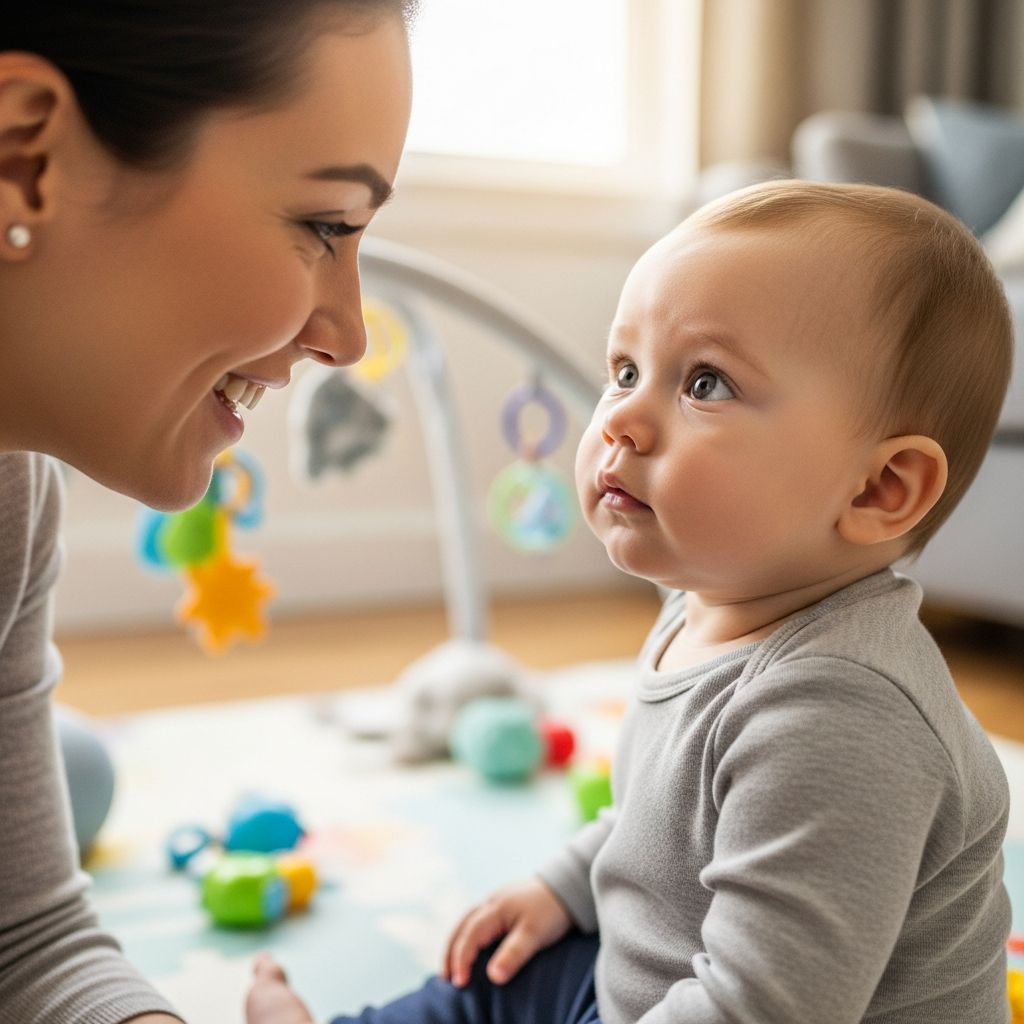
During the pivotal window of 9 to 15 months, infants begin actively seeking emotional signals from caregivers to interpret ambiguous situations, a process known as social referencing. This skill marks a key milestone in emotional and social development, helping babies regulate their responses to novelty and uncertainty.
Understanding the Foundations of Social Referencing
Social referencing emerges as babies transition from relying solely on their instincts to incorporating social cues for decision-making. Around 8-10 months, infants start decoding facial expressions and vocal tones, using this information to guide behavior in unfamiliar scenarios. By 12 months, they actively modify actions based on these cues, demonstrating growing social awareness.
This ability is rooted in earlier developments like joint attention and imitation. Infants first respond to caregiver voices in utero and produce social smiles by two months. By one year, they look to trusted adults during novel events to gauge safety or interest. Research shows even younger infants, as early as 4-5 months, can learn referencing through conditioned responses to joyful or fearful expressions.
Key Developmental Milestones from 9 to 15 Months
Between 9 and 15 months, social referencing evolves rapidly, aligning with motor skills like crawling, which increases exposure to new environments.
- 9-10 Months: Babies glance at caregivers’ faces when encountering new objects or sounds, seeking reassurance before proceeding.
- 12 Months: Infants use cues to adjust behavior, such as approaching or avoiding toys based on parental reactions.
- 14-15 Months: Toddlers apply referencing indirectly, learning from others’ experiences, and show preferences influenced by past emotional feedback.
These milestones support broader social-emotional growth, including secure attachment patterns linked to positive outcomes like better play skills and trust.
The Science Behind Social Referencing: Classic Studies
Iconic experiments illustrate this phenomenon. The visual cliff study by Gibson and Walk demonstrated infants (around 6-14 months) crawling over a safe glass surface mimicking a drop-off. Babies crossed when mothers smiled encouragingly but hesitated if mothers displayed fear, highlighting reliance on emotional signals for perceived safety.
Further research confirms multimodal cues (face, voice, body) are processed by 12 months, with facial expressions alone influencing older toddlers. Discrimination training studies show even 4-month-olds can associate expressions with outcomes, though full referencing solidifies later.
How Social Referencing Shapes Emotional Intelligence
Social referencing broadens infants’ emotional repertoire, teaching them to associate expressions with feelings like joy, fear, or disgust. It fosters emotion regulation: a fall prompts a cry, but a calm caregiver response teaches resilience.
By observing reactions, babies learn societal norms and preferences. For example, a smile for cookies versus a frown for chocolate bars signals maternal likes, guiding future choices.
| Age Range | Skill Development | Example Scenario |
|---|---|---|
| 9 Months | Basic cue recognition | Looks to parent before touching stranger’s toy |
| 12 Months | Behavior modification | Avoids ambiguous object if parent frowns |
| 15 Months | Indirect application | Refrains from snack after seeing sibling scolded |
Parental Role: Fostering Healthy Social Referencing
Caregivers are central to this development. Responsive, consistent emotional displays build trust, enabling secure attachment. Strategies include:
- Exaggerating expressions clearly during play or novelty.
- Maintaining eye contact and vocal tone matching the emotion.
- Modeling positive responses to encourage exploration.
Avoid ambiguity; a neutral face may confuse, stalling progress. Programs like CDC milestones emphasize showing affection and play reciprocity at 15 months to reinforce these skills.
Potential Challenges and Variations in Development
Not all infants progress uniformly. Factors like crawling onset around 8-9 months heighten referencing needs due to independence. Securely attached babies show stronger skills, while disorganized patterns correlate with social delays.
Cultural differences may influence expression salience, but core referencing appears universal. If delays occur, early intervention supports emotional growth.
Long-Term Benefits for Social and Cognitive Growth
Mastering social referencing lays groundwork for empathy, theory of mind, and peer interactions. Toddlers with robust skills engage more in pretend play and cooperative games. It enhances decision-making, as children weigh social feedback against personal impulses.
Research links early referencing to later emotional regulation, reducing behavioral issues and boosting school readiness.
Practical Activities to Encourage Social Referencing
- New Toy Introduction: Present an unfamiliar object; react positively or cautiously, observing baby’s response.
- Peek-a-Boo Variations: Use excited tones for joy, surprised looks for novelty, prompting gaze-checking.
- Daily Routines: During dressing or meals, use affirming smiles to build positive associations.
- Group Play: At 15 months, facilitate observing peers’ reactions to model indirect referencing.
These activities, done consistently, strengthen caregiver-infant bonds and social competence.
Frequently Asked Questions (FAQs)
What age do babies start social referencing?
Babies typically begin between 8-10 months, with clear behavior changes by 12 months.
Why is my baby looking at me before touching things?
This is social referencing: seeking your emotional approval to assess safety in uncertain situations.
How can I help my 15-month-old develop this skill?
Use clear facial expressions, vocal cues, and responsive interactions during play and exploration.
Does social referencing differ in children with delays?
Yes, it may emerge later; consult professionals if milestones like copying play or showing objects are missed by 15 months.
Is social referencing only with parents?
Primarily with primary caregivers, but extends to familiar adults and peers as trust builds.
Monitoring Progress: Signs of Strong Social Referencing
Track these indicators:
- Claps or hugs toys when excited, mirroring caregiver joy.
- Copies play actions after parental encouragement.
- Shows objects for approval before engaging.
- Pauses in new settings to check reactions.
Regular check-ins align with CDC guidelines for healthy development.
References
- Acquisition of Social Referencing via Discrimination Training — Stenberg G. 2012-03-07. https://pmc.ncbi.nlm.nih.gov/articles/PMC3297351/
- Social Referencing | Overview & Examples — Study.com. Accessed 2026. https://study.com/learn/lesson/social-referencing-psychology-importance-examples.html
- 4.4 Social Development in Infants and Toddlers — OpenStax Lifespan Development. 2023. https://openstax.org/books/lifespan-development/pages/4-4-social-development-in-infants-and-toddlers
- Social Referencing during Infancy and Early Childhood — Max Planck Institute. 2017. https://pure.mpg.de/rest/items/item_1835620_3/component/file_2628556/content
- Social Referencing – DePauw University — DePauw University Lab. 2010. https://www.depauw.edu/learn/lab/publications/documents/infant%20development/2010_Infant_development_Social_referencing.pdf
- What Is Social Referencing in Child Development? — Rasmussen University. 2023. https://www.rasmussen.edu/degrees/education/blog/what-is-social-referencing-in-child-development/
- Social-Emotional Development: Infants and Toddlers — Virtual Lab School. Accessed 2026. https://www.virtuallabschool.org/infant-toddler/social-and-emotional-development/lesson-2
- Milestones by 15 Months — CDC. 2024. https://www.cdc.gov/act-early/milestones/15-months.html