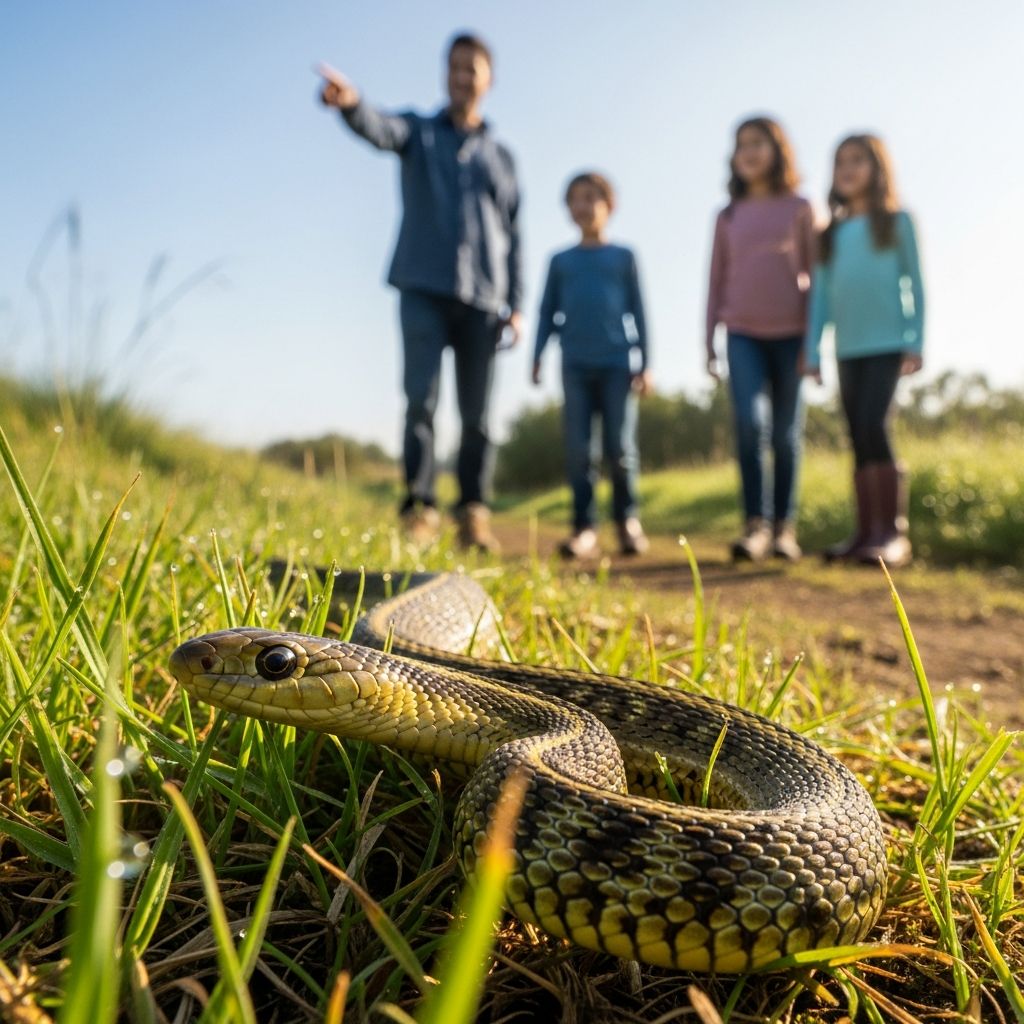
Outdoor activities like hiking, camping, and backyard play expose families to wildlife, including snakes. Most snakes avoid humans, but encounters happen, especially in warmer months or rural areas. Teaching children proper safety measures empowers them to enjoy nature confidently without unnecessary fear. This guide provides evidence-based strategies drawn from pediatric health experts and wildlife educators to minimize risks and handle situations effectively.
Understanding Snake Behavior and Risks
Snakes are ectothermic reptiles that seek warmth, shelter, and prey in natural environments. They typically flee from humans unless provoked, cornered, or surprised. In the U.S., about 7,000-8,000 venomous snakebites occur annually, with children at higher risk due to their size and curiosity, though fatalities are rare—less than 5 per year—with prompt medical care.
Venomous species like rattlesnakes, copperheads, and cottonmouths pose the main threats in many regions. Non-venomous snakes vastly outnumber them, and bites often result from handling or stepping on them unaware. Educating kids on these facts fosters respect rather than panic.
Proactive Prevention During Outdoor Activities
The cornerstone of snake safety is prevention. Simple habits reduce encounter odds significantly.
- Choose proper footwear: Opt for closed-toe shoes with ankle coverage, ideally sturdy leather or hiking boots, to protect against strikes targeting lower legs.
- Stick to cleared paths: Walk in the center of trails, avoiding tall grass, brush, or leaf piles where snakes hide.
- Make noise while moving: Stomp feet firmly or use a walking stick to create ground vibrations, alerting snakes to your presence so they slither away.
- Supervise play areas: Clear yards of debris like rocks, wood stacks, or overgrown weeds before children play.
- Time activities wisely: Snakes are most active at dawn, dusk, or after rain; hike during midday when they seek shade.
For family camping, position tents away from woodpiles or water sources, and shake out sleeping bags before use.
Dressing Smart for Snake Country
Clothing choices matter. Long pants tucked into boots, gloves for handling items, and layered clothing add barriers. A table outlines ideal gear:
| Activity | Recommended Attire | Why It Helps |
|---|---|---|
| Hiking | High boots, long pants, wide-brim hat | Protects ankles, legs; shades eyes for spotting snakes |
| Camping | Thick socks, closed shoes, long sleeves | Prevents bites while gathering wood or setting up |
| Backyard Play | Sneakers, pants, gloves for gardening | Shields from hidden snakes in gardens or under toys |
Teaching Kids to Spot Venomous Snakes
Knowledge builds confidence. Focus on regional venomous species: triangular heads, elliptical pupils, heat-sensing pits, or rattles. Teach children to observe from afar—use pictures or apps for identification. Early learning enables safe admiration without approach. Programs like those from herpetology experts emphasize that kids as young as 5 can distinguish threats, promoting outdoor freedom.
Freeze Protocol: What to Do During an Encounter
If a snake appears, calm is key. Sudden movements provoke strikes. Instruct children:
- Freeze in place: Stand still like a statue, arms crossed for reassurance—this “freeze pose” prevents startling the snake.
- Observe quietly: Note direction and type without touching or approaching.
- Back away slowly: Once 10+ feet separate you, retreat steadily without turning your back fully.
- Alert others: Call “Snake!” loudly to notify adults, pointing to the location.
Snakes prefer escape; patience usually resolves encounters peacefully.
Fun Ways to Practice Snake Safety at Home
Role-playing reinforces lessons without real risk. Create a fabric or toy snake, hide it in the yard, and simulate scenarios:
- Hide snake on paths; kids practice stomping and spotting.
- Use timers for freeze drills—reward calm responses.
- Turn it into games: “Snake Hunt” where finding it triggers the protocol.
Positive parental attitudes matter—model composure to shape fearless explorers. Review protocols regularly for retention.
First Aid Essentials for Snakebites
Bites are rare but require immediate action. Symptoms include pain, swelling, nausea. Do not:
- Apply tourniquets, ice, or cut the wound.
- Suck venom or use electric shock.
Instead:
- Keep the child calm and still; immobilize the bitten limb below heart level.
- Call 911 immediately.
- Remove rings/jewelry; cover with clean bandage.
- Note snake details for medics without recapturing.
- Transport to hospital quickly—antivenom is effective if given soon.
Pediatric hospitals stress rapid EMS response over home remedies.
Regional Considerations and Legal Protections
Snake prevalence varies: Southwest U.S. has rattlesnakes; Southeast, cottonmouths. Check local wildlife reports. Many areas protect native snakes legally—handling or killing is often illegal. Respect ecosystems by observing, not interfering.
Building a Family Outdoor Safety Plan
Compile a checklist:
- Pre-trip: Gear check, snake ID review.
- During: Buddy system, phone charged, first aid kit stocked.
- Post: Debrief encounters, update skills.
Carry essentials: phone, whistle, kit with bandages, antihistamines.
Frequently Asked Questions
What age should I start teaching snake safety?
Begin around age 3-4 with simple rules like “freeze and tell an adult,” advancing to ID by 5-6.
Are all snakes dangerous?
No, only a few species are venomous; most are harmless and beneficial for pest control.
What if my child is bitten?
Stay calm, call emergency services, keep still—do not drive unless necessary.
How can I make learning fun?
Use crafts, games, and stories—avoid scary tales to prevent phobia.
Is snake season year-round?
Peak in spring/summer; inactive in winter cold snaps.
References
- Snakebites in Children — Nationwide Children’s Hospital. 2023. https://www.nationwidechildrens.org/conditions/health-library/snakebites-in-children
- How to Be Safe Around Snakes — University of Georgia SREL Herpetology. 2024. https://srelherp.uga.edu/snake-safety/
- Teach Children to Respect Snakes & Never Touch Them — Ask Dr. Vivi. 2023. https://askdrvivi.com/teach-children-to-respect-snakes-never-touch-them/
- Snake Safety for Kids — Wildlings Forest School. 2024. https://www.wildlingsforestschool.com/blog/snake-safety-for-kids
- Snake Safety for Kids and Families — Seek Adventures Blog. 2023. https://seekadventuresblog.com/snake-safety-for-kids-and-families/