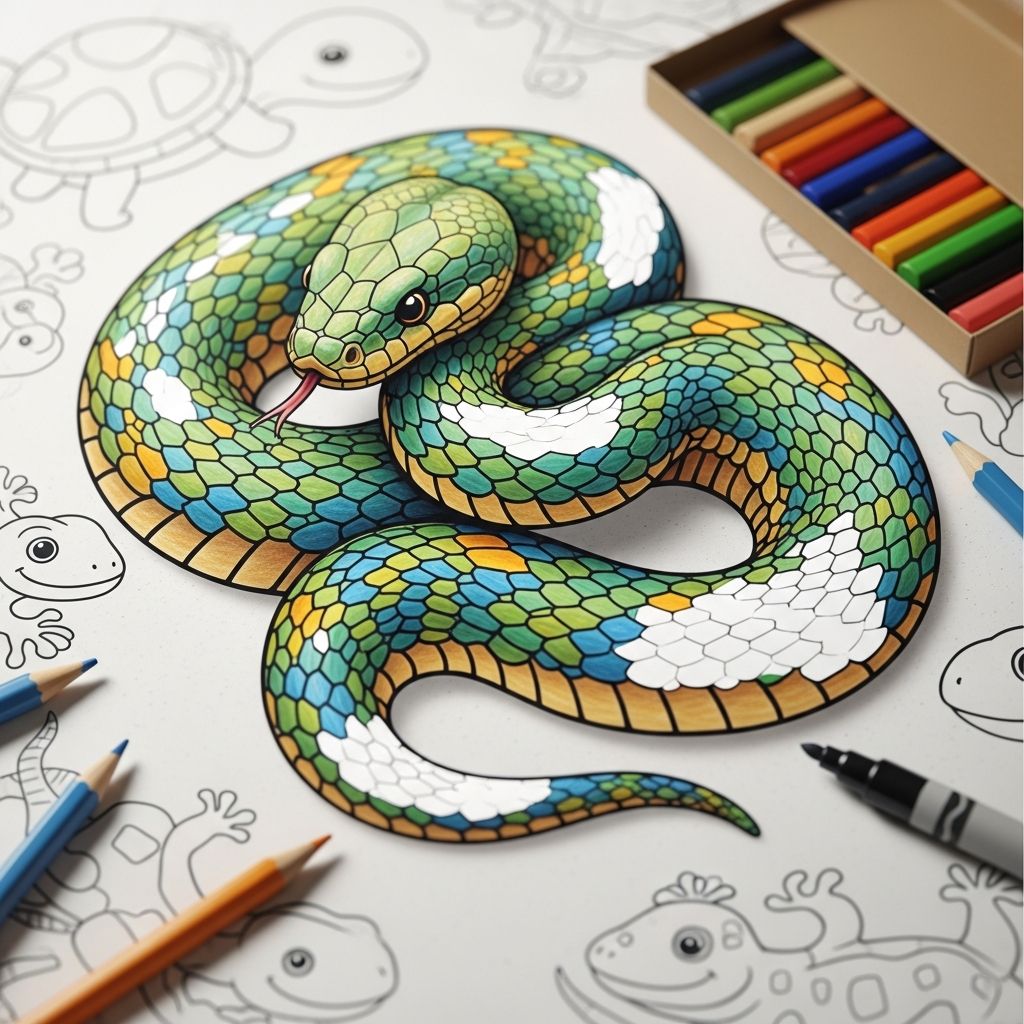
Snake coloring pages offer far more than a quick distraction: they can boost fine motor skills, inspire curiosity about wildlife, and create calm, focused moments for kids of all ages.
With a few smart strategies, parents and teachers can turn simple snake outlines into rich, educational experiences that kids genuinely enjoy.
Why Snakes Make Great Coloring Subjects
Snakes may seem like an unusual choice for a children’s coloring activity, but they are surprisingly perfect for creative and educational play.
- Recognizable shapes: The long, curved body gives kids clear areas to color without feeling overwhelmed.
- Endless patterns: Stripes, spots, diamonds, and scales invite experimentation with color and design.
- Built-in curiosity: Many children are both fascinated and slightly nervous about snakes, which makes them eager to learn more in a safe, playful context.
Snakes also appear in stories, myths, and nature documentaries, giving adults plenty of talk-starting material while children color.
Benefits of Snake Coloring Pages for Child Development
Coloring isn’t just fun; it supports several key developmental areas that help children thrive at home and in school.
- Fine motor control: Staying inside the snake’s outlines and filling small details strengthens the small muscles in the hands and fingers.
- Hand–eye coordination: Children learn to guide their hands according to what their eyes see, an important skill for writing and everyday tasks.
- Color recognition and planning: Choosing color combinations for scales, tongues, and backgrounds builds early planning and decision-making skills.
- Focus and patience: Completing a detailed snake picture teaches kids how to stick with a task until the end.
- Emotional regulation: Repetitive motions like coloring curved snake bodies can have a calming effect, especially for anxious or energetic children.
Because snakes allow for both simple and highly detailed designs, these coloring pages can support growth from toddler years into the early teens.
Types of Snake Coloring Pages to Try
Not all snake pages are the same. Choosing the right style can make a big difference in how much your child enjoys and learns from the activity.
Simple Snakes for Toddlers and Preschoolers
- Large, thick outlines with minimal details.
- Friendly facial expressions and rounded shapes.
- Few overlapping lines to reduce frustration.
These pages work best with chunky crayons or washable markers that small hands can grip easily.
Patterned Snakes for Early Elementary Kids
- Snakes with stripes, zigzags, or repeating shapes along their bodies.
- Background elements like leaves, rocks, or simple jungle plants.
- Opportunities to use multiple colors in one drawing.
Kids in this age group often enjoy deciding whether their snake is camouflage, rainbow-colored, or completely imaginary.
Realistic and Detailed Snakes for Older Kids
- More accurate body shapes and heads that resemble real species.
- Smaller scales and shadows that invite careful, patient coloring.
- Scenes that include branches, desert sand, or water for extra challenge.
Older children can use colored pencils or fine-tip pens to shade, blend, and experiment with realistic color palettes.
Educational Ideas to Add to Snake Coloring Time
With a few simple tweaks, snake coloring pages can become a mini science lesson, art class, and storytelling session all at once.
Introduce Basic Snake Facts
While your child colors, you can gently weave in simple information about snakes.
- Explain that most snakes are not dangerous and help control pests such as mice.
- Talk about the difference between venomous and non-venomous snakes in age-appropriate language.
- Mention where some snakes live: deserts, jungles, forests, and even gardens.
Keep the tone positive to reduce fear and build respect for wildlife.
Teach Patterns and Math Concepts
Snake bodies are an excellent canvas for visual math practice, especially with younger children.
- Create simple color patterns along the snake’s body, such as “red-blue-red-blue.”
- Count scales or body segments together, pointing to each as you go.
- Compare length by drawing several snakes of different sizes and lining them up on the table.
These playful ideas help children see that math can be creative and fun, not just numbers on a page.
Encourage Storytelling and Language Skills
After or during coloring, invite children to tell a story about their snake character.
- Ask questions like “Where is your snake going?” or “What is your snake’s name?”
- Encourage kids to describe the environment they colored: jungle, backyard, or imaginary planet.
- Prompt older kids to write a short caption or mini-story beneath their finished page.
This supports vocabulary development and creative thinking while keeping things playful.
Materials and Setup for a Smooth Coloring Session
A little preparation can turn coloring time from a messy scramble into a relaxing, screen-free ritual.
- Paper: Print snake pages on slightly thicker paper if possible to reduce marker bleed-through.
- Coloring tools: Offer a mix of crayons, markers, and colored pencils so kids can experiment.
- Work surface: Protect tables with a placemat, old tablecloth, or recycled cardboard.
- Storage: Keep coloring supplies in a labeled box so kids know where to find and return them.
Having everything ready before you start helps children stay focused and reduces interruptions.
Ideas for Themed Snake Coloring Sessions
If your child is especially excited about snakes, you can build a mini-theme day around their coloring pages.
Rainforest Snake Adventure
- Choose snake pages with leafy or jungle-style backgrounds.
- Play soft rainforest sounds or nature videos in the background (without overwhelming the activity).
- Talk about animals that might share the snake’s habitat, like frogs, birds, and insects.
This theme is perfect for kids who love bright greens, yellows, and tropical colors.
Desert Dwellers and Sand Snakes
- Print snake pages with simple or empty backgrounds, then invite kids to draw sand, rocks, and cacti around the snake.
- Use warm colors like tan, orange, and red to create a desert feel.
- Discuss how animals stay cool and find water in hot environments.
Desert scenes help kids practice shading and subtle color changes from light to dark.
Fantasy and Rainbow Serpents
- Encourage children to color magical snakes with rainbow stripes, star patterns, or glowing eyes.
- Add wings, crowns, or jewelry to the design with pencil or pen.
- Invite kids to imagine powers their mythical snake might have, such as flying or controlling the weather.
Fantasy-themed pages are especially helpful for children who are still a bit nervous about real snakes.
Using Snake Coloring Pages with Different Age Groups
The same basic idea—coloring a snake—can look very different for toddlers, early elementary kids, and older children. Adapting expectations helps everyone feel successful.
| Age Group | Page Style | Suggested Focus |
|---|---|---|
| Toddlers (2–3 years) | Big, simple snakes with thick lines | Scribbling, color exploration, basic hand control |
| Preschoolers (3–5 years) | Friendly snakes with a few patterns | Learning color names, basic patterns, staying near the lines |
| Early Elementary (6–8 years) | Patterned snakes and simple backgrounds | Following color patterns, adding simple details, short stories |
| Older Kids (9+ years) | Realistic or intricate snakes with complex scenes | Shading, blending, species research, more complex writing |
Creative Projects to Do with Finished Snake Pages
Once your child finishes a snake coloring page, you can give it a second life with quick craft projects and display ideas.
- Reptile gallery wall: Hang finished pages on a bulletin board or string them along a wall with clothespins.
- Snake storybook: Staple several colored pages together and ask your child to write a sentence under each picture.
- Classroom or playroom bunting: Cut out the colored snakes and tape them to a long piece of yarn to create a fun banner.
- Homemade board game: Use snake drawings as part of a homemade “move along the path” game board, where the snake’s body becomes the trail.
These projects give children a sense of pride and show that their artwork is valued and useful.
Tips for Encouraging Confident Coloring
Some children feel pressure to make their work “perfect.” A supportive approach can help them enjoy the process more than the final result.
- Celebrate effort, not perfection: Comment on focus and creativity instead of whether they stayed inside the lines.
- Model experimentation: Color your own snake page beside them and intentionally try unusual color choices.
- Offer choices: Let children decide which page to color, which tools to use, and when the picture feels finished.
- Keep sessions short: Stop before they get tired so they associate snake coloring with positive feelings.
The goal is to build confidence and joy, not to create museum-level artwork.
Frequently Asked Questions About Snake Coloring Pages
Are snake coloring pages appropriate for very young children?
Yes, snake coloring pages can be a great choice for toddlers and preschoolers when the designs are simple and friendly. Look for big, smiling snakes rather than highly realistic or frightening images, and keep the focus on colors and shapes rather than detailed facts about wild snakes.
How can I reduce my child’s fear of snakes while coloring?
Choose playful, cartoon-style snakes at first, and talk about them as characters in a story rather than as scary animals. As your child becomes more comfortable, you can gently introduce basic nature facts, emphasizing that most snakes avoid people and play important roles in the environment.
Which coloring tools work best for snake pages?
Crayons and washable markers are ideal for younger kids because they are easy to grip and clean. Older children may prefer colored pencils or fine-tip markers, which allow them to fill the snake’s scales with detailed patterns and subtle shading.
Can snake coloring activities support school learning?
Yes, coloring snakes can reinforce early math, science, and language skills. You can count segments, create color patterns, talk about habitats, and encourage short stories about the snakes’ adventures, all of which support what children learn in class.
How often should I offer coloring as an activity?
There is no strict rule, but many families find that short, regular coloring sessions—such as a few times a week—work well. The key is to keep it enjoyable and low-pressure so children see snake coloring pages as a fun break rather than another assignment.
Making Snake Coloring a Long-Lasting Favorite
Snake coloring pages blend creativity, quiet focus, and real learning in a way that works for a wide range of ages and personalities. By choosing age-appropriate designs, adding simple educational twists, and celebrating each finished picture, parents and educators can turn these reptile-themed sheets into a beloved, repeatable activity.
Over time, children can watch their skills grow—from broad, joyful scribbles to detailed, carefully shaded snake scenes—building both artistic confidence and a deeper appreciation for the natural world.