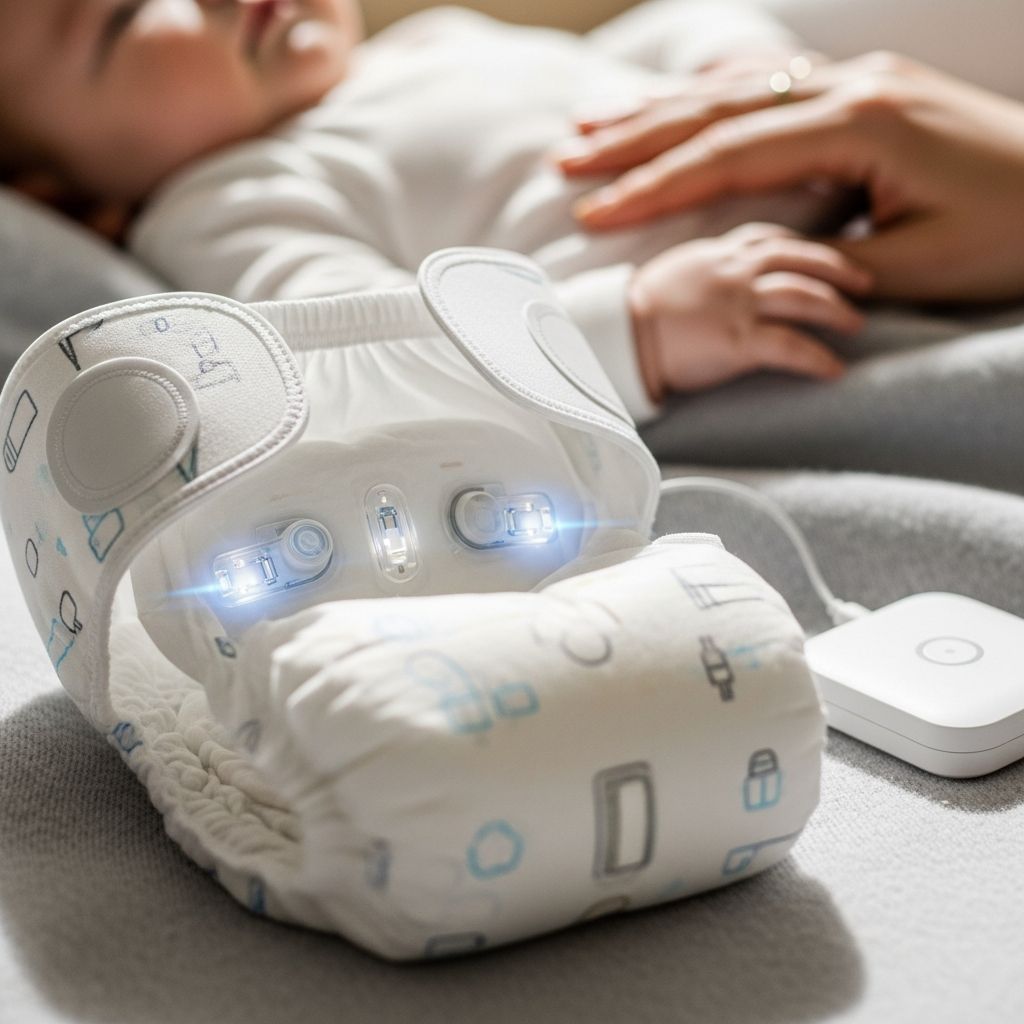
Smart diaper sensors are turning a routine parenting task into a source of useful health insights and real peace of mind for caregivers.
By pairing tiny moisture or hydration sensors with a phone app, these devices help parents respond faster to wet diapers, protect delicate skin, and better understand a child’s daily patterns.
What Is a Smart Diaper Sensor?
A smart diaper sensor is a small device that detects moisture or humidity in a diaper and sends an alert to a caregiver’s phone or other receiver when it is time to change.
Some systems are disposable and built into the diaper layers, while others are reusable add-on clips or patches that attach to the outside or inside of standard diapers.
- Most use moisture or humidity changes to detect when a diaper is wet or heavily soiled.
- Alerts typically arrive via Bluetooth, Wi-Fi, or a nearby reader that forwards notifications to an app.
- Advanced models can log patterns over days or weeks to show trends in wetness and skin health.
How the Technology Works (Without the Jargon)
Behind the scenes, smart diaper sensors rely on very simple physics: water changes how materials conduct electricity or radio signals.
Researchers have embedded tiny RFID tags, humidity elements, or pencil-drawn conductive traces into diapers so that even a slight increase in moisture can trigger a signal.
| Technology | How It Detects Wetness | Typical Use |
|---|---|---|
| RFID moisture tag | Hydrogel in the diaper becomes slightly conductive when wet and activates a tiny RFID chip. | Low-cost, disposable newborn and infant diapers. |
| Humidity sensor arrays | Sensors between absorbent layers track humidity level and changes over time. | Smart diapers that estimate how wet the diaper is, not just if it is wet. |
| Bluetooth moisture patch | Electrodes detect dampness and a small battery powers wireless alerts. | Reusable external sensor clips or patches for baby or adult diapers. |
In many designs, the sensor triggers within seconds of a diaper becoming significantly wet, dramatically reducing how long a child sits in moisture.
Because these systems record repeated events over days, they can also highlight patterns in urination, sweating, or changes related to illness or hydration.
Why Parents Are Interested in Smart Diapers
Parents care about more than just convenience; smart diaper sensors touch on comfort, skin health, sleep, and even medical insight.
By closing the gap between when a diaper gets wet and when it is changed, these devices can reduce unnecessary discomfort and the risk of prolonged exposure to moisture.
- Faster diaper changes often mean less crying, fewer nighttime disruptions, and calmer bedtimes.
- Data on wetness episodes can support conversations with pediatricians about hydration and elimination patterns.
- Caregivers responsible for multiple children or patients can prioritize who needs help first.
Skin Health and Diaper Rash Prevention
One of the most important benefits of smart diaper sensors is their role in preventing incontinence-associated dermatitis and classic diaper rash.
Clinical work with smart diaper systems has shown that timely changes supported by moisture alerts can reduce prolonged skin exposure to urine and stool, which are key drivers of irritation and breakdown.
- Prompt notifications make it easier to stick to a “change as soon as wet” routine, even overnight.
- Some care pathways combine smart sensors with barrier creams or antifungal ointments, improving outcomes for high-risk patients.
- Less time in a wet diaper means fewer opportunities for friction and maceration of delicate skin.
Beyond Babies: Adult and Special-Needs Use
Although most parents hear about smart diapers in the context of infants, the same technology is being explored extensively for adults with incontinence, mobility challenges, or dementia.
For these groups, smart diaper sensors can help maintain dignity and comfort when individuals may not be able to communicate their needs clearly.
- Hospitals and long-term care facilities can monitor multiple patients at once, reducing manual checks.
- Caregivers at home gain reassurance that they will not miss a needed change, even overnight or from another room.
- Smart sensors may lower the risk of skin breakdown and infections in bedbound adults.
Health Insights Hidden in Diaper Data
Behind every alert is a data point, and aggregated over time, those data points can reveal trends in a child’s health and routine.
Researchers are investigating how diaper-based sensors can act as early warning tools for dehydration, urinary tract infection, or other health issues.
- Changes in frequency or volume of wet diapers can signal shifts in hydration or kidney function.
- Certain sensors aim to detect biomarkers in urine that correlate with infection or disease risk.
- Continuous monitoring may help clinicians spot subtle trends that single checkups could miss.
Pros and Cons at a Glance
| Aspect | Potential Benefits | Potential Drawbacks |
|---|---|---|
| Comfort and skin health | Quicker changes, less exposure to moisture, reduced rash risk. | Caregivers may still ignore alerts or rely too heavily on technology. |
| Caregiver workload | Fewer manual checks, better prioritization, less guesswork at night. | Setup, charging, and app management add small tasks to the routine. |
| Cost and accessibility | Low-cost disposable sensor designs are emerging. | Some reusable Bluetooth systems are relatively expensive compared with basic diapers. |
| Data and privacy | Patterns can inform medical care and parenting decisions. | Data storage and sharing raise questions about privacy and security. |
Key Features to Look For When Buying
Families considering a smart diaper system should focus less on buzzwords and more on everyday practicality.
The right product is the one that fits your baby, your tech comfort level, and your budget without adding stress.
- Type of sensor: Decide between integrated single-use diapers or reusable clips and patches that work with your existing brand.
- Alert method: Check whether it uses Bluetooth, Wi-Fi, or a nearby hub and whether notifications are reliable through walls and at night.
- Battery and charging: Understand how often the device needs charging and whether it is sealed, replaceable, or wireless-charging compatible.
- App design: Look for clear, simple dashboards, customizable alert settings, and useful historical views without overwhelming detail.
- Fit and comfort: Make sure any reusable sensor is low-profile, waterproof, and does not create pressure points for the baby.
Practical Tips for Everyday Use
Once a family adds a smart diaper sensor to the nursery, small habits can help get the most value out of the device.
Used thoughtfully, the goal is to support caregivers, not to create another screen to check every few minutes.
- Start with moderate alert sensitivity so that only clearly wet diapers trigger notifications, then adjust if you miss changes.
- Pair sensor alerts with visual skin checks during regular changes to catch redness before it worsens.
- Use the data view weekly instead of obsessing daily; trends matter more than single events.
- Share exported logs with healthcare providers if you have concerns about hydration, urination, or recurrent rashes.
Safety, Privacy, and Data Concerns
As with any connected baby product, parents should weigh the benefits of extra information against questions about data handling and wireless exposure.
Most smart diaper systems use very low-power signals similar to other household electronics, but apps and cloud services may collect usage data that families should understand.
- Read privacy policies to learn what data are stored, how long they are kept, and whether they are shared or anonymized.
- Use strong passwords and, where available, two-factor authentication for any associated accounts.
- Turn off sharing options that are not essential for your family’s needs.
Are Smart Diapers Worth It?
Whether a smart diaper sensor is worthwhile depends on your unique situation: your baby’s skin sensitivity, your schedule, and how much you value data-driven insights.
Families caring for premature infants, babies with recurring rashes, or adults at high risk for skin breakdown may gain particular value from early alerts and structured monitoring.
- Tech-comfortable parents who already use baby monitors and apps may find smart diapers a natural extension of their toolkit.
- Others may choose to reserve this level of monitoring for high-risk periods, such as illness or travel.
- Even if you opt out of smart diapers, the core lesson—shorten the time a child spends in a wet diaper—remains valuable.
Frequently Asked Questions
Do smart diaper sensors expose my baby to a lot of radiation?
Most smart diaper and RFID-based systems operate at very low power levels, comparable to or lower than many everyday wireless tags used in retail and transit systems.
Designers typically place antennas and electronics outside the most sensitive areas and focus on minimizing power consumption, which also helps the battery last longer.
Can smart diapers detect infections like UTIs?
Some research explores diaper-based sensors that detect biomarkers or patterns associated with urinary tract infections, but most consumer products today focus mainly on wetness and humidity.
Over time, more advanced systems may combine wetness data with chemical analysis to flag possible infections earlier, but these tools are generally meant to complement, not replace, clinical testing.
Will a smart diaper replace my baby monitor?
No, smart diaper sensors are designed to monitor moisture and possibly related health markers, not breathing, movement, or sound.
They work best alongside, not instead of, traditional monitors and normal parental checks.
What happens if I ignore the alerts?
If alerts are frequently dismissed, the main benefits—faster changes and reduced moisture exposure—will not materialize, and the device becomes little more than a novelty.
Successful use depends on pairing technology with consistent caregiver response and good diapering habits.
Are there eco-friendly options?
Some smart diaper approaches use ultra-low-cost disposable sensors or simple pencil-drawn traces on treated paper, which reduce material use and complexity.
Reusable clip-on sensors that pair with high-quality diapers can also cut down on waste by allowing families to stay with their preferred, possibly more sustainable diaper brands.
Making Smart Diapers Work for Your Family
Smart diaper sensors are not a requirement for good parenting, but they offer a new way to combine comfort, health protection, and helpful data in one small device.
Used thoughtfully and selectively, they can ease caregiver workload, protect sensitive skin, and open a window into daily patterns that were once invisible.