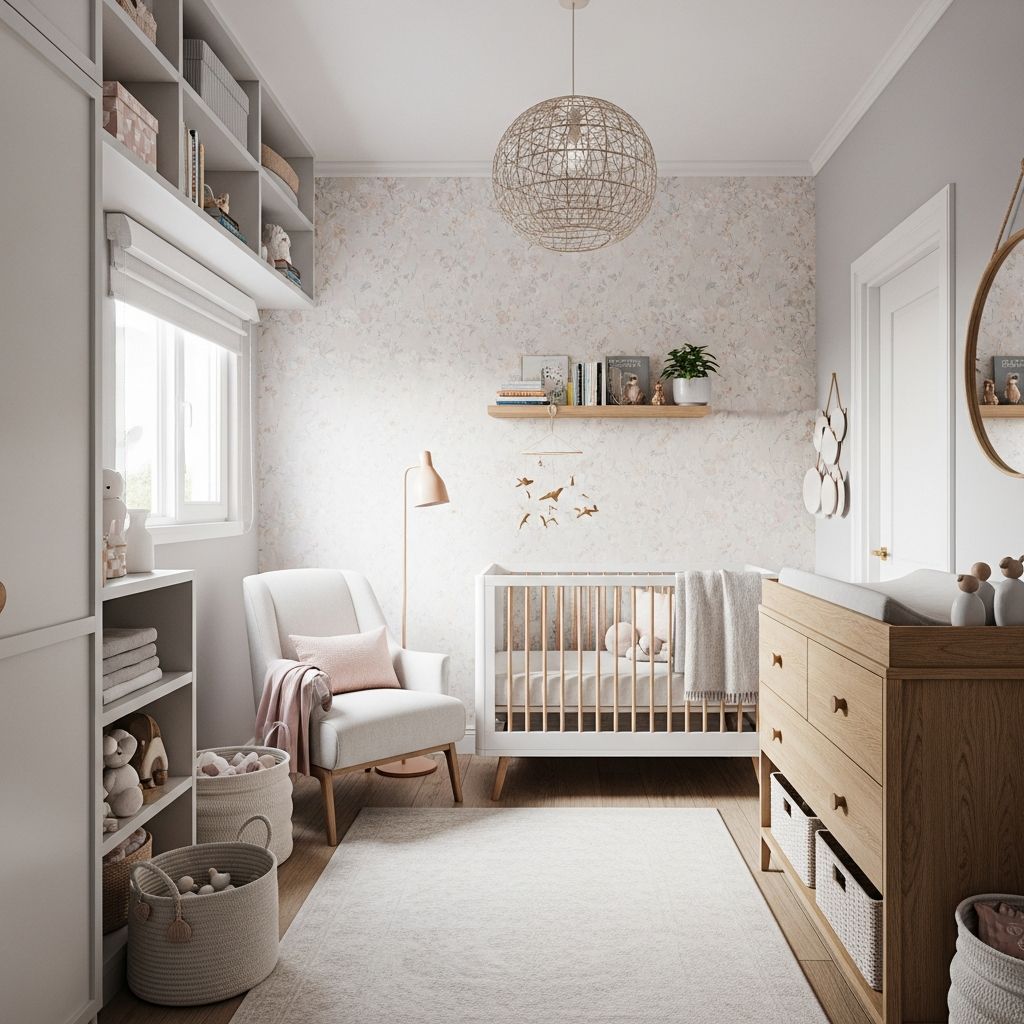
Preparing for a baby when you live in a small home, studio, or shared bedroom can feel overwhelming. You may not have a dedicated room, but you can still create a safe, calm, and functional nursery using smart layout, multitasking furniture, and thoughtful organization.
This guide walks you through how to plan, furnish, and decorate a nursery in the smallest of spaces, from a corner of your bedroom to a converted closet or hallway nook.
Clarify Your Space and Your Priorities
Before you buy anything, spend a little time really understanding the area you have and what matters most to you day-to-day.
Measure and Map the Area
Grab a tape measure and note the width, depth, and height of the spot you plan to use as a nursery. Sketch a simple floor plan and mark:
- Doors and how they swing
- Windows, radiators, and vents
- Electrical outlets and light switches
- Low ceilings, sloped walls, or awkward corners
Knowing your measurements ensures the crib fits safely with enough clearance and that drawers and closet doors can still open comfortably.
Decide What Truly Needs to Live in the Nursery
In a tiny space, every item has to earn its place. Focus on what your baby actually needs in the first year:
- Safe sleep surface (crib or bassinet, with a firm mattress and fitted sheet)
- Diaper changing zone with supplies within arm’s reach
- Clothing and linen storage for everyday basics
- Feeding spot (chair or bed edge and a small table) if space allows
Many extras—large toys, bulk diapers, and keepsakes—can be stored elsewhere in the home.
Choose Smart Sleep Solutions for Small Spaces
Sleep space is the non-negotiable element of any nursery. Safety should come before aesthetics or storage.
Understand Safe Sleep Basics
Health authorities recommend placing babies on their backs on a firm, flat sleep surface with no soft bedding, pillows, bumpers, or toys to reduce the risk of sudden infant death syndrome (SIDS).
Key safe sleep guidelines include:
- Use an approved crib, bassinet, or portable play yard with a tight-fitting mattress.
- Keep the sleep surface bare: just a fitted sheet and the baby, in a wearable blanket if needed.
- Room-share (baby in your room, but not in your bed) for at least the first 6 months, ideally up to 1 year.
Space-Saving Sleep Options
Depending on your layout and budget, consider:
- Mini crib – Smaller than a standard crib, often on wheels, ideal for studio apartments or shared bedrooms.
- Bassinet – Very compact and easy to move; best for the newborn months before transitioning to a crib.
- Convertible crib – Some models start smaller and expand to toddler beds or beyond, saving you future purchases.
| Sleep Option | Best For | Pros | Considerations |
|---|---|---|---|
| Mini crib | Very small rooms, apartment corners | Smaller footprint, often portable, can use longer than a bassinet | Requires specific mattress and sheets |
| Bassinet | Newborn months, bedside setup | Ultra compact, easy to move between rooms | Short lifespan; baby will outgrow quickly |
| Convertible crib | Families wanting long-term value | Grows with child, may reduce future furniture costs | Some models are larger; measure carefully |
Plan a Compact but Efficient Layout
Even a corner can feel like a dedicated nursery when you organize it into purposeful zones that mirror your daily routines.
Create Logical “Zones”
Think of your space in terms of activities:
- Sleep zone: crib or bassinet, monitor, blackout shade
- Diapering zone: changing surface, diapers, wipes, creams
- Storage zone: clothes, linens, extra diapers
- Comfort/feeding zone: chair or bed edge, soft light, water bottle
In a tiny nursery, some zones will overlap; for example, a dresser can double as both storage and changing space.
Sample Small-Space Layout Ideas
Consider these simple arrangements that work in very limited square footage:
- Bedroom corner: Place the mini crib with the short side against a wall, a narrow dresser beside it, and floating shelves above the dresser for diapers and baby care items.
- Closet nursery: Remove doors, add a crib against the back wall, and use high shelves and hanging rods for clothing.
- Shared office or guest room: Use a room divider or open shelving unit to visually separate the crib area from the desk or bed.
Leave as much central floor space open as possible for walking, rocking, and future play.
Furnish with Dual-Purpose, Space-Saving Pieces
You do not need a long list of nursery furniture. In small spaces, fewer pieces that do more work are best.
Essential Furniture Checklist
- Crib or bassinet – The anchor of the space
- Dresser with changing pad – Replaces a separate changing table
- Compact chair or glider – Optional but wonderfully helpful for feeding and soothing
- Small side table or shelf – Holds wipes, water, and burp cloths within reach
Make Furniture Work Harder
Look for pieces designed to multitask:
- Cribs or mini cribs with built-in drawers underneath
- Dressers that fit a contoured changing pad on top
- Ottomans with hidden storage for blankets and toys
- Foldable or nesting tables that tuck away when not in use
Maximize Vertical and Hidden Storage
When floor space is scarce, walls, doors, and the area under furniture become your best friends.
Use Walls Intentionally
- Floating shelves: Store diapers, creams, and a few books up out of baby’s reach.
- Hooks and peg rails: Hang diaper bags, wraps, and swaddles.
- Wall-mounted organizers: Use pockets for pacifiers, nail clippers, and other tiny items.
Ensure anything mounted above the crib or changing area is secure and cannot fall.
Claim Hidden Storage Spots
- Slide low bins or rolling drawers under the crib for backup diapers, wipes, and seasonal clothes.
- Use over-the-door organizers for shoes, small toys, or bath supplies.
- Divide dresser drawers with small boxes to keep onesies, socks, and hats tidy.
Make the Most of the Closet
Even a tiny closet can store a surprising amount when reconfigured:
- Add a second hanging rod to double baby clothing space.
- Use slim hangers and group clothes by size.
- Install shelves or cubbies above and below the hanging area for linens, diapers, and gear.
Lighting, Sound, and Comfort in a Tiny Nursery
Small spaces can easily feel bright and noisy. Thoughtful lighting and sound can make them soothing for sleep and nighttime care.
Layer Your Lighting
Having only a bright overhead light makes night feeds and diaper changes jarring. Instead, use:
- A soft bedside or table lamp with a warm bulb
- Clip-on or wall-mounted reading lights near the chair
- Dimmable bulbs or smart plugs for gradual transitions to bedtime
Aim for low, indirect light during the night so your baby—and you—can fall back asleep more easily.
Control Noise and Light from Outside
- Use blackout curtains or shades to block streetlights and help naps last longer.
- Add a white noise machine on a nearby shelf to mask household sounds and traffic.
- Lay down a soft rug to absorb echo and make floor time more comfortable.
Make a Small Nursery Feel Calm, Not Cluttered
Even a few items can feel like too much in a tight corner. With a restrained approach, you can create a space that looks intentional instead of cramped.
Keep the Visual Palette Simple
- Choose a light or mid-tone wall color to reflect light.
- Limit yourself to 2–3 main colors plus a few accent tones.
- Repeat colors in textiles, baskets, and artwork to tie everything together.
Edit Toys and Décor
- Display only a few favorite books and toys at a time; store the rest elsewhere.
- Use closed baskets and drawers for most items, reserving open shelves for a handful of special pieces.
- As new gifts arrive, rotate older items out to keep surfaces clear.
Shared Spaces: Nursery in Your Bedroom or Living Area
Many families place the nursery in their own bedroom or another shared living space, especially in the first year.
Defining the Baby’s Area
- Use a rug to visually mark the nursery corner.
- Add a small wall shelf or framed art above the crib for a sense of identity.
- Place a narrow bookshelf or screen between your bed and the crib if you want more separation.
Maintain Adult Functionality
- Choose nursery storage that blends with your existing décor.
- Keep one or two drawers in your dresser for your own bedtime items so they remain accessible.
- Use under-bed or high-closet storage for infrequently used baby gear.
Small Nursery Safety Checklist
Close quarters can introduce safety concerns, so walk through your design with safety in mind.
- Keep crib away from windows, blinds cords, heaters, and hanging artwork that could fall.
- Secure bookcases and tall dressers to the wall to prevent tipping.
- Use outlet covers and keep cords out of baby’s reach.
- Store diaper creams, medicines, and other hazardous items high up or in latched drawers.
- Maintain a clear path to the crib for nighttime visits.
Frequently Asked Questions (FAQs)
Q: What is the smallest space that can realistically work as a nursery?
A: A nursery can be as small as a corner that fits a crib or bassinet plus a bit of storage. Many families successfully use half of a bedroom, a walk-in closet with doors removed, or an alcove as long as they can maintain safe sleep practices and clear walkways.
Q: Do I need a full-size crib in a tiny nursery?
A: No. A mini crib, bassinet, or crib that starts compact and later converts can all be safe, space-saving choices, provided they meet current safety standards and are used according to manufacturer instructions.
Q: How can I fit a changing table if I barely have room for a crib?
A: Use the top of a low dresser as your changing station by adding a non-slip changing pad and a small basket for essentials. Alternatively, a foldable changing mat stored in a drawer or under the crib can work on the bed or floor when space is extremely tight.
Q: Is it safe to hang shelves above the crib?
A: It is safer to avoid placing shelves, heavy frames, or other objects directly over the crib. If you use wall storage, mount it above a dresser or on a side wall, and ensure all hardware is properly anchored into studs to prevent falls.
Q: How can I keep a small nursery from feeling cluttered?
A: Limit how many items live in the space, favor closed storage like drawers and baskets, and commit to rotating books and toys. A simple color palette, clear floor space, and consistent decluttering habits make the room feel calm even when it is tiny.
References
- Small Space Nursery Hacks for Apartment Living — Levtex Home. 2023-08-10. https://levtexhome.com/blogs/news/small-space-nursery-hacks
- How to Create a Nursery Nook in a Small Space — The Everymom. 2022-09-01. https://theeverymom.com/nursery-nook/
- Nursery Layout and Floor Plan Guide — Nursery Design Studio. 2025-06-06. https://www.nurserydesignstudio.com/2025/06/06/nursery-layout-and-floor-plan-guide/
- Fun and Affordable Small Nursery Ideas + Gender Neutral Nursery — Mommy Labor Nurse. 2023-05-15. https://blog.mommylabornurse.com/small-nursery-ideas
- Nursery Design: 10 Tips for Small Baby Rooms — Pehr. 2022-07-20. https://pehr.com/blogs/seed/designing-a-small-nursery
- 26 Creative Small Nursery Ideas to Save Space — Pottery Barn Kids. 2023-04-12. https://www.potterybarnkids.com/tips-and-ideas/nursery-ideas/creative-small-nursery-ideas-to-save-space/