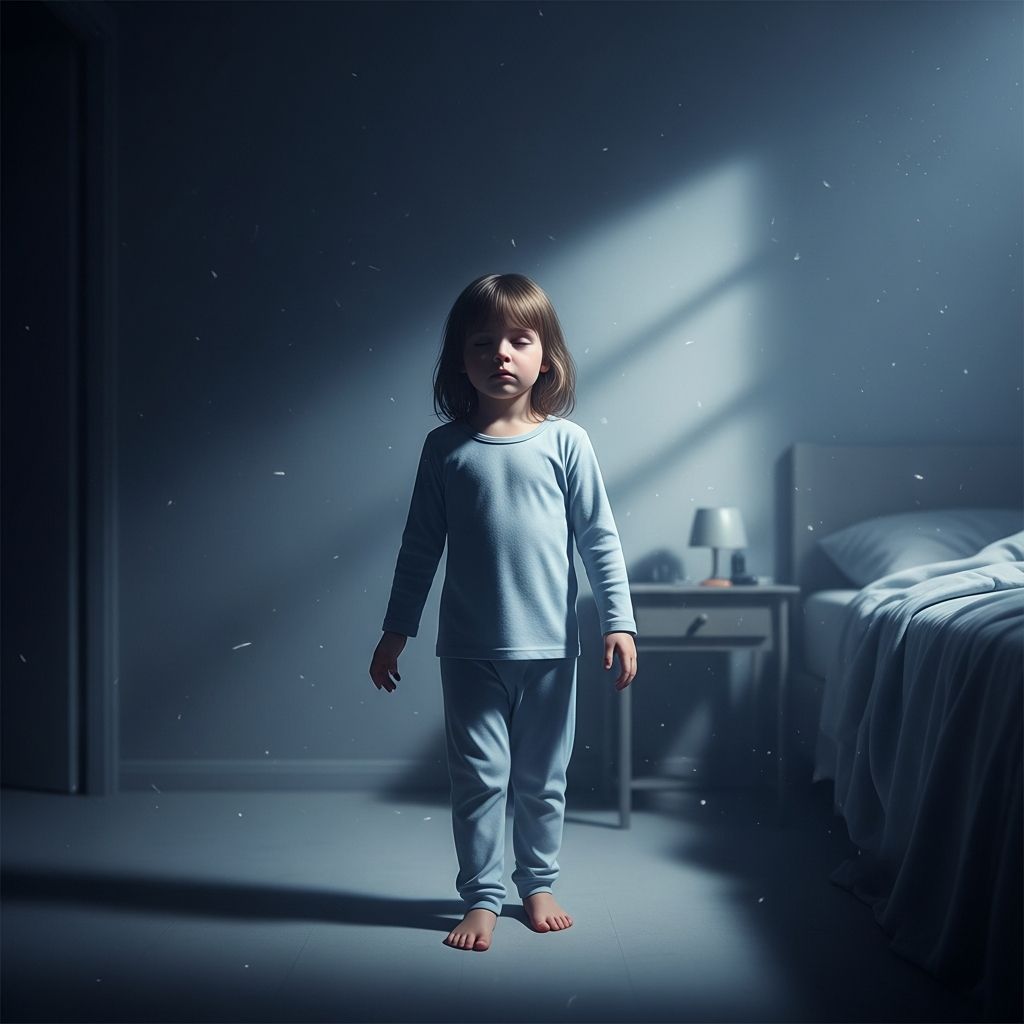
Sleepwalking, medically known as somnambulism, involves children rising from bed and moving about while remaining in a state of deep sleep, typically during the first few hours after bedtime. This common pediatric sleep disorder affects up to 15% of kids aged 4 to 12, often resolving naturally by adolescence.
Recognizing the Signs of Sleepwalking
Identifying sleepwalking early helps parents respond appropriately. Children may sit up in bed, eyes open but with a glassy, unfocused stare, or wander the house performing routine tasks like opening doors or even dressing. Other indicators include mumbling incoherently, clumsy movements, or urinating in odd locations, with no recollection upon waking.
- Blank or dazed expression: Eyes appear open, but the child is unresponsive to voices or touch.
- Repetitive actions: Such as switching lights on and off or rearranging objects without purpose.
- Difficulty arousing: Attempts to wake the child fully often lead to confusion or agitation.
- Amnesia: Complete lack of memory of the event the next day.
Episodes generally last 5 to 15 minutes, though some extend longer, occurring 1-2 hours post-sleep onset during non-REM deep sleep stages.
Common Triggers Behind Nighttime Wanderings
Several factors contribute to sleepwalking episodes, often a mix of genetic predisposition and environmental influences. It tends to run in families, with children inheriting the trait from parents.
| Trigger Category | Examples | Impact on Sleep |
|---|---|---|
| Fatigue-Related | Insufficient sleep, irregular bedtimes | Disrupts sleep cycles, increasing deep sleep arousals |
| Emotional | Stress, anxiety from school or changes | Heightens arousal during transitions |
| Physical | Fever, full bladder, illness | Provokes partial awakenings |
| Environmental | Hot room, new surroundings, travel | Alters sleep patterns |
| Medical | Sleep apnea, medications like antihistamines | Interferes with normal sleep architecture |
Boys are slightly more prone, and episodes peak between ages 4-8.
Assessing Potential Risks and Dangers
While usually benign, sleepwalking poses injury risks from falls, stairs, or exiting the home unknowingly. Rare complications include prolonged daytime fatigue affecting school performance or, in complex cases, links to apnea or restless legs.
- Frequent injuries or dangerous actions warrant medical evaluation.
- Episodes in the latter night half or persisting into teens signal deeper issues.
Consult a pediatrician if sleepwalking disrupts family rest, causes exhaustion, or coincides with snoring/gasping.
Safety Measures to Protect Your Child
Prevention focuses on creating a secure sleep environment without waking the child abruptly, which can confuse them further.
- Secure the bedroom: Use gates on doors/stairs, lock windows/doors, remove obstacles.
- Bedtime consistency: Enforce regular schedules, adequate sleep duration.
- Pre-sleep calm: Avoid screens, caffeine; opt for relaxing routines like reading.
- Gentle guidance: Lead child back to bed softly without conversation.
- Scheduled awakenings: Wake 15-30 minutes before typical episode time for a few nights to reset cycles.
For high-risk cases, mattress alarms or bell-on-door strategies alert parents.
When to Consult a Healthcare Professional
Most children outgrow sleepwalking without intervention, but persistent or severe cases need assessment. Seek advice if:
- Episodes exceed twice weekly or involve violence/injury.
- Accompanied by bedwetting, terrors, or daytime sleepiness.
- Family history of sleep disorders or onset after head injury.
Doctors may recommend sleep studies for underlying apnea or prescribe low-dose meds rarely.
Lifestyle Adjustments for Better Sleep
Holistic changes reduce frequency significantly. Prioritize 9-12 hours nightly for school-age kids, minimizing naps. Stress management via play, open talks about worries helps. Cool, dark rooms prevent overheating triggers.
Incorporate family sleep hygiene:
- Consistent dinner times, avoiding heavy meals late.
- Physical activity earlier in the day.
- Limit fluids before bed to ease bladder pressure.
Related Sleep Phenomena in Children
Sleepwalking overlaps with night terrors—intense episodes with screaming but no walking—and confusional arousals. Differentiate: terrors involve fear without recall, while sleepwalking shows purposeful movement.
Frequently Asked Questions (FAQs)
Is sleepwalking a sign of emotional problems in kids?
Not usually; it’s often genetic or cycle-related, but stress can exacerbate it. Address via routines and talks.
How long do sleepwalking episodes typically last?
Most are 5-15 minutes, though some reach 30-60.
Can sleepwalking be cured?
It self-resolves in most by teens; management focuses on safety and triggers.
Should you wake a sleepwalking child?
Avoid full awakening; gently guide back to bed to prevent disorientation.
Does diet affect sleepwalking?
Yes, avoid sugar/caffeine late; balanced meals support stable cycles.
Long-Term Outlook and Parental Peace of Mind
With proper safeguards, sleepwalking rarely impacts development. Track patterns in a journal for doctor discussions. Reassure siblings it’s common and temporary, fostering family calm.
Expand on education: Share age-appropriate explanations, like “Your brain is dreaming but body moves a bit.” This demystifies, reducing anxiety.
Research underscores non-drug approaches first: hygiene, safety, monitoring yield 70-80% improvement in mild cases. For chronic issues, cognitive behavioral strategies or therapy address anxiety roots.
Parental vigilance evolves with child growth. Infants rarely sleepwalk due to lighter sleep; toddlers show milder forms. School-age peaks demand proactive steps.
Global stats: 1 in 5-7 kids experience it sometime, higher in boys, familial clusters. Cultural views vary, but medically, it’s parasomnia—arousal disorder—not psychological flaw.
Tech aids emerge: Wearables detect movements, apps log patterns, but prioritize basics. Vaccine fevers or post-illness spikes are transient; monitor resolution.
Partner involvement: Co-parent strategies ensure consistent responses. School nurses can advise daytime fatigue links.
Holistic wellness: Yoga, mindfulness for kids cut stress-induced episodes 40% per studies. Nutrition: Magnesium-rich foods (nuts, greens) aid relaxation, though evidence preliminary.
Adolescent transition: 80% cease by 13; lingering cases probe apnea, RLS. Adult persistence rare, often tied to disorders.
Empower families: Knowledge trumps fear. Safe homes, steady routines turn nighttime adventures into managed blips.
References
- Sleepwalking in Children: Symptoms, Prevention & More — Naturepedic. 2023. https://www.naturepedic.com/blog/what-to-do-if-your-child-is-sleepwalking
- Pediatric Sleepwalking: Causes, Symptoms, and Treatments — Healthline. 2023-10-20. https://www.healthline.com/health/sleep/sleepwalking-and-children
- Sleepwalking In Children — Children’s Hospital Colorado. 2024. https://www.childrenscolorado.org/conditions-and-advice/conditions-and-symptoms/conditions/sleepwalking/
- Sleep Terrors and Sleepwalking — Nationwide Children’s Hospital. 2024. https://www.nationwidechildrens.org/conditions/sleep-terrors-and-sleepwalking
- Sleepwalking – Symptoms and causes — Mayo Clinic. 2024-06-04. https://www.mayoclinic.org/diseases-conditions/sleepwalking/symptoms-causes/syc-20353506
- Sleepwalking — The Royal Children’s Hospital. 2023. https://www.rch.org.au/kidsinfo/fact_sheets/Sleepwalking/
- Sleepwalking — NHS. 2024. https://www.nhs.uk/conditions/sleepwalking/