Winter brings exhilarating opportunities for family fun, with sledding standing out as a timeless activity that sparks joy in children. However, the thrill of gliding down snowy slopes carries inherent risks, including head injuries, fractures, and cold-related ailments. According to pediatric experts, thousands of children seek emergency care annually due to sledding mishaps, many preventable with simple precautions. This guide draws from recommendations by renowned children’s hospitals to equip parents with actionable strategies for safe play.
Understanding Sledding Risks and Statistics
Sledding accidents frequently result from collisions with fixed objects, falls from the sled, or uncontrolled speeds on unsafe terrain. Common injuries encompass bruises, lacerations, bone fractures, and severe head or neck trauma, particularly affecting those under six years old. Head injuries often stem from headfirst descents, while younger children face heightened vulnerability due to their size and developing coordination. By prioritizing supervision and proper equipment, families can drastically reduce these dangers.
| Injury Type | Common Causes | Prevention Focus |
|---|---|---|
| Head/Neck Injuries | Headfirst sledding, no helmet | Feet-first position, helmets |
| Fractures/Bruises | Collisions with obstacles | Safe hill selection |
| Cold-Related (Frostbite) | Prolonged exposure | Layered clothing, breaks |
Choosing the Perfect Sledding Hill
Selecting an appropriate location forms the foundation of safe sledding. Opt for hills with a gentle incline—no steeper than 30 degrees—to allow controlled speeds and ample stopping distance via a long, flat runout area. Steer clear of sites ending near roads, parking areas, ponds, or drop-offs, as these amplify collision risks.
- Inspect for obstacles: Ensure the path is free of trees, rocks, fences, poles, or bumps that could cause flips or impacts.
- Daylight preference: Sled only in well-lit conditions; artificial lights must fully illuminate the entire path if evening play is unavoidable.
- Avoid crowded spots: Choose areas with clear sightlines to prevent mid-hill pileups.
- No icy patches: Smooth, packed snow permits better steering and braking than glare ice.
Ideal spots include designated sledding parks or open backyard slopes verified safe by adults beforehand.
Selecting and Maintaining Quality Sled Equipment
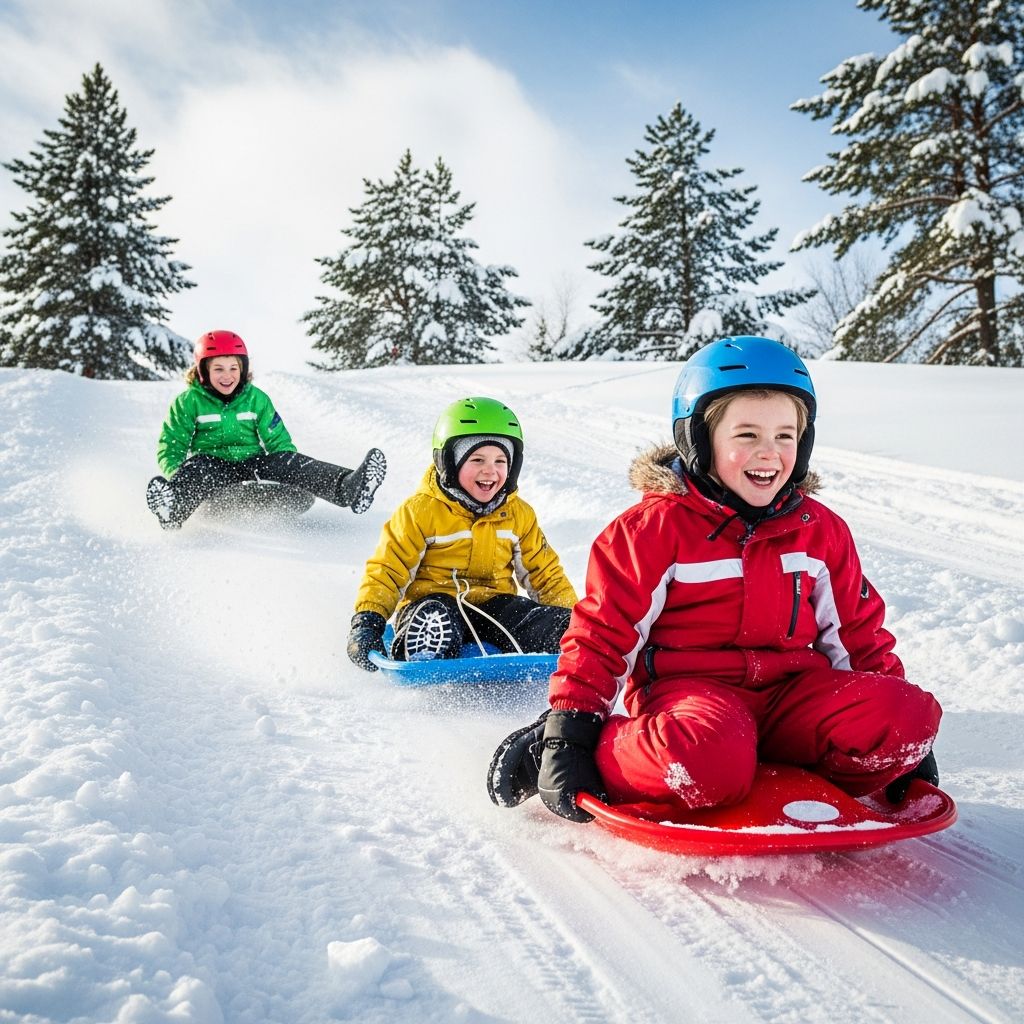
Not all sleds offer equal safety. Prioritize models with steering mechanisms and brakes, such as traditional wooden sleds with flexible metal runners, suitable for ages 6-12. Discard or repair any with sharp edges, splinters, cracks, or faulty steering.
- Prohibited options: Shun non-steerable items like saucers, inner tubes, toboggans, or improvised substitutes (e.g., trays, lids), which spin unpredictably and lack control.
- Capacity adherence: Heed manufacturer limits on riders—typically one child per sled, except when adults accompany toddlers.
- Pre-use checks: Lubricate steering components and confirm structural integrity before each session.
For tubing, confine use to supervised resort parks designed for high speeds.
Protective Gear and Winter Attire Essentials
Helmets are non-negotiable, slashing head injury risks significantly. Winter sports helmets are optimal, but bike or multi-sport variants suffice if snugly fitted. Layer clothing to trap warmth: waterproof snow pants, insulated jackets, hats, gloves/mittens, and sturdy snow boots. Skip scarves to prevent snags.
- Additional padding: Knee and elbow guards buffer impacts for beginners.
- Hypothermia safeguards: Enforce timed outdoor sessions with indoor warm-ups; watch for shivering, numbness, or blue lips.
- Wet gear swap: Promptly replace soaked clothes to avert frostbite.
Prohibit alcohol or impairing substances for participants and supervisors.
Mastering Safe Sledding Techniques
Proper form minimizes mishaps. All riders must sit upright, facing forward, feet downhill, arms/legs tucked inside—no standing, headfirst dives, or side-sitting.
- Single occupancy: One rider per sled (adult-toddler exceptions); no stacking or linking sleds.
- Turn-taking protocol: Wait until the prior sled clears the path fully before launching.
- Emergency roll-off: Instruct kids to bail by rolling sideways if the sled veers uncontrollably—sled retrieval follows safely.
- No jumps or stunts: Building ramps invites flips and spinal injuries.
Younger children (under 5) sled tandem with adults; those 5-12 require constant oversight.
Supervision and Age-Appropriate Guidelines
Adult presence is mandatory, especially for kids under 12. Riders under 5 need an adult partner on the sled. Teach boundary rules: no towing by vehicles (cars, ATVs, snowmobiles)—this invites catastrophic speeds. Avoid snowbanks hiding rocks or stumps.
Age breakdowns:
- Under 5: Adult-supervised tandem rides only.
- 5-12: Solo on steerable sleds with nearby adult watcher.
- 12+: Independent but rule-abiding.
Preventing Cold Weather Complications
Beyond trauma, winter exposes kids to hypothermia and frostbite. Limit outings to 30-60 minutes, with frequent checks and hydration breaks—hot cocoa aids rewarming. Exposed skin frostbites rapidly below freezing; cover thoroughly and apply high-SPF sunscreen for UV reflection off snow.
First Aid and Emergency Preparedness
Pack a kit with bandages, blankets, thermoses, and a charged phone. For falls: Assess consciousness/breathing first, stabilize injuries, warm gradually, and seek medical aid for head knocks, suspected fractures, or cold symptoms. Know nearest ER locations.
Frequently Asked Questions
What age can kids sled alone?
Children under 5 should always sled with an adult; 5-12 need supervision nearby.
Is a bike helmet okay for sledding?
Yes, if properly fitted; winter helmets preferred for cold tolerance.
Can two kids share a sled?
Only if within manufacturer limits and supervised; generally one per sled recommended.
What if the sled won’t stop?
Roll off sideways immediately—don’t cling.
Is nighttime sledding safe?
Avoid unless fully illuminated; daylight best.
References
- Monroe Carell Jr. Children’s Hospital at Vanderbilt Urges Sledding Safety — Vanderbilt University Medical Center. 2025-01-09. https://news.vumc.org/2025/01/09/monroe-carell-jr-childrens-hospital-at-vanderbilt-urges-sledding-safety/
- 10 Rules for Safe Sledding — Brown University Health. Accessed 2026. https://www.brownhealth.org/be-well/10-rules-safe-sledding
- Sledding Safety Tips — UPMC Children’s Hospital of Pittsburgh. Accessed 2026. https://www.chp.edu/injury-prevention/safety/holiday-and-seasonal/sledding
- Safety Tips: Sledding — Rady Children’s Hospital. Accessed 2026. https://www.rchsd.org/health-article/safety-tips-sledding/
- Sledding Safety — Nationwide Children’s Hospital. Accessed 2026. https://www.nationwidechildrens.org/cirp-sledding-safety?device=mobile
- Cold Weather and Sledding Safety for Kids — Dr. Joe Pediatrics. Accessed 2026. https://www.drjoepediatrics.com/blog/cold-weather-and-sledding-safety-for-kids-tips-from-dr-joe.html
- Winter Activity Safety Tips for Kids — Plymouth Pediatric Associates. Accessed 2026. https://www.plymouthpediatricassociates.com/posts/winter-activity-safety-tips-for-kids-sledding-skiing-ice-safety/