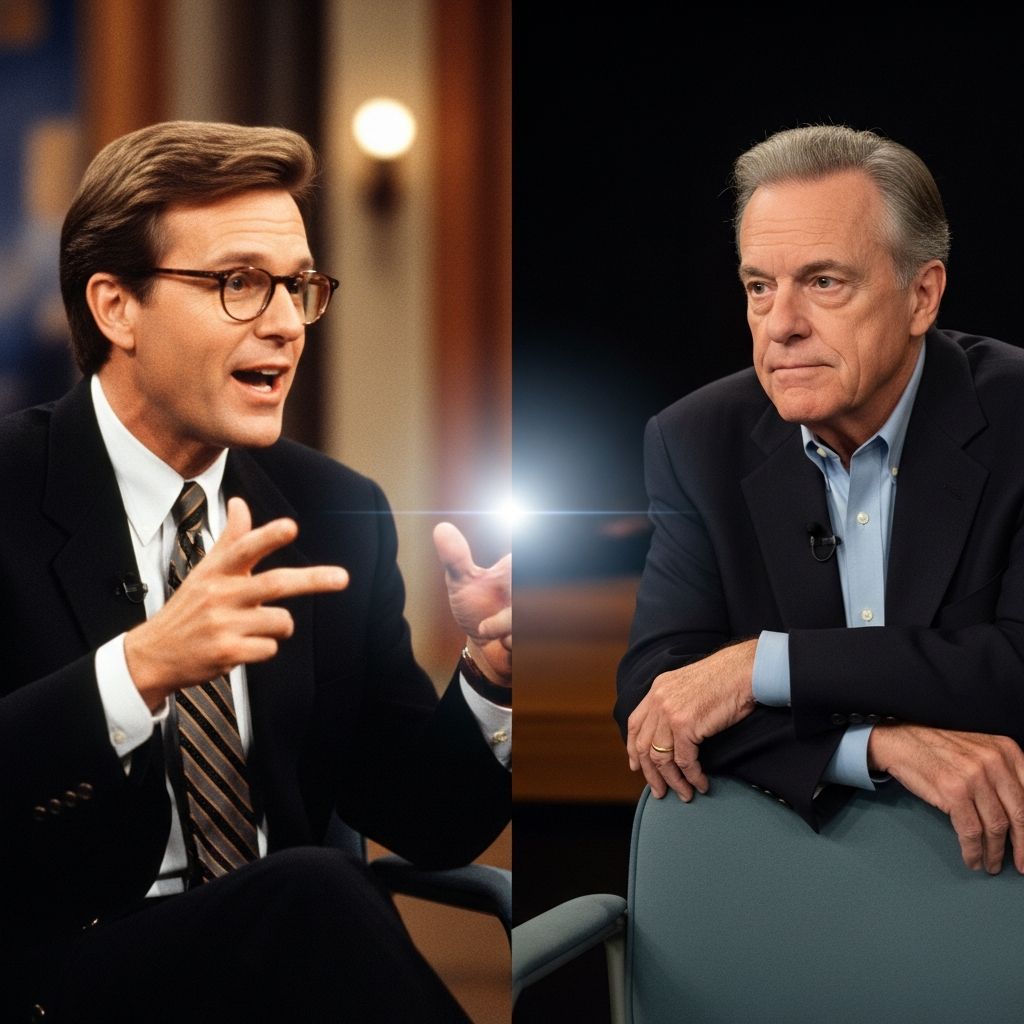
Gene Siskel and Roger Ebert didn’t just review movies—they created a new kind of television. For more than two decades, their weekly debates brought film criticism into living rooms, turning thumbs up and thumbs down into cultural shorthand. Their final episode together, taped in early January 1999 and aired on January 23, wasn’t announced as a finale; there were no tearful goodbyes or retrospective montages. Instead, it was just another show, filled with the same passionate disagreements that had defined their partnership. That quiet, unceremonious ending only deepened the sense that something irreplaceable had passed when Siskel died just weeks later at age 53.
The Unlikely Duo Who Redefined Movie Talk
When Siskel and Ebert first shared a screen in the mid-1970s, they were rivals, not partners. Siskel, the sharp-edged critic from the Chicago Tribune, and Ebert, the Pulitzer-winning writer from the Chicago Sun-Times, had little in common beyond their love of cinema . Early tapings were tense, often bogged down by arguments over everything from chair placement to lunch orders, and producers struggled to capture the energy that would later make the show iconic .
What transformed them was a simple realization: their real chemistry came not from polished scripts, but from honest, spontaneous debate. A young intern, Nancy De Los Santos, reportedly suggested letting them just talk and argue naturally, and that shift turned a stiff review segment into must-see TV . Their contrasting styles—Siskel’s clipped, sometimes combative delivery and Ebert’s warm, expansive storytelling—created a dynamic that felt both intellectual and deeply human .
The Final Taping: Business as Usual
By January 1999, Siskel was already battling a brain tumor, though few viewers knew the full extent of his illness. He had recently undergone surgery to remove a growth and returned to the show with slower speech and reduced mobility, but he refused to miss a taping . For that last episode, he asked to be seated before Ebert arrived, a small but telling gesture to conceal his physical struggles .
The show followed the familiar format: five films, each debated with the trademark intensity fans expected. They covered At First Sight, Another Day in Paradise, The Hi-Lo Country, Playing by Heart, and finally The Theory of Flight . On The Theory of Flight, their final joint review, Siskel gave it a thumbs up while Ebert gave it a thumbs down, a fittingly divided verdict that mirrored their entire career . There was no closing speech, no hint that this would be their last time together on camera .
What They Reviewed in Their Last Show
Their final episode was a mix of mid-tier dramas and one offbeat romance, reflecting the kind of eclectic lineup that kept their show grounded in mainstream tastes:
- At First Sight – A drama about a blind man who regains his sight; Siskel found it moving, while Ebert thought it veered into melodrama .
- Another Day in Paradise – A gritty crime film about addicts and criminals; both critics acknowledged its raw power but debated its moral ambiguity .
- The Hi-Lo Country – A Western from director Stephen Frears; they split on whether it was a classic-style epic or a slow, overlong period piece .
- Playing by Heart – An ensemble drama about love and connection; Ebert appreciated its emotional honesty, while Siskel questioned its structure .
- The Theory of Flight – A British romantic drama about a man with cerebral palsy; Siskel praised its humanity, Ebert found it sentimental and contrived, making it their last point of contention .
These reviews weren’t about blockbusters or Oscar bait; they were about how ordinary people experienced stories on screen, a hallmark of Siskel & Ebert’s approach .
The Aftermath: A Legacy in Silence
Just over a week after the final episode aired, Siskel announced he was taking a “leave of absence” to recover before the fall 1999 season . He died on February 20, 1999, only 17 days later, leaving Ebert and millions of viewers stunned . In public, Ebert spoke with grace about his friend, but privately he grieved the loss of the man he had spent more than 20 years arguing with on camera .
The show continued with guest critics before settling on Richard Roeper as Ebert’s new partner, first as Ebert & Roeper and later under other titles . While Roeper brought his own strengths, the unique friction between two equals—two critics who genuinely challenged each other—was gone . Ebert later reflected that people often asked if they truly hated each other, and his answer was simple: “One thing I know for sure is that we didn’t” .
How They Changed Film Criticism
Before Siskel & Ebert, film criticism was largely confined to newspapers and academic circles. Their show brought it into the mainstream, making it accessible and entertaining without sacrificing depth . They didn’t just tell people what to see; they taught audiences how to think about movies—about acting, direction, story, and what a film meant beyond its plot .
Their influence extended far beyond television:
- They popularized the “thumbs up / thumbs down” system, which studios and audiences still reference decades later .
- They championed independent and foreign films that might otherwise have been overlooked, helping build wider audiences for directors like Spike Lee and Jane Campion .
- They proved that serious criticism could be both passionate and popular, paving the way for later critics and review aggregators like Rotten Tomatoes .
Comparing Their Eras on TV
| Aspect | Siskel & Ebert (1986–1999) | Ebert & Roeper (2001–2008) | Later “At the Movies” (2008–2010) |
|---|---|---|---|
| Core Dynamic | Two equals, fierce debate, personal chemistry | Mentor/protégé, more consensus, less conflict | Rotating hosts, shifting tone, less consistent identity |
| Format | Five films per episode, extended debates | Similar structure, but shorter segments | More varied, sometimes fewer reviews, more promotional content |
| Legacy | Defined the golden age of TV film criticism | Stable but less iconic; kept the brand alive | Seen as a diminished version of the original |
Why Their Final Episode Still Matters
The power of Siskel & Ebert’s last show lies in what it wasn’t: a manufactured farewell. There were no retrospectives, no “greatest hits,” no emotional speeches about friendship and legacy . Instead, it was a reminder that their greatness came from doing the work—show after show, argument after argument—until they simply couldn’t anymore .
That final taping also captures a shift in Siskel’s own perspective. In his last months, he spoke more openly about mortality, finding unexpected depth in films like Meet Joe Black that he might once have dismissed as sentimental . His final episode, with its mix of mainstream and offbeat choices, reflects a critic who had come to terms with his own fragility while still passionately engaging with cinema .
Frequently Asked Questions
When was Siskel & Ebert’s last episode together?
Their final episode together aired on January 23, 1999, after being taped in early January 1999; it covered five films, including The Theory of Flight as their last joint review .
Did Siskel and Ebert know it was their last show?
No, neither Siskel nor Ebert knew that taping would be their last together; there was no farewell speech or special acknowledgment at the end of the episode .
What happened to the show after Siskel died?
After Siskel’s death in February 1999, the show continued with guest critics before pairing Ebert with Richard Roeper; it later became Ebert & Roeper and then other incarnations until ending in 2010 .
Did Roger Ebert continue reviewing after Siskel’s death?
Yes, Ebert continued as a critic for many years, writing for the Chicago Sun-Times and later founding RogerEbert.com, even after losing his ability to speak due to cancer .
Why are Siskel & Ebert still remembered today?
They are remembered for making film criticism accessible, for their unique on-screen chemistry, and for shaping how generations of viewers think about and discuss movies .