Play forms the cornerstone of healthy child development, serving as a natural avenue for children to explore, learn, and grow. Unlike structured activities driven by screens or rigid schedules, simple play emphasizes unstructured, imaginative engagement that builds essential skills like creativity, resilience, and social competence. Research from the National Association for the Education of Young Children (NAEYC) highlights that playful instincts are innate, allowing children to thrive when given freedom to direct their own experiences. This article explores actionable strategies for parents and educators to integrate more meaningful play into daily routines, drawing on evidence-based approaches to create enriching environments.
The Essential Role of Unstructured Play in Development
Unstructured play, often called free play, provides children with the autonomy to invent rules, solve problems, and express emotions without adult intervention. According to Harvard Graduate School of Education, play strengthens brain architecture by enhancing memory, attention, and self-control through age-appropriate games. For instance, toddlers benefit from imitation activities like “follow the leader,” which sharpen working memory and focus, while older children gain from strategy games that promote mental flexibility.
Free play also counters the rise of overscheduled childhoods. Scholastic experts note that praising a child’s independent inventions—such as a self-built tower—reinforces confidence without imposing adult ideas. By prioritizing open-ended toys like blocks or balls over prescriptive ones, parents enable higher creativity levels, fostering innovation that carries into academic and social success.
Creating Inviting Spaces for Independent Exploration
A child’s environment profoundly influences their play quality. Design dedicated zones that spark curiosity without overwhelming. Start with accessible, low shelves stocked with passive toys—wooden blocks, cloth dolls, and natural objects like stones or pinecones—which encourage active imagination over passive consumption.
Separate screens from play areas to minimize distractions, as recommended by child development specialists. Ensure physical freedom by childproofing spaces where kids can move safely alone, promoting self-reliance. For home setups, cozy corners with soft rugs, pillows, and rotating sensory items like fabric scraps keep engagement fresh.
- Rotate materials weekly: Introduce loose parts such as boxes, scarves, or recyclables to prevent boredom and stimulate new ideas.
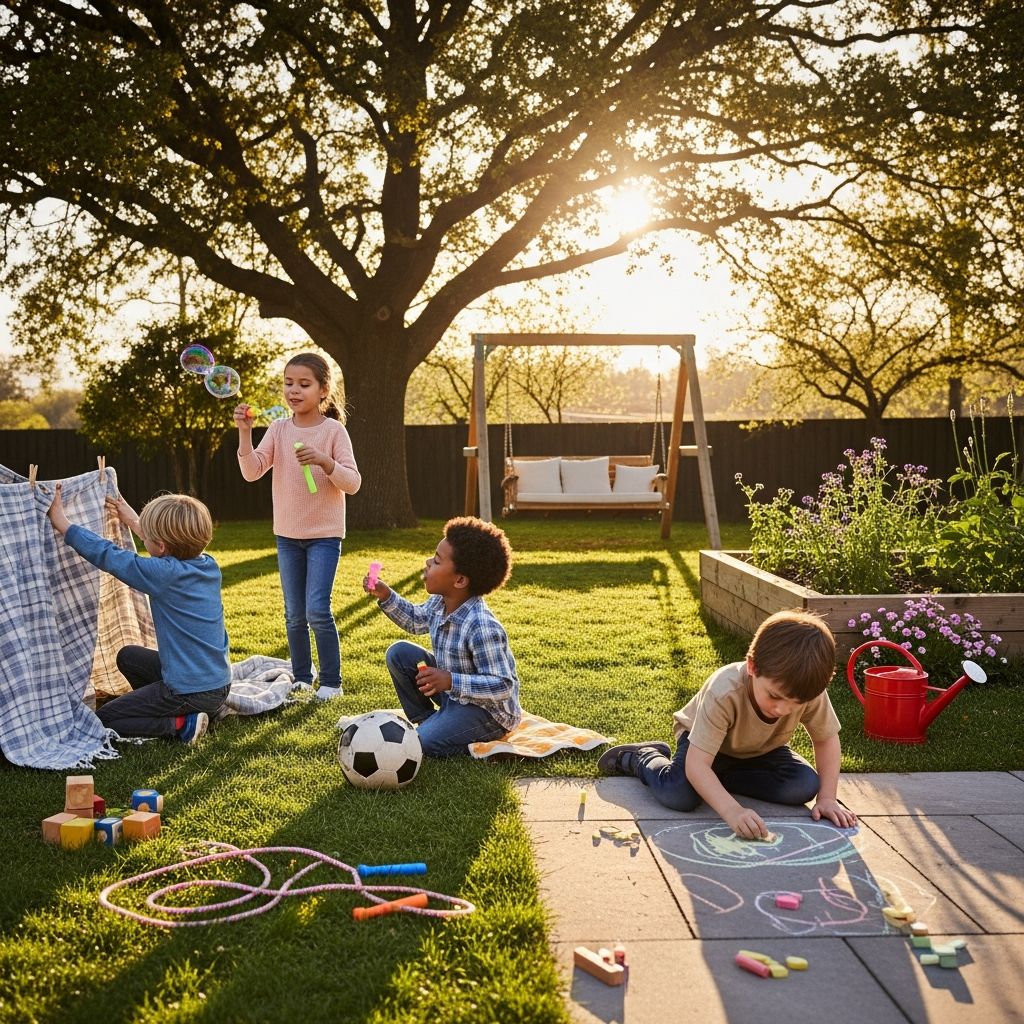
- Incorporate nature: Backyard nooks with dirt piles or water play mimic natural exploration, vital for sensory growth.
- Balance solitude and group areas: Quiet spots for solo play alongside communal zones for peer interactions.
Columbia Pediatric Therapy emphasizes following the child’s lead—observe their interests and gently expand on them to build engagement. This child-centered approach turns ordinary spaces into hubs of discovery.
Age-Specific Play Strategies for Maximum Impact
Tailor play to developmental stages for optimal benefits. The CDC outlines milestones where specific games align with brain growth.
| Age Group | Recommended Activities | Key Benefits |
|---|---|---|
| 0-6 Months | Peekaboo, pat-a-cake, hiding objects under cloth | Self-control, motor skills, object permanence |
| 6-9 Months | Baby see-baby-do gestures, noisy hide-and-seek | Attention focus, imitation, working memory |
| 2-3 Years (Toddlers) | Active songs (e.g., I’m a Little Teapot), follow-the-leader | Physical coordination, self-regulation, memory |
| 4+ Years | Strategy board games, group storytelling | Mental flexibility, teamwork, problem-solving |
For babies, simple hiding games teach anticipation; toddlers thrive on movement-based songs that demand start-stop control. Older kids excel in collaborative challenges, like building the farthest-flying paper airplane, blending fun with science concepts.
Practical Activities to Ignite Imagination at Home
Parents can weave play seamlessly into routines with minimal effort. Embrace boredom as a creativity catalyst—unscheduled time prompts self-entertainment and resilience, per child psychology insights.
- I Spy adventures: Transform car rides or errands into observation games, honing critical thinking by spotting shapes, colors, or patterns.
- Hide-and-seek twists: Conceal toys with descriptive clues (e.g., “something soft and blue”) to build vocabulary and deduction skills.
- Would-you-rather debates: Pose whimsical dilemmas like “fly like a bird or swim like a fish?” to spark decision-making and bonding.
- Secret codes and gestures: Invent family handshakes or affection notes hidden around the house, boosting emotional expression and confidence.
PBS and ChildCare.gov advocate for turn-taking in these games to enhance language and social cues. Join occasionally as a partner, mirroring the child’s ideas to extend play without dominating.
Classroom Techniques for Educators to Promote Playful Learning
Teachers can infuse play into curricula for deeper retention. Sensory stations with water, sand, or texture bins engage multiple senses, fostering curiosity through hands-on discovery. Swap worksheets for manipulatives like letter tiles or pattern blocks, making abstract concepts tangible.
- Collaborative storytelling: Each child adds a word or sentence, cultivating teamwork and narrative skills amid laughter.
- Mystery object challenges: Present unfamiliar items for guessing games, igniting abstract thinking across ages.
- Competitive crafts: Paper airplane contests teach aerodynamics while channeling energy positively.
- Rock-paper-scissors tournaments: Build excitement and fairness through elimination rounds.
Bay Area HIBA Academy stresses dramatic play areas stocked with props for role-playing, where children process emotions freely. Regular variety keeps classrooms dynamic.
Overcoming Barriers to Everyday Play
Busy schedules and screen temptations challenge playtime. Limit extracurriculars to free afternoons, inviting neighbors for group sessions where parents step back. Praise efforts lavishly: “Your story invention is brilliant!” without suggestions, preserving ownership.
Address safety concerns by organizing park meetups, allowing supervised freedom. For independent play, prepare homes as “child-interesting” with real-life items like pots or fabrics, involving kids in chores as play extensions.
Long-Term Benefits and Parental Mindset Shifts
Consistent simple play yields lifelong gains: improved executive function, empathy, and adaptability. NAEYC urges trusting parental instincts—reconnect with your inner child to model joyful engagement. Track progress through journals noting newfound independence or creative bursts.
Purposeful play at home mirrors kindergarten benefits, preparing children for school via self-directed learning. By prioritizing play, parents invest in resilient, innovative futures.
Frequently Asked Questions
What if my child resists unstructured play?
Start small with 10-minute sessions using favorite open-ended toys. Gradually extend as they self-entertain, praising persistence.
How much daily play is ideal?
Aim for 1-2 hours of free play, balanced with routines. Quality trumps quantity.
Can play help with behavioral issues?
Yes, it builds self-regulation and emotional outlets, reducing tantrums via problem-solving practice.
What toys promote the best play?
Open-ended ones: blocks, art supplies, balls. Avoid battery-operated for true creativity.
Is outdoor play essential?
Vital for physical health and sensory input; combine with indoor for all-weather options.
References
- 30 Simple Ways for Parents and Teachers to Bring More Play Into Children’s Lives — Playground Equipment. 2023-05-15. https://www.playgroundequipment.com/30-simple-ways-to-bring-more-play-into-childrens-lives/
- Purposeful Play in Early Childhood: Benefits, Activities & Examples — HIBA Academy. 2024-02-10. https://bayarea.hibaacademy.org/en/post/purposeful-play-kindergarten-activities
- How to Promote Play in Young Children — Columbia Pediatric Therapy. 2023-11-20. https://www.columbiapedstherapy.com/blog-posts/parenting/promote-play
- How to Encourage Free Play — Scholastic. 2022-08-05. https://www.scholastic.com/parents/family-life/parent-child/how-to-encourage-free-play.html
- How to Encourage Independent Play — Katherine Martinko, Substack. 2024-03-12. https://katherinemartinko.substack.com/p/how-to-encourage-independent-play
- Play Helps Children Build Better Brains — Harvard Graduate School of Education. 2025-01-25. https://www.gse.harvard.edu/ideas/usable-knowledge/25/01/play-helps-children-build-better-brains-here-are-some-ways-get-kids
- 10 Ways To Encourage Independent Play — The Parenting Junkie. 2023-07-18. https://www.theparentingjunkie.com/10-ways-to-encourage-independent-play/
- 10 Things Every Parent Should Know About Play — NAEYC. 2024-06-01. https://www.naeyc.org/our-work/families/10-things-every-parent-play
- Supporting Children’s Learning Through Play — ChildCare.gov. 2025-09-30. https://childcare.gov/consumer-education/support-my-childs-health-development/supporting-childrens-learning-through-play