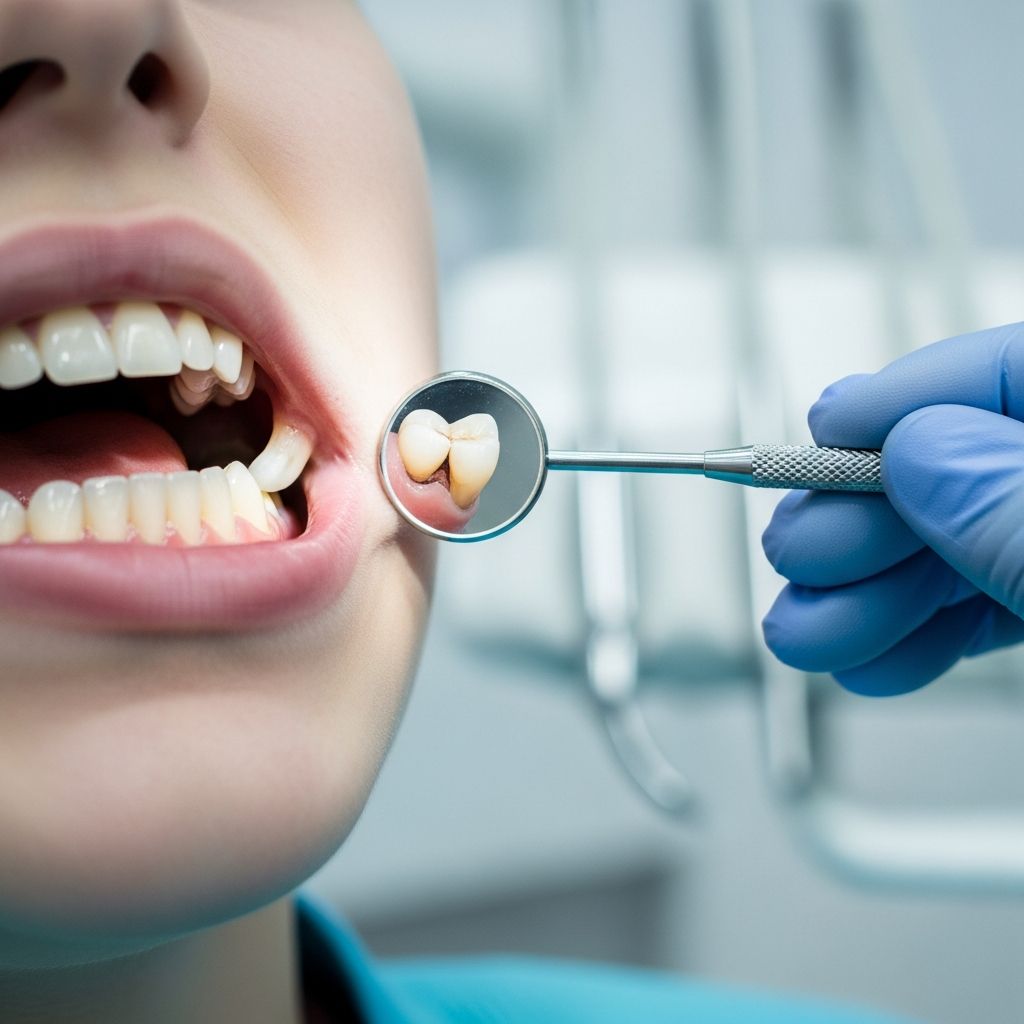
Silver diamine fluoride (SDF) provides a noninvasive topical treatment that halts tooth decay in children by killing bacteria and remineralizing enamel, often without the need for drilling or anesthesia.
Understanding Tooth Decay in Young Children
Tooth decay, or dental caries, affects millions of children worldwide, starting when cariogenic bacteria in the mouth consume sugars and produce acids that erode enamel. In kids, baby teeth are particularly vulnerable due to thinner enamel and dietary habits rich in fermentable carbohydrates. Early intervention prevents progression to painful infections or abscesses that could impact permanent teeth development.
Traditional management involves drilling out decay and filling, but this can be challenging for toddlers, anxious children, or those with special healthcare needs. SDF emerges as a promising alternative, recognized by bodies like the American Academy of Pediatric Dentistry (AAPD) for arresting caries effectively.
Key Benefits of Silver Diamine Fluoride Treatment
SDF stands out for its simplicity and child-friendliness. Here are the primary advantages:
- Painless application: No needles, drilling, or sedation required, making it suitable for very young children or those with dental phobia.
- High efficacy: A single application arrests 47-90% of cavities, depending on lesion size and location, with clinical trials showing 54% success in halting progression versus 21% for placebo.
- Quick procedure: Takes just minutes, covering multiple teeth at once—up to eight in one session—ideal for kids with widespread decay.
- Cost-effective: Far less expensive than fillings, which require longer appointments and materials.
- Versatile use: Relieves sensitivity and prevents new decay by strengthening enamel.
These benefits make SDF a game-changer, especially in pediatric or medical settings where full dental procedures aren’t feasible.
How Silver Diamine Fluoride Works on Teeth
SDF is a clear liquid combining silver ions, which possess potent antibacterial properties to eliminate decay-causing microbes, and fluoride ions that promote remineralization by hardening softened dentin. Upon application, silver penetrates the lesion, disrupting bacterial biofilms, while fluoride forms fluorapatite, a more acid-resistant mineral than natural enamel.
Research from the National Institutes of Health (NIH) confirms this dual action: treated cavities harden measurably, indicating arrested decay. Ongoing studies explore exact mechanisms, but the combination proves superior to fluoride alone in stopping active caries.
Step-by-Step: Administering SDF in Pediatric Care
The procedure is straightforward and performed by dentists or trained medical providers:
- Preparation: Isolate the tooth, protect gums with petroleum jelly or cotton to avoid irritation and staining.
- Cleaning: Gently dry the cavity surface with air or cotton.
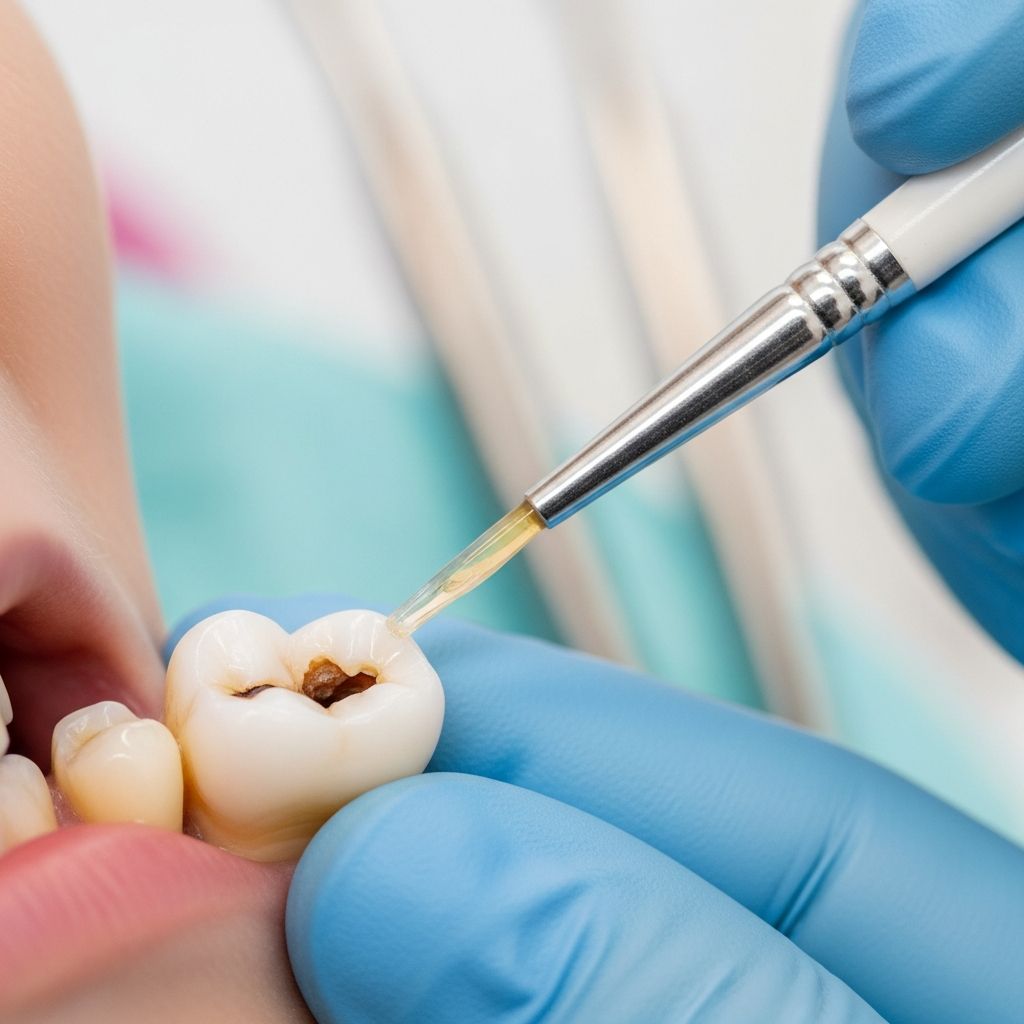
- Application: Paint or swab SDF directly onto the decay using a microbrush; for interproximal areas, use floss.
- Drying: Blow dry with compressed air to set the solution.
- Post-care: Advise avoiding eating/drinking for 1 hour; reapply as needed every 3-12 months.
Total time: 1-3 minutes per tooth, with no recovery needed. Parents report high satisfaction due to the stress-free experience.
Safety Profile and FDA Recognition
SDF is deemed very safe for children, with FDA clearance since 2014 for hypersensitivity and ‘breakthrough therapy’ status in 2016 for caries arrest, based on preliminary evidence of substantial improvement over existing options. No serious adverse reactions reported in trials; minor soft tissue irritation is rare and transient.
The American Academy of Pediatrics (AAP) endorses its use in medical settings for at-risk kids. Contraindications are limited to silver allergies, ulcerative gingivitis, or stomatitis.
Managing the Black Staining Effect
The most notable downside is permanent black discoloration of treated decay, resulting from silver oxide formation. This doesn’t affect healthy tooth structure and is often unnoticeable on molars.
Staining Facts:
| Aspect | Details |
|---|---|
| Color Change | Decayed area turns black within 24-48 hours; permanent unless tooth exfoliates. |
| Visibility | Less concerning on back teeth; avoid on front for aesthetics. |
| Mitigation | Not fully coverable by composites; best for primary teeth. |
| Health Impact | None; staining is cosmetic only. |
For visible areas, dentists may recommend fillings later. Many parents prioritize function over appearance in baby teeth.
SDF Compared to Traditional Fillings
SDF offers a conservative interim solution, not a permanent replacement. Here’s a comparison:
| Factor | SDF | Fillings |
|---|---|---|
| Invasiveness | Topical, no drill | Drilling required |
| Pain/ Anxiety | None | Numbing, possible discomfort |
| Time | Minutes | 30-60+ minutes |
| Durability | Temporary (reapply); 50% revert in 24 months | Longer-lasting |
| Best For | Early decay, young/special needs kids | Advanced/large cavities |
| Cost | Lower | Higher |
SDF buys time for baby teeth or prepares for restorations; combine with hygiene for best outcomes.
Ideal Candidates for SDF Therapy
- Children under 6 with multiple early cavities.
- Patients with behavioral challenges or medical complexities precluding sedation.
- High-caries-risk kids needing preventive arrest.
- Interim treatment before permanent teeth erupt.
- Older children with lingering primary teeth decay.
Not suitable for deep cavities near pulp or anterior aesthetics-focused cases.
Long-Term Success and Maintenance Tips
Reapplication every 3-12 months maximizes efficacy; pair with fluoride varnish, sealants, and diet counseling. Studies show sustained arrest with compliance, reducing need for extractions. Monitor via exams; advanced lesions may still require fillings.
Frequently Asked Questions About SDF for Kids
Is SDF painful for my child?
No, it’s a quick swab with no drilling or shots—many kids don’t even notice.
How long does SDF last?
Effects vary; reapply every 3-12 months. About 50% of arrests hold at 24 months.
Will the black stain go away?
No, it’s permanent on treated areas, but fades with natural tooth loss.
Can SDF prevent new cavities?
Yes, its antibacterial and remineralizing actions help protect untreated teeth.
Is SDF covered by insurance?
Often yes as a caries-arresting medicament; check with your provider.
At what age can kids get SDF?
From infancy onward, safe for primary teeth.
References
- What Is Silver Diamine Fluoride? | Can It Stop Tooth Decay? — Hurst Pediatric Dentistry. 2023. https://hurstpediatricdentistry.com/blog/can-silver-diamine-fluoride-stop-tooth-decay/
- Silver Diamine Fluoride (SDF) FAQ for Families — American Academy of Pediatrics (AAP). 2024. https://www.aap.org/en/patient-care/silver-diamine-fluoride-application-in-the-pediatric-medical-setting/silver-diamine-fluoride-frequently-asked-questions-for-families/
- What Is Silver Diamine Fluoride (SDF) | Risks of SDF — Sprout Pediatric Dentistry. 2024. https://www.sproutpediatricdentistry.com/blog/pediatric-dentistry/silver-diamine-fluoride/
- Topical solution halts tooth decay in children — National Institutes of Health (NIH). 2024-03-08. https://www.nih.gov/news-events/news-releases/topical-solution-halts-tooth-decay-children
- Silver Diamine Fluoride — American Dental Association (ADA). 2024. https://www.ada.org/resources/ada-library/oral-health-topics/silver-diamine-fluoride
- Silver Diamine Fluoride in the Management of Dental Caries Lesions — American Academy of Pediatric Dentistry (AAPD). 2023. https://www.aapd.org/media/Policies_Guidelines/R_ChairsideGuide.pdf