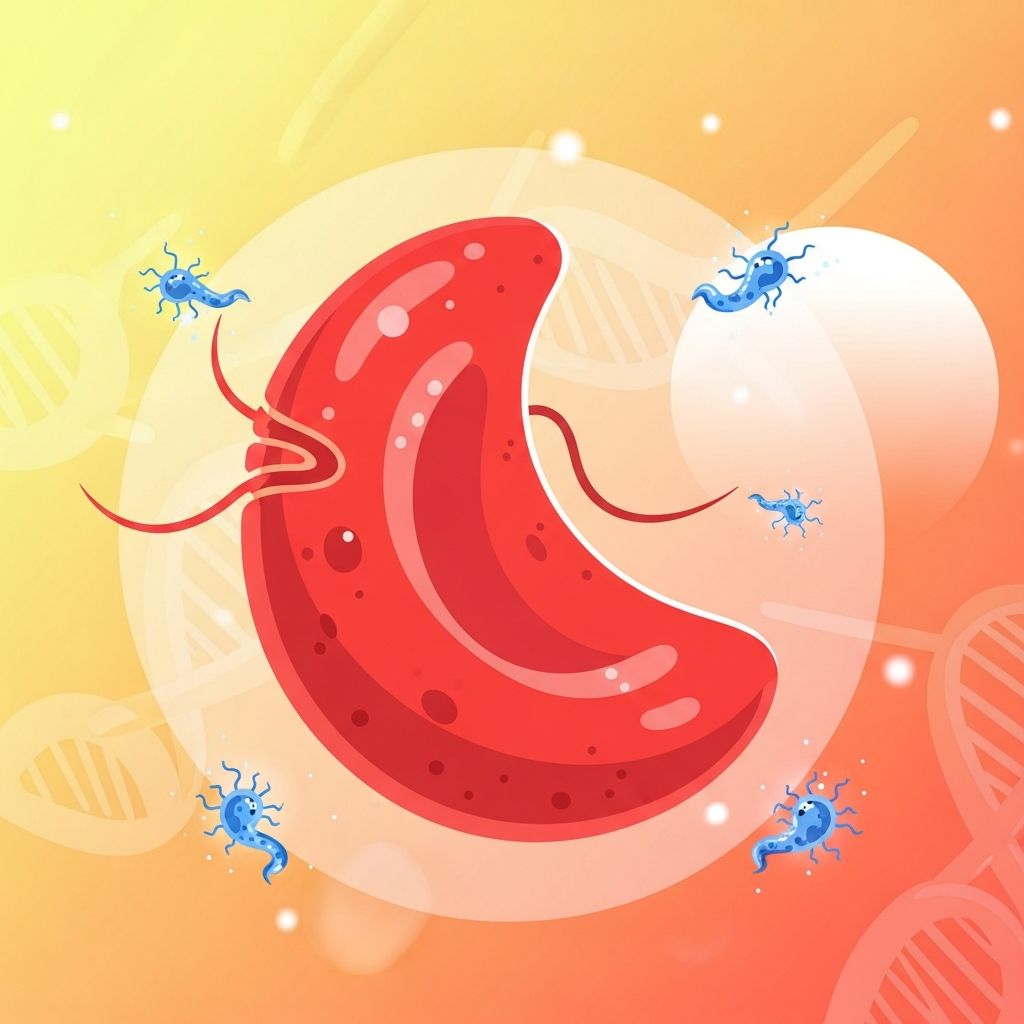
If you have ever heard about sickle cell trait and malaria, you might have been told that one can protect you from the other. That sounds confusing at first: how can a blood condition offer protection from a serious infection? This guide breaks down the science in simple language so you can understand what is happening in your body and why it matters, especially if you or your family come from areas where malaria is or was common.
Understanding the Basics: Red Blood Cells and Hemoglobin
To understand sickle cell trait and malaria, it helps to start with your red blood cells (RBCs). These tiny cells travel through your blood vessels, carrying oxygen from your lungs to all parts of your body. They contain a protein called hemoglobin that grabs oxygen in the lungs and releases it to tissues that need it.
- Normal red blood cells are smooth, round, and flexible.
- They usually live for about 120 days before your body replaces them.
- The most common type of hemoglobin in healthy people is called hemoglobin A (HbA).
In sickle cell trait and sickle cell disease, a change in the gene that tells the body how to make hemoglobin causes a different type of hemoglobin to be produced, called hemoglobin S (HbS).
What Is Sickle Cell Trait?
Sickle cell trait (SCT) happens when a person inherits one typical hemoglobin A gene and one hemoglobin S gene. Doctors often write this as AS. This is different from sickle cell disease, where a person inherits two copies of the sickle gene (SS) or one sickle gene plus another abnormal hemoglobin gene.
| Genotype | Hemoglobin Type | Condition |
|---|---|---|
| AA | Mainly hemoglobin A | No sickle cell trait or disease |
| AS | Mix of hemoglobin A and S | Sickle cell trait |
| SS (or other combinations like SC) | Mainly abnormal hemoglobin | Sickle cell disease |
Most people with sickle cell trait:
- Have enough normal hemoglobin A to keep red blood cells working well.
- Do not have the painful crises that people with sickle cell disease experience.
- Usually live completely typical lives and may not even know they carry the trait.
However, they can pass the gene on to their children. When two people with SCT have a baby together, each pregnancy has a 25% chance of resulting in a child with sickle cell disease, a 50% chance of SCT, and a 25% chance of neither.
What Is Malaria and Why Is It Dangerous?
Malaria is an infection caused by parasites of the genus Plasmodium, transmitted by the bite of infected female Anopheles mosquitoes. The most dangerous species for humans is Plasmodium falciparum, which can cause severe illness and death, especially in young children and pregnant people.
When an infected mosquito bites someone:
- Parasites enter the bloodstream and first infect the liver.
- After multiplying in the liver, they move into the red blood cells.
- Inside RBCs, they grow and multiply until the cells burst.
- The burst cells release more parasites, which infect more RBCs, causing cycles of fever and chills.
Serious malaria can lead to anemia, breathing problems, brain complications, and even death if not treated quickly.
Where Do Sickle Cell Trait and Malaria Overlap?
Sickle cell trait is especially common in areas where malaria has been a major health problem, such as much of sub-Saharan Africa, parts of the Middle East, India, and some regions of the Mediterranean. Scientists noticed that in regions with intense malaria transmission, a higher percentage of people carry the sickle cell trait. That pattern gave researchers a clue that there might be an advantage to having SCT in those environments.
Studies have found that in areas with severe malaria, having sickle cell trait can reduce the risk of death from malaria by a significant amount compared with people who do not have the trait.
How Does Sickle Cell Trait Protect Against Malaria?
People with sickle cell trait can still get malaria, but research shows they are less likely to develop severe or life-threatening forms of the disease. Protection is not total—it is partial and mostly affects how serious the illness becomes.
1. Making Life Hard for the Parasite Inside Red Blood Cells
When malaria parasites infect red blood cells that contain hemoglobin S, several things can happen:
- Under low-oxygen or stressful conditions, RBCs with hemoglobin S can start to change shape or “sickle” more easily.
- Infected sickling cells are more likely to be recognized and removed by the spleen and other immune cells early, before parasites can multiply a lot.
- Changes in the inside of the sickle-trait RBC can slow down or disrupt parasite growth and development.
Newer studies suggest that when hemoglobin S starts to form stiff polymers inside infected cells, it interferes with the parasite’s ability to continue its normal growth cycle, reducing the overall number of parasites in the blood.
2. Boosting the Immune Response Over Time
Research in children living in areas with intense malaria transmission has shown that those with sickle cell trait develop stronger or faster acquired immunity to malaria over the first years of life. In simple terms, their immune system becomes better at recognizing and controlling the parasite after repeated exposure. Scientists think this may be because infected sickle-trait RBCs are cleared more quickly, giving the immune system more frequent “practice” without the same risk of deadly illness.
3. Fewer Parasites, Milder Illness
Because infected cells are removed earlier and parasites do not grow as well, people with SCT often have:
- Lower parasite counts in their blood.
- Shorter or less intense fevers and other symptoms compared to people without SCT in the same setting.
However, this does not mean they are immune. They still need the same malaria prevention and treatment as everyone else in high-risk areas.
Sickle Cell Trait vs. Sickle Cell Disease in Malaria
It is very important to separate sickle cell trait from sickle cell disease when talking about malaria.
| Feature | Sickle Cell Trait (AS) | Sickle Cell Disease (SS or similar) |
|---|---|---|
| Everyday health | Usually no symptoms; lives a typical life | Chronic illness, pain episodes, risk of organ damage |
| Malaria infection risk | Can be infected | Can be infected |
| Malaria severity | Lower risk of severe malaria compared to AA | Higher risk of serious outcomes and death from malaria |
| Reason | Mixed hemoglobin A and S offers a “balance” | Too many rigid, fragile sickle cells and chronic health stress |
Some articles mistakenly give the impression that sickle cell disease also protects against malaria. Research in African children shows the opposite: kids with sickle cell disease face extremely high risks from malaria and need rigorous prevention and fast treatment.
Why Did This Trait Become So Common? Evolution in Action
The connection between SCT and malaria is often described as a classic example of balanced polymorphism or heterozygote advantage in evolution.
- In areas with intense malaria, children with normal hemoglobin (AA) were more likely to die from severe malaria.
- Children with sickle cell disease (SS) often died young from complications of their disease.
- Children with sickle cell trait (AS) had the best chance of surviving childhood because they were less likely to die from malaria and did not suffer severe effects of sickle cell disease.
Over many generations, this survival advantage meant that the S gene stayed in the population at relatively high levels in places where malaria was common. In areas without malaria, there is no such advantage, so SCT tends to be less frequent.
Health Tips for Teens with Sickle Cell Trait
If you have sickle cell trait, you might not feel any different from your friends, but there are still some things worth keeping in mind.
1. Malaria Prevention Still Matters
Even though SCT lowers the risk of severe malaria, you can still:
- Become infected.
- Get quite sick.
- Spread malaria to others if mosquitoes bite you and move on to someone else.
If you live in or travel to an area where malaria is found, you should still:
- Sleep under insecticide-treated bed nets.
- Use mosquito repellent and wear long sleeves and pants at night.
- Take preventive malaria medicines if your doctor recommends them.
- See a health professional quickly if you have fever, chills, or flu-like symptoms after being in a malaria region.
2. Know Your Genetic Status
Because SCT can be passed on to children, it is helpful to:
- Ask your parents or guardians if you have had a newborn screening or a blood test for hemoglobin type.
- Keep a copy of your test results or remember your genotype (AA, AS, or SS).
- Encourage partners to get tested before having children so you both understand the chances of having a child with sickle cell disease.
3. Rare Situations to Be Aware Of
Most of the time, SCT causes no health problems. In rare cases, extreme conditions such as very intense physical exertion with dehydration, very low oxygen (for example at high altitude), or overheating have been linked to complications in people with SCT. If you are a student athlete or join the military, talk with your health provider or team doctor about any extra precautions you might need.
Talking with Your Doctor or Counselor
It is normal to have questions if you find out you have sickle cell trait. A good next step is to talk with:
- Your primary care provider or pediatrician.
- A genetic counselor who can explain inheritance patterns.
- A hematologist (blood specialist) if you have more detailed questions.
You might want to ask:
- “What is my hemoglobin type and what does it mean for my health?”
- “If I travel to a country where malaria is common, what should I do to stay safe?”
- “What are the chances that my future children could have sickle cell disease?”
- “Are there any sports or activities I should be careful about?”
Frequently Asked Questions (FAQs)
Q1. If I have sickle cell trait, can I still get malaria?
Yes. Sickle cell trait does not prevent infection. It mainly reduces the risk of severe or deadly malaria compared with people who do not have the trait, especially in high-transmission areas. You still need mosquito protection and, when appropriate, preventive medication.
Q2. Does sickle cell disease protect against malaria?
No. People with sickle cell disease (SS) are at high risk of serious complications and death from malaria. Studies in African children show that those with sickle cell disease have worse outcomes from malaria than both SCT carriers and children with normal hemoglobin.
Q3. How strong is the protection from sickle cell trait?
Research suggests that sickle cell trait provides a high degree of protection against severe and complicated malaria, but the protection is only partial and varies by age and local malaria patterns. Some studies report much lower parasite levels and fewer severe cases in people with SCT compared with those with normal hemoglobin.
Q4. If malaria decreases in a region, will the number of people with sickle cell trait go down?
Over many generations, if malaria remains rare, the evolutionary advantage of SCT would shrink, and the frequency of the sickle gene could slowly decrease. However, this kind of population change takes a long time and depends on many social and environmental factors.
Q5. Should I be tested for sickle cell trait?
In many countries, newborns are routinely screened for sickle cell disease and trait. If you are unsure of your status, a simple blood test called hemoglobin electrophoresis or similar tests can tell you. Knowing your status is especially important for family planning and for understanding certain health risks during intense physical activity.
References
- Malaria and Early African Development: Evidence from the Sickle Cell Trait — David de la Croix, et al. 2018-09-01. https://pmc.ncbi.nlm.nih.gov/articles/PMC6171532/
- An Immune Basis for Malaria Protection by the Sickle Cell Trait — Williams TN, et al., PLOS Medicine. 2005-05-10. https://pmc.ncbi.nlm.nih.gov/articles/PMC1140945/
- Resistance to Plasmodium falciparum in sickle cell trait erythrocytes — Archer NM, et al., Proceedings of the National Academy of Sciences. 2018-08-06. https://www.pnas.org/doi/10.1073/pnas.1804388115
- How Are Malaria & Sickle Cell Trait Related? — Sickle-Cell.com Editorial Team. 2022-04-01. https://sickle-cell.com/clinical/malaria
- Can Someone with Sickle Cell Anemia Get Malaria? — Healthline Editorial Team. 2021-10-20. https://www.healthline.com/health/can-someone-with-sickle-cell-anemia-get-malaria
- How Sickle Cell Disease and Malaria Defined Evolution — Global Health Now, Johns Hopkins Bloomberg School of Public Health. 2024-06-18. https://globalhealthnow.org/2024-06/how-sickle-cell-disease-and-malaria-defined-evolution