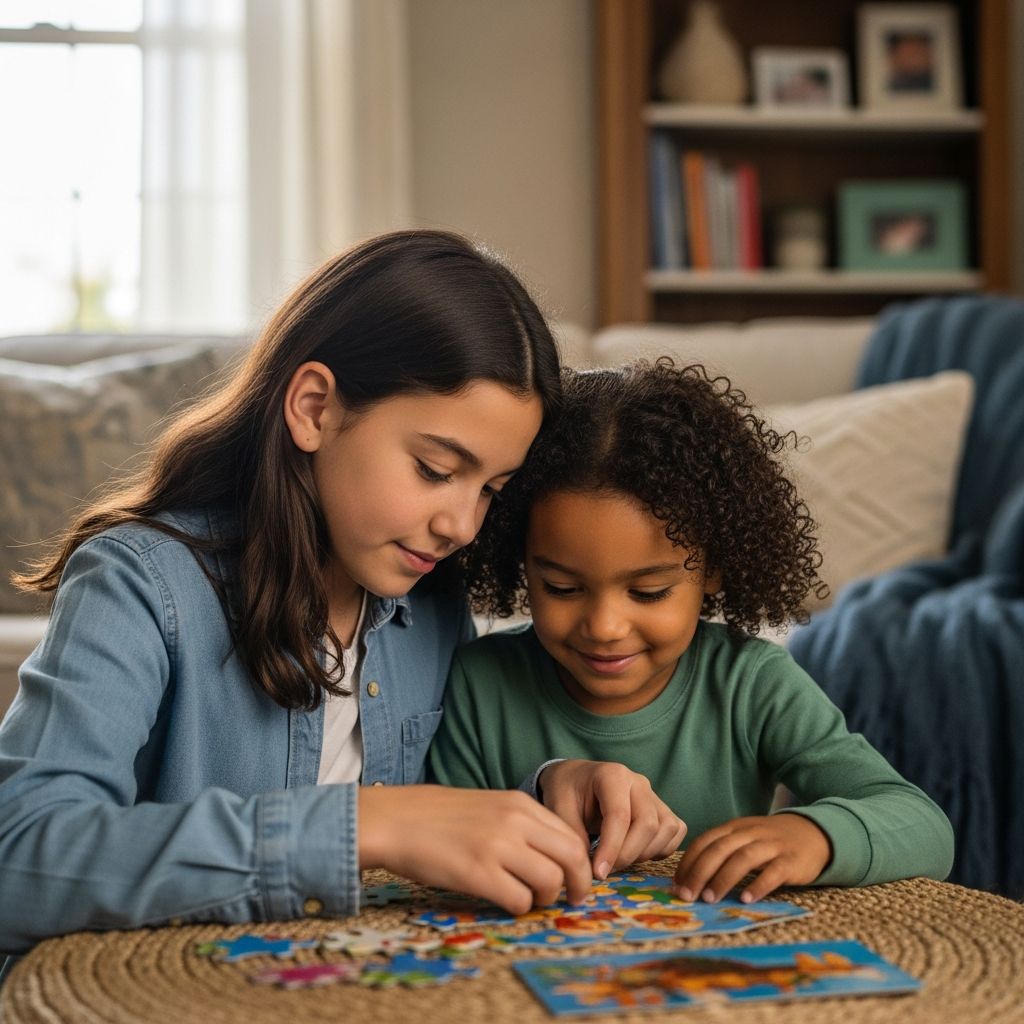
Understanding Sibling Dynamics in Adoptive Families
When adoption enters a family, it fundamentally transforms the way siblings relate to one another. Whether an adoptive family consists of multiple adopted children, a mix of biological and adopted children, or siblings connected through birth family relationships, the dynamics that emerge are layered and multifaceted. Unlike traditional sibling relationships, those within adoptive families must navigate the added complexity of differing genetic connections, potential trauma histories, and questions about identity and belonging.
The presence of siblings in an adoptive household significantly influences how adopted children process their adoption experience and develop their sense of self. Research demonstrates that siblings play a critical role in shaping behavioral outcomes and emotional adjustment from adolescence into emerging adulthood, offering support systems that extend far beyond what adoptive parents alone can provide.
The Prevalence of Birth Sibling Connections
Many adoptive families grapple with an often-overlooked reality: adopted children frequently have biological siblings living elsewhere. A comprehensive survey of adoptive families found that approximately 71% of adopted children have known birth siblings, with an additional 14% potentially having siblings whose identities remain unknown. This statistic underscores the importance of acknowledging and addressing birth sibling relationships as an integral part of adoptive family life.
Birth siblings may exist in various configurations. Some remain with their biological parents while others have been placed for adoption with different families. Half-siblings may be older or younger, and they might be aware of their connection to the adopted child or completely unaware. Each scenario presents unique emotional and practical considerations for adoptive parents to navigate thoughtfully.
Types of Sibling Configurations in Adoptive Families
Adoptive families encompass diverse sibling structures, each with distinct implications for family dynamics:
- Adoptive-only siblings: Families where multiple children have been adopted, though they may or may not be biologically related to one another. This configuration creates a shared adoptive experience that can foster deep understanding between siblings.
- Mixed sibling families: Households containing both adopted and biological children of the adoptive parents. These families navigate the challenge of differing genetic connections and potentially different adoption narratives.
- Birth-related adoptive siblings: Multiple children who are biologically related but adopted into separate families. These siblings share genetic history despite living apart.
- Foster-care or kinship siblings: Children who formed sibling bonds through foster care or who are connected through kinship arrangements, regardless of biological status.
How Siblings Influence Adoption Identity and Experience
Research reveals that sibling involvement profoundly affects how adopted children perceive their own adoption journeys. When siblings express positive attitudes toward their individual adoption experiences, target adoptees demonstrate greater positivity about their own adoption. This mutual reinforcement creates a feedback loop where supportive sibling relationships strengthen individual adoption identity.
The presence of a sibling who maintains contact with birth family members can trigger complex emotions in an adopted child. Adolescents who observed their adopted siblings forming special bonds with their respective birth families often expressed stronger desires to establish their own birth family connections, even when they had limited previous interest in such contact. This phenomenon highlights how sibling experiences function as mirrors, reflecting possibilities and inspiring new curiosities.
Emotional and Behavioral Closeness Between Siblings
A critical finding from adoptive family research challenges common assumptions about biological connection. While biological siblings report greater behavioral closeness—meaning higher frequency and quality of time spent together—biological and adoptive siblings demonstrate indistinguishable levels of emotional closeness. Love, care, and trust between siblings proved equally strong regardless of genetic relationship.
The determining factor for closeness across all sibling pairings is family communication patterns. Siblings from families with open, honest communication report significantly greater closeness, both behavioral and emotional, compared to those from families with restricted or avoidant communication styles. This suggests that adoptive parents have substantial influence over sibling relationships through how they facilitate family dialogue.
Birth Family Contact and Sibling Dynamics
The landscape of birth family contact becomes more complex when multiple siblings are involved. Research examining adolescent adoptee sibling pairs revealed distinct patterns depending on contact configurations. In “dual contact” scenarios where both siblings maintained relationships with their respective birth families, adolescents reported fewer adoption-related conversations with family or close friends. These siblings seemed to experience fewer unanswered questions about their adoption narratives.
Conversely, in “mixed contact” situations where one sibling had birth family contact while the other did not, the sibling without contact expressed greater needs to discuss adoption with their family and friends. These adolescents often harbored stronger desires to connect with their birth families, seemingly motivated by observing their sibling’s special relationship with their own birth relatives. This dynamic illustrates how sibling experiences directly shape individual adoption processing and family relationships.
Roles, Labels, and Family Positioning
Families sometimes inadvertently assign rigid roles to siblings, categorizing them as the “good child,” the “difficult one,” the “smart one,” or the “athletic one.” These labels can profoundly influence how parents treat each child and how siblings perceive themselves and each other. In adoptive families, such labeling becomes even more consequential when it intersects with adoption status or perceived behavioral differences attributed to adoption-related trauma or adjustment challenges.
Breaking free from these polarized roles requires intentional parental awareness. Recognizing each child as a unique individual with distinct strengths, challenges, and needs allows siblings to develop more authentic connections beyond predetermined categories. This approach fosters healthier sibling relationships and supports each child’s individual identity development.
Preparation and Education for Biological Siblings
When an adoptive family adds an adopted child to a household that already includes biological children, preparation and education are paramount. Biological children benefit from age-appropriate explanations of what adoption means, how it works, and why it represents a positive choice for their family. Without this foundation, biological children may struggle to understand their new sibling’s potential needs or experiences.
Thoughtful preparation helps biological children feel more secure and accepting of their new sibling. It transforms what might otherwise feel like displacement or confusion into participation in a meaningful family expansion. Parents who invest time in this educational process often find that biological children become allies in the adoptive journey, offering unique understanding and support to their adopted sibling.
Maintaining Connections Across Separated Siblings
Despite best efforts by child welfare agencies to keep siblings together, separation occurs frequently. Siblings may be separated because one remains with a biological parent or relative while another enters foster care, an older sibling ages out of the system before younger ones are adopted, or adopted siblings are placed with different families. Each separation scenario carries emotional weight for all parties involved.
Adoptive parents are encouraged to prioritize maintaining biological sibling connections whenever possible. Even when separation has been prolonged or contact has been limited, these connections offer invaluable benefits. Birth siblings often serve as living links to genetic heritage and personal history, providing adopted children with tangible connections to their roots and answers to questions about their origins that adoptive parents alone cannot provide.
Building and sustaining sibling connections requires practical effort. Successful models involve creating structured opportunities for siblings to engage in enjoyable activities together, even when they live in different homes or communities. Research demonstrates that meaningful sibling connections, maintained through intentional contact, can help address trauma and facilitate identity formation and belonging.
Complex Emotions and the Inner Experience
Learning about the existence of biological siblings triggers a spectrum of emotions in adopted children. Some wonder why they were chosen for adoption while their siblings were not. Others experience guilt about growing up in different circumstances than their siblings or anger about not being “kept” by their biological parents. Many engage in imaginative speculation about what their lives would have been like if they had been raised alongside their biological siblings.
These emotions are valid and warrant compassionate acknowledgment from parents and professionals. Rather than dismissing or minimizing these feelings, adoptive parents can create space for adopted children to process complex emotions about sibling relationships and their own adoption narratives. This emotional work strengthens children’s capacity to integrate different aspects of their identity and heritage.
Private Domestic Adoption and Sibling Contact Agreements
In private domestic adoption contexts, sibling contact can be formalized through post-adoption contact agreements. When a biological sibling remains with the birth parent, contact provisions can be negotiated as part of the adoption agreement. When biological siblings are adopted by different families, agreements must be established collaboratively between both sets of adoptive parents.
These formal agreements provide structure and mutual accountability, helping ensure that contact intentions translate into sustained practice. They also grant legal recognition to what many adoptees and birth families identify as essential relationships, moving beyond informal arrangements to documented commitments.
Parentification and Role Confusion
In some adoptive families, biological children inadvertently assume parental roles, a dynamic known as parentification. This occurs when biological children provide emotional support to stressed parents or take responsibility for helping to parent their adopted siblings. While some children may feel comfortable in this role, others resent it, experiencing the assignment as involuntary and emotionally burdensome.
Regardless of the child’s feelings, parentification creates unhealthy dynamics with long-term implications for mental health and future relationships. Adoptive parents must remain vigilant about maintaining appropriate generational boundaries, ensuring that biological children are supported as children rather than recruited as co-parents or therapists for their adoptive siblings.
The Lifelong Nature of Sibling Bonds
Deciding what siblings mean to one another represents a lifelong task in adoptive families, much like in non-adoptive families but with added layers of complexity. Siblings can be friends or sources of conflict, confidantes or rivals, strangers or intimates. These relationships often shift through various modes before stabilizing in adulthood. The challenge for adoptive parents is to foster conditions where siblings can develop authentic, flexible relationships that accommodate these natural evolutions.
Practical Strategies for Supporting Sibling Relationships
- Establish open family communication patterns that create safety for discussing adoption, birth family, and sibling relationships
- Avoid assigning rigid roles or labels to children based on adoption status or perceived behavioral differences
- Prepare biological children thoroughly before adoption, ensuring understanding and buy-in
- Create structured opportunities for siblings to bond through enjoyable, shared activities
- Maintain formal or informal contact agreements with birth siblings when possible
- Support each child’s individual adoption journey while acknowledging shared family experiences
- Seek professional support when sibling conflicts or adoption-related issues become overwhelming
- Respect generational boundaries and protect children from parentification dynamics
Frequently Asked Questions
Q: What percentage of adopted children have biological siblings?
A: Approximately 71% of adopted children have known biological siblings, with an additional 14% potentially having siblings whose identities are unknown. This makes sibling relationships a common consideration in adoptive family planning.
Q: Are emotional bonds between adoptive and biological siblings different?
A: Research shows that emotional closeness—characterized by love, care, and trust—is equivalent between adoptive and biological sibling pairs. What matters most is family communication patterns rather than genetic connection.
Q: How can observing a sibling’s birth family contact affect an adopted child?
A: Adopted children who observe their siblings maintaining positive relationships with birth family members often develop stronger desires to pursue their own birth family connections, even if they previously showed limited interest.
Q: What should adoptive parents do if siblings are separated?
A: Adoptive parents should prioritize maintaining biological sibling connections through structured contact whenever possible. Birth siblings serve as important links to genetic heritage and can provide adopted children with connection to their roots and personal history.
Q: How can parents avoid unhealthy role assignments among siblings?
A: Treat each child as an individual with unique strengths and needs rather than assigning them to fixed roles like “the good one” or “the difficult one.” This approach is especially important in adoptive families to prevent adoption status from influencing role expectations.
References
- The Role of Siblings in Adoption Outcomes and Experiences from Adolescence into Emerging Adulthood — National Center for Biotechnology Information (NCBI). 2015. https://pmc.ncbi.nlm.nih.gov/articles/PMC4816658/
- Birth Sibling Dynamics: Navigating Contact and Bonds After Adoption — North American Council on Adoptable Children (NACAC). 2024. https://adoptioncouncil.org/publications/birth-sibling-dynamics-navigating-contact-and-bonds-after-adoption/
- Maintaining Sibling Connections for Adopted Children — Massachusetts Adoption Resource Exchange (MARE). 2024. https://www.mareinc.org/articles/maintaining-sibling-connections-for-adopted-children
- Adoption and Biological Siblings: What Parents Need to Know — Lifelong Adoptions. 2024. https://www.lifelongadoptions.com/10-lgbt-adoptive-parents/719-adoption-and-biological-siblings
- Building Bonds: Relationships Between Biological and Adoptive Siblings — Children’s House International. 2024. https://childrenshouseinternational.com/building-bonds-relationships-between-biological-and-adoptive-siblings/