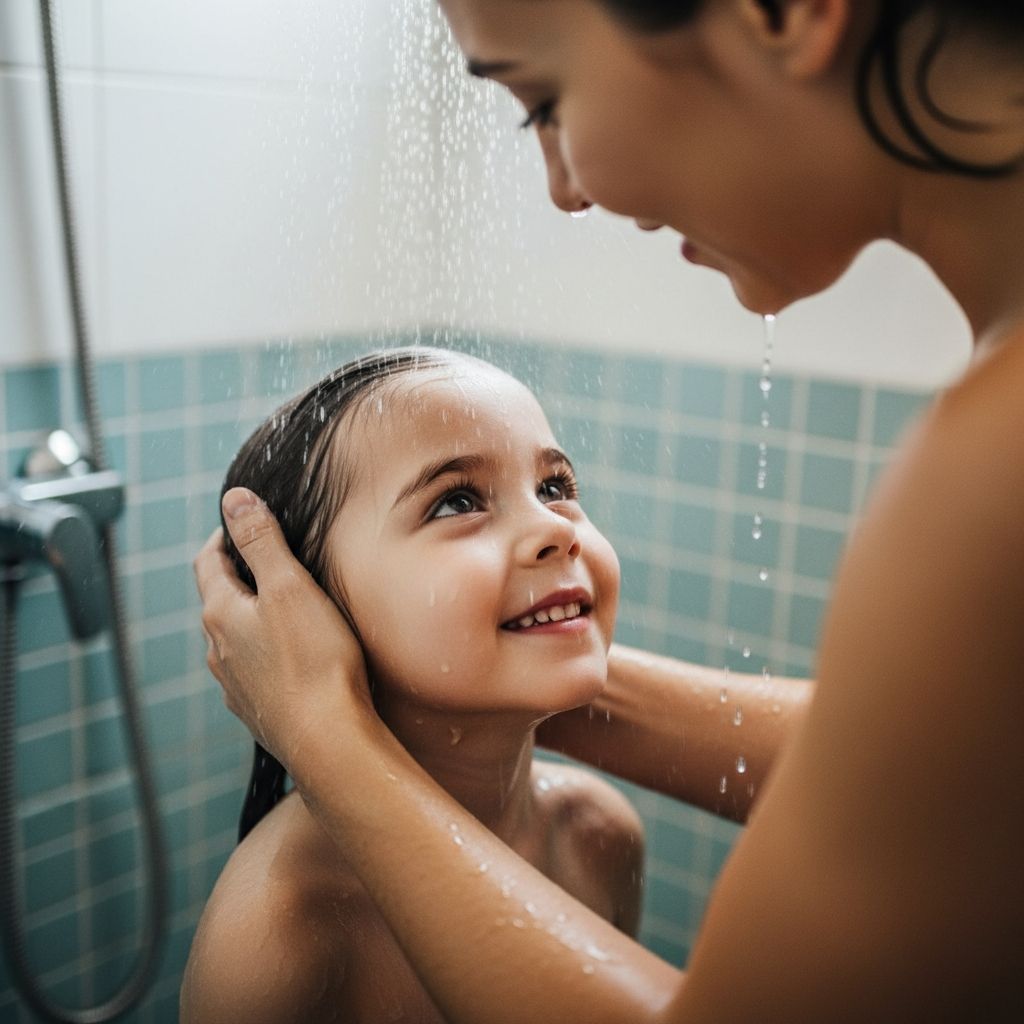
Showering or bathing with children is more common than many parents admit, yet it remains a topic surrounded by questions, mixed feelings, and social stigma. Some families see it as a normal, practical part of daily life; others worry about boundaries, safety, and how it may affect children’s development and body image.
This guide explores why some parents shower with their kids, what the possible benefits and drawbacks can be, how age and culture play a role, and how to recognize when it’s time to stop and help children bathe independently.
Is It Normal to Shower With Your Kids?
Co-bathing or co-showering usually begins for practical reasons: parents need to save time, keep young kids safe in water, or soothe a baby who hates baths. In many homes, especially with infants and toddlers, sharing the shower or tub is simply part of the daily routine and not seen as unusual.
Yet what feels normal at home can feel controversial when discussed publicly. Parents often worry that others may judge them or misinterpret their intentions, even when nothing inappropriate is happening. This tension between private comfort and public opinion is one reason the topic generates so much debate.
- In some cultures and families, nudity in shared spaces is treated as natural and nonsexual.
- In others, nudity is strongly private, and showering together past babyhood may be viewed as crossing a line.
- Ultimately, what is considered “normal” depends heavily on context, values, and personal boundaries.
Why Parents Choose to Shower With Children
Parents who shower with their kids usually do so for a mix of emotional, practical, and educational reasons. For many, it starts with convenience and evolves into a meaningful, if temporary, ritual.
Common Practical Reasons
- Time-saving: Getting everyone clean at once can be a lifesaver for busy caregivers managing work, meals, and bedtime.
- Supervision: In the early years, showering together makes it easier to keep a close eye on a slippery, wobbly toddler in water.
- Reducing fear of water: Nervous or sensory-sensitive children may feel safer when a familiar adult is right there with them.
- Consistency in routines: Sharing the shower can anchor the evening routine, especially in families with multiple kids.
Emotional and Relational Reasons
Beyond practicality, many caregivers describe co-bathing as a time of close connection. The relaxed setting and physical closeness can strengthen the bond between parent and child.
- Bonding time: Bath or shower time often involves playful conversation, giggles, and shared rituals that become cherished memories.
- Comfort and reassurance: Touch, warmth, and calm talk can help children regulate emotions after a long or stressful day.
- Safe place for conversations: Kids sometimes open up about school, friends, or feelings during simple routines like washing and rinsing.
Potential Benefits of Showering With Your Kids
When handled in a healthy, respectful way, co-showering can support several aspects of a child’s development. These benefits are not guaranteed, but they describe what many families report and what child-development specialists generally highlight as potential positives.
1. Strengthening Attachment and Emotional Security
Physical closeness and warm, responsive care help build secure attachment in early childhood. A parent who is gentle, respectful, and attentive during shared shower time reinforces the message that the child is safe and cared for.
- Skin-to-skin or skin-to-warm-water contact can calm babies and toddlers, reducing fussiness and bedtime resistance.
- Children who feel safe in daily routines often find it easier to handle new environments and changes.
2. Teaching Hygiene and Self-Care Skills
Young children learn best by observing and copying adults. Showering together can become a hands-on lesson in hygiene and bodily autonomy.
- Parents can demonstrate how to wash hair, clean folds of skin, and rinse safely without getting soap in the eyes.
- Kids can practice washing their own bodies while a parent supervises, building coordination and confidence.
- Routine repetition helps children remember which areas to wash and in what order.
3. Supporting Healthy Body Image
Seeing a real adult body in a neutral, nonsexual context can help children develop more grounded expectations of what bodies look like. When parents treat their own and their children’s bodies with respect, it models body acceptance.
- Parents can normalize diversity in body size, shape, and features, helping reduce shame or embarrassment later.
- Careful language (avoiding criticism of one’s own body) can support a child’s emerging body image.
- Children learn that bodies are functional and worthy of care, not objects to judge harshly.
4. Creating Opportunities for Gentle Education
A shared shower naturally raises questions about anatomy, gender differences, privacy, and boundaries. Answering these questions calmly and age-appropriately can lay the groundwork for healthy attitudes about bodies and consent.
- Parents can introduce proper names for body parts, which supports safety and clear communication.
- Children can learn the difference between public and private body parts and which areas only they or trusted helpers may touch for care.
- Discussions about privacy (like knocking before entering the bathroom) can start very early.
5. Encouraging Independence Over Time
Because parents are right there, they can gradually shift more responsibility to the child. What starts as full assistance can become a supervised but mostly independent shower, then finally a child who manages on their own with occasional check-ins.
- Children can first learn to wash easier areas (arms, legs) before tackling hair or harder-to-reach spots.
- Parents can offer praise for small steps toward doing it “all by yourself,” supporting self-esteem.
Concerns and Drawbacks to Consider
While there can be benefits, co-showering is not the right choice for every family or every stage of development. Parents need to weigh potential downsides and respect both their own comfort and their child’s boundaries.
Emotional and Developmental Concerns
- Discomfort for the parent: If a caregiver feels awkward, tense, or resentful, that emotional tone can carry over and make the child uneasy.
- Confusion about privacy: If boundaries are never discussed or modeled, children may struggle to understand when nudity is appropriate or not.
- Age-related awareness: As children become more aware of gender differences and modesty, forced co-showering can feel intrusive or embarrassing.
Social and Cultural Stigma
Outside the home, other adults may interpret co-bathing as questionable once kids reach certain ages. Parents can find themselves worried about gossip, misunderstanding, or even unfounded accusations.
- Different societies, communities, and even extended families set different expectations about when co-showering should end.
- The same behavior that is normal in one context can be considered inappropriate in another.
Safety and Practical Risks
- Showers and tubs are slippery; managing your own balance while also holding a child increases fall risk.
- Very hot water, harsh products, or sharp fixtures can lead to accidental injuries.
- If the focus is entirely on the child, adults may rush their own hygiene or neglect their own comfort.
Age Guidelines: When to Stop Showering With Your Child
There is no single universal age at which parents must stop showering with their children, but most experts and families converge around certain developmental milestones. These guidelines are flexible and must be adjusted to cultural norms, family values, and individual comfort.
| Age Range | Common Practice | Key Considerations |
|---|---|---|
| Infant (0–1 year) | Parents frequently bathe or shower with baby. | Focus on safety, temperature control, and gentle handling. |
| Toddler (1–3 years) | Co-showering still common and often convenient. | Begin simple talk about body parts, privacy, and consent. |
| Preschool (3–5 years) | Some families continue; others phase out co-showering. | Growing curiosity about bodies; consider child’s preferences closely. |
| Early school age (5–7 years) | Many experts suggest transitioning to independent bathing. | Child’s modesty and peer norms become more important. |
| 8+ years | Most families no longer co-shower. | Respect for privacy, bodily autonomy, and emerging sexuality. |
Developmental Readiness Cues
Instead of focusing only on a specific birthday, it helps to watch for signs your child is ready to shower alone or with minimal help.
- The child asks to shower alone or wants the curtain or door partly closed.
- They show embarrassment about being naked around adults or siblings.
- They can follow simple multi-step instructions about washing and rinsing.
- They have enough balance and coordination to stand safely under the water.
Factors That Influence the Decision
Every family must decide for itself when co-showering starts and stops. Several factors shape this decision, and being honest about them helps ensure choices support both parent and child.
Cultural and Family Norms
- In some cultures, shared bathing with children and even same-sex relatives of different generations is common and accepted.
- In others, strict privacy norms mean even young children bathe alone or with minimal adult presence.
- Immigrant or multicultural families may juggle conflicting expectations from different side of the family.
Parent and Child Comfort Levels
Comfort is not static. A parent who was fine showering with a toddler might feel differently as the child grows, and children’s feelings can shift from day to day.
- If either the parent or the child feels uneasy, that is usually a sign to change the routine.
- Children should always know they can say “no” to co-showering and that this choice will be respected.
- Parents should feel free to set limits if continuing no longer feels appropriate, even if the child protests.
Gender and Household Composition
Many parents are more comfortable co-showering with same-sex children and tend to stop earlier with opposite-sex children, especially as kids approach school age. This pattern reflects both personal comfort and social expectations, not a strict rule.
Safety and Hygiene Tips for Co-Showering
For families who choose to shower with their kids, basic safety and hygiene precautions help make the experience positive and low-risk. These practices also set a foundation for children’s own future habits.
- Prevent slips and falls: Use nonslip mats, keep one hand on infants or unstable toddlers, and teach older kids to hold on when turning or bending.
- Control water temperature: Set the water heater to a safe level and always test the water on your own skin before your child steps in.
- Use gentle products: Choose mild, tear-free soaps and shampoos; keep strong exfoliants, razors, and hot styling tools out of reach.
- Protect privacy as kids age: Offer towels, robes, or separate changing areas once children begin to ask for them.
- Keep conversations neutral and kind: Avoid negative comments about bodies, weight, or appearance.
How to Transition Away From Showering Together
Ending co-showering does not need to be abrupt or dramatic. A gradual transition allows children to build skills and confidence, while still feeling supported and safe.
Step-by-Step Transition Ideas
- Start with partial independence: Let your child shower alone while you stay in the bathroom, reading or folding towels, and step in only when needed.
- Teach a simple routine: Create an easy sequence such as “wash hair, wash body, rinse, turn off water, dry off” and repeat it aloud for a few weeks until it sticks.
- Use visual aids: A waterproof picture chart in the shower can help younger kids remember the steps independently.
- Offer privacy gradually: Close the curtain or door partially at first, then fully once the child seems ready.
- Celebrate milestones: Praise your child when they complete most of the shower on their own, emphasizing how grown up they are becoming.
Handling Resistance
Some children resist the change because they enjoy the closeness of co-showering or feel nervous about “doing it wrong.” Calm consistency and reassurance help.
- Explain that growing up means getting more privacy and new responsibilities.
- Stay nearby at first so your child knows you are available if they need help.
- Keep the rest of the bedtime or morning routine predictable to offset the change.
Frequently Asked Questions
Is it harmful to shower with my child?
In a typical, loving household where boundaries and consent are respected, showering with a young child is not inherently harmful. Problems arise when either the parent or child feels uncomfortable, when boundaries are ignored, or when co-showering continues long past the point where the child wants privacy.
What age is “too old” to shower with my kid?
Many families naturally phase out co-showering around the early school years, roughly ages 5 to 7, as children become more modest and capable of independent hygiene. That said, the “right” age varies; the most important signals are the child’s comfort, awareness of privacy, and motor skills.
Is it different for mothers and fathers?
Often, yes. Some parents feel more comfortable showering with same-sex children and may stop earlier with opposite-sex children due to cultural norms and personal boundaries. Whatever the configuration, respect, consent, and age-appropriate behavior are essential.
How do I talk to my child about body parts during showers?
Use simple, correct names for body parts and keep explanations factual, calm, and age-appropriate. Emphasize that certain areas are private, that no one should touch them without a health or hygiene reason, and that your child can always tell you if anything ever feels wrong.
What if my child suddenly seems embarrassed?
Embarrassment is a clear sign that your child’s sense of privacy is growing and should be respected. Respond positively by offering more privacy, changing the routine, and reassuring your child that it is completely normal to want more space as they grow.
Key Takeaways for Parents
- Showering with children is common in many families, especially during infancy, toddlerhood, and preschool years.
- Potential benefits include bonding, easier supervision, hygiene teaching, and support for healthy body image when done thoughtfully.
- Pay attention to safety, cultural context, and how both you and your child feel about the arrangement.
- As children grow more aware of their bodies and peers’ expectations, gradually shift toward independent bathing.
- Above all, let respect, open communication, and your child’s emerging sense of autonomy guide the choices you make.