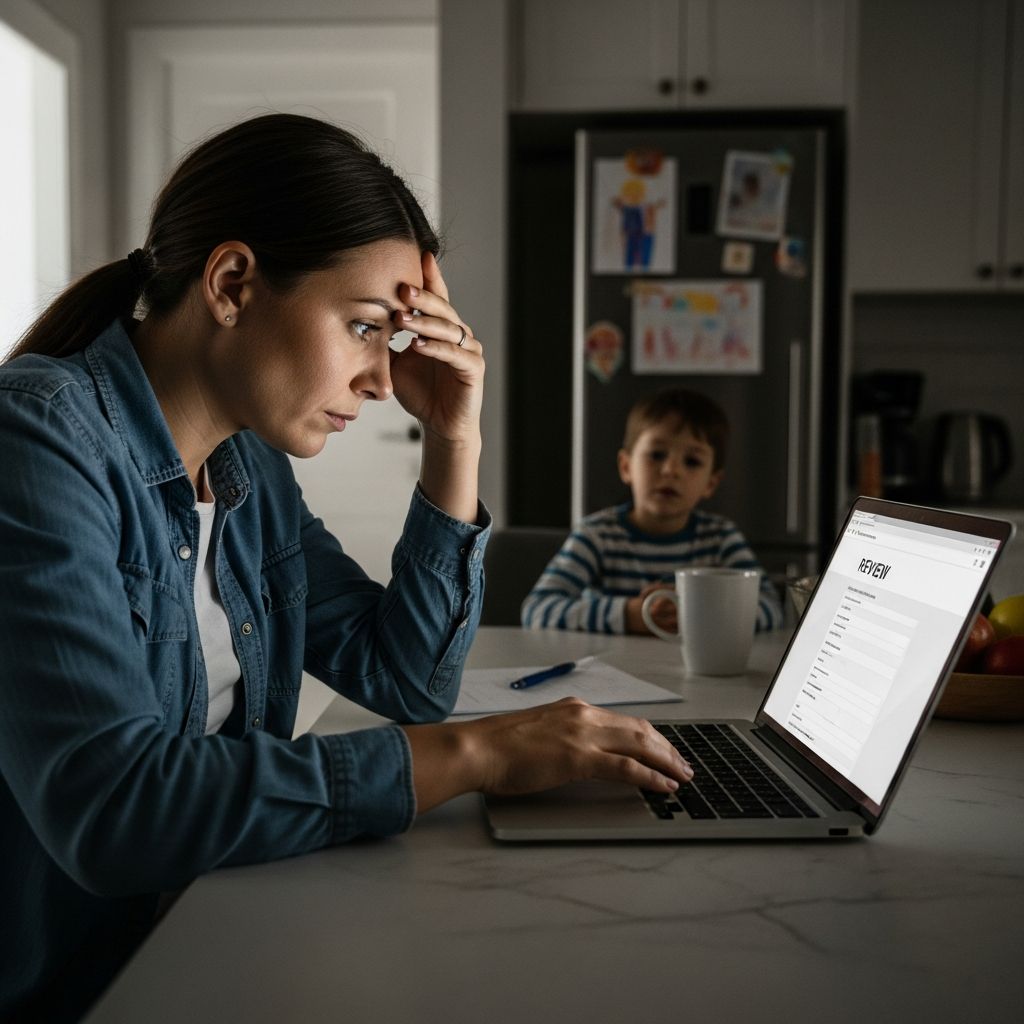
Hiring a nanny asks you to trust a stranger with the most vulnerable people in your life: your children. When that trust is broken, the anger, fear, and guilt can feel overwhelming, and the internet makes it very easy to turn those emotions into a public review within seconds. But deciding whether to write a negative nanny review online is more than a simple yes-or-no question. It raises serious issues of safety, fairness, reputation, and even potential legal risk.
This guide walks through the emotional, practical, and ethical sides of leaving a bad review for a caregiver. You will learn how to assess what happened, how to respond in the moment, and how to communicate in a way that protects children without crossing into online revenge.
Why This Decision Feels So Heavy
Parents who are considering a negative review are rarely just annoyed; they are usually scared or deeply disappointed. The idea that someone you trusted may have endangered or mistreated your child can make you want immediate, public accountability. At the same time, most parents understand that a single online review can change a person’s career forever, especially in a field built entirely on reputation.
That tension—between protecting future children and being fair to the nanny—is what makes this choice so complicated. Recognizing that complexity is the first step toward a thoughtful, responsible decision rather than a purely emotional reaction.
First Things First: Is Your Child Safe Right Now?
No online action matters more than immediate safety. Before thinking about reviews, make sure your child is physically and emotionally safe and that any urgent issues are addressed. If you suspect abuse, serious neglect, or criminal behavior, contact the appropriate authorities or a child protection hotline. An online review cannot replace official reporting channels and should never be the only way you act on serious concerns.
- Remove your child from harm immediately if you believe they are unsafe.
- Seek medical care or professional evaluation if there is any sign of physical injury or trauma.
- Document what happened for your own records: dates, times, descriptions, and any photos, messages, or other evidence.
Once your child is safe and you’ve taken any necessary formal steps, you are in a better position to decide what, if anything, to share online.
Different Kinds of “Bad” Experiences
Not every negative nanny experience is the same. Sorting what happened into broad categories can help you decide how serious the situation is and what response makes sense.
| Type of issue | Examples | Possible next steps |
|---|---|---|
| Minor performance problems | Chronic lateness, too much phone use, not following minor preferences | Private feedback, clear expectations, possible termination without public review |
| Moderate professional issues | Ignoring house rules, leaving small messes, being inattentive but not dangerous | Document incidents, discuss concerns, consider neutral or mixed review |
| Serious safety concerns | Leaving child unsupervised, unsafe driving, failing to administer necessary medication | Immediate termination, formal reporting if needed, careful factual review |
| Abuse or clear neglect | Physical harm, emotional cruelty, deliberate disregard for basic needs | Stop care at once, contact authorities, consult legal counsel; online review only after safety and reporting |
Seeing your situation in a larger context can reduce the temptation to treat every disappointment as a public emergency. Some experiences, while upsetting, may be better handled privately.
What Are You Hoping to Accomplish?
Before you open a review form, pause and ask what outcome you actually want. If your primary goal is punishment or venting, time and distance may serve everyone better than a permanent online record. If your goal is to protect other families from real risk and contribute honest information, that intention can shape a calmer, more constructive review.
Common reasons parents consider a negative review include:
- Warning other families about genuine safety issues.
- Providing honest feedback about reliability and professionalism.
- Balancing overwhelmingly positive reviews with your different experience.
- Creating a record in case future disputes arise.
Writing down your goals (even in a private note) can keep you focused on facts and outcomes instead of hurt and anger.
Ethical Questions to Consider
Because caregivers work in such a trust-based profession, negative reviews are especially powerful. That makes ethics central to your decision. Ask yourself:
- Are you describing what you saw and experienced, or are you guessing about motives or unseen events?
- Are you including unnecessary personal details that could expose the nanny to harassment?
- Would you stand by every sentence if you had to read it aloud in front of the nanny, another parent, or a mediator?
Ethical reviewing balances three responsibilities: your duty to your child, your duty to other families’ children, and your duty to treat the caregiver as a human being whose entire life should not be defined by your worst interaction.
Emotions vs. Evidence
Parents are emotional about childcare for good reason, but reviews should rest on evidence, not just feelings. Before you publish anything, gather and organize what supports your account. This does not mean you need video proof or extensive documentation, only that you can clearly explain what happened when, and how you know.
- Make a brief timeline of important dates and incidents.
- Separate what your child directly reported from what you are inferring.
- Save messages, schedules, and notes, but do not upload or share private content publicly without thinking through the risks.
Evidence-focused thinking protects both you and the nanny from exaggerated claims or misunderstandings that can spiral online.
When a Negative Review Makes Sense
Despite the risks, there are times when a carefully written, factual negative review can genuinely help other families make safer choices. In particular, a review may be appropriate when:
- The nanny’s behavior created or could have created real safety risks.
- You witnessed patterns of conduct, not just a single isolated mistake.
- You have already addressed concerns privately and did not see meaningful change.
- You can describe the problems clearly without insulting or speculating about the nanny’s character.
In such cases, an honest review can add an important piece of information to a prospective family’s decision-making, especially if previous reviews are vague or glowing without detail.
When You May Want to Hold Back
There are also situations where restraint is wise. For example, if your frustration is mostly about mismatched personalities or preferences rather than safety or reliability, a harsh public critique may be disproportionate to the harm.
Consider skipping or softening a public review when:
- The issue was resolved quickly and to your satisfaction.
- The conflict centered on style, not substance (for example, you disagreed about snack choices but the nanny followed your rules once clarified).
- Both parties misunderstood the job description or expectations.
- You are too upset to write without name-calling, insults, or sweeping generalizations.
In these cases, direct communication, a private reference, or simply choosing not to rehire the nanny may be more appropriate than a public warning.
How to Write a Fair, Clear Review
If you decide a review is warranted, the way you write it matters. The goal is to be accurate and specific while avoiding language that is defamatory or unnecessarily cruel. Think of it as writing a factual report that another parent can rely on.
Key Principles for Your Review
- Stick to facts. Describe what you saw, heard, or directly experienced.
- Avoid diagnoses. Do not label the nanny’s mental health, morality, or motives.
- Be specific. Mention concrete examples instead of vague phrases like “bad with kids.”
- Balance when possible. If there were positive aspects, briefly acknowledge them while still being honest about why you would not rehire.
- Respect privacy. Do not share addresses, full names of children, or details not needed for another parent’s decision.
Suggested Structure
You can organize your review into a few simple sections, even if you never label them explicitly:
- Context: How long the nanny worked for you, ages of your children, and type of schedule.
- Strengths: One or two things the nanny did reasonably well, if any.
- Concerns: A concise description of the main problems, with 1–3 clear examples.
- Outcome: Whether you addressed the issues, whether improvements happened, and why you ultimately stopped working together.
- Bottom line: Whether you would recommend this nanny, and under what conditions (if any).
This approach keeps the review grounded and useful, even if your experience was painful.
Legal and Practical Cautions
Parents sometimes forget that online reviews can have legal consequences. While this article does not provide legal advice, it is worth keeping a few general points in mind. Truthful, opinion-based reviews are treated differently from false, specific accusations stated as fact.
- Do not accuse someone of crimes online unless those have been formally established or clearly documented.
- Avoid exaggerations that could be read as factual claims (e.g., writing that the nanny “always” did something if it happened once).
- Check the platform’s terms of service so you understand what is allowed and how disputes are handled.
If you are considering posting about severe misconduct, especially anything that might also lead to official investigations, talking with a lawyer or an appropriate authority before posting can help you avoid unintended consequences.
Protecting Your Own Privacy and Safety
It is easy to focus on the nanny’s reputation and forget your own vulnerability. A review that includes your full name, neighborhood, and a detailed description of your schedule can reveal more about your family than you intend, especially if the relationship ended badly.
- Use only the amount of personal information required by the platform.
- Avoid publishing specific addresses, school names, or recurring routines.
- Consider using private or semi-private parent groups when you need emotional support rather than public-facing review sites.
Protecting your privacy is another way of protecting your children, especially in a world where information can move quickly and be stored indefinitely.
How This Affects Future Hiring
How you handle a bad experience can shape your future relationships with caregivers. Some nannies actively search their own names online; they may see how former families speak about past caregivers. A parent known for leaving harsh, one-sided reviews may unintentionally scare away excellent candidates who worry they could be the next target.
On the other hand, a well-written, measured review—positive or negative—signals that you are thoughtful and fair. That reputation can make it easier to attract strong, professional caregivers who value clear communication and mutual respect.
Alternatives and Complements to Public Reviews
Posting a review is only one tool. In some situations, you may choose other paths instead of or in addition to writing publicly.
- Direct conversation: Calmly explaining what went wrong can sometimes repair misunderstandings or help the nanny improve with future families.
- Private references: If agencies or families contact you directly, you can share a fuller picture than an online review allows.
- Community word-of-mouth: Trusted local parent groups, friends, or neighbors can benefit from your experience in a more controlled setting.
- Formal complaints: When appropriate, reports to agencies, placement services, or authorities create a documented trail beyond consumer-style reviews.
Using multiple channels lets you match the seriousness of the issue to the reach of your response.
Quick Reference: Should You Post That Review?
The checklist below is not a rulebook, but it can help you pause before you click “submit.”
- Your child is currently safe and no emergency action is pending.
- You have taken or considered any necessary formal reports.
- You can describe what happened in specific, factual terms.
- You have waited long enough for your initial anger to cool.
- You would be comfortable standing by this review in a calm conversation.
If you cannot check most of these boxes, saving your draft and revisiting it later may prevent an impulsive post you regret.
Frequently Asked Questions
Do I have to warn other parents if I had a bad experience?
There is no universal obligation, but many parents feel a moral responsibility to speak up when serious safety issues arise. Whether you do this through a public review, private conversations, or official reports depends on the severity of the situation and your comfort level.
What if I am afraid the nanny will retaliate?
Retaliation can be a real concern, especially in small communities. You can reduce risk by avoiding unnecessary personal details, checking platform policies on anonymity, and documenting any threats or harassment. In extreme cases, you may decide that private warnings are safer than public reviews.
Is it okay to write a negative review if I never confronted the nanny directly?
Direct conversation is usually the fairest first step, but there are exceptions—such as when you fear for your child’s safety or worry that confrontation could escalate tension. If you skip direct feedback, be extra careful to keep your review factual and avoid speculating about why the nanny behaved as they did.
Can I change or remove a review later?
Many platforms allow you to edit or delete reviews, but not all. Before posting, assume your words could be permanent. If your understanding of events changes, or new information emerges, consider updating your review to reflect the fuller picture.
How can I avoid another bad nanny experience?
Use detailed interviews, reference checks, paid trial days, and clear written agreements to minimize misunderstandings and screen for red flags. No process is perfect, but investing time upfront reduces the chances of ending up in the same painful situation again.
Final Thoughts
Writing a negative nanny review online sits at the intersection of parental protectiveness, digital permanence, and human fallibility. You cannot control how others will react to your words, but you can control how carefully you choose them. When you prioritize your child’s safety, respect the power of public criticism, and ground your review in verifiable facts, you give yourself the best chance of doing right by both your family and the wider community of parents and caregivers.