For generations, many men have treated standing to pee as the unquestioned default. Yet a growing number are quietly choosing to sit, whether at home, in public bathrooms, or at night when half-asleep. This simple change can affect hygiene, comfort, relationships, and in some cases, health.
This article explores what science, urologists, and everyday experience say about urination posture, and why sitting is becoming a serious option rather than a punchline.
Standing vs. Sitting: What Actually Changes?
On the surface, urinating is a basic bodily function. But posture alters what happens in the body and in the bathroom around you.
- Body mechanics: Pelvic floor muscles, abdominal pressure, and bladder position shift depending on whether you stand, sit, or squat.
- Flow of urine: Position can influence flow rate and how completely the bladder empties, especially if you have urinary or prostate issues.
- Cleanliness: Splash, spray, and drips are different when you stand compared with when you sit.
- Effort and balance: Standing requires more balance and coordination; sitting provides a stable base and can be safer for some people.
For healthy men with no urinary problems, both positions are generally safe. But sitting can offer clear advantages in comfort, cleanliness, and sometimes medical conditions.
Health Reasons Some Men Prefer to Sit
Research on urination posture is still limited, but several studies and clinical observations point to benefits of sitting for particular groups of men.
More Complete Bladder Emptying
One key issue in men’s urinary health is residual urine—the amount left behind in the bladder after you pee. Higher residual volumes can contribute to symptoms such as weak stream, frequent urination, and sometimes infections.
- Studies comparing postures have found that, for some men (especially those with prostate enlargement), sitting leads to less residual urine and better bladder emptying than standing.
- More complete emptying may lower the risk of urinary tract infections (UTIs) and reduce the urge to return to the bathroom soon after finishing.
While research continues, current evidence suggests that if you already have urinary symptoms, sitting may give your bladder a better chance to fully empty.
Support for Prostate Problems and Enlarged Prostate
As men age, the prostate often enlarges, a condition known as benign prostatic hyperplasia (BPH). This can constrict the urethra and make urination more difficult.
- Urologists and reviews of available studies note that sitting can improve flow and comfort in men with BPH, and reduce the feeling of incomplete emptying.
- For men with nighttime urination caused by BPH, more complete emptying while sitting may help reduce how often they get up at night.
Sitting is not a cure for prostate disease, but it can be a low-effort, no-cost strategy to ease day-to-day symptoms.
Less Strain on the Pelvic Floor
The pelvic floor is a group of muscles and connective tissues that support the bladder, bowel, and sexual organs. Over time, chronic straining and poor habits can contribute to dysfunction, causing issues such as urgency, leakage, or pain.
- Health professionals note that sitting often encourages more relaxation of the pelvic floor muscles in men who struggle to fully relax while standing.
- Reduced straining can be particularly helpful for men with chronic constipation, pelvic pain, or overactive pelvic floor muscles.
Relaxed muscles generally mean less resistance for urine leaving the bladder, which can translate to a smoother, more comfortable pee.
Potential Effects on Radiation and Spine Health (Emerging Research)
There is ongoing early-stage research examining whether posture affects the clearance of certain harmful particles from the body.
- One recent paper proposed that urinating while seated—in a slightly forward-leaning posture—might improve elimination of some alpha-emitting radioactive particles from the spinal region compared with standing.
- The authors suggest this may relate to spinal alignment and relaxation of tissues, but this is a highly specialized and still-debated area that requires more independent confirmation.
For now, these findings are interesting but not a primary reason most men change habits. More practical motivations tend to drive the decision to sit.
Everyday Advantages: Comfort, Cleanliness, and Convenience
Even if you have no medical issues, there are many down-to-earth reasons to choose sitting—especially at home.
A Cleaner Bathroom (and Happier Housemates)
Splash and spray are inevitable when you stand at a toilet bowl. Microscopic droplets can land on the seat, floor, and nearby surfaces.
- Sitting positions the stream closer to the waterline, typically reducing the radius of splash and making cleaning easier.
- Partners and family members often notice fewer stains and odors when men sit, which can reduce household tension over bathroom hygiene.
- Parents sometimes encourage boys to sit when toilet training to limit mess.
In shared homes, this argument alone is enough for many men to switch.
Comfort and Relaxation
For some, standing to pee feels automatic; for others, it can feel like one more task in a long day.
- Sitting allows you to relax your legs and back, especially if you’re tired, dizzy, or recovering from illness.
- Some men describe sitting as a brief mental break, particularly during workdays or at night, when they would rather not fully wake up.
- Men with joint pain, back problems, or fatigue often find that sitting makes the bathroom routine less physically demanding.
Comfort alone is a valid reason to choose one posture over another.
Safety and Balance for Older Adults
Balance gradually declines with age and certain medical conditions. Standing to aim into a toilet, particularly in the dark or when groggy, can increase fall risk.
- Clinical guidance highlights that sitting can reduce the chance of falls in men with balance problems, dizziness, or mobility issues.
- Sitting removes the need to stand, pivot, and aim—motions that can be destabilizing for people using walking aids or managing blood pressure changes.
For many older men, sitting is as much about safety as comfort.
Culture, Masculinity, and the Stigma Around Sitting
Even if sitting offers clear advantages, social expectations can keep men standing.
- In many cultures, standing to pee is tied—fairly or not—to ideas about masculinity and independence.
- Media and jokes sometimes portray men who sit as weak or overly domesticated, despite a lack of evidence that posture reflects anything about character.
- Surveys have found that a sizeable share of men say they would never consider sitting, even though others already sit at least some of the time.
Underneath the jokes is a simple fact: how you pee is a private habit that rarely needs to be a public identity issue. Medical professionals emphasize that comfort, cleanliness, and health matter more than cultural stereotypes.
Standing vs. Sitting: A Quick Comparison
| Aspect | Standing | Sitting |
|---|---|---|
| Bathroom cleanliness | Higher risk of splash and spray around the toilet | Generally less splash; easier to keep area clean |
| Bladder emptying (men with urinary issues) | May leave more residual urine for some with prostate problems | Often associated with more complete emptying in symptomatic men |
| Pelvic floor relaxation | Some men unconsciously tense muscles while aiming | Can promote better muscle relaxation and less straining |
| Balance & safety | Requires standing, turning, and aiming | Stable seated position; safer for mobility or balance problems |
| Convenience in public spaces | Often faster at urinals | Requires a cubicle; sometimes less convenient in crowded restrooms |
When Sitting Might Be Especially Helpful
Sitting is optional, but there are clear situations where it deserves serious consideration:
- You have urinary symptoms: weak stream, hesitancy, or a sense of incomplete emptying.
- You’ve been diagnosed with BPH or other prostate issues and want to reduce straining.
- You wake up multiple times at night to pee and suspect you are not emptying fully.
- You live with others who are frustrated by bathroom mess and odors.
- You have balance, mobility, or vision problems that make standing and aiming more challenging.
- You simply prefer a calmer, more relaxed bathroom routine.
None of these reasons require abandoning standing entirely. Many men use a mix: sitting at home or at night, standing at urinals when out.
How to Sit in a Way That Supports Good Urinary Flow
There is no single perfect technique, but a few practical tips can make sitting more comfortable and effective.
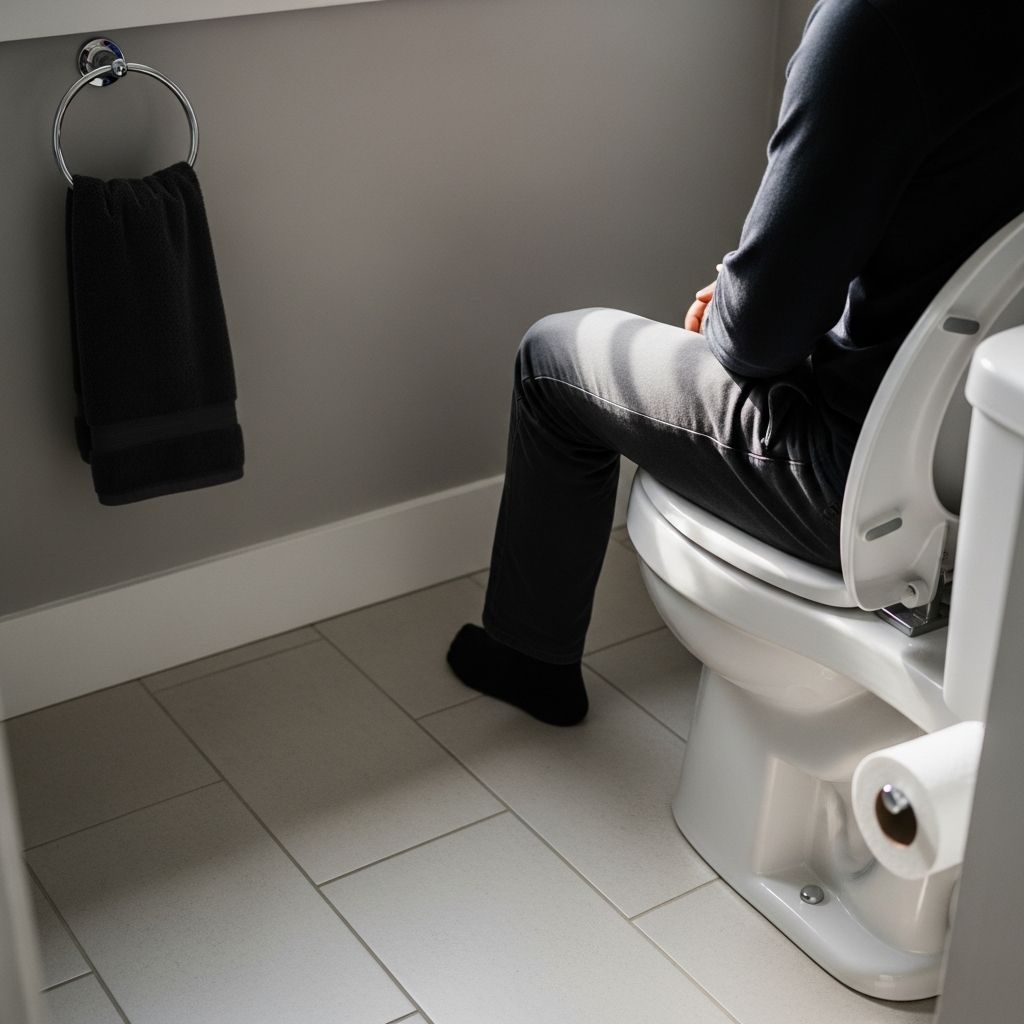
- Use a stable, comfortable position. Sit fully on the seat, with both feet on the floor for support.
- Relax your lower body. Loosen tight waistbands or belts so your abdomen and pelvic region are not compressed.
- Lean slightly forward if comfortable. A mild forward tilt with relaxed shoulders can help some men empty more fully.
- Take a few extra seconds. Avoid rushing; allow time for the bladder to empty completely.
- Stand up slowly. Especially at night or if you have low blood pressure, rising gradually can reduce dizziness.
If you have significant urinary symptoms, it is still important to discuss them with a clinician rather than relying only on posture changes.
Common Myths About Sitting to Pee
Several misconceptions keep lingering around this topic. Here are a few, clarified.
- “Sitting is only for men with serious health problems.”
In reality, many healthy men sit purely for comfort or cleanliness. It is a personal choice, not a diagnosis. - “If you sit, you’ll weaken your pelvic floor.”
There is no evidence that sitting to urinate weakens pelvic floor muscles. Problems are more likely from chronic straining, constipation, or lifting very heavy loads without proper technique. - “Real men stand.”
Medical literature does not connect urination posture with masculinity. Health professionals focus on symptoms, not symbolism. - “Standing is always more efficient.”
Some studies show the opposite for men with prostate enlargement, where sitting can mean faster and more complete bladder emptying.
Frequently Asked Questions (FAQs)
Is sitting to pee medically better for all men?
For healthy men with no urinary problems, current evidence does not show that one posture is universally superior. Sitting tends to help most when men already have urinary or prostate symptoms, balance issues, or hygiene concerns.
Can sitting to pee prevent urinary tract infections?
More complete bladder emptying is associated with lower risk of infections, because bacteria have fewer pockets of residual urine in which to grow. For men prone to UTIs or with compromised immunity, sitting may be one useful part of a broader prevention plan, but it does not replace medical care.
Should I be worried if I suddenly prefer to sit?
A new preference for sitting is not a problem by itself. However, if it appears together with symptoms like weak stream, burning, blood in the urine, or frequent nighttime urination, it is sensible to see a doctor to rule out infection, BPH, or other conditions.
Do urologists recommend sitting?
Many urologists tell symptomatic men that sitting is a reasonable and often helpful option to improve comfort and bladder emptying, especially in the context of enlarged prostate or pelvic floor dysfunction. For men without symptoms, they usually say to choose the position that feels best and keeps the bathroom clean.
Can I mix both habits?
Yes. Many men stand at urinals in public places and sit at home or at night. There is no medical requirement to pick one position forever.
References
- Why Peeing While Sitting is Better for Health: A Bone Spine Account — Pirot F, Mezhennaya M. 2024-01-15. https://www.scivisionpub.com/abstract-display.php?id=3881
- Should Men Sit When They Pee? 4 Benefits of Sitting Down — Aeroflow Urology. 2023-08-10. https://aeroflowurology.com/blog/sitting-while-peeing
- Should Men Sit Or Stand To Pee For Urinary Tract + Prostate Health? — Modern Urology. 2023-06-05. https://modernurology.com/should-men-sit-or-stand-to-pee-for-urinary-tract-prostate-health/
- Why Men Should Consider Sitting to Urinate – Health Benefits — SmartWellness. 2022-11-02. https://www.smartwellness.eu/blog-en/why-men-should-sit-instead-of-stand-while-urinating-health-benefits
- Sitting down to urinate can be healthier for men, especially as they age — The Telegraph. 2024-02-19. https://www.telegraph.co.uk/health-fitness/body/the-health-benefits-of-sitting-down-to-pee/
- Why upright standing men urinate more efficiently than in supine position — Van Tilburg M et al., Neurourology and Urodynamics. 2022-03-30. https://pubmed.ncbi.nlm.nih.gov/35419817/