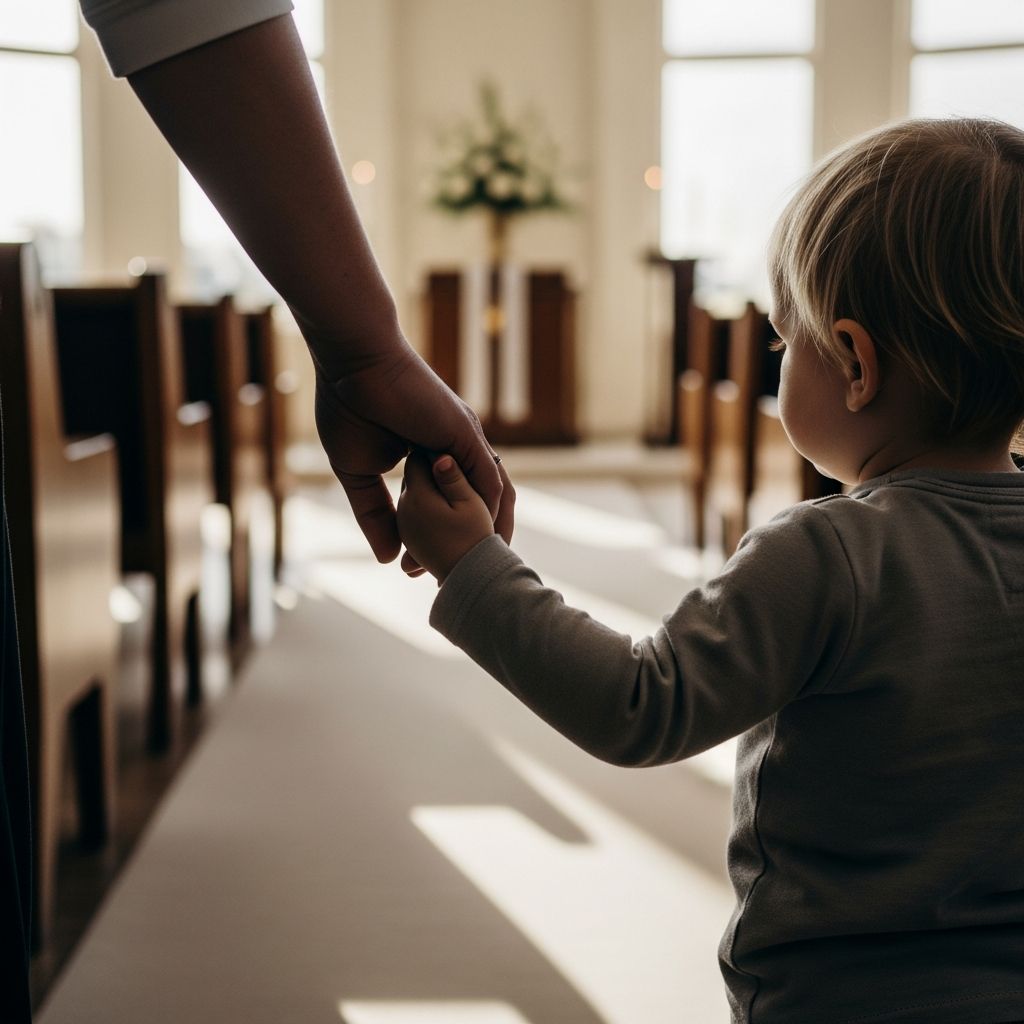
Few parenting moments feel as daunting as deciding whether to bring a toddler to a funeral. You may be grieving, trying to support other family members, and at the same time wondering how much your young child should see or know. This guide offers calm, practical support to help you navigate that decision and prepare your child in a way that protects them while still honoring their place in the family.
1. Understanding How Toddlers See Death and Rituals
Toddlers are not miniature adults. Their understanding of death and of formal rituals like funerals is limited, concrete, and closely tied to their daily routines and relationships.
Research in child development shows that children under age 5 typically do not fully grasp the permanence of death, though they may notice the absence of a person and changes in adults’ behavior. They are highly sensitive to routine disruptions and the emotional climate around them, even when they cannot explain what is happening in words.
When thinking about funerals and toddlers, keep three developmental truths in mind:
- Concrete thinking: Toddlers understand what they can see and touch right now. Abstract ideas like “forever” or “soul” are beyond their grasp, though you can still share your beliefs in simple language.
- Big feelings, small words: They feel sadness, confusion, and anxiety, but lack the vocabulary to express it. Instead, they may show it through clinginess, fussiness, or changes in sleep and appetite.
- Short attention span: Long, formal services are difficult for them. They may be fine for a while and then suddenly need movement, snacks, or quiet space.
2. Should Your Toddler Attend the Funeral?
There is no one-size-fits-all rule. Guidance from bereavement experts suggests that children should generally be allowed to attend funerals if they wish and if they are properly prepared, but not forced. With toddlers, the decision usually rests more on the parents’ judgment, because very young children cannot clearly express a preference.
2.1 A Simple Decision Framework
Ask yourself these questions as you decide:
- How close was your toddler to the person who died? If this was a daily caregiver or beloved grandparent, being present for the family goodbye may matter more emotionally than if it was a distant relative.
- How overwhelmed are you likely to feel? If you expect to be deeply distressed, you may need another trusted adult to focus solely on your child, or you may decide it is more compassionate to both of you for the child to stay home.
- What type of service is planned? A brief, small gathering may be more suitable than a lengthy, formal ceremony in a packed venue.
- Is there a reliable adult who can leave with the child if needed? Many grief organizations recommend arranging in advance for a familiar adult who can take the child out for a break or home entirely.
2.2 Pros and Cons at a Glance
| Potential Benefits | Potential Challenges |
|---|---|
| Helps the child see that something important has happened and that adults come together to say goodbye. | Long, quiet services can be overstimulating or boring for toddlers, leading to restlessness and disruption. |
| Gives them a chance, in their own small way, to participate in family mourning. | Parent may be too distressed to meet both their own emotional needs and the child’s needs at the same time. |
| Supports honesty: the child sees that the person is not coming back, which can help reduce confusion. | If not prepared, they may be frightened by strong emotions or by seeing the body. |
| Provides opportunities to share family stories and memories in age-appropriate ways. | Travel, dress clothes, and schedule disruptions can add extra stress to already hard days. |
3. Preparing Your Toddler Before the Funeral
Experts consistently emphasize that children cope better with funerals when they are prepared in simple, truthful terms, rather than shielded with vague phrases or surprises.
3.1 Use Clear, Honest Language
Avoid euphemisms such as “went to sleep” or “gone away,” which can confuse young children and even create fear of sleep or separation. Instead, use concrete words like “dead” or “died,” paired with gentle reassurance.
For example, you might say:
- “Grandma died. That means her body stopped working, and we won’t be able to see her anymore.”
- “We are having a special goodbye ceremony called a funeral. People will cry, hug, and talk about Grandma.”
You can still share your spiritual beliefs, but keep them simple and avoid implying that the person might come back soon. Clear, consistent messaging helps toddlers feel safer even when they don’t fully understand everything.
3.2 Describe What They Will See and Hear
Walk your child through what will happen, step by step, using short, concrete descriptions. Bereavement organizations recommend explaining where the service will be, who will be there, and what they might notice, including people’s emotions.
You might cover:
- Where you are going (for example, a church, funeral home, or cemetery).
- That there may be flowers, pictures, and people hugging.
- That some people may be crying, some may be quiet, and some may even laugh as they tell happy stories.
- Whether there will be a casket or urn, and if the casket will be open.
3.3 If There Will Be an Open Casket
Most professional guidelines advise giving children a genuine choice about viewing or touching the body, and never forcing this experience. With toddlers, this may be more about whether you gently carry them near, or keep distance.
Explain in advance, in very concrete terms, how the body may look and feel. For example:
- “Grandpa will be lying very still in a special box called a casket.”
- “He looks like he is sleeping, but he is not asleep. His body stopped working.”
- “If you touch him, he will feel cool and hard, not warm like when we hug people who are alive.”
If your toddler turns away, buries their face in your shoulder, or clearly resists, respect that response. They can still be part of the ritual by sitting with you, placing a flower near the casket (with help), or taking part in another small gesture later.
4. Making a Plan for the Day of the Funeral
Planning ahead reduces stress for you and increases your toddler’s sense of security. Professionals in grief support suggest arranging logistics so the child’s basic needs are met and exits are easy if needed.
4.1 Practical Considerations
- Food and sleep: Try to keep meals and naps as close to usual times as possible. Bring snacks and water, especially if the service is long or travel is involved.
- Comfort items: A familiar blanket, stuffed animal, or small toy can help them self-soothe in an unfamiliar setting.
- Clothing: Darker or muted colors are typical funeral etiquette, but comfort and warmth matter more for young children than formality.
- Transportation: If possible, have your child ride with the designated adult who will be their primary support, so that person can leave early if needed.
4.2 Designate a Supportive Adult
It can be very helpful to appoint a trusted relative or friend whose main role is to pay attention to your toddler’s needs during the service. This person can:
- Sit on the aisle for easy exits.
- Take the child outside if they get overwhelmed.
- Offer snacks, quiet distractions, or comforting contact.
- Leave the event early with the child, without you feeling torn between your grief and your parenting responsibilities.
4.3 Small, Meaningful Ways Toddlers Can Participate
Children often benefit from doing one small thing to say goodbye, tailored to their age and comfort level.
Some gentle options include:
- Carrying a single flower (with help) and laying it near the casket or urn.
- Helping choose a photo of the loved one to display.
- Bringing a simple drawing or sticker picture to place in the casket or near a memorial table.
- Wearing an item in the loved one’s favorite color, or a small ribbon or pin.
Participation should always be an invitation, never an obligation. If your toddler resists or loses interest, that is perfectly acceptable.
5. Supporting Your Toddler During the Service
Once you are there, your main goals are to stay attuned to your child’s cues, allow their genuine reactions, and offer simple, steady reassurance.
5.1 Normalize Emotions
Grief experts emphasize that children need to know all feelings are allowed at funerals: tears, quiet, and even giggles at times. In toddler-friendly language, you can say:
- “People are sad because they love Grandma and they will miss her.”
- “It’s okay if you feel sad, or not-sad, or just want to play.”
If you cry, you can briefly name your feeling: “I’m crying because I’m sad that Grandpa died. I’m okay, and I’m glad you’re with me.” This helps your child understand that tears are not dangerous and that adults can feel strong emotions and still keep them safe.
5.2 Watch for Signs of Overload
Toddlers may not say “This is too much,” but their behavior often tells you. Signs they need a break include:
- Sudden restlessness, loud talking, or running.
- Clinging tightly or hiding their face.
- Unexpected aggression, such as hitting or throwing toys.
- Repeated requests to leave or go home.
If you or the designated adult notices these signals, a short walk, bathroom break, or a quiet corner can help. Many organizations recommend giving children the option to step out and rejoin as needed, without pressure to stay the entire time.
5.3 Respect Their Pace With the Body and Rituals
If there is a viewing, burial, or other close-up ritual, guide rather than push. Professional guidelines caution strongly against forcing children to touch the body or stand close to the casket if they do not wish to. For a toddler, standing at the back, watching from a distance, or being held by someone facing away from the casket may be plenty.
6. After the Funeral: Helping Toddlers Process and Adjust
For very young children, the funeral is not the end of their questions or their grief. They will continue to notice the person’s absence and may ask the same questions many times as their understanding slowly deepens.
6.1 Expect Repeated Questions and Mixed-Up Time
Because toddlers cannot fully grasp “forever,” they may ask when the person is coming back, even after you have explained the death. Guidance from child grief specialists suggests answering with the same simple truth each time, calmly and consistently.
For example:
- “Grandma died. That means we can’t see her anymore, but we can talk about her and look at her pictures.”
- “No, she won’t come back, but we can remember the games you played together.”
6.2 Watch for Behavior Changes
Changes in sleep, appetite, toilet habits, or clinginess are common in toddlers after a big change or loss. Short-term regression is usually a normal response to stress, but if you are concerned, or if distress seems to be worsening over time, your pediatrician or a child mental health professional can help you sort out what is typical and what might need more support.
6.3 Simple Ways to Remember Together
Ongoing, gentle remembrance can be soothing for both you and your child. Some families:
- Look at photos and tell brief, happy stories about the loved one.
- Light a candle (with adult supervision) on special dates and say the person’s name.
- Visit a grave or special place, keeping visits brief and child-centered.
- Create a small memory box with safe items—a photo, a ribbon, a ticket stub, or a simple drawing.
These quiet rituals show toddlers that it is okay to talk about the person who died and to keep them in the family’s story.
7. Caring for Yourself While Caring for Your Child
Your own grief matters. Parenting a toddler at a funeral while you are mourning is demanding emotional work. Many adults describe feeling pulled between the need to cry freely and the desire to shield or comfort their children.
Where possible:
- Lean on other adults—relatives, close friends, or community members—so you are not the only one caring for your toddler throughout the service.
- Give yourself permission to step out if you feel overwhelmed; your child may benefit from a break at the same time.
- Seek support afterward from trusted people or professionals if you feel stuck in guilt, anger, or numbness.
Being honest, imperfect, and loving in front of your toddler teaches them something powerful: that sadness and love can exist together, and that families can get through hard things side by side.
Frequently Asked Questions (FAQs)
Q: Is my toddler too young to go to a funeral?
There is no strict age cutoff. Experts note that very young children do not need to attend for their own understanding, but they can be included if it feels right for your family and if you plan for their needs. Consider the child’s temperament, the type of service, and how much support you will have on the day.
Q: What if my toddler disrupts the service?
Some noise and movement from children is normal and often welcomed as a reminder of ongoing life. To minimize disruption, sit near an exit, bring quiet activities, and arrange for a supportive adult who can step outside with your child if needed.
Q: How should I dress my toddler for a funeral?
Traditional etiquette favors dark or muted clothing, but comfort and warmth are more important for toddlers. Aim for neat, simple clothes in softer colors rather than strict formality, especially if the child will be sitting and moving a lot.
Q: Should I let my toddler see the body?
Professional guidelines strongly advise never forcing a child to view or touch the body. With toddlers, it is usually enough to explain that the person’s body is very still and not working anymore. If you do approach the casket while holding your child, watch their reaction closely and move away if they seem scared or distressed.
Q: What if our beliefs about death are religious—how do I explain that?
You can share your faith in simple, concrete words while still being honest about the finality of death in this life. For example, you might say, “In our family, we believe Grandma is with God now, and we won’t see her again here, but we can still love her and talk about her.” Keeping your explanation consistent over time helps your toddler feel secure.
References
- Guidelines for Children Attending Funerals and Memorial Services — VITAS Healthcare. 2022-03-15. https://www.vitas.com/family-and-caregiver-support/grief-and-bereavement/children-and-grief/guidelines-for-children-attending-funerals-and-memorial-services
- Funeral Etiquette: Helping Children Through the Funeral Process — Remembrance Process. 2021-09-10. https://www.remembranceprocess.com/funeral-etiquette/helping-children-through-the-funeral-process/
- How Can You Explain Funerals to Children? — Funeralocity. 2020-06-05. https://www.funeralocity.com/blog/how-can-you-explain-funerals-to-children/
- Walking a Child Through a Funeral: 9 Tips for Parents — Funeral Basics. 2019-11-22. https://www.funeralbasics.org/walking-child-through-funeral-9-tips-parents/
- Should Children Go to Funerals? — Funeral Partners. 2020-02-14. https://www.funeralpartners.co.uk/help-advice/attending-a-funeral/should-children-go-to-funerals/