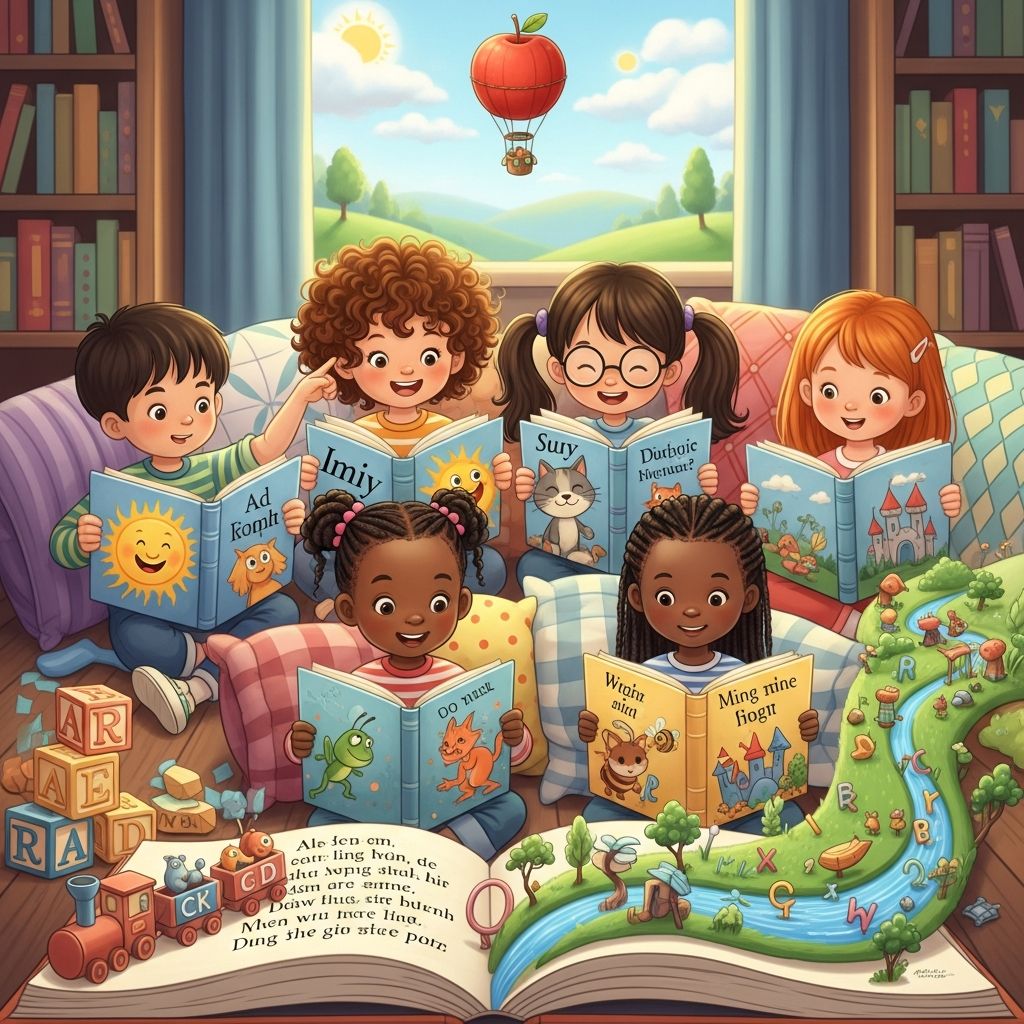
Short, playful poems are one of the easiest ways to help children fall in love with language. A few lines of rhyme can turn reading into a game, build confidence, and give kids a safe way to explore big feelings.
This guide explains why short poems matter, how they support early literacy and emotional growth, and simple ways to weave poetry into your everyday family or classroom life.
Why Short Poems Are Perfect for Children
Poetry looks simple on the page, but it is packed with learning. Even a four-line rhyme can offer rhythm, new words, and chances to play with sounds.
- Fast to read: Short poems feel manageable for hesitant or emerging readers.
- Easy to repeat: Re-reading strengthens memory and fluency.
- Fun to say aloud: Rhythm and rhyme invite performance, giggles, and drama.
- Simple to memorize: Knowing a poem “by heart” gives kids a powerful sense of achievement.
- Flexible: A poem can fit into a two-minute car ride or a full lesson plan.
How Poetry Supports Early Reading Skills
Researchers and literacy organizations consistently highlight poetry as a powerful tool for reading development, especially in the early years.
| Reading Skill | How Short Poems Help |
|---|---|
| Phonological & phonemic awareness | Rhyme, alliteration, and rhythm help children hear and manipulate sounds in words, a core predictor of later reading success. |
| Fluency | Repeated, expressive reading of short poems improves pacing, accuracy, and prosody (reading with expression). |
| Vocabulary | Poems often use vivid, unusual words in memorable contexts, boosting word learning and comprehension. |
| Comprehension | Condensed language encourages children to infer, visualize, and interpret meaning beyond the literal text. |
| Motivation to read | Short poems are less intimidating than long passages and feel more like a game than a task. |
Sound Play: The Engine Behind Early Literacy
Being able to hear and work with sounds in words (like rhymes and beginning sounds) is a strong predictor of how easily a child will learn to read. Short poems are naturally full of:
- Rhyme (cat / hat)
- Alliteration (“busy buzzing bees”)
- Onomatopoeia (bang, splash, zoom)
- Repetition of words and patterns
Each of these elements makes it easier for children to notice, compare, and manipulate sounds, which supports spelling and decoding later on.
Age-by-Age Guide to Using Short Poems
Kids of every age can enjoy poetry, but their needs and abilities change over time. Use the ideas below as flexible guidelines.
Babies and Toddlers: Rhythm, Voice, and Bonding
- Focus on simple, musical rhymes with lots of repetition.
- Use exaggerated intonation, pitch, and facial expression to hold attention.
- Bounce, clap, or sway so children feel the beat in their bodies.
- Repeat favorites often; familiarity is comforting and builds memory.
At this age, the goal is not understanding every word, but connecting language with warmth, rhythm, and fun.
Preschoolers: Playing With Sounds and Ideas
- Choose short, silly, or action-filled poems that invite movement.
- Pause before the final rhyming word and let children guess it.
- Ask simple questions: “What do you see in your mind?” or “How do you think the character feels?”
- Encourage children to change a word or line to make their own version.
Preschool is the perfect time to build phonological awareness and imagination through playful verse.
Early Elementary (Grades K–2): Confidence and Expression
- Introduce poems with clear stories and relatable characters.
- Practice choral reading (reading together) to build fluency without pressure.
- Invite kids to recite a favorite poem for the family or class.
- Have them illustrate poems to connect text with images.
Short poems give young readers quick wins; they can finish a piece, understand it, and share it aloud, all in a few minutes.
Older Elementary (Grades 3–6): Interpretation and Voice
- Explore poems with richer imagery, humor, or emotional depth.
- Discuss point of view: Who is speaking? What do they care about?
- Compare two poems on a similar topic and ask how they feel different.
- Encourage kids to write their own poems about real experiences or opinions.
At this stage, poetry can open conversations about identity, fairness, friendship, and resilience in accessible, bite-sized ways.
Benefits Beyond Reading: Emotions, Creativity, and Community
Poetry is about more than decoding words. It also supports social and emotional learning, creativity, and a sense of belonging.
- Emotional understanding: Poems give language to feelings children may not yet know how to name, helping them process joy, fear, frustration, or excitement.
- Creativity: Playing with imagery, metaphor, and sound stretch kids’ imaginations and encourage original thinking.
- Resilience: A well-chosen poem can help children look at a challenge from a new angle and feel less alone in their experience.
- Community-building: Sharing poems and performances helps kids know one another and feel part of a group.
Practical Ways to Add Poems to Everyday Life
You do not need a formal lesson plan to make poetry part of your routine. Small, consistent moments are enough.
Quick Daily Ideas
- Morning rhyme: Start the day with a two-line poem at breakfast.
- Poetry corner: Keep a basket of poetry books where kids can reach them.
- Car or bus rides: Recite or chant a favorite poem together on the go.
- Bedtime poem: Read one short poem after a story as a calming ritual.
Simple Games With Short Poems
- Rhyme detective: Read a poem and ask children to clap every time they hear a rhyming pair.
- Missing word: Cover the last word of a line and let kids guess the rhyme.
- Echo reading: You read a line with expression; children “echo” it back, copying your rhythm and tone.
- Swap the noun: Pick a poem line and replace one noun with a silly alternative; talk about how it changes the picture in their minds.
Tips for Choosing Great Short Poems for Kids
Not every poem will click with every child. Use these guidelines to find or write ones that work for your family or classroom.
- Match the length to attention span; shorter is usually better for younger or reluctant readers.
- Look for clear rhythm or rhyme, especially when kids are just starting with poetry.
- Check that vocabulary is mostly familiar, with only a few new words to discuss.
- Favor concrete images (animals, food, weather, school) over abstract ideas for younger ages.
- Include a mix of funny, thoughtful, and descriptive poems so children experience different moods and styles.
Helping Children Write Their Own Short Poems
Writing even a tiny poem can be empowering. Children learn that they can shape language, not just receive it.
Gentle Ways to Get Started
- Begin with lists: “Things I love,” “Sounds at the park,” or “Colors in my room.”
- Use a fill-in-the-blank frame, like “I feel ___ when ___,” to lower the pressure.
- Invite kids to draw first and then write a few words or lines about their picture.
- Highlight sound play rather than spelling at first; creativity comes before correctness.
Encouraging children to write poems supports originality, confidence, and advanced language skills, including flexible grammar and varied vocabulary.
Frequently Asked Questions About Short Poems for Kids
How often should I read poems with my child?
Even a few minutes a day can make a difference. Aim for short, frequent sessions—a poem at breakfast, in the car, or at bedtime—rather than long, occasional sessions. Consistency helps children internalize rhythm, patterns, and new words.
Can poetry really help struggling readers?
Yes. Struggling readers often find poems less overwhelming than long passages. The short length, strong patterns, and opportunities to reread build confidence, fluency, and motivation to keep trying.
What if my child says they don’t like poetry?
Sometimes “I don’t like poetry” really means “I haven’t found a poem that feels like me yet.” Try humorous poems, action rhymes, or poems about topics your child already loves (dinosaurs, sports, pets), and keep sessions light and playful.
Do poems have to rhyme to help with reading?
No. Rhyming poems are especially helpful for sound awareness, but free verse poems can be powerful for vocabulary, comprehension, and emotional expression. A healthy mix of both exposes children to the full range of how language can work.
How can teachers use short poems without taking extra time from the curriculum?
Poems fit easily into transitions and warm-ups: a two-minute fluency practice, a quick vocabulary discussion, or a writing prompt. They can also support subjects like science (weather poems), social studies (community and heritage), and art (illustrating imagery), making them a flexible tool rather than an add-on.
References
- 10 Fun and Educational Poems for Early Readers — Patricia Herber. 2024-01-15. https://patriciaherber.com/educational-poems-for-early-readers/
- How poetry can help kids develop reading skills — Reading Partners. 2022-04-05. https://readingpartners.org/blog/poetry-can-help-kids-develop-reading-skills/
- The Power of Poetry for Kids — Poetry Pop. 2024-07-29. https://poetrypop.com/2024/07/29/the-power-of-poetry-for-kids/
- Poetry Can Help Kids Develop Reading Skills — Reading Partners. 2022-04-05. https://readingpartners.org/blog/poetry-can-help-kids-develop-reading-skills/
- 10 Back-to-School Poems to Begin the Learning Journey — LoveToKnow. 2023-08-10. https://www.lovetoknow.com/parenting/kids/back-school-poems
- The Importance of Poetry in the Lives of Children — This Intentional Home. 2021-03-18. https://thisintentionalhome.com/the-importance-of-poetry-in-the-lives-of-children/
- Five Reasons Why We Need Poetry in Schools — Edutopia (Elena Aguilar). 2014-04-16. https://www.edutopia.org/blog/five-reasons-poetry-needed-schools-elena-aguilar