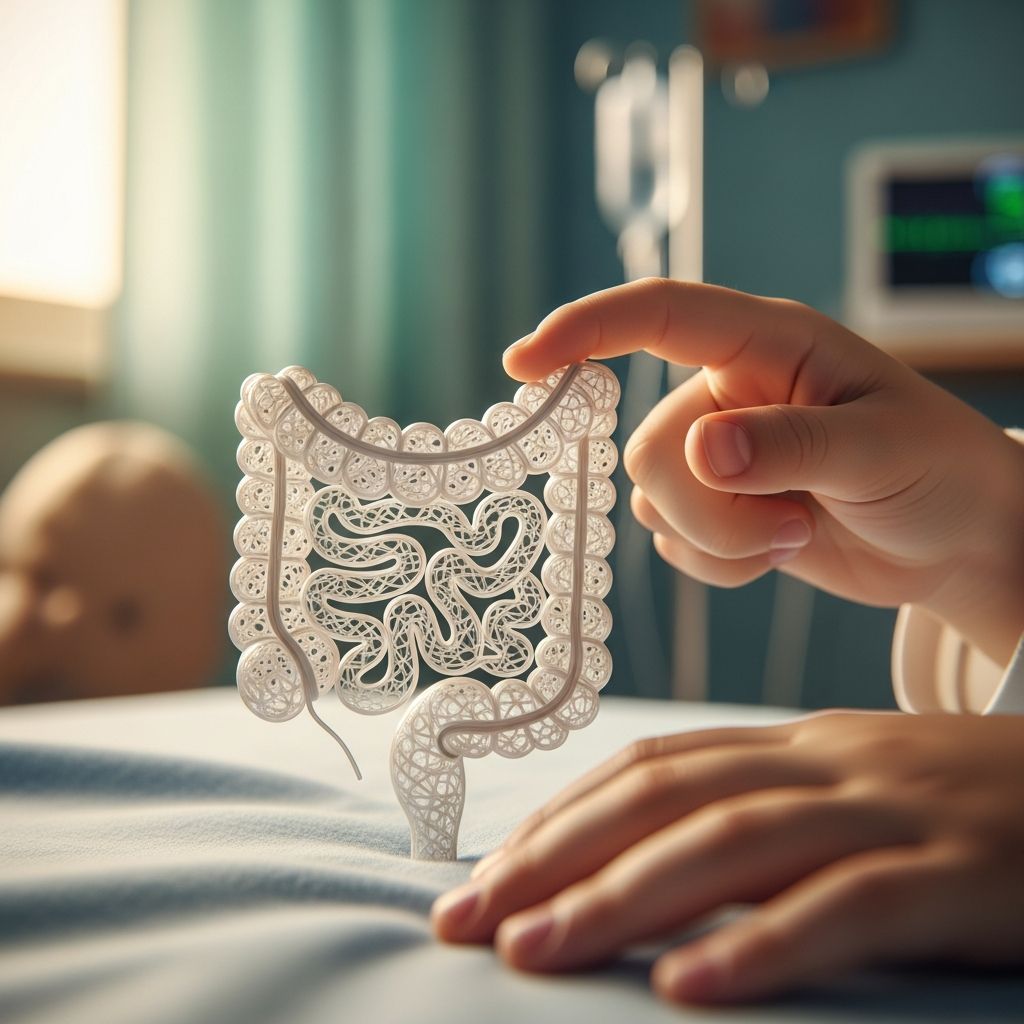
Short bowel syndrome (SBS) is a serious condition where a child’s small intestine is too short or dysfunctional to properly absorb nutrients and fluids from food, often leading to malnutrition and growth challenges. This malabsorption disorder typically arises after extensive surgical removal of the intestine or due to congenital defects, affecting infants and young children most commonly. Parents play a crucial role in managing SBS through specialized nutrition, medications, and ongoing medical care to help their child thrive.
Understanding the Small Intestine’s Vital Role
The small intestine, stretching 275 to 850 centimeters in adults but proportionally shorter in children, is the primary site for nutrient absorption. In children with SBS, remaining bowel length under 180-200 cm (adjusted for age) impairs this process, causing diarrhea, dehydration, and nutrient deficits. Even if length is adequate, diseases damaging the bowel’s lining can mimic SBS by reducing absorptive surface area.
Key functions disrupted include breaking down fats, proteins, carbohydrates, vitamins, and minerals. Without enough functional bowel, children face risks like electrolyte imbalances, weakened immunity, and stalled development.
Primary Causes in Pediatric Populations
SBS in children often stems from surgical resections necessitated by life-threatening conditions or birth anomalies. Here’s a breakdown:
- Necrotizing Enterocolitis (NEC): The leading cause in premature infants, where intestinal wall tissue dies, requiring removal of damaged sections.
- Congenital Defects: Conditions like intestinal atresia (blocked or missing segments), gastroschisis (intestines outside the abdominal wall), or malrotation leading to volvulus (twisting).
- Other Rare Issues: Hirschsprung’s disease extending to the small intestine or microvillus inclusion disease impairing absorption without shortening.
| Pediatric Causes | Adult Causes |
|---|---|
| NEC, atresia, volvulus | Crohn’s, ischemia, trauma |
| Gastroschisis, congenital short gut | Cancer resection, radiation |
Unlike adults, where Crohn’s disease dominates, pediatric SBS is frequently congenital or neonatal.
Recognizing Key Symptoms and Complications
Symptoms emerge rapidly due to malabsorption, varying by remaining bowel length and adaptation. Common signs include:
- Chronic, watery diarrhea leading to dehydration (dark urine, thirst).
- Malnutrition signs: weight loss, muscle wasting, dry skin, edema in legs.
- Growth failure, fatigue, and pale, greasy stools (steatorrhea).
- Deficiencies in vitamins (e.g., B12, D causing anemia, bone issues) and minerals (magnesium, zinc).
In infants, poor weight gain and developmental delays are red flags. Severe cases risk bacterial overgrowth, liver disease from prolonged parenteral nutrition, or osteoporosis.
How SBS is Diagnosed in Children
Diagnosis combines clinical history, physical exams, and tests. Doctors assess surgical history, measure stool output (high volume indicates malabsorption), and use blood tests for nutrient levels. Imaging like X-rays or endoscopy evaluates remaining bowel, while absorption tests confirm deficiencies. Early diagnosis is critical to prevent complications.
Nutrition: The Cornerstone of SBS Management
Nutrition therapy aims to maximize absorption while promoting bowel adaptation, where the remaining intestine hypertrophies over 1-2 years. Strategies include:
- Enteral Nutrition: Oral rehydration solutions, elemental formulas (pre-digested nutrients) given continuously via tube if needed.
- Parenteral Nutrition (PN): IV fluids with electrolytes, vitamins, and calories for those unable to tolerate enteral feeds; risks include infections and liver damage.
- Diet Adjustments: High-calorie, low-fat diets with soluble fibers; anti-diarrheal meds like loperamide slow transit.
Many children wean off PN as adaptation occurs, monitored by a gastroenterologist and dietitian.
Medications and Surgical Interventions
GLP-2 analogs like teduglutide enhance adaptation by promoting villus growth, reducing PN dependence. Other meds address deficiencies (vitamins, minerals) and complications (antibiotics for overgrowth). Surgery options include bowel lengthening (STEP procedure), transplantation in end-stage cases, or ostomy management.
Long-Term Outlook and Adaptation
Prognosis improves with early intervention; 50-70% of children adapt enough to discontinue PN within years. Factors like ileocecal valve presence aid success. Lifelong monitoring prevents osteoporosis, kidney stones, or gallstones from fat malabsorption.
Families should track growth charts, stool patterns, and hydration. Multidisciplinary teams (surgeons, nutritionists, psychologists) support holistic care.
Practical Tips for Parents Managing SBS
- Monitor daily weights, intake/output; report fever or lethargy immediately.
- Learn PN/home enteral skills; rotate IV sites to avoid infections.
- Encourage play and school; address emotional impacts like body image from ostomies.
- Join support groups for peer advice.
Frequently Asked Questions (FAQs)
Can children with SBS lead normal lives?
Yes, many achieve independence with adaptation, though some need lifelong supplements.
How long does bowel adaptation take?
Typically 1-2 years, faster with intact colon/ileum.
Is SBS curable?
Not always, but management allows growth and normal activities for most.
What role does diet play post-diagnosis?
Customized formulas and small, frequent meals optimize absorption.
Are there genetic factors in congenital SBS?
Rarely; most are sporadic birth defects.
References
- Short Bowel Syndrome – StatPearls — NCBI Bookshelf. 2023-10-01. https://www.ncbi.nlm.nih.gov/books/NBK536935/
- Short Bowel Syndrome — National Organization for Rare Disorders (NORD). 2023-08-15. https://rarediseases.org/rare-diseases/short-bowel-syndrome/
- Symptoms, Causes And Diagnosis Of Short Bowel Syndrome — IFFGD. 2024-02-20. https://iffgd.org/gi-disorders/short-bowel-syndrome-2/symptoms-causes-of-sbs/
- Symptoms & Causes of Short Bowel Syndrome — National Institute of Diabetes and Digestive and Kidney Diseases (NIDDK). 2023-11-07. https://www.niddk.nih.gov/health-information/digestive-diseases/short-bowel-syndrome/symptoms-causes
- What is Short Bowel Syndrome (SBS)? — Gattex (Takeda). 2024-01-10. https://www.gattex.com/short-bowel-syndrome/
- Short Bowel Syndrome — UF Health. 2023-05-12. https://ufhealth.org/conditions-and-treatments/short-bowel-syndrome
- What Is SBS — Short Bowel Syndrome Site. 2023-09-18. https://www.shortbowelsyndrome.com/what-is-sbs