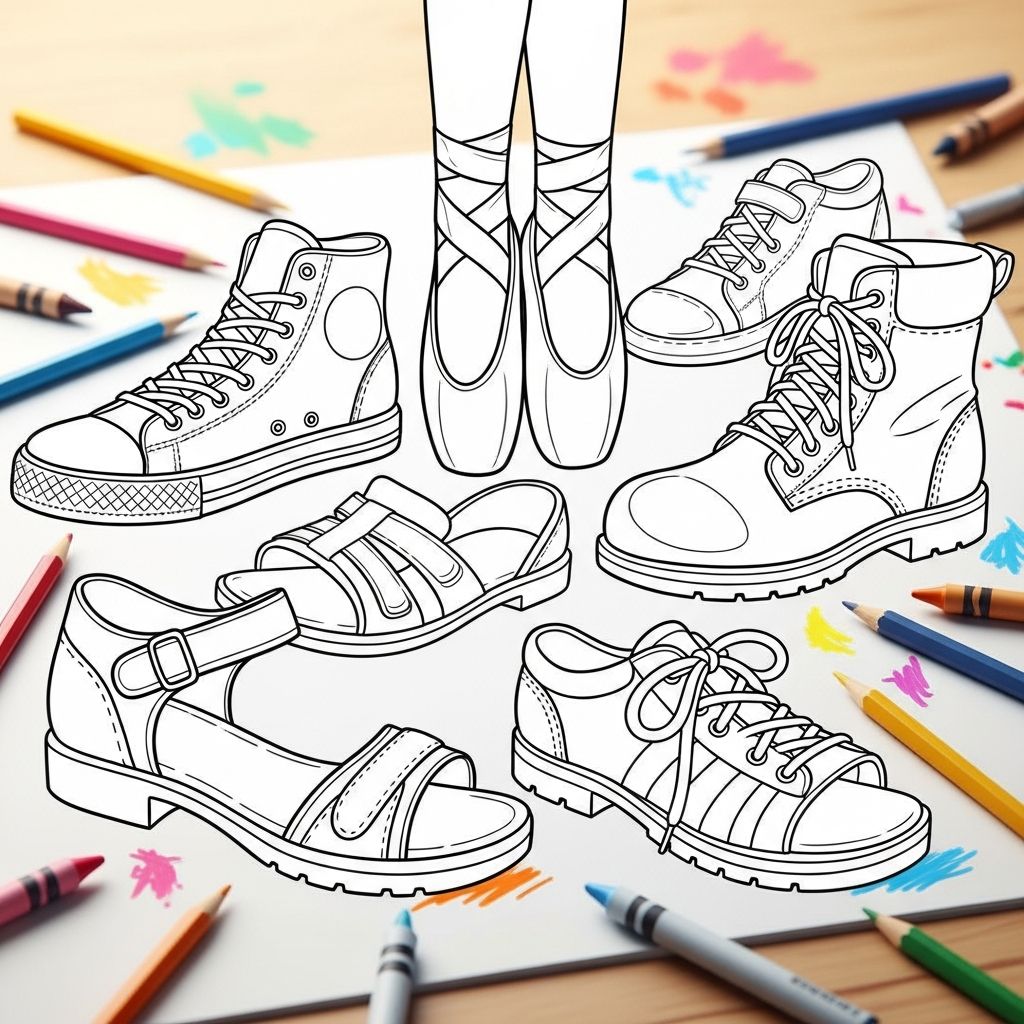
Shoe coloring pages take an everyday object kids see all the time and turn it into a playful canvas for color, patterns, and imagination. This guide shows you how to use shoe-themed pages for learning, creativity, and simple, screen-free fun at home or in the classroom.
Why Shoes Make Great Coloring Subjects
Shoes are familiar enough that young children can recognize them instantly, yet varied enough to offer endless creative options. From sneakers to rain boots, each type of shoe gives kids a different shape, texture, and style to explore with their crayons or markers.
Because shoes are often tied to seasons, sports, or special occasions, they also help children talk about their daily lives. A pair of soccer cleats can lead to a conversation about teamwork, while fancy dress shoes might connect to birthdays, weddings, or holiday celebrations.
Key Benefits of Shoe Coloring Pages
Coloring may look simple, but shoe-themed pages can support multiple areas of development and learning. When a child carefully fills in laces, buckles, and soles, more is happening than just coloring inside the lines.
- Fine motor practice: Holding crayons, shading small details, and tracing outlines help strengthen the muscles needed for writing.
- Hand-eye coordination: Staying within the shoe outline and coloring specific sections trains children to match what they see with how they move their hands.
- Creativity and self-expression: Shoes can be any color or pattern, allowing kids to experiment with stripes, polka dots, gradients, and more.
- Early design thinking: Kids start to think like designers as they choose colors that “go together,” decorate laces, and decide which shoe details should stand out.
- Emotional regulation: The repetitive motion of coloring can be calming, offering a quiet break from screens or busy activities.
Types of Shoe Coloring Pages to Try
Instead of using a single generic shoe outline, consider offering a small collection of different shoe styles. This variety keeps kids engaged and lets you match pages to seasons, themes, or lessons.
Everyday shoes
Everyday shoes are ideal for toddlers and preschoolers because the shapes are simple and familiar. These might include slip-on shoes, low-detail sneakers, or basic flats with minimal decorations.
- Large, bold outlines that are easier for little hands to color.
- Few small details so kids can focus on basic color choices.
- Perfect for first coloring experiences or quick, low-preparation activities.
Sport and activity shoes
Sport shoes invite conversations about hobbies, exercise, and healthy habits. These designs often have more details, making them better for older kids or longer activities.
- Running shoes with textured soles, layered panels, and reflective strips.
- Soccer or football cleats with studs and team colors.
- Dancing or ballet shoes with ribbons and soft curves.
Seasonal and weather shoes
Seasonal shoe pages help children connect art to the world outside their window. You can rotate designs throughout the year to keep coloring sessions feeling fresh and relevant.
- Rain boots with puddles, raindrops, clouds, or umbrellas.
- Snow boots with fur trim, snowflakes, and cozy winter outfits.
- Summer sandals with flowers, seashells, or beach backgrounds.
Dress-up and fantasy shoes
Fancy or make-believe shoes are perfect for imaginative kids who love stories and pretend play. These designs can be whimsical, sparkly, and over-the-top.
- High-heel shoes with bows, jewels, or swirling patterns.
- “Royal” slippers or boots inspired by fairy tales and heroes.
- Futuristic space boots with buttons, panels, and glowing sections.
Suggested Age Levels and Difficulty
Choosing the right level of detail keeps kids engaged instead of frustrated. Use the guide below to match shoe coloring pages to your child’s age and skill level.
| Age Range | Recommended Page Style | Key Features |
|---|---|---|
| 3–4 years | Big, simple shoe outlines | Thick lines, few small details, wide spaces to color. |
| 5–7 years | Basic sneakers, boots, and sandals | Some laces, buckles, and patterns to practice control. |
| 8–10 years | Detailed sport shoes and fashion designs | Multiple sections, textures, and overlapping shapes. |
| 11+ years | Intricate, patterned shoes | Smaller spaces, decorative backgrounds, and tiny accents. |
Fun Ways to Use Shoe Coloring Pages
Shoe coloring sheets are flexible enough to fit into many parts of your day. From rainy afternoons to birthday parties, there are countless ways to turn these pages into memorable mini-projects.
- Quiet time activity: Keep a mini folder of shoe pages ready for moments when you need children to settle down.
- Art center in the classroom: Rotate different shoe themes weekly to match weather, sports units, or storybooks.
- Party stations: Set up a “design your dream shoes” table where guests color and decorate their favorite styles.
- Sibling bonding: Print matching designs and see how differently each child colors the same shoe.
- Travel entertainment: Slip a few pages and a small pack of crayons into a travel bag for long car rides or flights.
Simple Shoe Design Prompts for Kids
Some children dive right in, while others appreciate a little guidance. Short, open-ended prompts can spark ideas without limiting their creativity.
- “Create a pair of shoes for a rainy day adventure in a giant puddle.”
- “Design sneakers for an athlete who runs faster than the wind.”
- “Color shoes that would match your favorite outfit.”
- “Imagine shoes for a character who lives under the sea.”
- “Turn these boots into a pair you would wear in the snow.”
After coloring, encourage kids to tell a short story about who owns the shoes and where they are going. This turns a single coloring sheet into a full storytelling activity.
Materials and Coloring Techniques
The right materials can make even a simple outline feel special. You do not need expensive supplies—thoughtful choices and a few fun extras are often enough.
- Crayons: Great for younger children, durable, and easy to clean up.
- Colored pencils: Ideal for older kids who enjoy shading and adding small details.
- Washable markers: Provide bold, bright color and work well for posters and displays.
- Gel pens or glitter pens: Perfect for metallic shoelace tips, sparkly heels, or shiny buckles.
- Stickers and gems: Add texture and dimension to decorations on the shoe surface.
Easy techniques to try
As children grow more confident, they can start playing with simple art techniques. These skills help them see coloring pages as real artwork they can shape and style.
- Color gradients: Use a darker shade along the edges of the shoe and a lighter one in the middle to create depth.
- Pattern play: Fill different sections with stripes, dots, zigzags, or tiny doodles.
- Shadow and highlight: Add a pale gray under the sole or inside the shoe to hint at shadows.
- Mixed media: Combine crayons for the base color and markers for standout details like stitching or brand logos.
Turning Shoe Pages into Displays and Keepsakes
Instead of recycling finished pages, consider displaying or reusing them in small creative projects. This shows kids that their effort matters and gives them a sense of pride.
- Mini gallery wall: Hang multiple shoe pages side by side to create a “shoe store” art display in a hallway or playroom.
- Classroom bulletin board: Pin pages under headings like “Running Shoes,” “Rain Boots,” or “Party Shoes.”
- Greeting cards: Cut out colored shoes and glue them onto folded cardstock for homemade birthday or thank-you cards.
- Scrapbook pages: Add a few colored shoes to memory books about back-to-school, sports seasons, or family trips.
- Bookmarks: Laminate narrow sections of colored shoes and punch a hole at the top for a ribbon.
Organizing and Storing Your Coloring Pages
A little organization makes it easier to grab shoe coloring pages exactly when you need them. It also helps you see which styles your child enjoys most, so you can print more of their favorites.
- Theme folders: Use separate folders for “Sports Shoes,” “Weather Shoes,” and “Dress-Up Shoes.”
- Skill-level dividers: Keep simple, medium, and detailed pages in different sections for quick access.
- Date labeling: Write the date and child’s name on the back to track progress over months or school years.
- Digital backup: Save a small set of your favorite printable outlines in a clearly labeled folder on your computer or cloud storage.
Quick Ideas for Parents and Teachers
When time is short, it helps to have ready-made plans for using shoe coloring pages. The ideas below fit easily into a busy day with minimal preparation.
- Pair shoe coloring with a short discussion about when and why we wear different types of shoes.
- Ask children to color one shoe for warm weather and one for cold weather, then compare their choices.
- Use shoe coloring pages as the art portion of a unit on community helpers (for example, boots for firefighters or comfortable shoes for nurses).
- Invite kids to design team shoes that match their favorite sports or school colors.
- Combine a walking or movement break with a coloring session to highlight the link between shoes and healthy activity.
Frequently Asked Questions
Are shoe coloring pages suitable for toddlers?
Yes, as long as the outlines are large and simple. Choose pages with thick lines and avoid very small details so toddlers can focus on basic coloring without becoming frustrated.
How can I make shoe coloring educational?
You can connect each coloring page to a mini-lesson. Talk about weather, sports, professions, or special occasions, and ask children to explain why their design would work well for that situation.
What if my child gets bored easily?
Offer choices instead of a single page. A small stack of different shoe types—sneakers, boots, and sandals—allows kids to pick the style that matches their mood that day.
Do I need special art supplies?
No. Crayons and regular printer paper are enough to get started. Over time, you can gradually add markers, colored pencils, or stickers to help keep the activity feeling fresh and exciting.
How long should a coloring session last?
Let your child’s attention span guide you. Some kids enjoy short, 10-minute sessions, while others may happily color for half an hour or more if they are relaxed and engaged.