Shingles can sound scary, especially when it happens to a child. Understanding what it is, why it develops, and how it is treated can help you stay calm and make good decisions for your family. This guide explains shingles in plain language, with a focus on what parents need to watch for and how doctors typically manage the illness.
What Is Shingles?
Shingles, also called herpes zoster, is a viral infection that causes a painful, blistering rash on the skin. It is caused by the varicella-zoster virus (VZV), the same virus that causes chickenpox.
After a person recovers from chickenpox, the virus does not completely leave the body. Instead, it becomes inactive and hides in the nerve cells near the spinal cord and brain. Years later, that dormant virus can “wake up” and travel along a nerve to the skin, leading to shingles.
Key facts about shingles
- Caused by the same virus as chickenpox (varicella-zoster virus).
- Usually affects only one side of the body or face.
- Leads to a band or patch of blisters in the area supplied by a single nerve (a dermatome).
- Is more common in adults, but children can get shingles too, especially if they have had chickenpox.
Why Do Children Get Shingles?
To get shingles, a child must have had a previous infection with the varicella-zoster virus, most often through chickenpox. The virus then stays in the body for life.
How the virus behaves over time
- A child gets chickenpox (or, more rarely, the varicella vaccine virus causes a mild infection).
- After the chickenpox rash clears, the virus goes dormant in nerve cells.
- Months or years later, the virus reactivates in a single nerve pathway.
- The child develops pain, tingling, or itching in that nerve’s skin area, followed by a strip of blisters.
Risk factors that may increase the chance of shingles
- Weakened immune system from illnesses, medications, or treatments that affect immune function.
- Infection with varicella-zoster at a very young age.
- Certain medical conditions that affect the body’s ability to fight infections.
In most otherwise healthy children, shingles appears as a single episode and gets better with appropriate care.
Early Warning Signs Parents Might Notice
Shingles often begins with symptoms in the skin where the rash will later appear. These early changes can show up a few days before the blisters.
- Burning, tingling, or sharp pain in one area of skin.
- Skin sensitivity or soreness when touched or when clothing rubs on the area.
- Itching or unusual discomfort in a patch of skin.
- General symptoms such as fever, headache, tiredness, or feeling unwell.
These early symptoms may be mistaken for a pulled muscle, insect bite, or minor skin irritation, especially before the rash appears.
What the Shingles Rash Looks Like in Children
After the early pain or tingling, the shingles rash typically appears within a few days. The pattern and timing of the rash are important clues doctors use to diagnose shingles.
Typical rash pattern
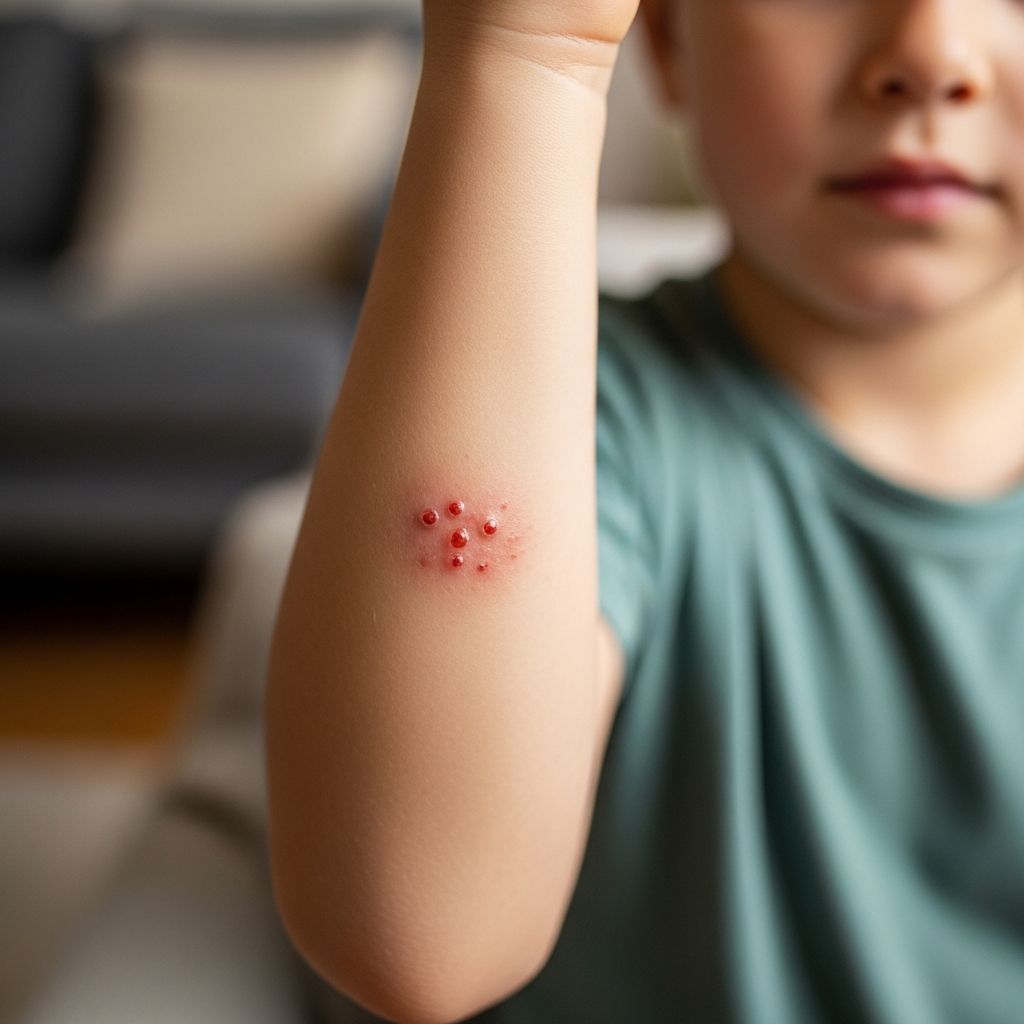
- Starts as small red spots on one side of the body or face.
- Quickly turns into clusters of fluid-filled blisters.
- Usually forms a stripe, band, or patch that follows a nerve pathway.
- Usually does not cross the midline of the body (you see it on the left or the right, not both).
How long the rash lasts
- Blisters form and then break open over 3–4 days.
- The open blisters dry out and crust over in 7–10 days.
- Crusts and scabs usually clear within 2–4 weeks from the start of the rash.
| Stage | Typical Timeframe | What Parents See |
|---|---|---|
| Early symptoms | 1–5 days before rash | Pain, tingling, itching, sensitive skin, sometimes fever or headache |
| Rash appears | Day 0–3 | Red patches and small bumps on one side of the body or face |
| Blister phase | Days 3–7 | Fluid-filled blisters in clusters or a band pattern |
| Crusting phase | Days 7–10 | Blisters dry, crust, and scab over |
| Healing phase | Weeks 2–4 | Scabs fall off; skin may look slightly discolored or sensitive |
Other Symptoms That May Happen
Along with the rash, some children may experience more general symptoms.
- Fever or chills
- Headache
- Fatigue, low energy, or irritability
- Upset stomach or feeling sick to the stomach
- Sensitivity to light in some cases
Rarely, a child can have the nerve pain of shingles without the typical rash. In those situations, a doctor may need additional tests to confirm the diagnosis.
Is Shingles in Children Contagious?
The varicella-zoster virus can spread from a person with shingles to someone who has never had chickenpox or the chickenpox vaccine.
Important points about contagion:
- A child with shingles can pass the virus to another person, but that person would develop chickenpox, not shingles.
- The virus usually spreads through direct contact with the fluid from shingles blisters.
- After the blisters have crusted over, the risk of spreading the virus drops sharply.
Practical steps to reduce spread
- Keep the rash covered with loose, clean clothing or dressings when possible.
- Encourage frequent handwashing for everyone in the household.
- Avoid close contact between the child and pregnant people, newborns, and anyone with a weak immune system who is not immune to chickenpox.
How Doctors Diagnose Shingles
In many children, doctors can diagnose shingles by looking at the rash and asking about symptoms and past chickenpox infection.
During the visit, the healthcare provider may:
- Ask about recent pain, tingling, or itching in a specific area of skin.
- Examine the location and pattern of the rash.
- Review the child’s history of chickenpox or varicella vaccination.
- Check for signs of complications, especially if the rash is near the eyes, ears, or face.
Sometimes, particularly when the rash is not typical, the doctor may gently swab a blister to send to a lab for testing, or order blood tests. This is less common in straightforward cases.
Treatment Options for Shingles in Children
Treatment has two main goals: control the virus and relieve symptoms. Starting medical treatment early can help shorten the illness and reduce the risk of longer-term pain.
Antiviral medicines
Doctors may prescribe antiviral drugs such as acyclovir or related medicines. These medicines:
- Work best when started within the first 72 hours after the rash appears.
- Can help reduce how long the rash lasts.
- May lower the chances of complications in higher-risk children.
The specific medicine, dose, and duration depend on the child’s age, weight, and health history. Parents should never give antiviral medicines without a doctor’s guidance.
Managing pain and itching
Pain and itching can be the hardest part of shingles for children. Doctors might recommend:
- Pain relievers such as acetaminophen or ibuprofen (using child-appropriate doses and following professional advice).
- Cool compresses or cool baths to ease discomfort.
- Anti-itch lotions or creams suitable for children, used as directed by the healthcare provider.
Home care tips
- Dress the child in loose, soft clothing to reduce rubbing on the rash.
- Keep the rash area clean and dry to help prevent bacterial infection.
- Remind the child not to scratch or pick at the blisters or scabs.
- Offer quiet activities (books, puzzles, drawing) to help distract from discomfort.
Possible Complications of Shingles
Severe complications are less common in otherwise healthy children than in older adults, but they can occur. Knowing the warning signs helps parents seek help quickly.
Pain that lasts after the rash
Some people develop postherpetic neuralgia (PHN), which is pain that continues where the rash was, even after it heals. PHN is far more common in older adults, but it highlights why early treatment and follow-up are important.
Eye and facial involvement
- Shingles that affects the area around the eye can lead to eye inflammation and, rarely, vision problems.
- The child may have redness around the eye, eye pain, or trouble seeing clearly.
Other rare complications
- Skin infections if bacteria enter open blisters.
- Neurologic problems such as facial weakness, balance issues, or, very rarely, brain inflammation (encephalitis).
When Should Parents Call the Doctor?
Parents should contact a healthcare provider whenever they suspect shingles in a child, especially if the child has not been seen for these symptoms before.
Get urgent medical care right away if:
- The rash is near the eyes or on the tip of the nose.
- The child has trouble seeing, eye pain, or eye redness.
- There is a high fever, severe headache, or stiff neck.
- The child seems very confused, drowsy, or unusually irritable.
- The rash looks very widespread or affects both sides of the body.
- You see redness, warmth, pus, or spreading streaks around the blisters that could signal a bacterial infection.
Preventing Shingles and Chickenpox
A major tool for lowering the risk of shingles later in life is preventing chickenpox in the first place. Varicella vaccination for children has dramatically reduced chickenpox infections in many countries and, in turn, the overall burden of shingles.
Key prevention points
- Chickenpox (varicella) vaccination in childhood helps protect against primary varicella infection and reduces the pool of virus that can later reactivate.
- Keeping the child’s immune system as healthy as possible—through good nutrition, sleep, and regular medical care—also supports the body’s defenses.
- A child with shingles should avoid direct contact between their rash and people at high risk of severe varicella (pregnant people without immunity, newborns, and those with weak immune systems).
Frequently Asked Questions (FAQs)
Q: Can a child get shingles more than once?
A: It is possible, but most children who have shingles only experience it once. If a child has repeated episodes, doctors may look more closely for underlying immune problems.
Q: Should a child with shingles stay home from school?
A: Many doctors recommend that children with open shingles blisters stay home until the rash has crusted over, especially if classmates or staff might be pregnant or have weak immune systems. Your child’s healthcare provider can give specific advice based on how extensive the rash is and school policies.
Q: Can my child catch shingles from someone with shingles?
A: No. A person with shingles can spread the varicella-zoster virus, but someone who is infected for the first time would develop chickenpox, not shingles. Later in life, that person could develop shingles if the virus reactivates.
Q: Is shingles more serious in children with other health problems?
A: Yes. Children with weakened immune systems are more likely to have a severe or widespread rash, a longer illness, and complications. These children usually need prompt medical evaluation and sometimes hospital care.
Q: Does the shingles rash leave scars?
A: Many children heal without noticeable scarring, especially if the blisters are kept clean and the child does not scratch or pick at them. However, deeper skin damage, infections, or very severe rashes can sometimes leave marks.
References
- Shingles (Herpes Zoster) — National Foundation for Infectious Diseases. 2023-06-01. https://www.nfid.org/infectious-disease/shingles/
- Shingles – Symptoms & causes — Mayo Clinic. 2023-05-10. https://www.mayoclinic.org/diseases-conditions/shingles/symptoms-causes/syc-20353054
- Shingles (Herpes Zoster): Causes, Symptoms & Treatment — Cleveland Clinic. 2024-01-15. https://my.clevelandclinic.org/health/diseases/11036-shingles
- Shingles — Phoenix Children’s Hospital. 2022-09-01. https://phoenixchildrens.org/specialties-conditions/shingles
- Shingles Overview: Types, Causes, Symptoms, and Treatment — Pfizer. 2022-11-15. https://www.pfizer.com/disease-and-conditions/shingles
- Shingles – treatments, symptoms and causes — Healthdirect Australia. 2023-07-20. https://www.healthdirect.gov.au/shingles
- Shingles — NHS. 2023-08-09. https://www.nhs.uk/conditions/shingles/