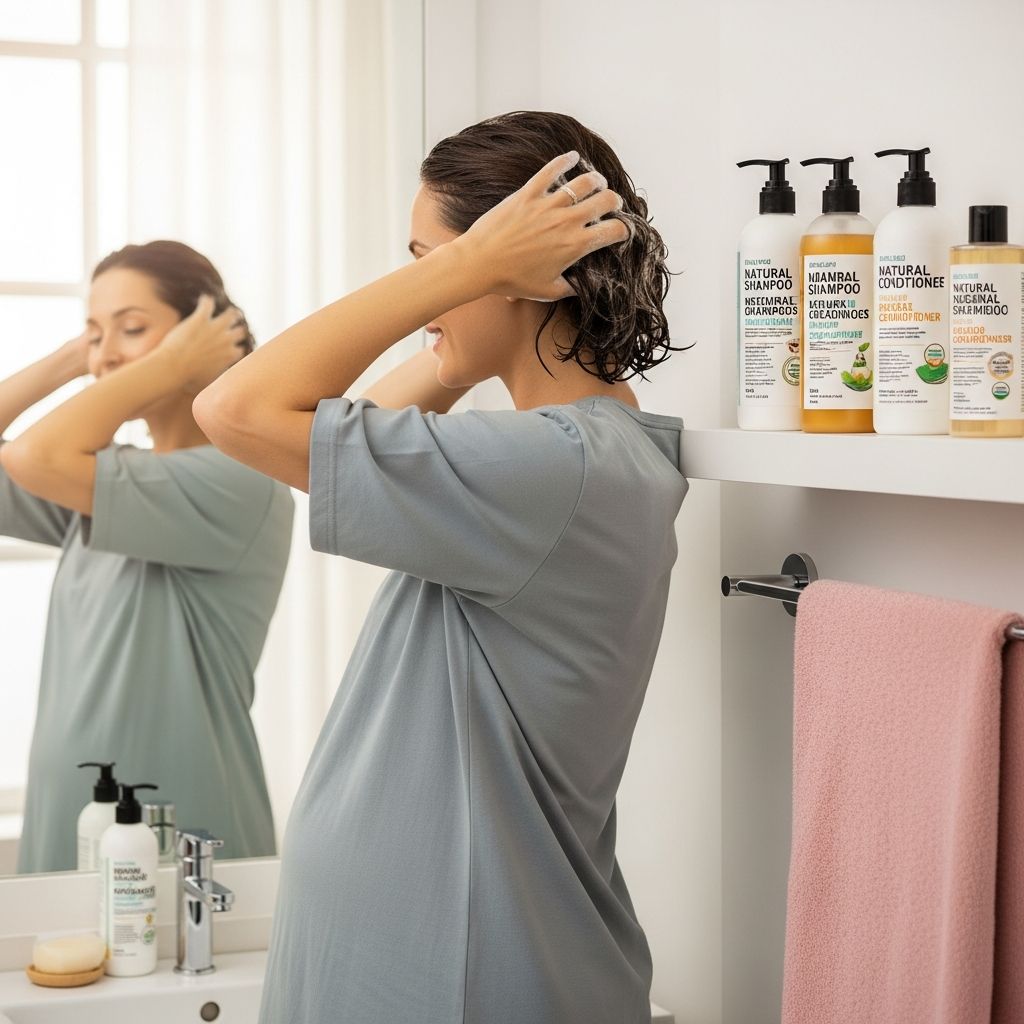
Pregnancy changes almost everything about your daily routine, and that includes the products you use in the shower. This guide explains what is currently known about shampoo safety in pregnancy, common ingredients you may want to review with your clinician, and practical ways to take care of your hair with less worry.
Why Shampoo Becomes a Question During Pregnancy
Pregnancy does not just alter hormones; it can also change how your skin and scalp react to familiar products. Many people notice more sensitivity, dryness, or itching, and that often prompts a closer look at ingredient lists.
At the same time, it is easy to feel overwhelmed by conflicting advice about what is safe. A balanced approach recognizes two realities: most everyday shampoo exposure is quite low, yet it is still reasonable to reduce contact with certain chemicals when practical, especially over many months.
How Much Shampoo Is Actually Absorbed?
Shampoo is designed to be rinsed off, not left on the skin, which limits the amount that can be absorbed through the scalp. Contact time is brief, and the top layer of skin provides a natural barrier for many ingredients.
However, absorption is not zero. Small amounts of some substances can pass through the skin, particularly if there is irritation, cuts, or very frequent exposure. The idea behind choosing gentler products in pregnancy is to avoid unnecessary, repeated contact with chemicals that raise theoretical or emerging concerns.
Key Shampoo Ingredients and What They Do
Understanding what the major shampoo components do can make label reading less intimidating. Most bottled shampoos share the same basic categories of ingredients, even if the specific chemicals differ from brand to brand.
| Ingredient role | What it does | Examples you may see on labels |
|---|---|---|
| Cleansers (surfactants) | Lift oil and dirt from hair and scalp so they rinse away easily. | Sodium lauryl sulfate, sodium laureth sulfate, coco-betaine, decyl glucoside |
| Conditioning agents | Soften hair, add slip, and reduce static or frizz. | Silicones (e.g., dimethicone), plant oils, quaternary compounds |
| Preservatives | Prevent mold and bacterial growth in the bottle. | Parabens, formaldehyde-releasing agents, organic acids |
| Fragrance | Adds scent, often a blend of dozens of aroma chemicals. | “Fragrance,” “parfum,” essential oils |
| Colorants and extras | Provide color or marketing features such as shine, volume, or scalp soothing. | Artificial dyes, plant extracts, proteins, vitamins |
When people talk about “safer shampoo,” they are usually focusing on the cleanser, preservative, and fragrance categories, because these are where some controversial ingredients tend to appear.
Ingredients Some Pregnant People Prefer to Limit
Scientists and regulators continue to evaluate many cosmetic ingredients for their health impact. The following categories are often highlighted in conversations about pregnancy, not because a single shampoo use is known to be dangerous, but because reducing long-term exposure may be a reasonable precaution.
Strong sulfates and harsh surfactants
Sulfate surfactants are very efficient cleaners, yet on sensitive or pregnancy-affected scalps they can contribute to dryness or irritation. Many people choose gentler, sulfate-free formulas during pregnancy simply for comfort, even when safety is not a clear-cut issue.
- If a shampoo makes your scalp sting, itch, or feel very tight after rinsing, consider switching to a milder cleanser.
- Look for words such as “sulfate-free,” “gentle cleansing,” or surfactants ending in “glucoside,” which are often less stripping.
Parabens and certain preservatives
Parabens are widely used preservatives and help keep products free of microbes, but they have also been studied as potential hormone-disrupting chemicals. Overall exposure from one product is typically low, yet some pregnant people prefer to avoid them as part of a general strategy to limit endocrine-active substances when feasible.
- On an ingredient list, parabens usually end in “-paraben,” such as methylparaben or propylparaben.
- Brands often advertise “paraben-free” on the front label if they have formulated without this preservative family.
Formaldehyde-releasing preservatives
Certain older preservatives slowly release small amounts of formaldehyde over time to control microbial growth. Formaldehyde itself is a respiratory and skin irritant and is recognized as a human carcinogen at higher exposures.
- Names to watch for can include words such as “quaternium-15,” “DMDM hydantoin,” “imidazolidinyl urea,” and related compounds.
- Choosing products that specify they are free of these preservatives is one way to simplify your routine if this category concerns you.
Phthalates and synthetic fragrance blends
Fragrance mixtures are a common, but very broad, source of chemical exposure in personal-care products. Some fragrancing agents, including certain phthalates, have raised questions about hormone and developmental effects in research studies.
- Because fragrance recipes are often treated as trade secrets, ingredient lists may simply say “fragrance” or “parfum,” without individual components.
- Those who want to be cautious may choose fragrance-free shampoos or products that clearly state they do not contain phthalates.
How to Read a Shampoo Label When You Are Expecting
Ingredient lists are printed in descending order of concentration, so the first few lines tell you the most about what is in the bottle. However, even small amounts of certain preservatives or fragrances can matter if you use them every day for months or years.
Step-by-step label checklist
- Scan for obvious red-flag categories first. Look for parabens, formaldehyde-releasing preservatives, or any ingredients that your own clinician has asked you to avoid.
- Decide how you feel about fragrance. If strong scents trigger nausea or headaches, opt for products labeled “fragrance-free” rather than “unscented,” which may still contain masking perfumes.
- Check the cleanser type. If your scalp is easily irritated, consider gentler surfactants and look for terms such as “for sensitive scalp” or “soap-free cleansing base.”
- Watch for personal allergies. If you already know you react to a specific preservative, botanical, or oil, verify that it is not hiding in the list.
Everyday Hair-Care Habits That Reduce Exposure
Selecting a product is only part of the picture. How often and how you use shampoo also affects overall exposure to any ingredient it contains.
- Use the smallest amount that still cleans effectively. Instead of a large handful, start with a small coin-sized amount and add more only if needed.
- Rinse thoroughly. Allow plenty of lukewarm water to run through your hair and over your scalp until the water runs completely clear.
- Avoid extremely hot water. Very hot showers can dry and irritate the scalp, potentially increasing absorption of some substances and worsening itchiness.
- Wash as often as needed, not out of habit. Some people can comfortably stretch washes further apart during pregnancy, while others find that oiliness requires more frequent washing. Either approach is fine as long as your scalp stays comfortable.
- Keep products away from broken skin. If you have scratches, rashes, or scalp conditions, speak with a healthcare professional about appropriate medicated shampoos rather than self-treating with multiple cosmetic products.
Choosing Types of Shampoos: Conventional, Natural, and Everything Between
Labels such as “natural,” “clean,” and “organic” do not always mean the same thing from brand to brand, and they are not legal guarantees of pregnancy safety. Instead of relying solely on marketing terms, it can help to think about the type of shampoo in broad groups.
| Category | Typical features | Points to consider in pregnancy |
|---|---|---|
| Conventional drugstore shampoo | Widely available, often lower cost, may contain strong sulfates, synthetic fragrance, and standard preservatives. | Convenient and effective, but you may want to check for specific ingredients you prefer to limit and see how your scalp reacts. |
| “Free-from” or “clean” formulas | Marketed as free of certain chemicals such as parabens, phthalates, or sulfates; ingredients lists vary widely. | Can reduce contact with some controversial substances, but still need label reading, especially for fragrance and preservatives. |
| Certified organic shampoos | Rely heavily on plant-derived ingredients; certification rules differ by region and certifying body. | Often avoid many synthetic chemicals, yet essential oils and botanicals can still be irritating for some users. |
| Shampoo bars | Solid format, often with shorter ingredient lists and reduced packaging. | A good option for minimizing plastic waste; still review surfactants, fragrance, and preservatives like any other product. |
No category guarantees a better or safer choice by itself. The best option is the one that meets your hair needs, avoids ingredients you and your clinician are concerned about, and feels comfortable on your scalp.
When to Talk to a Healthcare Professional About Hair Products
Most healthy pregnancies do not require highly restrictive rules around shampoo, but there are times when personalized advice is important. Your healthcare team knows your medical history, medications, and any complications, and can tailor recommendations for you.
- You have a skin condition of the scalp, such as psoriasis or severe eczema, and need medicated shampoos.
- You work in a job that involves heavy or frequent exposure to hair products, such as hairdressing or cosmetic manufacturing.
- You are already managing a high-risk pregnancy or taking medications that might interact with certain topical treatments.
- You have had allergic reactions to cosmetic products in the past and are unsure what triggered them.
Frequently Asked Questions About Shampoo and Pregnancy
Do I need a special “pregnancy shampoo” brand?
There is no requirement to buy a product marketed specifically for pregnancy. Many standard shampoos are reasonable to use as long as they agree with your skin and do not contain ingredients that you or your clinician are purposely avoiding. Special “maternity” labels can be helpful for quick shopping, but they are not the only safe choices.
Is it dangerous if I used my regular shampoo before I learned I was pregnant?
In most cases, occasional use of a typical shampoo early in pregnancy is not considered a reason for panic or emergency testing. If you are worried about a specific ingredient, bring the product label to your prenatal appointment so you can discuss realistic risk and next steps together.
Are heavily scented shampoos a problem?
Strongly scented products can trigger nausea, headaches, or general discomfort, particularly in the first trimester. From a chemical perspective, perfumes also contain numerous substances that may add to your overall exposure burden. If you want to be cautious, you can shift toward fragrance-free or lightly scented options.
Should I avoid hair dye because of the shampoo used after coloring?
Concerns around hair coloring in pregnancy usually focus more on the dye chemicals themselves and the timing and frequency of treatments. The shampoo used afterward typically has a brief contact time and similar ingredients to regular products. If you plan to color your hair while pregnant, discuss the overall procedure with your provider, including ventilation, gloves, and how often you intend to dye.
What if every ingredient list looks confusing?
It is normal to feel overwhelmed by long, unfamiliar chemical names. One practical strategy is to write down a short personal “avoid list” agreed upon with your healthcare provider, then simply check each new product for those specific terms rather than trying to evaluate every single ingredient.
Putting It All Together
Shampoo is only one small piece of the environment that surrounds you during pregnancy, and most people can continue washing their hair without dramatic changes. By understanding the basic roles of shampoo ingredients, choosing gentler surfactants when helpful, and being thoughtful about preservatives and fragrances, you can make informed choices that fit your comfort level.
The goal is not perfection but reasonable, sustainable habits. When in doubt, a brief conversation with your prenatal care team can provide reassurance and help you tailor a hair-care routine that keeps both your scalp and your peace of mind in good shape.