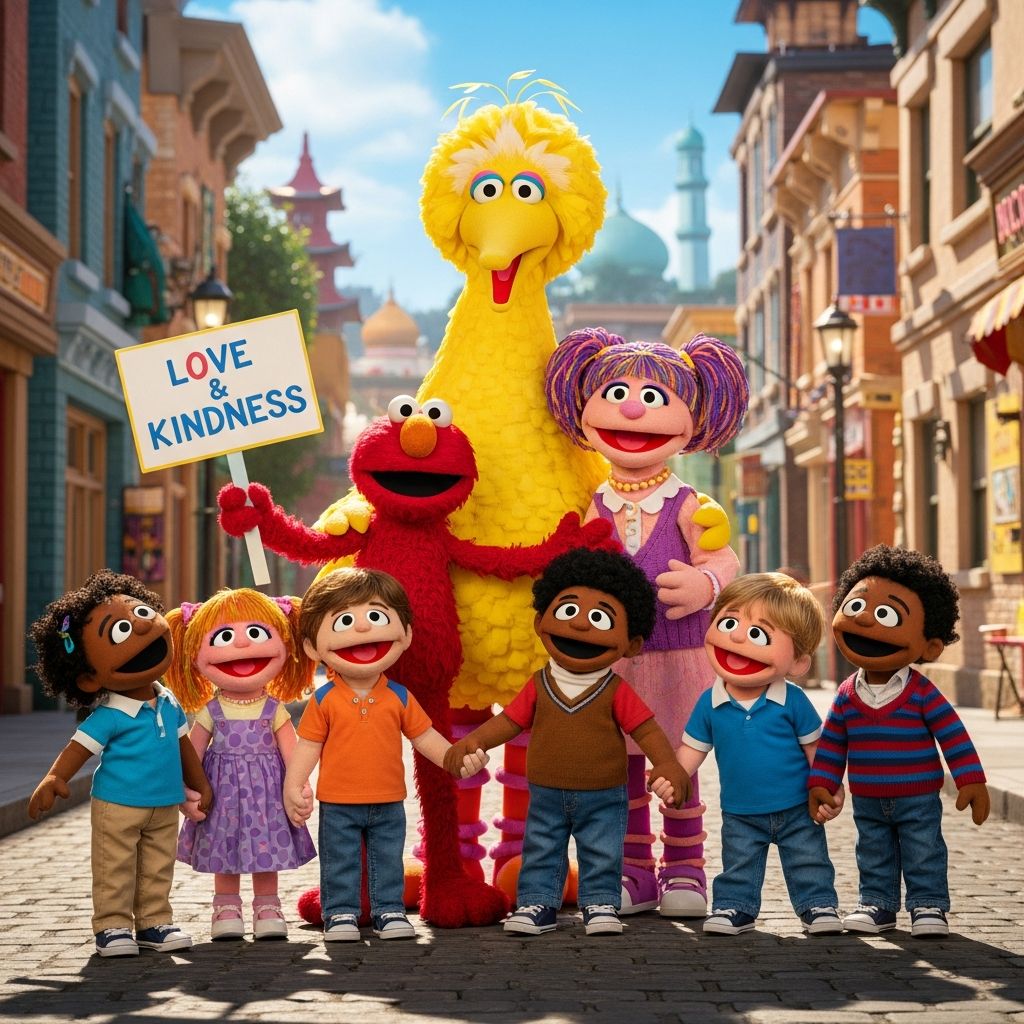
Sesame Street has long been a trusted resource for early childhood education, blending fun with fundamental lessons on diversity and kindness. In a pivotal moment amid national conversations on racial justice, the show released a dedicated half-hour special titled “The Power of We,” aimed at equipping young viewers with the tools to identify and challenge racism.
Understanding the Need for Age-Appropriate Conversations on Race
Children encounter the world with unfiltered curiosity, often absorbing societal biases before they can fully articulate them. Research from child development experts emphasizes that early discussions about race prevent the internalization of stereotypes. By addressing racism directly, parents and educators can guide kids toward empathy and action rather than silence.
This special arrives at a critical time, responding to widespread calls for inclusive curricula. It models how to transform passive observation into active resistance, using familiar characters to make complex topics accessible.
Breaking Down the Special’s Core Narrative
The storyline centers on beloved Muppets like Elmo and Abby Cadabby, joined by new characters: 6-year-old Gabrielle and her 8-year-old cousin Tamir. Together, they navigate scenarios where unfair treatment based on skin or fur color unfolds, learning to recognize prejudice in everyday interactions.
Human cast members, including Alan, Charlie, Chris, and Gordon, provide grounded perspectives, while celebrity guests like Yara Shahidi, Christopher Jackson, and Andra Day add inspirational flair. The narrative builds through relatable vignettes, showing racism’s impact without overwhelming young audiences.
- Key Scenes: Muppets experience exclusion, prompting questions like “Why can’t I play because of my color?”
- Emotional Arc: From confusion to empowerment, as characters unite against injustice.
- Resolution: Emphasis on collective strength, encapsulated in the special’s title.
Defining Racism in Simple, Impactful Terms
One of the special’s strengths is its clear definition of racism: treating someone unfairly because of their skin color or appearance. This straightforward explanation demystifies the concept for preschoolers, using visual examples like a Muppet denied entry to a game.
By contrasting fair and unfair behaviors, it illustrates harm without graphic detail, ensuring the message resonates emotionally yet safely. Gabrielle’s advice rings clear: “When you see something that’s wrong, speak up and say, ‘That’s wrong’ and tell an adult.”
Empowering Kids to Become Upstanders
The concept of an “upstander”—someone who intervenes against wrongdoing—is central. Unlike bystanders who watch silently, upstanders act with words or by seeking help. The special teaches phrases like “That’s not fair!” to build confidence in young voices.
“Speak up. Say something.” – From the upstander song, reinforcing action over inaction.
This approach aligns with psychological strategies for building resilience in children facing bias, encouraging peer support and adult involvement.
Memorable Songs That Stick with Children
Music has always been Sesame Street’s superpower for memory-making. “The Power of We” introduces two originals:
| Song Title | Theme | Key Message |
|---|---|---|
| How Do You Know? | Recognizing bias | Question unfair judgments based on appearance |
| Listen, Act, Unite! | Collective response | Performed by Christopher Jackson and Andra Day, urging unity |
| How to Be an Upstander | Intervention steps | “When someone is not let in because of the color of their skin, speak up!” |
These tunes repeat empowering lyrics, making them easy to sing along and remember during real-life moments.
Critiques and Conversations Around Representation
While praised for broaching the topic, the special faced scrutiny. Some observers noted that analogies, like Elmo’s red fur representing discrimination, might dilute the specificity of anti-Black experiences. Tamir’s song with Elmo prompts reflection on colorism but risks equating fictional scenarios with systemic realities.
This highlights a broader challenge: balancing universality with nuance. Critics argue it prioritizes comfort over depth, yet defenders see it as an entry point for ongoing dialogue.
Practical Tips for Families Watching Together
Designed for co-viewing, the special prompts parent-child talks. Here’s how to maximize impact:
- Pre-View Prep: Ask, “What do you think racism means?” to gauge baseline understanding.
- During: Pause at key moments to discuss feelings.
- Post-View: Role-play upstander scenarios using toys or drawings.
- Follow-Up: Read books like “Let’s Talk About Race” or explore Sesame’s free resources.
Such activities reinforce lessons, turning passive watching into active learning.
Broader Impact on Children’s Media and Education
Sesame Street’s move sets a precedent for kid-friendly activism. It complements initiatives like the American Psychological Association’s guidelines on racial communication, advocating truth-telling to disrupt bias cycles.
Availability on HBO Max and PBS Kids ensures wide reach, with airings on public stations amplifying access. This integration into trusted platforms normalizes anti-racism education.
Long-Term Strategies for Nurturing Anti-Racist Kids
Beyond one special, fostering equity requires consistency:
- Diverse Media: Choose shows and books reflecting multiple identities.
- Model Behavior: Demonstrate inclusive actions daily.
- Community Ties: Engage in multicultural events.
- Open Dialogues: Address questions honestly, without oversimplifying.
Studies show these habits build lifelong allies.
Frequently Asked Questions (FAQs)
Is “The Power of We” suitable for all ages?
Targeted at ages 2-6, but beneficial for families. Younger kids grasp emotions; older ones discuss systems.
Where can I watch the special?
Stream on HBO Max or PBS Kids; check local listings for broadcasts.
How does it handle sensitive topics?
Gently, through stories and songs, focusing on empowerment over trauma.
Are there companion resources?
Yes, Sesame Workshop offers free guides for parents on racial justice.
What if my child asks tough questions after?
Listen actively, validate feelings, and use the special’s language to respond.
Why This Matters for Future Generations
In an era of heightened awareness, tools like this special bridge generational gaps. By humanizing justice, Sesame Street not only educates but inspires a kinder world. Parents play the pivotal role in extending these lessons into daily life, ensuring children grow into advocates for equity.
(Word count: 1678)
References
- The problem with Sesame Street’s approach to anti-racism — Trinitonian. 2020-11-19. https://trinitonian.com/2020/11/19/the-problem-with-sesame-streets-approach-to-anti-racism/
- ‘Speak Up!’ — ‘Sesame Street’ Tackles Racism In TV Special — CBS News. 2020-10-01. https://www.cbsnews.com/texas/news/speak-up-sesame-street-tackles-racism-in-tv-special/
- The Power of We: Sesame Street Special to Help Children Stand up to Racism — VPM. 2020-10-14. https://www.vpm.org/2020-10-14/the-power-of-we-sesame-street-special-to-help-children-stand-up-to-racism
- Sesame Street: How to be an Upstander to Racism Song — YouTube (Sesame Street). 2020-10-15. https://www.youtube.com/watch?v=ddinvnj7PWg
- How to Integrate Racial Justice into Your Work with Children — YouTube (APA/Sesame). 2020-10-01. https://www.youtube.com/watch?v=qtwxsqyR4Wo