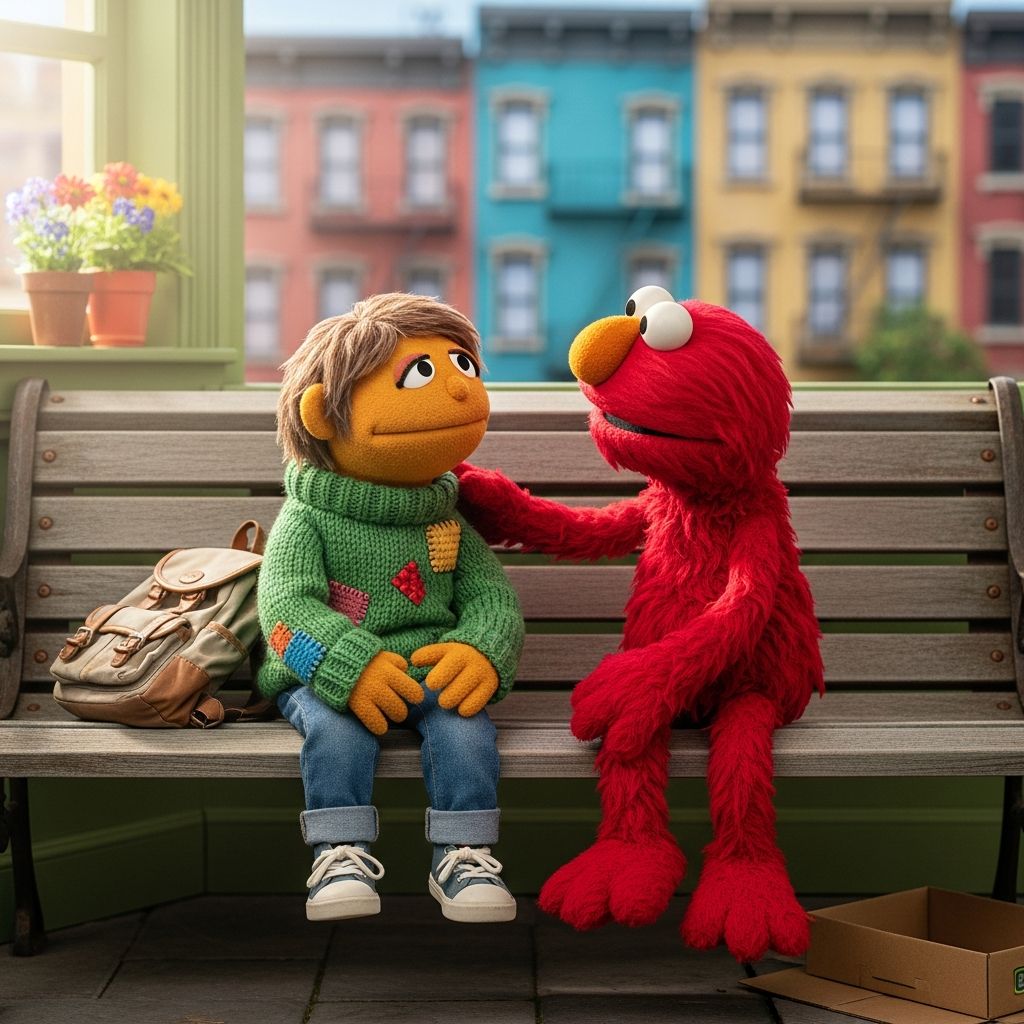
Sesame Street has long been a beacon for children’s education, addressing real-world issues through its beloved Muppets. In a groundbreaking step, the show introduced Lily, a vibrant 7-year-old Muppet experiencing homelessness, to shine a light on a crisis affecting millions of American children. This initiative aims to foster understanding and provide practical tools for families.
Understanding the Crisis of Child Homelessness
Child homelessness remains a pressing issue in the United States. Data from the U.S. Administration for Children and Families reveals that approximately 1 in 20 children under age 6 faced homelessness between 2014 and 2015. Similarly, the U.S. Department of Education reported over 1.3 million homeless children and youth enrolled in public schools during the 2013-2014 school year. These figures underscore the scale of instability many young lives endure.
Factors contributing to this epidemic include economic downturns, job loss, rising housing costs, and family disruptions. Children in such situations often grapple with anxiety, disrupted education, and emotional distress. Sesame Workshop recognized the need to address this gap in children’s media, using storytelling to normalize these experiences and reduce stigma.
Meet Lily: A Muppet with a Relatable Story
Lily stands out with her bright pink skin, blue nose, and long pigtails. First introduced in 2011 as a character facing food insecurity, her narrative evolved to reflect deeper housing challenges. Now, her family has lost their apartment and relies on staying with friends, mirroring the ‘doubled-up’ living arrangements common among homeless families.
Sherrie Westin from Sesame Workshop explained that Lily’s expanded storyline perfectly extends her original arc, helping children identify with peers in similar predicaments. Through online videos, stories, and interactive resources, Lily’s journey teaches resilience, empathy, and the importance of community support.
- Key traits of Lily: Energetic, curious, and optimistic despite challenges.
- Her message: It’s okay to feel scared or different; friends and helpers make a difference.
- Target audience: Children aged 2-8 and their caregivers.
Sesame Street in Communities: A Broader Initiative
The introduction of Lily is part of the Sesame Street in Communities program, which delivers free, research-based resources on tough topics. This effort extends beyond TV episodes to digital platforms, offering toolkits for parents, educators, and service providers. Videos like “A Rainbow Kind of Day” depict supportive environments amid hardship.
Other characters in this initiative include Karli, who navigates foster care due to her mother’s substance abuse, and Julia, representing autism. These stories create a diverse neighborhood that reflects America’s complex realities, promoting inclusion and emotional literacy.
| Character | Issue Addressed | Launch Year | Resources Available |
|---|---|---|---|
| Lily | Homelessness & Food Insecurity | 2011 (expanded later) | Videos, parent guides, activities |
| Karli | Foster Care & Substance Abuse | 2020 | Songs, stories, ambassador program |
| Julia | Autism | 2017 | Interactive tools, empathy exercises |
Why Children’s Media Matters in Addressing Social Issues
Media shapes how children perceive the world. By portraying homelessness through a Muppet, Sesame Street demystifies it, showing it’s not a personal failing but a circumstance that can happen to anyone. Research supports that such representations build empathy and reduce bullying toward affected peers.
Parents often struggle with how to discuss instability. Lily’s content provides scripts and activities, like drawing ‘safe spaces’ or role-playing helper roles, making conversations age-appropriate and hopeful.
Practical Resources for Families and Educators
Sesame Workshop offers a wealth of free materials at sesamestreetincommunities.org. These include:
- Downloadable activity guides for talking about feelings.
- Video series featuring Lily and friends overcoming obstacles.
- Bilingual (English/Spanish) toolkits for diverse families.
- Professional development for teachers on supporting homeless students.
Educators can integrate these into classrooms to foster a supportive environment. For instance, group discussions prompted by Lily’s videos help children express their own experiences.
The Impact and Reception of Lily’s Introduction
Since her debut, Lily has resonated widely. News outlets and organizations like Bergen Family Promise have highlighted her role in sparking vital dialogues. Feedback from families indicates reduced isolation for children, who see their stories reflected on screen.
Critics praise Sesame Street’s commitment to authenticity, consulting experts and lived-experience advisors to ensure accuracy. This approach contrasts with sanitized portrayals, offering genuine hope rooted in real solutions like stable housing programs.
Broader Implications for Children’s Programming
Sesame Street sets a precedent for educational TV. By tackling homelessness, it challenges networks to address systemic issues. Future expansions could explore related topics like eviction or shelter life, always emphasizing community and recovery.
For parents, this means leveraging media as a tool for emotional education. Combining episodes with real-world actions, like volunteering at shelters, amplifies the lessons.
Statistics on Child Homelessness: A Closer Look
To grasp the urgency:
- Over 1.5 million children experience homelessness yearly (updated federal estimates).
- Urban areas see higher rates due to cost of living.
- Children of color are disproportionately affected.
These stats, drawn from official reports, highlight why initiatives like Lily’s are timely.
How to Support Children Experiencing Homelessness
Beyond media, practical steps include:
- Listen without judgment.
- Maintain routines where possible.
- Connect with school liaisons or nonprofits.
- Advocate for policy changes like affordable housing.
Sesame’s resources align with these, providing immediate, accessible support.
Frequently Asked Questions (FAQs)
What age group is Lily’s content designed for?
Lily’s stories target children ages 2-8, with adaptable resources for slightly older kids. They use simple language and visuals to convey complex emotions.
Is Lily appearing on the main Sesame Street TV show?
No, Lily features primarily in online content and communities program, ensuring wide digital access without disrupting broadcast schedules.
How can parents access homelessness resources?
Visit sesamestreetincommunities.org for free downloads, videos, and guides in multiple languages.
Does Sesame Street address other family challenges?
Yes, through characters like Karli (foster care) and Julia (autism), covering incarceration, military deployment, and more.
Why introduce a homeless character now?
Rising homelessness rates post-recession made it essential to reflect children’s realities and equip families with tools.
Empowering Families Through Storytelling
Sesame Street’s Lily initiative proves that children’s programming can be both entertaining and transformative. By humanizing homelessness, it builds a generation more compassionate and informed. Parents and educators are encouraged to explore these resources, turning screens into bridges for understanding.
References
- Sesame Street character portrays child experiencing homelessness — Bergen Family Promise. 2018-10-15. https://www.bergenfamilypromise.org/sesame-street/
- On Sesame Street, the Neighborhood Adds a Foster Home — The Imprint. 2020-06-10. https://imprintnews.org/featured/on-sesame-street-the-neighborhood-adds-a-foster-home/35476
- Sesame Street introduces first homeless character — News 19 WLTX (YouTube). 2018-10-12. https://www.youtube.com/watch?v=iAwest_0Mcg
- A Rainbow Kind of Day — Sesame Workshop (YouTube). 2019-05-20. https://www.youtube.com/watch?v=5vHkU_DY7go
- Family Homelessness | Sesame Street in Communities — PBS LearningMedia. 2022-01-15. https://www.pbslearningmedia.org/resource/family-homelessness-activity-gallery/sesame-street-in-communities/