From the moment a baby arrives, every sight, sound, and touch is brand new. Sensory play takes these everyday experiences and turns them into gentle, playful opportunities for learning. Instead of complicated setups, the most powerful sensory activities for babies are simple, safe, and woven into daily routines.
What Sensory Play Really Means
Sensory play is any activity that lets your baby explore through their senses: touch, sight, sound, smell, taste, movement, and body awareness. It is less about fancy toys and more about how your baby experiences the world through their body and brain.
For babies, sensory play can be as basic as feeling a cool washcloth, listening to your voice, or watching light and shadow move across the wall. These experiences slowly build the foundations for later skills like problem-solving, coordination, and language.
Why Sensory Play Matters for Development
Babies are born with immature sensory systems that become more organized through use. When they touch, look, listen, and move during play, their brains create and strengthen important connections that support learning and behavior.
Regular sensory play can help with:
- Brain development: Repeated experiences help nerve pathways form and become more efficient.
- Motor skills: Reaching, grasping, kicking, and rolling build strength and coordination.
- Language: Hearing you describe textures, colors, and sounds links words to experiences.
- Emotional regulation: Gentle, predictable sensory activities can be soothing and help babies learn how to calm.
Guiding Principles Before You Start
Before setting up activities, it helps to keep a few big-picture ideas in mind. Babies benefit most when sensory play feels relaxed, responsive, and safe. Your presence and attention are far more important than what materials you use.
- Follow your baby’s cues and stop if they look overwhelmed, fussy, or turn away.
- Keep sessions short and sweet; a few focused minutes can be enough for young babies.
- Choose simple items you can easily clean up or put away.
- Stay close and keep everything within safe reach to avoid choking or other risks.
Safety Checklist for Baby Sensory Play
Safety is the foundation of any activity with babies. Even the most ordinary household object can become risky if it is too small, sharp, or not used with supervision. A quick safety check turns everyday items into baby-friendly tools for exploration.
- Avoid anything small enough to fit inside a cardboard toilet paper tube; this helps reduce choking risk.
- Skip objects with loose parts, peeling paint, or sharp edges.
- Stay within arm’s reach at all times, especially around water or food-based play.
- Watch for signs of skin irritation when using new materials, and stop if any redness appears.
- Limit strong scents, loud sounds, or intense lights that might overwhelm a baby.
Age-by-Age Sensory Play Overview
Every baby develops on a unique timeline, but it helps to think about sensory play in rough stages. The ideas below are guidelines, not strict rules. If your baby was born early or has additional needs, you may see skills appear later, and that is perfectly normal.
| Age range | Main focus | Example sensations |
|---|---|---|
| 0–3 months | Gentle visual and auditory stimulation; brief tummy time. | High-contrast patterns, soft voices, skin-to-skin contact. |
| 3–6 months | Grasping, reaching, and exploring with hands and mouth. | Crinkly fabrics, soft rattles, cool and warm textures. |
| 6–9 months | Rolling, sitting, banging, and splashing. | Water play, textured balls, touch-and-feel surfaces. |
| 9–12 months | Intentional exploration and cause-and-effect play. | Containers to fill and dump, simple scooping and pouring. |
Newborn Sensory Ideas (0–3 Months)
With newborns, less is more. In the early weeks, babies are still adjusting to life outside the womb. Gentle sensory play fits best into quiet, calm moments when the baby is awake but not hungry or upset.
- Face-to-face time: Hold your baby close and let them study your face. Talk or sing softly and pause so they can respond with tiny movements or expressions.
- Light and shadow: Sit near a window with natural light and let your baby watch the way light shifts on the wall or ceiling.
- Skin-to-skin contact: Place your diapered baby against your bare chest under a light blanket so they can feel warmth, hear your heartbeat, and smell your natural scent.
- Short tummy time: Lay your baby on a firm surface on their tummy for a few moments. Get down at their level so they can see your face or a simple high-contrast card.
Building on Curiosity (3–6 Months)
Around three months, many babies become more alert, start tracking moving objects more smoothly, and begin reaching for what interests them. Sensory play during this stage often includes more hand exploration and deliberate movement.
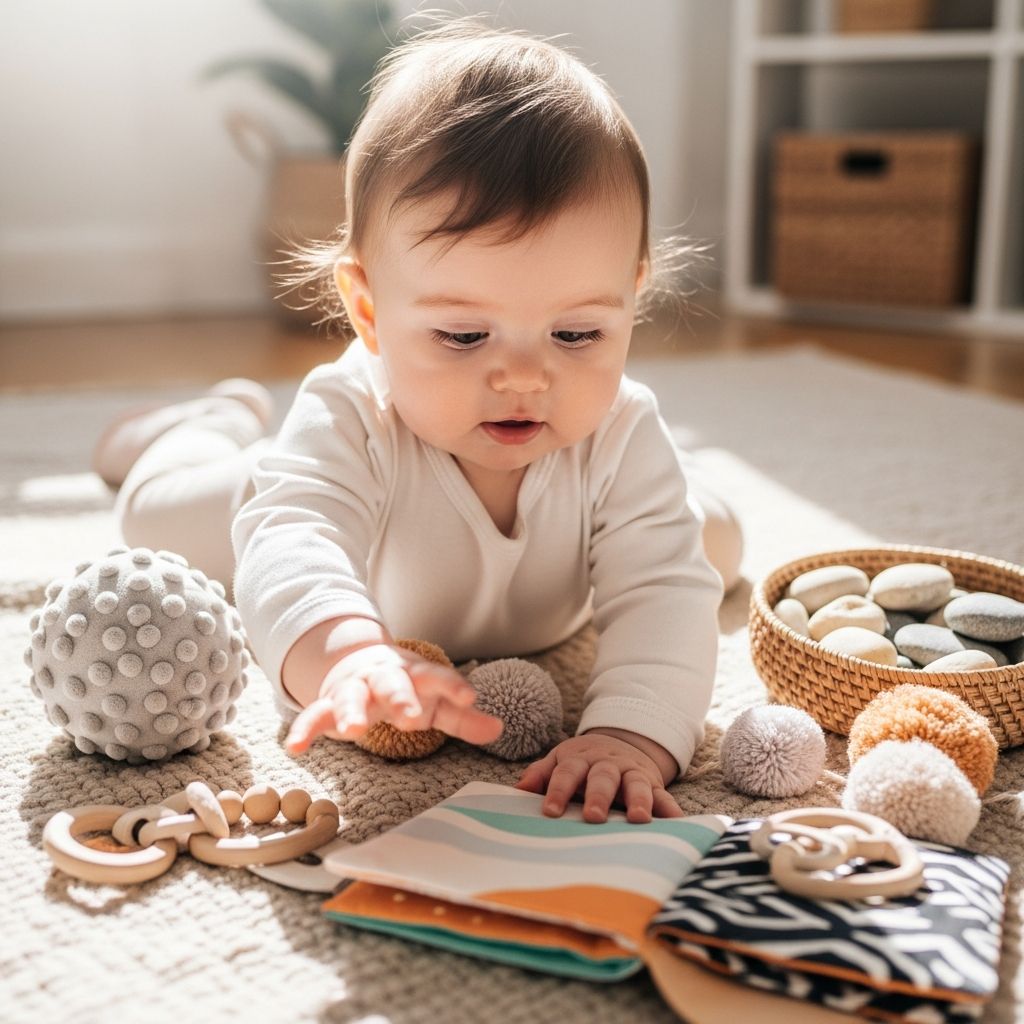
- Texture play blanket: Place a few larger squares of different fabrics (like cotton, fleece, and a ribbed dish towel) around your baby during supervised floor time so they can feel and rub them.
- Sound discovery: Offer a light rattle or soft toy that makes a gentle crinkling noise when squeezed. Help your baby move it at first so they can link their motion with the sound.
- Mirror moments: Use an unbreakable baby mirror during tummy time. Many babies enjoy watching their reflection move and may start to smile or vocalize at the “other baby.”
- Lap games: Sit with your baby on your lap and sway slowly to music. Light rocking and rhythmic patterns can be soothing and help babies notice motion and balance.
Exploring Through Movement (6–9 Months)
As babies roll, sit, and sometimes start to crawl, the world opens up. At this stage, sensory play can involve more active movement and exploration of safe objects in the environment.
- Water tray splashing: Place a small amount of lukewarm water in a shallow, stable baking dish on the floor. Support your sitting baby as they pat the water, watch ripples, and feel temperature and wetness.
- Treasure basket: Fill a low, stable basket with a few safe household items such as a large wooden spoon, a soft hairbrush, and a smooth silicone spatula. Offer one item at a time and let your baby bang, mouth, or feel each one.
- Rolling textures: Provide a soft ball, a ribbed massage ball, and a lightweight fabric ball. Roll them gently toward your baby so they can notice the differences in weight and feel.
- Sound exploration: Introduce a soft drum or a large, upside-down plastic container your baby can tap. Show them how to pat it with hands to make different sounds.
Curious Investigators (9–12 Months)
Older babies begin to test cause and effect more intentionally. They drop, shake, fill, and empty anything they can find. Sensory play at this stage often overlaps with early problem-solving activities and more complex movements.
- Fill-and-dump containers: Offer a few large plastic containers and chunky objects like big blocks. Encourage your baby to drop items in, dump them out, and listen to the sounds they make.
- Soft food play (if developmentally ready): During mealtimes, allow your baby to touch, squish, and explore safe finger foods such as soft-cooked vegetables or mashed fruits.
- Cushion obstacle course: Create a low, soft path of couch cushions or pillows for your baby to crawl over and around while you supervise closely.
- Simple push-and-pull: Provide a sturdy push toy or a box your baby can push along the floor to feel resistance and practice balance.
Everyday Sensory Play Using Household Items
You do not need special equipment to offer rich sensory experiences. Many babies are just as fascinated by safe household items as they are by store-bought toys. The key is to think about how an object looks, feels, sounds, and moves.
- Soft kitchen cloths in different weaves for touching and mouthing.
- Large wooden spoons and silicone spatulas for banging and exploring.
- Lightweight plastic bowls for nesting or tapping.
- Securely closed clear containers (for older babies) filled with large beads or pasta for shaking, always under supervision.
Sensory Play for Each Sense
Thinking by sense can help inspire new ideas. Most activities naturally involve more than one sense at once, which is useful, because real-life experiences are multi-sensory. You can still highlight one sense at a time to notice how your baby responds.
Touch (Tactile)
Touch is one of the earliest and most powerful senses for babies. Offer a variety of safe textures so your baby can notice differences between rough and smooth, firm and soft, warm and cool.
- Soft brushing of arms or legs with a clean makeup brush during calm moments.
- Playing with a cool, damp washcloth they can squeeze or chew under supervision.
- Letting feet explore different textures like a woven rug, a yoga mat, and a fleece blanket.
Sight (Visual)
Babies’ vision improves throughout the first year, starting with high-contrast shapes and later noticing finer details. Visual sensory play can be simple and quiet, which is helpful on days when energy levels are low.
- Hanging a lightweight scarf or mobile above the baby’s safe play area for them to watch gently swaying.
- Placing a few brightly colored toys against a plain blanket so they stand out more clearly.
- Letting baby watch you slowly open and close a hand or roll a ball back and forth.
Sound (Auditory)
Babies hear before birth and recognize familiar voices. Sound-based sensory play helps them connect noises with sources and learn how their own actions can create sound.
- Talking to your baby about what you are doing in a calm, conversational tone.
- Offering simple sound toys like a soft rattle or a cloth book with crinkle panels.
- Exposing them to gentle household sounds, such as water running or paper crinkling, while describing what they hear.
Smell and Taste (Olfactory and Gustatory)
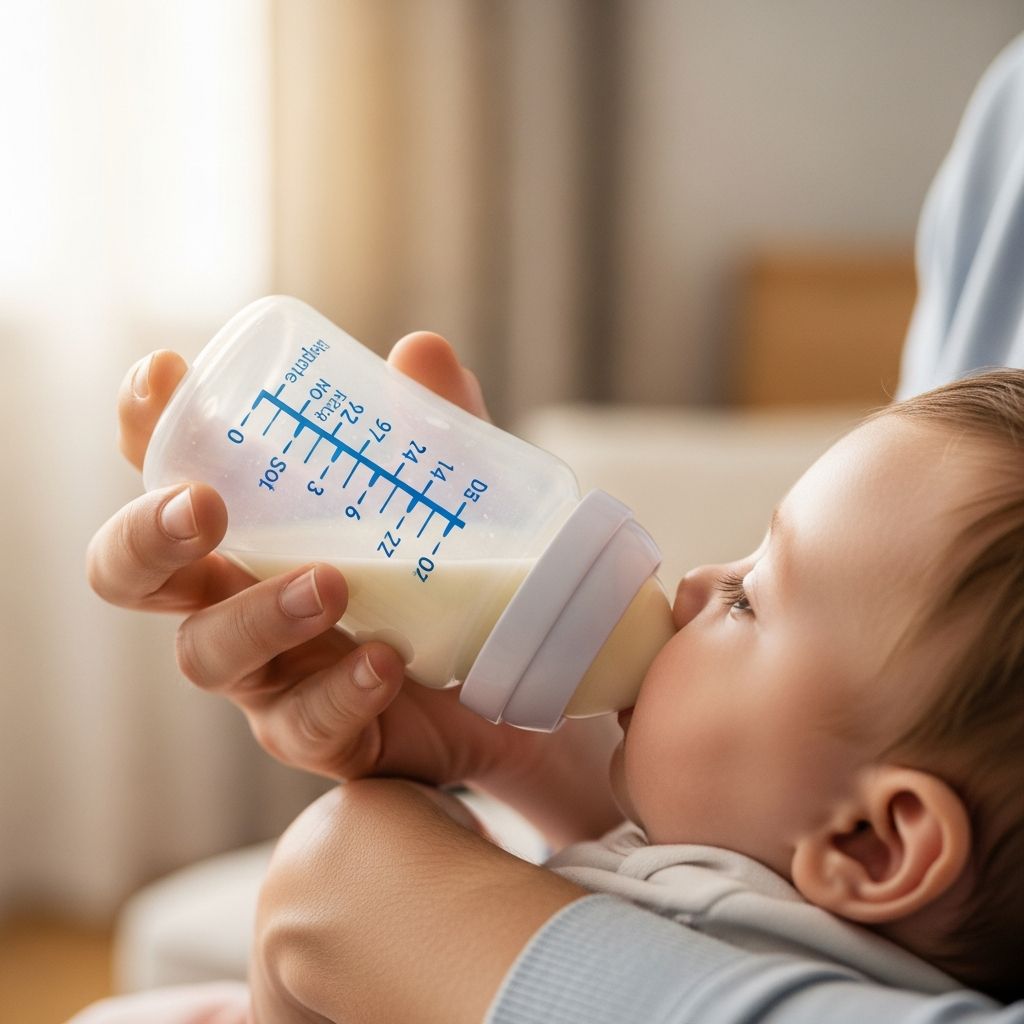
Smell and taste are closely linked and become more active when feeding begins. For young babies, these senses are engaged naturally through breastfeeding or bottle-feeding and everyday caregiving routines.
- Allowing baby to smell mild natural scents, like a sliced orange placed nearby but out of reach.
- Talking about the flavor of foods once they start solids, using simple words like “sweet” or “warm.”
- Keeping strong artificial fragrances to a minimum to avoid sensory overload.
Movement and Body Awareness (Vestibular and Proprioception)
Movement-based senses help babies understand where their bodies are in space. Gentle motion and opportunities to change positions throughout the day strengthen these systems.
- Slow rocking in your arms or in a chair, watching for any signs of overstimulation.
- Supported sitting on your lap while you gently bounce to a slow rhythm.
- Encouraging rolling from back to tummy and back again on a soft mat.
Balancing Stimulation and Calm
Babies need both active exploration and quiet rest. Too many bright, noisy, or complex activities can overwhelm them. A good rule of thumb is to offer one main sensory experience at a time and to build in breaks.
- Watch for signs of stress, such as looking away, startling, hiccupping, or crying.
- Offer a calm break by dimming lights, holding your baby, or stepping into a quieter room.
- Rotate toys and materials so your baby sees a few items at once rather than a big pile.
Simple Sensory Play Routines You Can Repeat
Consistency helps babies feel secure. Choosing one or two rituals you repeat most days can weave sensory play into life without adding more to your to-do list. Over time, these small habits can become cherished parts of your baby’s day.
- Morning stretch and touch: After a diaper change, gently stretch your baby’s arms and legs and massage their hands and feet.
- Daily tummy time corner: Set up a small area with a mirror, a couple of soft textures, and one interesting toy.
- Bath-time exploration: Let your baby feel water on hands and feet, squeeze a washcloth, and gently splash while you supervise closely.
- Bedtime wind-down: Use a short, predictable routine such as dim lights, soft song, and gentle rocking to signal sleep time.
Frequently Asked Questions
How early can I start sensory play with my baby?
Sensory play begins from birth, because every cuddle, feeding, and diaper change involves touch, sound, and smell. In the early weeks, sensory experiences should be soft, brief, and closely tied to comfort and care rather than structured activities.
How long should a sensory play session last?
For young babies, a few minutes at a time is often enough. Ending play when your baby seems tired or distracted helps keep sensory experiences positive and avoids overwhelming them.
Do I need special toys for sensory play?
Specialty toys are optional, not essential. Many of the richest sensory experiences come from ordinary items like fabrics, safe kitchen tools, and your own voice and touch.
What if my baby seems uninterested?
Babies have different temperaments. If yours seems less engaged, try offering one simple sensation at a time, such as gentle rocking or a single textured cloth, and give them time to respond at their own pace.
Can sensory play help calm a fussy baby?
Sometimes, yes. Rhythmic, predictable sensations such as rocking, quiet humming, or light swaddling can be soothing for many babies, especially when combined with responsive caregiving and a calm environment.
Encouragement for Caregivers
Sensory play does not need to be elaborate to be meaningful. Your baby benefits most from feeling safe, loved, and gently invited to explore the world at their own pace. With a bit of curiosity and a few simple ideas, everyday moments can become powerful building blocks for growth.