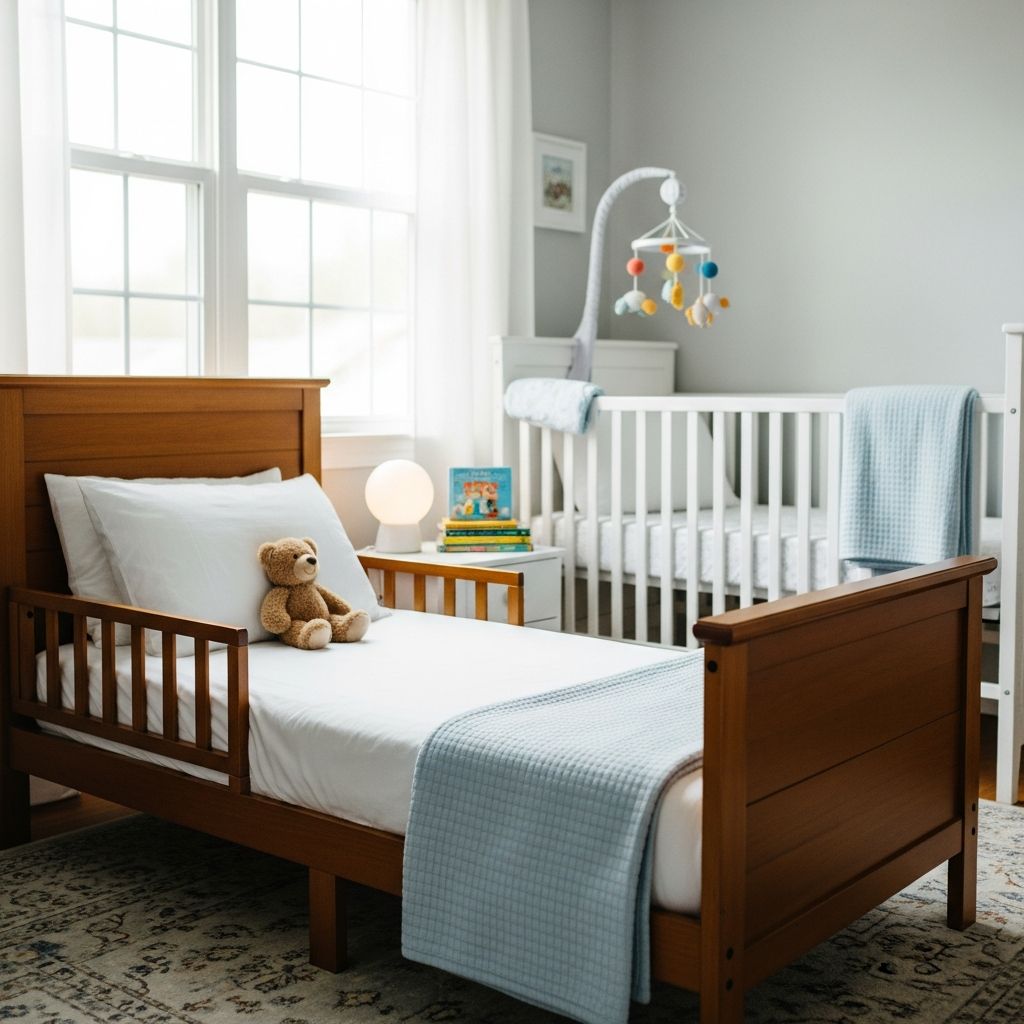
When a new baby is on the way and your older child is still sleeping happily in a crib, many parents face the same question: Should we buy a second crib or move our toddler into a bed? There is no single right answer. The best decision depends on your child’s development, your space and budget, and how much change your family can handle at once.
This guide walks you through the key factors so you can make a calm, informed choice instead of a rushed, stressed one.
Understanding the Transition: Crib vs. Toddler Bed
Most children move from a crib to another sleep space sometime between about 18 months and 3 years, but that window is flexible and highly individual. The American Academy of Pediatrics (AAP) suggests considering a change when a child reaches around 35 inches in height or can climb out of the crib, because falls from a raised crib can lead to serious injuries.
When a new baby is coming, parents often feel pressure to speed up this transition to “free up” the crib. But what is convenient for adults is not always what is easiest for a toddler. Your decision will likely come down to three questions:
- Is my toddler developmentally ready for the responsibility of a bed?
- Can we safely and comfortably manage two cribs?
- How much disruption can our family handle around the baby’s arrival?
Key Factors to Weigh Before You Decide
Before choosing between a second crib and a toddler bed, take a realistic look at these areas.
1. Your Toddler’s Age and Development
Age alone does not determine readiness, but it does matter. Many sleep specialists and pediatric organizations note that most babies can safely stay in a crib until at least age 2, and often longer if they are not climbing out.
Consider:
- Under ~2 years: Many children this age lack the impulse control needed to stay in a bed without rails. A crib often remains safer and more restful.
- 2–3 years: Some toddlers are ready, especially if they follow directions reasonably well and can understand simple sleep rules.
- Over 3 years: More likely to handle a bed, especially if you support the change with clear routines and boundaries.
2. Safety Considerations
Safety should be the first filter for your decision.
- Climbing out: Once your child can consistently climb out of the crib, it becomes less safe, even if you prefer to keep them contained.
- Height and rail level: The AAP recommends moving a child out of the crib when the rail height is roughly three-quarters of the child’s standing height or when they reach about 35 inches tall.
- Room-proofing for a bed: A toddler in a bed has the freedom to move around the room, so outlets, cords, furniture, and windows must be thoroughly childproofed.
3. Family Logistics: Space, Budget, and Timing
Practical issues are also important.
- Space: Can the room comfortably fit two cribs, or would one crib and one low bed work better?
- Budget: Buying another full-size crib can be costly, while some toddler beds are inexpensive and can reuse the crib mattress.
- Timing with baby’s arrival: A big sleep change right before or right after a new sibling arrives can stir up jealousy and insecurity. Spacing transitions out—by several weeks or months—often leads to smoother adjustments.
Pros and Cons: Second Crib vs. Toddler Bed
The table below compares the main advantages and challenges of each option.
| Option | Pros | Cons |
|---|---|---|
| Second full-size crib |
|
|
| Toddler bed |
|
|
Signs Your Child May Be Ready for a Bed
If you are considering skipping a second crib, look for these readiness cues before moving to a toddler or larger bed.
Physical and Safety Signs
- Climbing out of the crib: If your toddler has figured out how to climb over the rails, it is time to rethink the crib for safety reasons.
- Taller than the safe rail height: Around 35 inches tall or when the rail stands less than about three-quarters of their height, the crib may no longer be safe.
- Good mobility: Your child can safely climb in and out of a low bed and move around the room without frequent injuries.
Behavioral and Emotional Signs
- Can follow simple rules: Your child generally listens to short instructions like “stay in bed until I come back.”
- Shows interest in a big-kid bed: Some toddlers become excited about the idea of a new bed, which can make the transition smoother.
- Handles routine changes fairly well: If your child adapts reasonably to changes in schedule or environment, they may cope better with a new sleep space.
When a Second Crib May Be the Better Choice
Sometimes the simplest solution—buying or borrowing another crib—is genuinely the best fit.
- Children are very close in age: If your older toddler is under about 2 years old when the new baby arrives, keeping them in a crib may preserve everyone’s sleep while they mature a bit more.
- Your toddler sleeps well in their crib: If bedtime and nights are currently peaceful, changing the sleep setup solely to reuse the crib may not be worth the risk of disruption.
- You want to avoid stacking big changes: Adjusting to a sibling, a different room, and a new bed all at once can overwhelm many toddlers. Spreading changes out over time is often gentler.
- Your home has the space: If you can comfortably fit a second crib without creating crowding or safety hazards, it can be a straightforward solution.
When Moving to a Toddler Bed Makes Sense
In other families, transitioning the older child out of the crib before or around the baby’s arrival works well.
- Your toddler is climbing or nearly climbing out: Safety is your priority. A low bed with guardrails is usually safer than a tall crib for an agile climber.
- Potty training is underway: Easy access to the bathroom or a potty chair is valuable once children begin staying dry at night or need help using the toilet.
- Budget limits a second crib: A toddler bed that reuses your existing crib mattress can be a budget-friendly compromise.
- You have a convertible crib: Many modern cribs convert to toddler beds or even twin beds, which can offer continuity and save money.
Step-by-Step Tips for a Smooth Transition
Whether you choose a second crib now or decide to introduce a toddler bed, a thoughtful approach can protect your child’s sense of security.
If You Buy a Second Crib
- Keep your toddler’s crib as unchanged as possible. Same mattress, same lovey, same approximate room setup. Consistency helps them feel safe.
- Introduce the new baby’s crib gradually. Let your older child explore it during the day, put a doll or stuffed animal in it, and talk about how it will be the baby’s special bed.
- Avoid framing it as “giving away” the crib. Emphasize that everyone has a bed that is just right for their size and age.
If You Move Your Toddler to a Bed
- Time it carefully. Aim for a buffer of several weeks or months between the bed transition and the baby’s arrival, or wait until after the newborn stage if possible, so your toddler does not feel displaced by the baby.
- Keep the mattress familiar. If safe and in good condition, use the same crib mattress in the toddler bed so it smells and feels familiar.
- Childproof the bedroom thoroughly. Secure furniture to the wall, cover outlets, move cords out of reach, use window guards, and think of the entire room as an extension of the bed, since your child can now roam.
- Use guardrails and a low-height bed. A low frame or mattress on the floor with rails reduces the risk of falls and makes it easier for your child to get in and out independently.
- Practice during the day. Let your child climb in and out of the bed, pretend to sleep, and rehearse bedtime routines long before the first real night.
- Set clear, simple rules. For example: “We stay in bed. If you need me, call for me.” Use calm, consistent walk-backs if they keep getting up.
How This Decision Affects Sibling Dynamics
Sleep arrangements are not only about logistics; they can shape how your older child feels about the new baby.
- Avoid the crib grab. If your toddler is moved out of the crib only days before the baby moves in, some children interpret this as the baby “taking” their bed. Spacing out these changes can reduce resentment.
- Highlight your toddler’s new privileges. If they move to a bed, emphasize the fun parts—reading in bed together, choosing new bedding, or using a small night-light—rather than focusing on losing the crib.
- Protect one-on-one time. Whether they stay in a crib or move to a bed, keeping bedtime as a special, consistent connection time can ease jealousy and behavior issues.
Frequently Asked Questions (FAQs)
Is there a “wrong” age to move from crib to bed?
There is no single correct age. Many children transition between 18 months and 3 years, but the most important factors are safety (no climbing out) and your child’s ability to handle the freedom and follow simple rules.
Can I skip the toddler bed and go straight to a twin or larger bed?
Yes. With a proper guardrail and a safe, childproofed room, research suggests that sleep quality is similar whether a child sleeps in a toddler-size bed or a larger bed, as long as safety measures are in place. Many families skip the toddler bed to avoid another purchase, especially if they have space for a twin or full bed.
My toddler loves the crib. Should I move them just to reuse it for the baby?
Not necessarily. If your child is sleeping well, not climbing out, and is within the crib’s safety limits, it is often simpler and kinder to keep them there and consider a second crib or an alternative sleep solution for the baby. Minimizing unnecessary changes around the baby’s arrival can protect your toddler’s sense of security.
How long does it usually take for a toddler to adjust to a new bed?
There is wide variation, but many families notice a few unsettled nights to a few weeks of testing boundaries before sleep stabilizes. Consistent routines, clear rules, and strong safety measures often shorten this adjustment period.
Is it safer to delay the transition as long as possible?
It is safer to keep a child in a crib only as long as the crib remains physically safe—meaning they are not climbing out and still within height and rail guidelines. Once those limits are exceeded, a low bed with appropriate safety protections is usually safer than a too-small crib.
References
- How to Transition from Crib to Bed — Sleepopolis. 2023-05-01. https://sleepopolis.com/guides/how-to-transition-from-crib-to-bed/
- When & How to Move from Crib to Toddler Bed — dadada baby. 2023-07-10. https://dadadababy.com/blogs/dadada-daily/when-how-to-move-from-crib-to-toddler-bed
- When to Switch From Crib to Toddler Bed to Twin Bed — Leesa. 2022-11-18. https://www.leesa.com/article/crib-to-toddler-bed
- Benefits of Toddler Beds for Kids — HALO. 2022-09-14. https://www.halosleep.com/blogs/halo/benefits-of-toddler-beds-for-kids
- Ultimate Guide to the Toddler Bed Transition — Taking Cara Babies. 2021-08-05. https://www.takingcarababies.com/blogs/toddlers/ultimate-guide-to-the-toddler-bed-transition