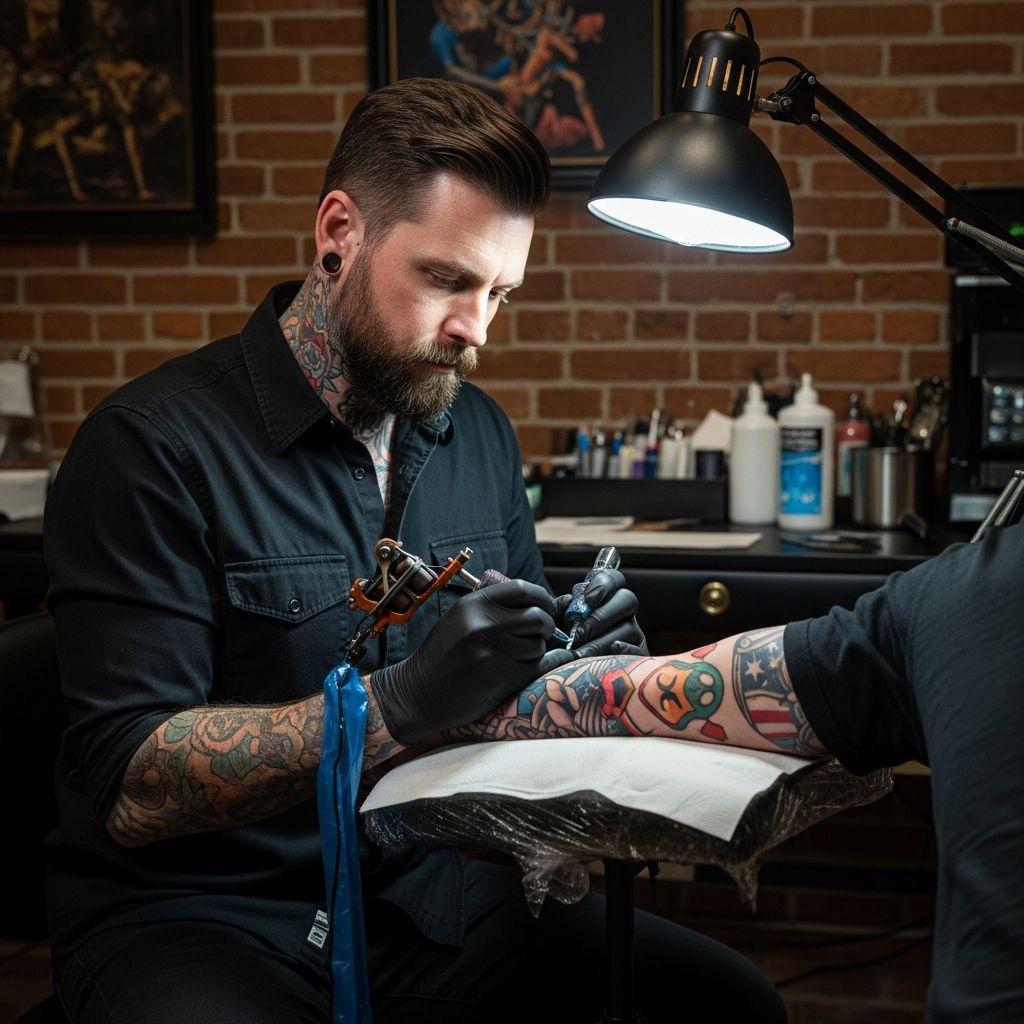
Scott Campbell is widely known as one of the most influential tattoo artists of his generation, with a client list that ranges from fashion designers to A-list actors and art collectors. Yet behind the celebrity aura is a working parent who thinks deeply about storytelling, responsibility, and what it means to mark a body forever. This article explores his artistic path, his perspective on kids and tattoos, and the way pop culture icons like Iron Man intersect with modern family life.
From Biochemistry to Tattoo Machines
Before Campbell became a household name in tattooing, he was on a very different path. Raised in Louisiana, he studied biochemistry at the University of Texas and originally intended to become a medical illustrator. That scientific training sharpened his eye for anatomy and precision, but the laboratory life felt too constrained. He eventually dropped out, moved to San Francisco, and immersed himself in the world of tattoo shops.
In San Francisco, he learned the craft at Picture Machine, one of the oldest tattoo shops in California, known for its dense history and nicotine-stained flash sheets from the 1960s and 1970s. The shop environment exposed him to:
- Biker culture and traditional Americana imagery
- Street-level storytelling, where every tattoo carried a tale of loyalty, loss, or rebellion
- Technical discipline, including sterile technique and consistent line work
These early years grounded Campbell in both the technical and emotional sides of tattooing, shaping the style that would later attract celebrity and art-world attention.
Building a Tattoo Studio with an Art-World Reputation
Campbell eventually moved to New York and opened his own studio, Saved Tattoo, in Williamsburg, Brooklyn. Williamsburg’s mix of artists, musicians, and designers turned the studio into a creative hub rather than a typical walk-in parlor. Over time, Saved Tattoo became synonymous with:
- High-end custom work tailored to individual clients rather than flash off the wall
- Crossovers with fashion, including extensive collaborations with designer Marc Jacobs
- Art-world visibility, thanks to collectors, gallerists, and curators who became clients
Celebrities such as Heath Ledger, Johnny Depp, and other film and fashion figures have been tattooed by Campbell, reinforcing his reputation as a go-to artist for people used to working with top-tier creatives.
The Emotional Weight of a Tattoo
Behind the glamorous clientele, Campbell emphasizes that tattooing is fundamentally about people and their inner lives. In interviews, he has described tattooing as a form of emotional translation: meeting a client, understanding their story, and then distilling it into a symbol or image that can live on the body.
He has highlighted several core responsibilities for any tattoo artist:
- Listening deeply to why someone wants a tattoo at this moment in their life
- Balancing aesthetics with meaning so the piece still resonates decades later
- Recognizing the permanence of the decision and respecting that weight
This focus reflects broader research on body art and identity. Studies in psychology and sociology have shown that tattoos often serve as markers of life transitions, memorials for loved ones, or declarations of group belonging, rather than impulsive decoration.
Parenthood, Risk, and the Question of Kids and Tattoos
As a father, Campbell’s relationship with tattoos extends into his family life. He has spoken openly about living in Pasadena with his two children while running tattoo projects in Los Angeles and beyond. That dual identity—artist and dad—shapes how he thinks about risk, rebellion, and what he wants his kids to learn from seeing him work.
How Tattoos Look Through a Parent’s Eyes
Modern parents frequently debate when (or whether) children and teens should get tattoos. Campbell’s career offers a unique perspective. While he does not advocate for children to be tattooed, the values behind his work—commitment, reflection, and self-knowledge—can be powerful teaching tools.
Parents concerned about tattoos often juggle several questions:
- Is my child mature enough to make a permanent decision?
- Will this choice limit professional opportunities?
- Is tattooing safe from a medical standpoint?
Medical organizations consistently stress that tattoos involve health risks—such as infection, allergic reactions, or scarring—and should be performed only in licensed settings that follow strict hygiene protocols. In the United States, state laws typically prohibit tattooing minors without parental consent, and some states ban it outright under 18.
Campbell’s professional rigor around cleanliness, planning, and aftercare reinforces those medical concerns from an artistic angle. His approach implicitly teaches that if a person is going to alter their body, it should be done thoughtfully, safely, and with respect for long-term consequences.
Talking to Kids About Body Art
Parents do not have to be pro-tattoo to have constructive conversations with their kids. In fact, artists like Campbell inadvertently provide talking points simply by taking the craft seriously. Useful themes to raise with children and teens include:
- Meaning over impulse: Why do you want this design, now, and how might it feel in 20 years?
- Health and safety: What does a clean, reputable studio look like, and what questions should you ask an artist?
- Social context: How might visible tattoos be perceived in schools, jobs, or particular cultures?
- Alternatives: Temporary tattoos, henna, or custom art on canvas or clothing as trial runs.
Research in adolescent psychology indicates that open, non-judgmental communication between parents and teens is associated with better decision-making about risky behaviors. Treating body art as a serious topic instead of a taboo can make it easier for kids to come to parents before making permanent choices.
Iron Man, Superheroes, and the Stories We Wear
Campbell’s clientele often bring in imagery pulled from films, comics, and video games. Superheroes like Iron Man are common reference points—emblems of resilience, armor, and transformation. While specific client stories are private, the cultural meaning of these symbols is widely discussed in media and scholarship.
Pop culture heroes resonate with both adults and children because they compress complex experiences—trauma, moral struggle, redemption—into colorful, readable icons. When someone asks a tattooer to put a character like Iron Man on their skin, they are not just requesting fan art; they are often claiming a specific narrative:
- Armor and vulnerability: A character who appears invincible but is emotionally fragile.
- Technology and identity: Questions about where the person ends and the suit—or device—begins.
- Redemption arcs: A flawed person working to correct past mistakes.
Campbell’s body of work is heavily story-driven, whether the images are traditional skulls, delicate script, or more abstract motifs. Superhero tattoos fit naturally into that framework: they are another way people externalize their inner scripts for courage, survival, or change.
Tattoos as Fine Art and Experimental Practice
Although Campbell continues to tattoo, he has also gained recognition for fine art projects that reinterpret tattoo language off the skin. These works include:
- Carved currency sculptures, where stacks of U.S. dollar bills are laser-cut or carved into intricate reliefs that resemble tattoo-style filigree.
- Watercolor series inspired by his time in a maximum-security prison in Mexico City, focusing on improvised tattoo tools and prison iconography.
- Graphite drawings on eggshells, playing with fragility and the tension between delicate surfaces and permanent marks.
By pulling tattoo aesthetics into galleries and museums, Campbell tests the boundary between what is often seen as a subcultural craft and what institutions label as “high art.” Critics have noted how his work connects folklore, prison culture, and fashion imagery into a cohesive visual language.
| On Skin | In Galleries |
|---|---|
| One-of-one, tied to a specific person | Editioned or unique works that can be resold |
| Subject to aging, sun, and time | Preserved in controlled environments |
| Intimate, often private meaning | Interpreted by critics, curators, and audiences |
| Created in direct collaboration with one person | Made for a broader, often anonymous public |
Campbell has emphasized that one thing he loves about tattoos is that they have no resale value: no one gets tattooed to flip it at auction. That purity—art rooted in a single life, not in market speculation—continues to anchor his practice even as his gallery career expands.
Entrepreneurship, Cannabis, and Creative Risk
Beyond tattooing and fine art, Campbell co-founded the cannabis brand Beboe, where he oversees product design and development. The company positions itself as an upscale, design-conscious line of cannabis products, aiming to destigmatize use among health-oriented and culturally attuned consumers.
His connection to cannabis is personal: he has described how his grandmother baked cannabis brownies to help his mother through chemotherapy, an early lesson in the plant’s medicinal potential. That experience later motivated him to craft products that feel considered, responsible, and aesthetically refined rather than clandestine or purely recreational.
From an entrepreneurial standpoint, Beboe reflects themes consistent across Campbell’s work:
- Design as storytelling: Packaging and branding that tell a narrative of care and ritual.
- Normalization of stigmatized practices: Similar to how tattoos have moved from the margins to the mainstream.
- Attention to user experience: Thinking about how a product fits into a person’s daily life, not just how it looks on a shelf.
Regulators and public health experts continue to study the effects of expanding legal cannabis markets on health and behavior, particularly among youth. Campbell’s role sits on the cultural side of that equation, focusing on how design can change perceptions and encourage more thoughtful, moderate use among adults.
Living Between Cities, Roles, and Expectations
In recent years, Campbell has shifted much of his life to the West Coast, opening a new version of Saved Tattoo in Los Angeles and settling in Pasadena with his family. The move from Brooklyn to Los Angeles reflects several broader trends:
- Creative migration from New York to L.A. for more space and different industry access (especially film and television).
- Changing tattoo demographics, with a growing base of clients in wellness, tech, and entertainment.
- Balancing travel with stability as a parent who previously lived in cities like Tokyo, Paris, and Madrid for tattoo work.
For Campbell, the challenge is to honor the restless, itinerant spirit that drew him to tattooing in the first place while providing a consistent home life for his children. That tension—between movement and rootedness—mirrors the dual nature of tattoos themselves: portable works that nonetheless anchor people to specific memories and places.
Frequently Asked Questions (FAQs)
At what age is it appropriate for someone to get a tattoo?
Laws vary, but in many places people must be at least 18 to be tattooed without parental consent, and reputable studios often decline to work on minors even with permission. Beyond legality, maturity matters: understanding permanence, health risks, and social implications is crucial.
How can parents talk to teens who want tattoos inspired by superheroes or pop culture?
Rather than dismissing the idea, parents can ask about the story behind the character, explore how that meaning might change over time, and discuss health and professional considerations. Encouraging temporary options first—such as custom prints, clothing, or non-permanent tattoos—can help teens test whether the attachment lasts.
Are tattoos safe if done by a professional artist?
When performed in a licensed studio that uses sterile equipment and proper aftercare instructions, tattoos are generally safe for healthy adults, although they still carry risks like infection or allergic reactions. People with certain medical conditions, such as immune disorders or specific skin diseases, should consult a healthcare professional first.
Why do some fine artists, like Scott Campbell, keep tattooing even after gallery success?
Many artists value tattooing as a uniquely intimate, non-commercial art form. Unlike paintings or sculptures, tattoos cannot be resold, which keeps the focus on the relationship between artist and client and on the meaning of the piece rather than its market price.
How can someone choose a good tattoo artist?
Look for a clean, professional studio; healed photos of the artist’s work; consistent style; and client reviews. It is also important to have a consultation where the artist listens carefully and is willing to say no if an idea is unsafe or unrealistic, a quality that artists like Campbell stress as central to ethical practice.
References
- Scott Campbell – Cosmetic Executive Women profile — Cosmetic Executive Women. 2023-01-01. https://cew.org/people/scott-campbell/
- Scott Campbell & Trudy Lines — Beboe. 2022-01-01. https://beboe.com/blogs/news/scott-campbell-trudy-lines
- Scott Campbell — AnOther Magazine. 2011-05-10. https://www.anothermag.com/art-photography/2239/scott-campbell
- BIO – Scott Campbell Studio — Scott Campbell Studio. 2020-01-01. https://www.scottcampbellstudio.com/about
- The Narrative of Life Through Tattoos and Art – a Visit to Scott Campbell’s Studio — Maria Brito Studio Blog. 2014-02-17. https://blog.mariabrito.com/articles/2014/2/17/the-narrative-of-life-through-tattoos-and-art-a-visit-to-scott-campbells-studio
- If You Don’t Belong, Don’t Be Long — COOL HUNTING. 2010-04-05. https://coolhunting.com/culture/scott-campbell-2/
- Tattooing and Body Piercing — American Academy of Pediatrics. 2017-10-01. https://publications.aap.org/pediatrics/article/140/4/e20171936/38624/Tattooing-and-Body-Piercing
- Public Health Implications of Legalization of Recreational Cannabis — American Journal of Drug and Alcohol Abuse. 2020-01-15. https://www.tandfonline.com/doi/full/10.1080/00952990.2020.1720692
- Tattoo artist Scott Campbell leaves New York for L.A. and opens a new Saved Tattoo studio — Los Angeles Times. 2017-06-09. https://www.latimes.com/fashion/la-ig-scott-campbell-20170609-htmlstory.html