Scoliosis can be a worrying diagnosis for any family, and being told that your child needs a back brace often raises many questions. This guide explains, in clear language, what a scoliosis brace does, why doctors recommend it, and how you and your child can manage everyday life while bracing.
Understanding Scoliosis and Why Braces Are Used
Scoliosis is a three-dimensional curve of the spine that usually develops just before or during the growth spurt of childhood and adolescence. In most otherwise healthy kids, doctors call it adolescent idiopathic scoliosis, meaning the exact cause is unknown.
Bracing is one of the main non-surgical treatments for scoliosis in growing children. The key aim is not to “perfectly straighten” the spine but to slow down or stop the curve from getting worse while your child is still growing.
- Who usually needs a brace? Children and teens who are still growing and have a moderate curve on X-ray (often around 25–45 degrees, depending on the specialist and guidelines).
- What is the main goal? Prevent the curve from progressing to a point where surgery is more likely to be recommended (often around 45–50 degrees for many children).
How a Scoliosis Brace Works
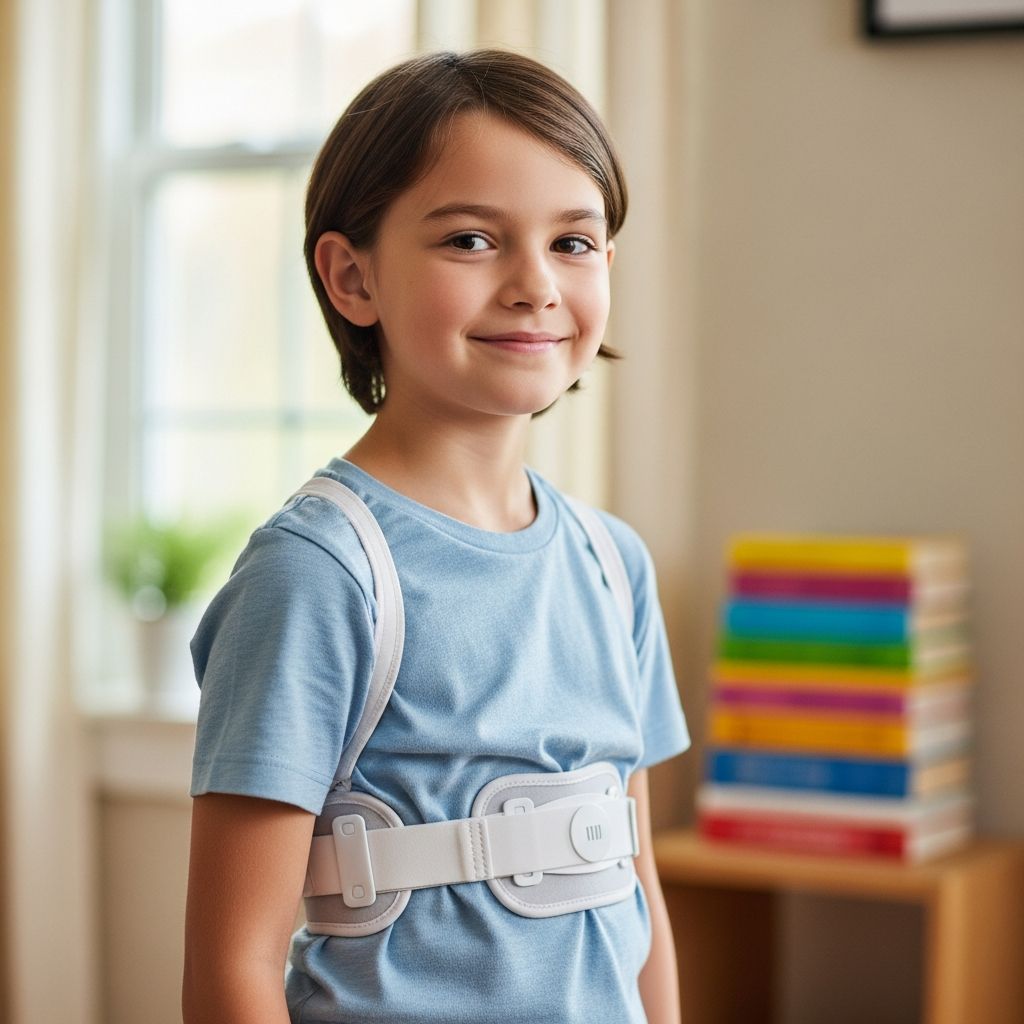
A scoliosis brace is a custom-molded plastic or composite device that fits snugly around the torso. It is designed based on your child’s spinal curve, body shape, and growth stage.
In simple terms, the brace:
- Applies gentle pressure in some areas of the ribs or lower back.
- Provides relief spaces in other areas, so the spine and ribs are encouraged to move toward a more aligned position.
- Uses your child’s remaining growth potential to guide the spine in a better direction.
It is important to remember:
- A brace does not cure scoliosis, and it cannot permanently straighten the spine on its own.
- Its job is to keep the curve from getting much worse while your child grows, lowering the chance that surgery will be needed later.
When Doctors Recommend Bracing
Your child’s spine team (usually a pediatric orthopaedic surgeon or pediatric spine specialist, sometimes with an orthotist) will consider several factors before recommending a brace:
| Factor | Why it matters for bracing |
|---|---|
| Curve size (Cobb angle) | Moderate curves (often 25–45°) in growing kids are the usual target group for bracing. |
| Growth remaining | Braces work only while a child is still growing, often over several years. |
| Curve pattern | Location and shape of the curve help determine brace design and how effective bracing is likely to be. |
| Bone age & puberty stage | Bone age X-rays or growth markers (like first menstrual period in girls) help predict how much growing time is left. |
| Past X-rays | If the curve has been increasing over time, bracing is more likely to be advised. |
Types of Scoliosis Braces for Children and Teens
There are several brace designs. Your child’s team will choose based on the curve, your child’s body, and daily routine. Names and exact styles vary, but most fall into two broad groups:
1. Full-Time Braces
These are worn most of the day, often 18–20 hours or more, with breaks for bathing and some sports.
- TLSO-style braces (thoracolumbosacral orthoses) usually extend from under the armpits down to the hips and are made from rigid plastic.
- They are the most commonly prescribed type for adolescent idiopathic scoliosis.
- Studies show that wearing a thoracolumbosacral brace for at least about 18 hours per day greatly increases the chance of stopping curve progression, compared with fewer hours of wear.
2. Nighttime Braces
Nighttime or “bending” braces are worn only while sleeping.
- They can usually apply more aggressive correction because they do not have to be comfortable for daytime activities such as sitting in class.
- They may be an option for certain curve types and for families who find full-time wear very difficult.
Your child’s doctor will explain why a specific design is recommended and what the realistic goals are for that brace.
The Fitting Process: What Families Can Expect
Getting a scoliosis brace is a stepwise process involving careful measurement and fine-tuning. It usually includes:
- Initial assessment: The doctor reviews X-rays, examines your child’s back, and assesses growth remaining.
- Orthotist visit: An orthotist (brace specialist) takes measurements, a scan, or a plaster mold of your child’s torso.
- Brace fabrication: A custom brace is designed to push where the curve is prominent and allow space where movement is desired.
- First fitting and adjustments: At the delivery appointment, the orthotist checks pressure areas, trims the plastic if needed, and teaches your child how to put on and take off the brace.
- In-brace X-ray: Many clinics take an X-ray with the brace on, to see how much correction is achieved when the brace is properly worn.
Small adjustments are common in the first weeks as your child grows or as pressure areas are identified. Families should feel able to contact the orthotist if anything causes pain, rubbing, or skin irritation.
Daily Wear Schedule and Building a Routine
Your child’s doctor will set a specific wear schedule, but these general principles apply:
- Full-time braces are often prescribed for 18–23 hours per day, with short breaks for bathing, clothing changes, and certain sports.
- Nighttime braces are usually worn for the entire sleeping period, typically 8–10 hours a night.
- Bracing usually continues until your child is finished growing, which may mean several years of wear.
Many families find it easier to:
- Gradually increase brace time over a few days if your doctor approves, so your child can adapt.
- Use alarms or phone reminders to keep track of hours.
- Link brace time to daily habits (after breakfast, after school, before bed) to build consistency.
Comfort, Clothing, and Skin Care Tips
A new brace can feel strange at first. With patience and proper care, most kids find ways to stay active and comfortable.
Clothing Under and Over the Brace
- Use a snug, seamless cotton or moisture-wicking shirt under the brace to reduce friction and absorb sweat.
- Avoid thick side seams, buttons, or zippers directly under the plastic.
- Choose slightly looser outerwear (T-shirts, sweatshirts, dresses) to help the brace blend in if your child prefers not to draw attention.
Skin Care Basics
- Check your child’s skin daily, especially during the first weeks of wear.
- Mild redness that fades within 20–30 minutes after removing the brace is usually acceptable; deeper marks, blisters, or sores should be reported to the orthotist or doctor.
- Keep the skin clean and dry. Avoid heavy creams or oils under the brace, as they can increase friction.
Physical Activity and Life with a Brace
Most children can continue to do the activities they enjoy, with small adjustments.
- School: Kids typically attend school normally. Some prefer extra padding on chairs, but many adapt without special equipment.
- Sports and exercise: Many doctors allow brace-free time for certain sports or physical education classes. Staying active can help maintain core strength and emotional well-being.
- Sleep: It can take a few nights to find a comfortable sleeping position. Extra pillows can help support the legs or back.
Ask your child’s doctor about any restrictions and whether specific exercises, such as physiotherapy-based scoliosis exercises, might be recommended alongside bracing.
Emotional Support: Helping Your Child Cope
Wearing a visible device on the body during childhood or adolescence can be emotionally challenging. It may affect body image, confidence, and social comfort. Families can make a significant difference by providing understanding and support.
- Listen first: Encourage your child to share worries about appearance, comfort, or friendships.
- Normalize the experience: Many kids and teens wear braces, casts, or medical devices at some point; your child is not alone.
- Include your child in decisions: Let them help choose undershirts, clothing, or brace decorations (stickers, patterns) if allowed by the clinic.
- Share age-appropriate information: Understanding why the brace matters often improves motivation to wear it.
- Seek extra help if needed: If your child seems persistently withdrawn, anxious, or depressed, ask the care team about counseling or support groups.
Monitoring Progress and Follow-Up Visits
Regular follow-up is essential to ensure that the brace is effective and still fits as your child grows.
- Clinic visits: Typically every few months, the team will check brace fit, make adjustments, and review wear time.
- X-rays: Periodic images track how the spine is doing both in and out of the brace.
- Growth monitoring: Doctors may check hand or wrist X-rays, height measurements, and puberty markers to determine when growth is slowing or finished.
Bracing usually continues until your child has reached skeletal maturity; at that point, the brace is gradually discontinued under the guidance of the spine specialist.
Common Myths About Scoliosis Bracing
- Myth: A brace will permanently straighten my child’s spine.
Reality: Bracing is intended to control curve progression, not to cure scoliosis. Some improvement in curve size can occur, but the main goal is preventing the curve from getting much worse. - Myth: Braces are always painful.
Reality: Braces can feel tight or uncomfortable at first, but they should not cause significant pain. If they do, adjustments are usually possible. - Myth: Kids in braces can’t play sports.
Reality: Many children remain active. Doctors often encourage continuing sports, sometimes with specified brace-free periods.
Frequently Asked Questions (FAQs)
How many hours per day does my child really need to wear the brace?A: Your child’s doctor will give a specific recommendation, but many full-time braces are prescribed for 18–23 hours per day. Research suggests that the more consistently a brace is worn (especially at or above about 18 hours daily), the better the chance of preventing the curve from worsening.
Q: Will my child still need surgery later on?
Bracing significantly lowers the risk of a curve growing to the size where surgery is usually recommended, but it cannot guarantee that surgery will never be needed. Factors such as initial curve size, remaining growth, and brace wear time all influence the long-term outcome.
How long will my child have to wear the brace (months or years)?
Most children wear a brace for several years, from the time the curve is discovered until growth is nearly finished. This timeframe depends on how early the scoliosis is diagnosed and how much growth your child has remaining.
Can my child take the brace off for special events?
It is important to follow the wear schedule as closely as possible, but many doctors allow occasional short breaks for special events, photos, or important activities. These should be planned and limited, and always discussed with your child’s spine specialist.
What signs mean we should call the doctor or orthotist?
Contact the care team if your child has persistent pain, numbness, sores or blisters on the skin, difficulty breathing, a brace that becomes too tight or loose due to growth, or if the brace is damaged or cannot be closed properly.
References
- Brace treatment for patients with scoliosis: State of the art — Weiss HR et al., Journal of Back and Musculoskeletal Rehabilitation. 2021-10-28. https://pmc.ncbi.nlm.nih.gov/articles/PMC8603182/
- Understanding Scoliosis Braces: Types, Uses, Effectiveness & More — Healthline Editorial Team. 2022-05-23. https://www.healthline.com/health/childrens-health/scoliosis-brace
- Scoliosis brace – Medical Encyclopedia — MedlinePlus, U.S. National Library of Medicine. 2021-08-10. https://medlineplus.gov/ency/imagepages/19467.htm
- Frequently Asked Questions about Scoliosis Braces — Hospital for Special Surgery (HSS). 2023-06-15. https://www.hss.edu/health-library/conditions-and-treatments/scoliosis-bracing
- Scoliosis Bracing — Hanger Clinic. 2022-02-01. https://hangerclinic.com/library/scoliosis-bracing/